Robert Frost

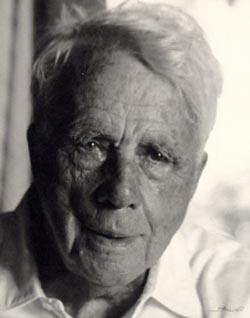
Portrait of Robert Frost
Robert Frost 1874–1963
1874Born

Robert Lee Frost, b. San Francisco, Mar. 26, 1874, d. Boston, Jan. 29, 1963, was one of America's leading 20th-century poets and a four-time winner of the Pulitzer Prize. An essentially pastoral poet often associated with rural New England, Frost wrote poems whose philosophical dimensions transcend any region. Although his verse forms are traditional - he often said, in a dig at arch rival Carl Sandburg, that he would as soon play tennis without a net as write free verse - he was a pioneer in the interplay of rhythm and meter and in the poetic use of the vocabulary and inflections of everyday speech. His poetry is thus both traditional and experimental, regional and universal.

After his father's death in 1885, when young Frost was 11, the family left California and settled in Massachusetts. Frost attended high school in that state, entered Dartmouth College, but remained less than one semester. Returning to Massachusetts, he taught school and worked in a mill and as a newspaper reporter. In 1894 he sold "My Butterfly: An Elegy" to The Independent, a New York literary journal. A year later he married Elinor White, with whom he had shared valedictorian honors at Lawrence (Mass.) High School. From 1897 to 1899 he attended Harvard College as a special student but left without a degree. Over the next ten years he wrote (but rarely published) poems, operated a farm in Derry, New Hampshire (purchased for him by his paternal grandfather), and supplemented his income by teaching at Derry's Pinkerton Academy.

In 1912, at the age of 38, he sold the farm and used the proceeds to take his family to England, where he could devote himself entirely to writing. His efforts to establish himself and his work were almost immediately successful. A Boy's Will was accepted by a London publisher and brought out in 1913, followed a year later by North of Boston. Favorable reviews on both sides of the Atlantic resulted in American publication of the books by Henry Holt and Company, Frost's primary American publisher, and in the establishing of Frost's transatlantic reputation.

Read the full biography

As part of his determined efforts on his own behalf, Frost had called on several prominent literary figures soon after his arrival in England. One of these was Ezra Pound, who wrote the first American review of Frost's verse for Harriet Munroe's Poetry magazine. (Though he disliked Pound, Frost was later instrumental in obtaining Pound's release from long confinement in a Washington, D.C., mental hospital.) Frost was more favorably impressed and more lastingly influenced by the so-called Georgian poets Lascelles Abercrombie, Rupert Brooke, and T. E. Hulme, whose rural subjects and style were more in keeping with his own. While living near the Georgians in Gloucestershire, Frost became especially close to a brooding Welshman named Edward Thomas, whom he urged to turn from prose to poetry. Thomas did so, dedicating his first and only volume of verse to Frost before his death in World War I.

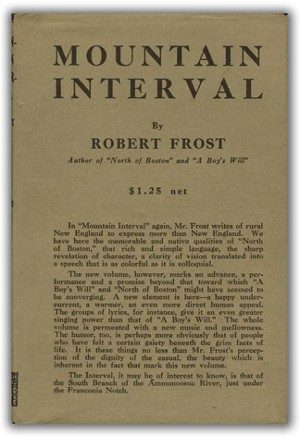
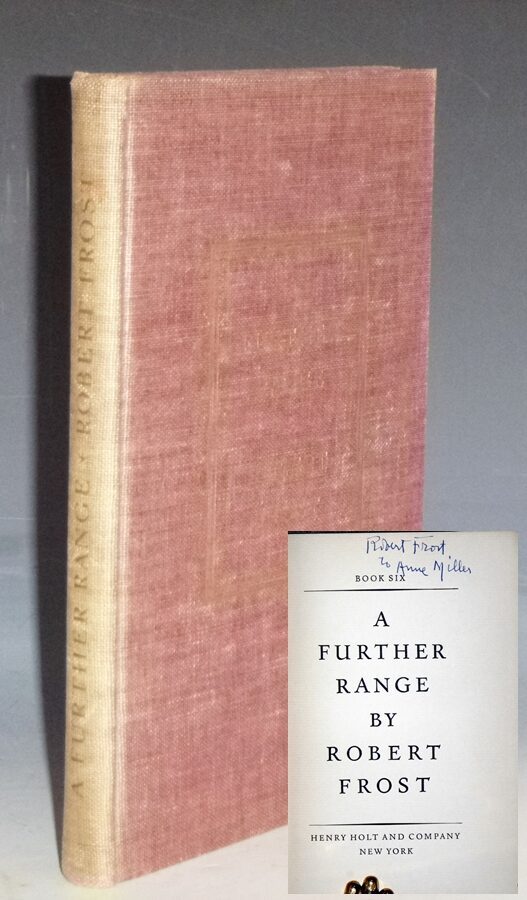
The Frosts sailed for the United States in February 1915 and landed in New York City two days after the U.S. publication of North of Boston (the first of his books to be published in America). Sales of that book and of A Boy's Will enabled Frost to buy a farm in Franconia, N.H.; to place new poems in literary periodicals and publish a third book, Mountain Interval (1916); and to embark on a long career of writing, teaching, and lecturing. In 1924 he received a Pulitzer Prize in poetry for New Hampshire (1923). He was lauded again for Collected Poems (1930), A Further Range (1936) and A Witness Tree (1942). Over the years he received an unprecedented number and range of literary, academic, and public honors.

Frost's importance as a poet derives from the power and memorability of particular poems. The Death of the Hired Man (from North of Boston) combines lyric and dramatic poetry in blank verse. After Apple-Picking (from the same volume) is a free-verse dream poem with philosophical undertones. Mending Wall (also published in North of Boston) demonstrates Frost's simultaneous command of lyrical verse, dramatic conversation, and ironic commentary. The Road Not Taken, Birches (from Mountain Interval) and the oft-studied Stopping by Woods on a Snowy Evening (from New Hampshire) exemplify Frost's ability to join the pastoral and philosophical modes in lyrics of unforgettable beauty.

The poetic and political conservatism of Frost caused him to lose favor with some literary critics, but his reputation as a major poet is secure. He unquestionably succeeded in realizing his life's ambition: to write "a few poems it will be hard to get rid of."

Biography by: Biography written by The Academic American Encyclopedia, © 1995 Grolier Electronic Publishing. Compiled and hyperlinked by Gunnar Bengtsson, 2000.

Reading closely

Analyses

A full analysis sits under 36 of these poems: what each poem says, how it is built and how readers here have read it. About the analyses

  • Nothing Gold Can StaySpring's first leaf, Eden and dawn as one law of loss, and whether that loss is grief
  • Stopping by Woods on a Snowy EveningA pause by dark woods, and the promises that pull the traveler back to the road
  • Fire and IceHow the world ends, decided from what the speaker knows of desire and hate
  • Dust of SnowA crow, a hemlock and a dusting of snow that turn a bad day part way round
  • The Lockless DoorFear of confrontation, flight from isolation, and entering the wider world
  • 'Out, Out--'A boy's death at the buzz-saw, blame left open, and the living who turn to their affairs
  • Mending WallBoundaries, inherited sayings and the doubter who still helps rebuild the wall
  • Ghost HouseA speaker who dwells in a vanished house, nature's return and the forgotten dead
  • Acquainted With the NightNight walks, isolation, a cry not meant for the speaker and a clock that will not judge
  • BirchesIce-bent trees, the boy who swings them, and a wish to leave earth and come back
  • A Minor BirdIrritation turned to self-blame, and the right of any voice, however minor, to sing
  • Two Tramps In Mud TimeLove against need, work as play for mortal stakes, and who has the better right to a job
  • DesignA white spider, moth and flower, and whether any design governs a thing so small
  • Into My OwnSolitude, the wish to vanish into the woods, and a self that stays the same
  • After Apple-PickingExhaustion, unpicked apples and the uncertain sleep that follows a finished harvest
  • Putting in the SeedPlanting, fertility and a love of the earth that echoes human love and birth
  • The Rose FamilyA word stretched until it means little, and a compliment that reclaims its original sense
  • StarsStars that seem to watch over human frailty but, like a marble statue, cannot see
  • Once By The PacificA storm swelling into apocalypse, and the mere luck that holds the land against the sea
  • The PastureAn analysis of farm chores, quiet observation, and an invitation to companionship.
  • A Passing GlimpseFleeting perception, the wish to return, and the limits of looking closely
  • The Cow In Apple-TimeA cow’s appetite, disregard for boundaries, and the cost of indulgence
  • Wind and Window FlowerCourtship across glass, sheltered life, and an encounter lost to hesitation
  • Love and a QuestionA request for shelter and the conflict between private love and a stranger’s need
  • The Death of the Hired ManWhat home means, what a worn-out man is owed, and one word that ends the argument
  • The RunawayA colt’s fear of first snow, uncertain sympathy, and the responsibility to shelter him
  • The Silken TentFreedom sustained by inner steadiness and many ties of love and thought
  • Hyla BrookA vanished brook, the work of memory, and love beyond an ideal appearance
  • My November GuestSorrow as a companion who deepens an existing love of bare November days
  • In a Disused GraveyardAn unused cemetery, the certainty of death, and a knowingly comforting lie
  • Asking For RosesTwo people knock at an empty house for roses, in a game of courtship, ruin and silence
  • The Span Of LifeAn old dog, a remembered pup, and two lines that sound like the ages they describe
  • An Old Man's Winter NightAn old man, a failing light and whether one sleeping person can keep a farm
  • My ButterflyA dead butterfly, knowledge that came too late, and the wind and God that handled it
  • Storm FearWind as a beast, a household counting its strength, and a doubt left open at the end

From readers

What readers say about Robert Frost

  1. On The Road Not Taken

    “Hudsno I think you and so many others miss the point entirely its not about which path he took or didnt take and hes not patting himself on the back for going down the one that most people dont chose. the pome says "and both that morning equally lay in leaves no step had trodden black." both the…”

  2. On Stopping by Woods on a Snowy Evening

    “I can see the contemplation of suicide. How death would be like "The woods are lovely, dark and deep" He is describing a what a low point in life he is at with "The darkest evening of the year". He changes his mind by saying "But I have promises to keep" He realizes his obligations are more…”

  3. On Dust of Snow

    “the poem “Dust of Snow” is about nature and how he feels related to nature. This is shown when he says how the crow shook down on him and the dust of snow from the hemlock tree gave him a change of mood. The poem is an explanation to me that he used to think he was superior to nature until nature…”

  4. On The Lockless Door

    “this poem although not to the standard of the metaphysical poets like donne and marvel, strikes the mind and asks us for a multi levelled interpretation this "knocking," this lockless door is a poosible past memory or incident that has come back to haunt him or continues too. Memories of war and…”

  5. On Ghost House

    “It is a poem well worth multiple readings. I didn't understand it at all at first but still loved the beauty it's phrasing and words. Very poignant. I now also read it as he is dead. His first words are "I dwell in a lonely house i know." And later, "I know not who these mute people are who share…”

  6. On Acquainted With the Night

    “the ryhme in this poem is a,b,a, b,c,b c,d,c d,a,d a,a i think this poem is about someone wanting to leave the city the poem is about lonliness and isolation When he passes the watchman, he drops his eyes and having no explanation for it. This could mean he is shy around others or feels awkward…”

Where readers gather

Most discussed

  1. No. 1The Road Not Taken551 comments
  2. No. 21Nothing Gold Can Stay324 comments
  3. No. 24Stopping by Woods on a Snowy Evening263 comments
  4. No. 17Fire and Ice138 comments
  5. No. 19Dust of Snow78 comments
  6. No. 44The Lockless Door74 comments
  7. No. 24'Out, Out--'71 comments
  8. No. 1Mending Wall65 comments
  9. No. 2Ghost House60 comments
  10. No. 21Acquainted With the Night51 comments

All 180 poems

A Boy's Will · 1913 · 30 poems
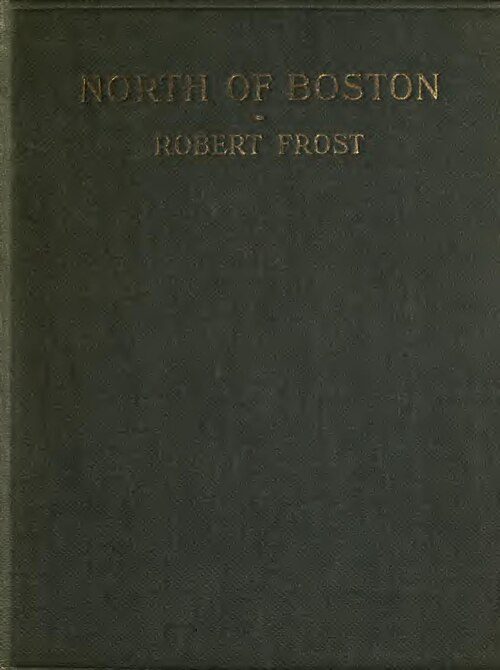
North of Boston · 1914 · 17 poems
Mountain Interval · 1916 · 30 poems
New Hampshire · 1923 · 45 poems
West-Running Brook · 1928 · 40 poems
A Further Range · 1936 · 7 poems
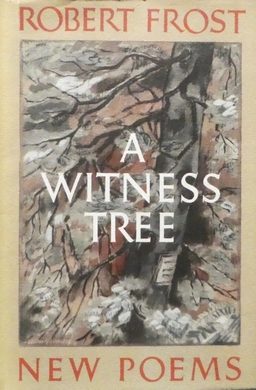
A Witness Tree · 1942 · 3 poems
Cover of A Witness Tree
First-edition dust jacket, Henry Holt, 1942
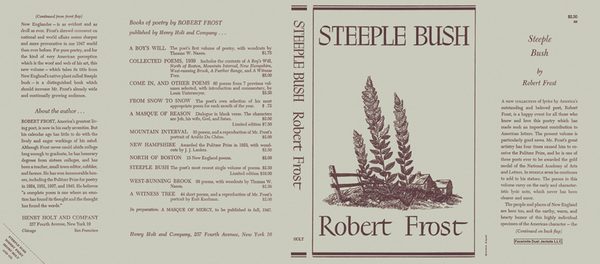
Steeple Bush · 1947 · 2 poems
Cover of Steeple Bush
1947 dust-jacket spread, Henry Holt; facsimile shown by Facsimile Dust Jackets
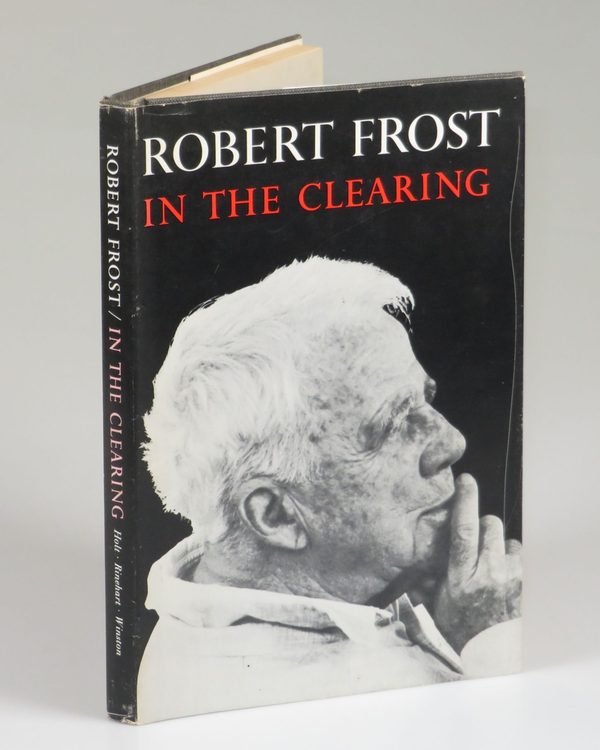
In the Clearing · 1962 · 1 poem
Cover of In the Clearing
First trade edition in its dust jacket, Holt, Rinehart and Winston, 1962 (Churchill Book Collector)
Other poems · 5