I'm going out to clean the pasture spring;
I'll only stop to rake the leaves away
(And wait to watch the water clear, I may):
I shan't be gone long. -- You come too.
I'm going out to fetch the little calf
That's standing by the mother. It's so young,
It totters when she licks it with her tongue.
I shan't be gone long. -- You come too.
✦
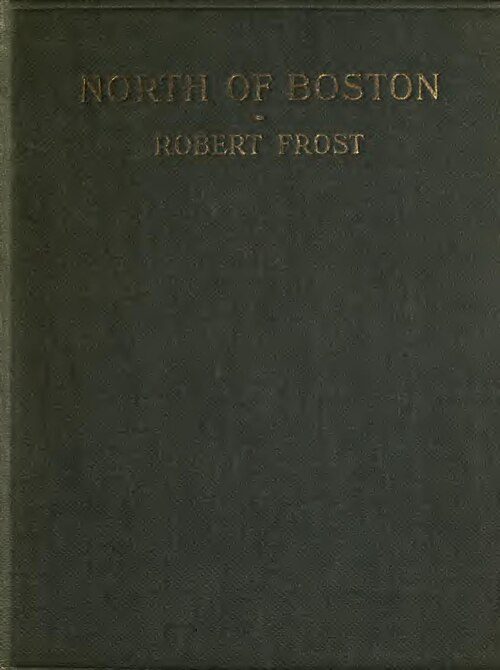
From the bookNorth of BostonFront cover, David Nutt, London, 1914
Analysis
The Pasture: analysis
Introduction
The Pasture is an eight-line poem set on a rural farm. The speaker announces two short outdoor tasks that need to be done. First, the speaker plans to clean out a pasture spring by raking away fallen leaves. Second, the speaker intends to fetch a young calf standing near its mother in the pasture.
After stating each task, the speaker extends a direct invitation to an unnamed listener. The poem combines everyday agricultural labor with an invitation to join the speaker outside. It balances simple rural chores with a warm, welcoming presence.
Summary
In the first four lines, the speaker states an intention to go outside to clean the pasture spring. The speaker notes that the pause at the spring will only take enough time to rake away fallen leaves. A parenthetical remark adds that the speaker may wait a moment to watch the water clear. The speaker reassures the listener that this outdoor trip will not take long. The section concludes with an explicit request for the listener to come along as well.
In the final four lines, the speaker describes a second task to fetch a little calf from the pasture. The calf is currently standing right beside its mother in the field. The speaker highlights how young the animal is, noting that it totters when the mother licks it with her tongue. The speaker repeats the statement about not being gone for long. The poem closes with the exact same direct request for the listener to join.
Themes and meaning
The poem presents farm chores as opportunities for quiet observation rather than hard physical labor. The speaker intends to clean the pasture spring in line 1, then describes raking leaves in line 2. This task includes a brief pause to watch the water clear in line 3. The work is light and unhurried, creating space to witness a natural process. Cleaning the water becomes a peaceful act of patient attention.
The second part of the poem focuses on gentle care within the natural world. The speaker plans to fetch a calf in line 5. The next line places it beside its mother. The text emphasizes the physical vulnerability of the young animal as it totters when licked in line 7. Maternal care appears alongside physical weakness. The speaker observes this quiet domestic scene with deep attention.
A central theme of the poem is companionship offered through a repeated invitation. Both parts of the poem end with the line I shan't be gone long followed by You come too. The speaker minimizes the time away to make joining seem easy and natural. Some readers interpret this as a personal invitation to a companion or family member. Other readings view it as an invitation to the reader to step into the world of the poem.
Tone
The overall tone of the poem is calm, informal, and welcoming. The speaker uses simple conversational phrasing like I'm going out in line 1 to set an unhurried tone. A quiet, reflective mood appears in line 3 as the speaker decides to wait and watch the water clear. The tone becomes tender in line 7 when describing the weak calf tottering under its mother's tongue. The repeated refrain in lines 4 and 8 maintains a reassuring and inviting tone throughout.
Form and structure
The poem consists of a single eight-line stanza. The line lengths range between eight and ten syllables. Most lines contain ten syllables, forming a loose iambic rhythm. The fourth line and eighth line drop to eight syllables.
The overall rhyme scheme is ABBCDEEC. Rhymes join the second line to the third line, and the sixth line to the seventh line. The eighth line repeats the fourth line exactly as a refrain.
Poetic devices
Refrain line 4
I shan't be gone long. -- You come too. Establishes a repeating invitation that closes each half of the poem.
Alliteration line 3
(And wait to watch the water clear, I may): Repeats the initial 'w' sound to mimic the calm movement of clearing water.
Parenthesis line 3
(And wait to watch the water clear, I may): Inserts an unhurried, reflective thought outside the main sentence.
Enjambment line 5
I'm going out to fetch the little calf Flows directly into the next line to complete the clause.
Imagery line 7
It totters when she licks it with her tongue. Provides a visual detail of the young calf's weak physical movement.
Assonance line 2
I'll only stop to rake the leaves away The long a sound recurs in rake and away. That audible link helps the task unfold in a relaxed, conversational movement.
Words worth knowing
fetch
To go after and bring back.
totters
Stumbles or moves unsteadily on weak legs.
What readers have said
Betty Blake connects the chores with accompanying her father on their Vermont farm as a child. She later read the poem at his funeral. Betty Blake, 2004
Gabriel sees an address to readers, but thinks the speaker would rather be alone than offer an uncomplicated welcome. Gabriel, 2005
Spenser sees the poem as an indirect love poem centered on shared presence and companionship. Spenser, 2010
catur wahyudi argues that the speaker does not genuinely expect the reader to follow. catur wahyudi, 2007
Tone This piece appears to have a certain tone to it. I found this because as a read i noticed that he does not complete what he is saying on one line. It continues onto the next, i believe he may have done this to make the words fit. An example of this is found in the second frame, “I’m going out to fetch the little calf That’s standing by her mother. It’s so young” It is also obvious the poem has tone because it…
Read the whole comment
Tone This piece appears to have a certain tone to it. I found this because as a read i noticed that he does not complete what he is saying on one line. It continues onto the next, i believe he may have done this to make the words fit. An example of this is found in the second frame, “I’m going out to fetch the little calf That’s standing by her mother. It’s so young” It is also obvious the poem has tone because it holds a very relaxed feel to it, the use of abbreviations help the relaxed feeling.
Detail There is not much detail at all in this poem. The writer uses the simplest of words to explain his plans for the day. The most descriptive word I found through out the piece was “toters,” he is describing the little calf’s movements. To me the use of words familiarises me with the country setting.
Vocabulary Robert Frost has chosen very simple describing words in his poem, The Pasture, they are all very small. There are no extreme cases of emphasising any words, nor are there metaphors present. He has also chosen a few contractions to coinside with the use of simple words. Some examples of this are, “I’m, I’ll, it’s and shan’t, these all fit nicely with the style of vocabulary used.
Sentence Structure The sentence structure in this piece is quite difficult; I had to look over the poem a couple of times before I understood the way it should be read allowed. In The Pasture the sentences are short and precisely to the point, Robert Frost uses compound sentences to describe what he is going to be doing. “I’m going to clean the pasture spring; I’ll only stop to rake the leaves away.” The poem is set up as a quatrain poem, grouped together in four lines. How ever, at the end of both groups he finishes with what seems like a question to end the sentence, “I shan’t be long. – You come too.” Yet there are no question marks, I believe it may be a direct imply.
Direct speech The writer of this piece is talking directly to someone else that perhaps he is talking to. We know this because he is describing what he is about to do, but he also implies that some one should accompany him also.
I love this poem, the simplicity of it, and it describes the relationship I had with my father. to clean the pasture spring, in the spring when he did this ,as I child I always went with him. To fetch the little calf, how many times did I go with him to do this, and he would bring the little calf back on his shoulders. I lived in rural Vermont on a farm growing up. I know I have not analized the poem , but it touches my heart , and I wanted to say this about it. I read it at my father's funeral.
I love this poem. To me this poem is about death. Knowing about Frost's history, I really feel like he is trying to cope with the death in his life. When this poem was written, he had lost four of his six children, all them by age four. So when they talk about the calf, to me it symbolizes his children. I think he was teaching his two older children that when people or animals are suffering that they should be but out of their misery like his children were.
halieUnited States
i really love this poem it is so fun to read. this is one of the many of roberts poems i enjoy.
LekoThailand
I like the simplicity of this poem. it's somewhat bring fresh air up to my trite life. i think it's about the celebration every little details of daily life and the celebrations of birth, the greatest gift of all living things. i read the comments above and it's such so much help for me to understand the poem more in another angle and some of it is toching.
kelseyCanada
i think this poem is very well written and it makes sense. I also like it because it describes relationships that kids have with their parents. Robert Frost is by far my favorite poet poet because his poems are very thought provoking
MikeUnited Kingdom
Knowing a little bit about RF I suspect this poem was written after the death of one of his children (perhaps the one that died in childbirth - I forget the name). Reading though it line by line, the following words and phrases leap out: - pasture: did RF now think he was too old to be useful? Did he blame himself in some way for what had happpened? - spring: new life and renewal, yet... - rake the leaves away: the…
Read the whole comment
Knowing a little bit about RF I suspect this poem was written after the death of one of his children (perhaps the one that died in childbirth - I forget the name).
Reading though it line by line, the following words and phrases leap out:
- pasture: did RF now think he was too old to be useful? Did he blame himself in some way for what had happpened? - spring: new life and renewal, yet... - rake the leaves away: the spring is clogged with old leaves which he means to rake away. He's trying to clear up the mess and move beyond it. - watch the water clear: he's looking for an end to confusion. - it's so young: really this is rather heartfelt perhaps the saddest line in the poem. Interpretation isn't hard. - it totters when she licks it: a complex picture, suggesting that a mothers' love can sometimes be overpowering. - I sha'n't be gone long: typical RF irony. - you come to: typical RF understatement. What he's really saying is - please come with me.
This is a tricky poem, but I think if you read a lot of Frost as well as read the few interviews or memoirs he's ever publicly let out, this poem stands out as the best and most succinct poem about how Robert Frost feels about his own poetry. The latest anthology picked this one to preface the entire edition for a reason, after all. This is a poem about how Robert Frost feels about his readers. I think the most…
Read the whole comment
This is a tricky poem, but I think if you read a lot of Frost as well as read the few interviews or memoirs he's ever publicly let out, this poem stands out as the best and most succinct poem about how Robert Frost feels about his own poetry. The latest anthology picked this one to preface the entire edition for a reason, after all. This is a poem about how Robert Frost feels about his readers. I think the most important part of this poem is not actually the lines about the calf but the parts where he says "--You come too." Though it might seem like it, he's not actually happily inviting the guest (or reader) along with him, in fact he'd probably rather be alone. Read into most of his work and you'll see he enjoys things like raking leaves and babbling water on his own; he rarely if ever has human company. Other people are like ghosts in his work... like the phantom mowing the lawn in The Tufts of Flowers, or the shelled husk of a neighbor he presents to us in The Mending Wall.
He isn't saying "Please, I'd like your company." He's just saying as an afterthought "-- You come too." Deep down he really just wants to experience the beauty of the new spring in the pasture on his own, but he feels compelled to give his guest a glimpse into it for whatever reason, be it politeness, a desperate hope for shared experience, or whatever it may be.
Frost feels this way about his writing. He's commented about how he never really took to being the "poet laureate" of the entire country because he's always written for just for himself. If you read his work closely you can see that desire to be alone, the feeling that he doesn't think he is well-understood by others and that he isn't sure if he cares or not. The same feeling is expressed when he lists all the beautiful things he wants to do and then half-heartedly invites us to go with him. He wants us to see what he sees, but he's just not so sure we'll understand. I think the complexity there is gorgeous, and is a true glimpse into a beautiful and profoundly interesting soul.
The Pasture Is a cool poem i like the way He explained the pasture and what he did. It is so awsome You should spend your time Ready Robert Frosts poems if you are interested in nature.
SarahUkraine
In my English class im supposed to find a poem and memorize it so I looked at robert Frost because we memorized "The Pasture" before so I saw it and it was just kinda cool to see it there.
DerekUnited States
I am supposed to analyze a poem for my english class and I was given this poem to think upon and express my views on it. Well, this is a pretty complicated poem that I think can symbolize many things. It could be that Robert Frost is a man who enjoys the company of nature and really sits back and takes a glimpse at its beauty. Then, he invites us to take the journey with him, hoping that we will understand his views…
Read the whole comment
I am supposed to analyze a poem for my english class and I was given this poem to think upon and express my views on it. Well, this is a pretty complicated poem that I think can symbolize many things. It could be that Robert Frost is a man who enjoys the company of nature and really sits back and takes a glimpse at its beauty. Then, he invites us to take the journey with him, hoping that we will understand his views and fulfillment of nature. Also, maybe the leaves and the water clearing may be a sign of hope or something. They could signify a new beginning in a time of renewal. Well, I present this poem today and I am just going to tell my teacher and my fellow students exactly what I get out of this wonderful poem. After all, maybe this poem gives a different message to everyone.
catur wahyudi
this poem is typically robert frost. in my mother tounge it is called ROBERT FROST BANGET.... talking about anything related to nature, frost is trying to get his readers involved in the sequence of the poem. in fact, The Pasture doesn't rally want to ask us (the reader) to come. He only said "you come too"
i really like this poem because it kida talks about animals and i love and. and i also grew up ona ranck.
freddieUnited States
i really like this poem because it givs you a feelling about animals and their personalities.
tylerUnited States
i think this poem is great, i am supposed to do this poem as an analysation for english, it is pretty cool..
tylerUnited States
Although this poem is rather short, The Pasture can be a tricky poem to understand. Frost feels this way about his writing because of how he is connected to nature. It shows how a life on a pasture works. He is trying to explain in this poem that life is no rush. He wants to express that someone’s life can be great if you take life slow. This poem also expresses the connection between animals and humans. It shows great detail of a cow’s life out on a field with its family being very happy. In this poem, the character watches how the cows take their life’s very slowly and peacefully. It shows that the character should do the same thing too.
AWALNigeria
it tooks me a while before i could fetch the point out of frost robert poem,[the pasture]..i believe the poet in the first stanza,was trying to shade light on how nature should be appreciated.on a bright beautiful day commitment and dedication should be an objective."i ll only stop to rake the leaves away.". the second stanza based on how beautiful life could be for an infant[totters]and the fullest joy of the the mother having her baby..'i shan't be gone long-you come too'the poet is also offering an invitation for the readers to appeciate life and its nature.
My long two-pointed ladder's sticking through a tree Toward heaven still, And there's a barrel that I didn't fill Beside it, and there may be two or three Apples I didn't pick upon some bough. But I am done with apple-picking now. Essence of winter sleep is on the night, The scent of apples: I am drowsing off. I cannot rub the strangeness from my sight I got from looking through a pane of glass I skimmed this…
Read the whole comment
My long two-pointed ladder's sticking through a tree Toward heaven still, And there's a barrel that I didn't fill Beside it, and there may be two or three Apples I didn't pick upon some bough. But I am done with apple-picking now. Essence of winter sleep is on the night, The scent of apples: I am drowsing off. I cannot rub the strangeness from my sight I got from looking through a pane of glass I skimmed this morning from the drinking trough And held against the world of hoary grass. It melted, and I let it fall and break. But I was well Upon my way to sleep before it fell, And I could tell What form my dreaming was about to take. Magnified apples appear and disappear, Stem end and blossom end, And every fleck of russet showing clear. My instep arch not only keeps the ache, It keeps the pressure of a ladder-round. I feel the ladder sway as the boughs bend.
And I keep hearing from the cellar bin The rumbling sound Of load on load of apples coming in. For I have had too much Of apple-picking: I am overtired Of the great harvest I myself desired. There were ten thousand thousand fruit to touch, Cherish in hand, lift down, and not let fall. For all That struck the earth, No matter if not bruised or spiked with stubble, Went surely to the cider-apple heap As of no worth. One can see what will trouble This sleep of mine, whatever sleep it is. Were he not gone, The woodchuck could say whether it's like his Long sleep, as I describe its coming on, Or just some human sleep.
juniperBarbados
the pasture by robert frost
i wish robert frost didnt write such complicated poems for me to model in class. i dont even like this one and it makes no sense!!
SpenserUnited States
The Pastures by Robert Frost
I see a love poem in these few stark sentences. The setting is gentle as are the words. An invitation that pulls you along. It is indirect. A simple country life, reflected in the rhythms of nature, the slow passage of time. The company of one's love, possibly a friend. You come too! The great gift of someone's presence! I can feel the fall air, a slight chill, the light starting to fade. A sidelong glance at your face, the way the light hits it, reassuring myself of your being at my side. And, the life. Simple chores, simple pleasures, simple love. Spencer of Ballston Lake, NY.
Robert Frost has very touching and very disturbing poems which intell many past stories about himself!
LaylaAustralia
“Willow and Ginkgo”
I have a few question about “Willow and Ginkgo” By Eve Merriam
List two lines from the poem that are to be read literally: 1. 2.
List two lines from the poem that contain vivid figurative language and explain your choices: 1. Explanation: 2. Explanation:
Add two of your own lines of figurative language to the poem followed by two lines to be read literally:
Figurative Line: Literal Line: Figurative Line Literal Line:
vanessaCosta Rica
the pasture
I love the way that Robert speaks, he is so romantic and really take,s you to the place where he is in the poem,is one of my favorite writers and every single poem from him is just great !!!
Tone This piece appears to have a certain tone to it. I found this because as a read i noticed that he does not complete what he is saying on one line. It continues onto the next, i believe he may have done this to make the words fit. An example of this is found in the second frame, “I’m going out to fetch the little calf That’s standing by her mother. It’s so young” It is also obvious the poem has tone because it…
Read the whole commentTone
This piece appears to have a certain tone to it. I found this because as a read i noticed that he does not complete what he is saying on one line. It continues onto the next, i believe he may have done this to make the words fit. An example of this is found in the second frame,
“I’m going out to fetch the little calf
That’s standing by her mother. It’s so young”
It is also obvious the poem has tone because it holds a very relaxed feel to it, the use of abbreviations help the relaxed feeling.
Detail
There is not much detail at all in this poem. The writer uses the simplest of words to explain his plans for the day. The most descriptive word I found through out the piece was “toters,” he is describing the little calf’s movements. To me the use of words familiarises me with the country setting.
Vocabulary
Robert Frost has chosen very simple describing words in his poem, The Pasture, they are all very small. There are no extreme cases of emphasising any words, nor are there metaphors present. He has also chosen a few contractions to coinside with the use of simple words. Some examples of this are, “I’m, I’ll, it’s and shan’t, these all fit nicely with the style of vocabulary used.
Sentence Structure
The sentence structure in this piece is quite difficult; I had to look over the poem a couple of times before I understood the way it should be read allowed. In The Pasture the sentences are short and precisely to the point, Robert Frost uses compound sentences to describe what he is going to be doing. “I’m going to clean the pasture spring; I’ll only stop to rake the leaves away.” The poem is set up as a quatrain poem, grouped together in four lines. How ever, at the end of both groups he finishes with what seems like a question to end the sentence, “I shan’t be long. – You come too.” Yet there are no question marks, I believe it may be a direct imply.
Direct speech
The writer of this piece is talking directly to someone else that perhaps he is talking to. We know this because he is describing what he is about to do, but he also implies that some one should accompany him also.
I love this poem, the simplicity of it, and it describes the relationship I had with my father. to clean the pasture spring, in the spring when he did this ,as I child I always went with him.
To fetch the little calf, how many times did I go with him to do this, and he would bring the little calf back on his shoulders. I lived in rural Vermont on a farm growing up.
I know I have not analized the poem , but it touches my heart , and I wanted to say this about it.
I read it at my father's funeral.
I love this poem. To me this poem is about death. Knowing about Frost's history, I really feel like he is trying to cope with the death in his life. When this poem was written, he had lost four of his six children, all them by age four. So when they talk about the calf, to me it symbolizes his children. I think he was teaching his two older children that when people or animals are suffering that they should be but out of their misery like his children were.
i really love this poem it is so fun to read. this is one of the many of roberts poems i enjoy.
I like the simplicity of this poem. it's somewhat bring fresh air up to my trite life. i think it's about the celebration every little details of daily life and the celebrations of birth, the greatest gift of all living things. i read the comments above and it's such so much help for me to understand the poem more in another angle and some of it is toching.
i think this poem is very well written and it makes sense. I also like it because it describes relationships that kids have with their parents. Robert Frost is by far my favorite poet poet because his poems are very thought provoking
Knowing a little bit about RF I suspect this poem was written after the death of one of his children (perhaps the one that died in childbirth - I forget the name). Reading though it line by line, the following words and phrases leap out: - pasture: did RF now think he was too old to be useful? Did he blame himself in some way for what had happpened? - spring: new life and renewal, yet... - rake the leaves away: the…
Read the whole commentKnowing a little bit about RF I suspect this poem was written after the death of one of his children (perhaps the one that died in childbirth - I forget the name).
Reading though it line by line, the following words and phrases leap out:
- pasture: did RF now think he was too old to be useful? Did he blame himself in some way for what had happpened?
- spring: new life and renewal, yet...
- rake the leaves away: the spring is clogged with old leaves which he means to rake away. He's trying to clear up the mess and move beyond it.
- watch the water clear: he's looking for an end to confusion.
- it's so young: really this is rather heartfelt perhaps the saddest line in the poem. Interpretation isn't hard.
- it totters when she licks it: a complex picture, suggesting that a mothers' love can sometimes be overpowering.
- I sha'n't be gone long: typical RF irony.
- you come to: typical RF understatement. What he's really saying is - please come with me.
I loved it a whole lot. It was wonderful.
This is a tricky poem, but I think if you read a lot of Frost as well as read the few interviews or memoirs he's ever publicly let out, this poem stands out as the best and most succinct poem about how Robert Frost feels about his own poetry. The latest anthology picked this one to preface the entire edition for a reason, after all. This is a poem about how Robert Frost feels about his readers. I think the most…
Read the whole commentThis is a tricky poem, but I think if you read a lot of Frost as well as read the few interviews or memoirs he's ever publicly let out, this poem stands out as the best and most succinct poem about how Robert Frost feels about his own poetry. The latest anthology picked this one to preface the entire edition for a reason, after all. This is a poem about how Robert Frost feels about his readers. I think the most important part of this poem is not actually the lines about the calf but the parts where he says "--You come too." Though it might seem like it, he's not actually happily inviting the guest (or reader) along with him, in fact he'd probably rather be alone. Read into most of his work and you'll see he enjoys things like raking leaves and babbling water on his own; he rarely if ever has human company. Other people are like ghosts in his work... like the phantom mowing the lawn in The Tufts of Flowers, or the shelled husk of a neighbor he presents to us in The Mending Wall.
He isn't saying "Please, I'd like your company." He's just saying as an afterthought "-- You come too." Deep down he really just wants to experience the beauty of the new spring in the pasture on his own, but he feels compelled to give his guest a glimpse into it for whatever reason, be it politeness, a desperate hope for shared experience, or whatever it may be.
Frost feels this way about his writing. He's commented about how he never really took to being the "poet laureate" of the entire country because he's always written for just for himself. If you read his work closely you can see that desire to be alone, the feeling that he doesn't think he is well-understood by others and that he isn't sure if he cares or not. The same feeling is expressed when he lists all the beautiful things he wants to do and then half-heartedly invites us to go with him. He wants us to see what he sees, but he's just not so sure we'll understand. I think the complexity there is gorgeous, and is a true glimpse into a beautiful and profoundly interesting soul.
The Pasture Is a cool poem i like the way He explained the pasture and what he did. It is so awsome
You should spend your time Ready Robert Frosts poems if you are interested in nature.
In my English class im supposed to find a poem and memorize it so I looked at robert Frost because we memorized "The Pasture" before so I saw it and it was just kinda cool to see it there.
I am supposed to analyze a poem for my english class and I was given this poem to think upon and express my views on it. Well, this is a pretty complicated poem that I think can symbolize many things. It could be that Robert Frost is a man who enjoys the company of nature and really sits back and takes a glimpse at its beauty. Then, he invites us to take the journey with him, hoping that we will understand his views…
Read the whole commentI am supposed to analyze a poem for my english class and I was given this poem to think upon and express my views on it. Well, this is a pretty complicated poem that I think can symbolize many things. It could be that Robert Frost is a man who enjoys the company of nature and really sits back and takes a glimpse at its beauty. Then, he invites us to take the journey with him, hoping that we will understand his views and fulfillment of nature. Also, maybe the leaves and the water clearing may be a sign of hope or something. They could signify a new beginning in a time of renewal. Well, I present this poem today and I am just going to tell my teacher and my fellow students exactly what I get out of this wonderful poem. After all, maybe this poem gives a different message to everyone.
this poem is typically robert frost. in my mother tounge it is called ROBERT FROST BANGET....
talking about anything related to nature, frost is trying to get his readers involved in the sequence of the poem. in fact, The Pasture doesn't rally want to ask us (the reader) to come. He only said "you come too"
deedee
i really like this poem because it kida talks about animals and i love and. and i also grew up ona ranck.
i really like this poem because it givs you a feelling about animals and their personalities.
i think this poem is great, i am supposed to do this poem as an analysation for english, it is pretty cool..
Although this poem is rather short, The Pasture can be a tricky poem to understand. Frost feels this way about his writing because of how he is connected to nature. It shows how a life on a pasture works. He is trying to explain in this poem that life is no rush. He wants to express that someone’s life can be great if you take life slow. This poem also expresses the connection between animals and humans. It shows great detail of a cow’s life out on a field with its family being very happy. In this poem, the character watches how the cows take their life’s very slowly and peacefully. It shows that the character should do the same thing too.
it tooks me a while before i could fetch the point out of frost robert poem,[the pasture]..i believe the poet in the first stanza,was trying to shade light on how nature should be appreciated.on a bright beautiful day commitment and dedication should be an objective."i ll only stop to rake the leaves away.".
the second stanza based on how beautiful life could be for an infant[totters]and the fullest joy of the the mother having her baby..'i shan't be gone long-you come too'the poet is also offering an invitation for the readers to appeciate life and its nature.
My favorite Frost Poem
My long two-pointed ladder's sticking through a tree Toward heaven still, And there's a barrel that I didn't fill Beside it, and there may be two or three Apples I didn't pick upon some bough. But I am done with apple-picking now. Essence of winter sleep is on the night, The scent of apples: I am drowsing off. I cannot rub the strangeness from my sight I got from looking through a pane of glass I skimmed this…
Read the whole commentMy long two-pointed ladder's sticking through a tree
Toward heaven still,
And there's a barrel that I didn't fill
Beside it, and there may be two or three
Apples I didn't pick upon some bough.
But I am done with apple-picking now.
Essence of winter sleep is on the night,
The scent of apples: I am drowsing off.
I cannot rub the strangeness from my sight
I got from looking through a pane of glass
I skimmed this morning from the drinking trough
And held against the world of hoary grass.
It melted, and I let it fall and break.
But I was well
Upon my way to sleep before it fell,
And I could tell
What form my dreaming was about to take.
Magnified apples appear and disappear,
Stem end and blossom end,
And every fleck of russet showing clear.
My instep arch not only keeps the ache,
It keeps the pressure of a ladder-round.
I feel the ladder sway as the boughs bend.
And I keep hearing from the cellar bin
The rumbling sound
Of load on load of apples coming in.
For I have had too much
Of apple-picking: I am overtired
Of the great harvest I myself desired.
There were ten thousand thousand fruit to touch,
Cherish in hand, lift down, and not let fall.
For all
That struck the earth,
No matter if not bruised or spiked with stubble,
Went surely to the cider-apple heap
As of no worth.
One can see what will trouble
This sleep of mine, whatever sleep it is.
Were he not gone,
The woodchuck could say whether it's like his
Long sleep, as I describe its coming on,
Or just some human sleep.
the pasture by robert frost
i wish robert frost didnt write such complicated poems for me to model in class. i dont even like this one and it makes no sense!!
The Pastures by Robert Frost
I see a love poem in these few stark sentences. The setting is gentle as are the words. An invitation that pulls you along. It is indirect. A simple country life, reflected in the rhythms of nature, the slow passage of time. The company of one's love, possibly a friend. You come too! The great gift of someone's presence! I can feel the fall air, a slight chill, the light starting to fade. A sidelong glance at your face, the way the light hits it, reassuring myself of your being at my side. And, the life. Simple chores, simple pleasures, simple love.
Spencer of Ballston Lake, NY.
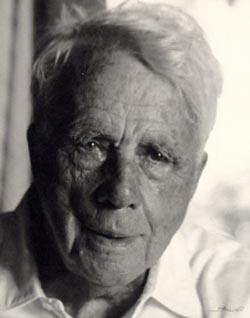
Robert Frost
Robert Frost has very touching and very disturbing poems which intell many past stories about himself!
“Willow and Ginkgo”
I have a few question about “Willow and Ginkgo”
By Eve Merriam
List two lines from the poem that are to be read literally:
1.
2.
List two lines from the poem that contain vivid figurative language and explain your choices:
1.
Explanation:
2.
Explanation:
Add two of your own lines of figurative language to the poem followed by two lines to be read literally:
Figurative Line:
Literal Line:
Figurative Line
Literal Line:
the pasture
I love the way that Robert speaks, he is so romantic and really take,s you to the place where he is in the poem,is one of my favorite writers and every single poem from him is just great !!!
You'll take in sense then understand what he want to say