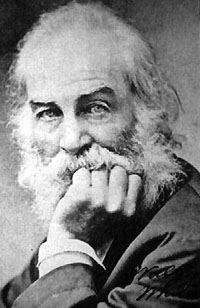
Walt Whitman

Portrait of Walt Whitman
Walt Whitman 1819–1892
1819Born

Walt Whitman was born on May 31, 1819, on the West Hills of Long Island, New York. His mother, Louisa Van Velsor, of Dutch descent and Quaker faith, whom he adored, was barely literate. She never read his poetry, but gave him unconditional love. His father of English lineage, was a carpenter and builder of houses, and a stern disciplinarian. His main claim to fame was his friendship with Tom Paine, whose pamphlet Common Sense (1776), urging the colonists to throw off English domination was in his sparse library. It is doubtful that his father read any of his son's poetry, or would have understood it if he had. The senior Walt was too burdened with the struggle to support his ever-growing family of nine children, four of whom were handicapped.

Young Walt, the second of nine, was withdrawn from public school at the age of eleven to help support the family. At the age of twelve he started to learn the printer's trade, and fell in love with the written and printed word. He was mainly self-taught. He read voraciously, and became acquainted with Homer, Dante, Shakespeare and Scott early in life. He knew the Bible thoroughly, and as a God-intoxicated poet, desired to inaugurate a religion uniting all of humanity in bonds of friendship.

In 1836, at the age of 17, he began his career as an innovative teacher in the one-room school houses of Long Island. He permitted his students to call him by his first name, and devised learning games for them in arithmetic and spelling. He continued to teach school until 1841, when he turned to journalism as a full-time career. He soon became editor for a number of Brooklyn and New York papers. From 1846 to 1847 Whitman was the editor of the Brooklyn Daily Eagle. Whitman went to New Orleans in 1848, where he was editor for a brief time of the "New Orleans Crescent". In that city he had become fascinated with the French language. Many of his poems contain words of French derivation. It was in New Orleans that he experienced at first hand the viciousness of slavery in the slave markets of that city.

Read the full biography

On his return to Brooklyn in the fall of 1848, he founded a "free soil" newspaper, the "Brooklyn Freeman". Between 1848 and 1855 he developed the style of poetry that so astonished Ralph Waldo Emerson. When the poet's Leaves Of Grass reached him as a gift in July, 1855, the Dean of American Letters thanked him for "the wonderful gift" and said that he rubbed his eyes a little "to see if the sunbeam was no illusion." Walt Whitman had been unknown to Emerson prior to that occasion. The "sunbeam" that illuminated a great deal of Whitman's poetry was Music. It was one of the major sources of his inspiration. Many of his four hundred poems contain musical terms, names of instruments, and names of composers. He insisted that music was "greater than wealth, greater than buildings, ships, religions, paintings." In his final essay written one year before his death in 1891, he sums up his struggles of thirty years to write Leaves of Grass. The opening paragraph of his self-evaluation "A Backward Glance O'er Travel'd Road," begins with his reminiscences of "the best of songs heard." His concluding comments again return to thoughts about music, saying that "the strongest and sweetest songs remain yet to be sung."

"When Lilacs Last in the Dooryard Bloomed" and "O Captain! My Captain!" (1866) are two of his more famous poems. A poet who was ardently singing on life and himself, Whitman is today claimed as one of the few truly great American men of letters.
Reading closely

Analyses

A full analysis sits under 11 of these poems: what each poem says, how it is built and how readers here have read it. About the analyses

From readers

What readers say about Walt Whitman

  1. On O Captain! My Captain!

    “Whilst is almost certain that this poem was indeed moitvated by the assasination of Lincoln ('captain') i think it important to consider the anology of the ship setting. Why is the 'captain' a captain of a ship as opposed to another vehicle.? The ship in question, i belive, is the US itself. The…”

  2. On O Me! O Life!

    “this poem starts off in a more pessimistic tone. O me! O life! "of the endless trains of the faithless"... "of the struggle ever renewed"... "what good amid these? O me! o life!" the answer is in comparison much more uplifting, as if whitman wanted to make a contrast. it's almost like another…”

  3. On Sleepers, The.

    “This poem i find brilliant. to be able to somewhat mentally understand it, i had to study for almost 7 months in sleech class. Its so open, i love it. In this poem the author is trying to explain to the reader thats there's no reason to fear being better or lower than other person, because in the…”

  4. On Song of the Redwood-Tree.

    “Whitman celebrates the new man who succeeds the dryad and hamadryad of the redwood forest as one race that displaces another, and waxes very positively about this displacement as though the dryads gleefully and willingly yield their territory to the superior beings. Were Whitman to have witnessed…”

  5. On I Hear America Singing.

    “"he founded a "free soil" newspaper, the "Brooklyn Freeman". / "returns to Brooklyn and edits The Brooklyn Freeman." / "He resigned from his position in 1848 because his stand against slavery was too strong for the paper's owners." That would imply that he's against slavery. Please, do some…”

  6. On I Sit and Look Out.

    “I think the last sentence gives the most meaning to me. "All these—All the meanness and agony without end, I sitting, look out upon, See, hear, and am silent." I think this poem is about all the bad things in the world and that people just observe them, they see that its injustice but they do…”

Where readers gather

Most discussed

  1. No. 2O Captain! My Captain!130 comments
  2. No. 4I Hear America Singing.73 comments
  3. No. 1I Sit and Look Out.32 comments
  4. No. 5When I heard the Learn’d Astronomer.30 comments
  5. No. 1O Me! O Life!22 comments
  6. No. 5On the Beach at Night.17 comments
  7. No. 1One’s-Self I Sing.16 comments
  8. No. 3Beat! Beat! Drums!15 comments
  9. No. 2Pioneers! O Pioneers!14 comments
  10. No. 10A Noiseless Patient Spider.13 comments

All 330 poems

Leaves of Grass · 330 poems
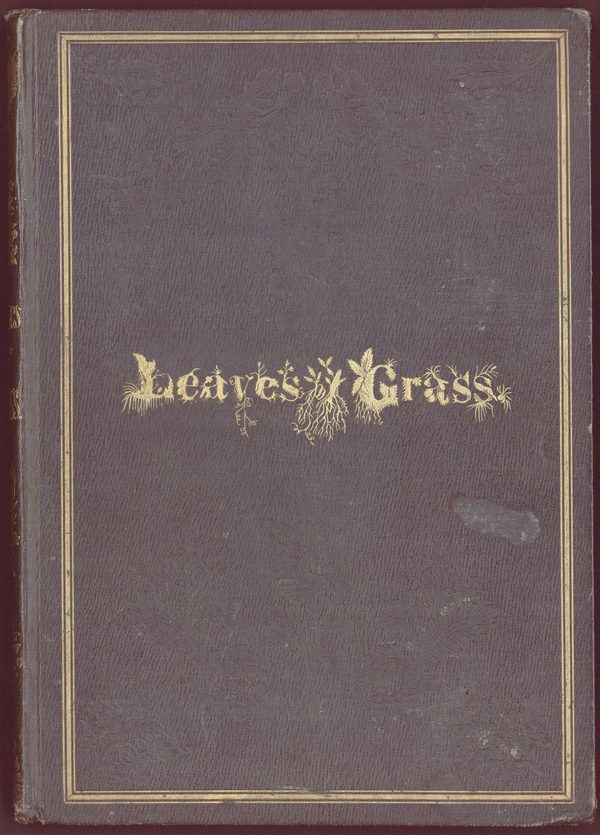
Cover of Leaves of Grass
First edition, Brooklyn, 1855

Leaves of Grass

  1. 1A Boston Ballad, 1854.
  2. 1A Carol of Harvest, for 1867 .
  3. 1Faces.1
  4. 1I Sit and Look Out.32
  5. 1O Me! O Life!22
  6. 1There was a Child went Forth.10
  7. 1This Compost.6
  8. 1To You.
  9. 2Longings for Home.
  10. 2Manhattan Streets I Saunter’d, Pondering.
  11. 2Me Imperturbe.
  12. 2Singer in the Prison, The.
  13. 2Unnamed Lands.
  14. 2Year of Meteors, 1859 ’60.
  15. 2Thoughts.
  16. 3A Broadway Pageant.2
  17. 3All is Truth.5
  18. 3As I lay with Head in your Lap, Camerado.
  19. 3Beginners.1
  20. 3Mannahatta.
  21. 3Warble for Lilac-Time.1
  22. 3You Felons on Trial in Courts.
  23. 4Crossing Brooklyn Ferry.1
  24. 4Old Ireland.5
  25. 4Thought.1
  26. 4To a Common Prostitute.3
  27. 4Voices.4
  28. 4Who Learns My Lesson Complete?
  29. 5I was Looking a Long While.
  30. 5To Oratists.1
  31. 5With Antecedents.
  32. 5Thought.
  33. 6A Hand-Mirror.7
  34. 6Myself and Mine.
  35. 6To a President.1
  36. 7Germs.9
  37. 7To Old Age.2
  38. 7To The States.3
  39. 8Miracles.8
  40. 9Sparkles from The Wheel.
  41. 10Excelsior.
  42. 11Mediums.
  43. 12Kosmos.
  44. 13To a Pupil.3
  45. 14What am I, After All?
  46. 15Others may Praise what They Like.
  47. 16Brother of All, with Generous Hand.
  48. 17Night on The Prairies.
  49. 18On Journeys Through The States.1
  50. 19Savantism.
  51. 20Locations and Times.
  52. 21Thought.
  53. 22Offerings.
  54. 23Tests.
  55. 24Torch, The.
  56. 25Gods.2
  57. 26To One Shortly to Die.3
  58. 27Song of the Exposition.
  59. 28One Song, America, Before I Go.
  60. 29Souvenirs of Democracy.
  61. 30As a Strong Bird on Pinions Free.
  62. 31Mystic Trumpeter, The.1
  63. 32O Star of France.
  64. 33Virginia—The West.
  65. 34By Broad Potomac’s Shore.
  66. 35Song of the Redwood-Tree.2
  67. 36Song of the Universal.
  68. 37Song for All Seas, All Ships.
  69. 38Eidólons.
  70. 39Prayer of Columbus.4
  71. 40Spain 1873–’74.
  72. 41Out from Behind this Mask.
  73. 42To a Locomotive in Winter.5
  74. 43Ox Tamer, The.
  75. 44Wandering at Morn.
  76. 45An Old Man’s Thought of School.1
  77. 46With All Thy Gifts.1
  78. 47After the Sea-Ship.2
  79. 48Thou Reader.
  80. 49To the Man-of-War-Bird.
  81. 50Patroling Barnegat.1
  82. 51Dalliance of the Eagles, The.3
  83. 52Roaming in Thought.
  84. 53Gliding Over All.
  85. 54Hast Never Come to Thee an Hour.
  86. 55As Consequent, Etc.
  87. 56Italian Music in Dakota.1
  88. 57My Picture-Gallery.5
  89. 58Prairie States, The.
  90. 59A Paumanok Picture.
  91. 60Thou Orb Aloft Full-Dazzling.
  92. 61A Riddle Song.3
  93. 62From Far Dakota’s Cañons.
  94. 63What Best I See In Thee.1
  95. 64Spirit That Form’d This Scene.
  96. 65A Clear Midnight.1
  97. 66As At Thy Portals Also Death.2
  98. 67Sobbing of The Bells, The.