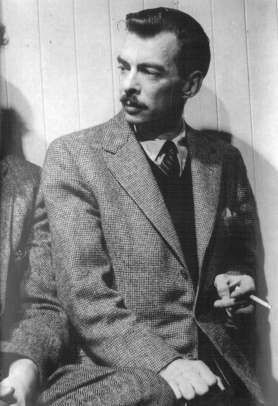
The poem
When the coal Gave out, we began Burning the books, one by one; First the set Of Bulwer-Lytton And then the Walter Scott. They gave a lot of warmth. Toward the end, in February, flames Consumed the Greek Tragedians and Baudelaire, Proust, Robert Burton And the Po-Chu-i. Ice Thickened on the sills. More for the sake of the cat, We said, than for ourselves, Who huddled, shivering, Against the stove All winter long.
It is always good to see a library in a poem. One thinks...tell them to read Borges and the Babel.... or one thinks...read this: A Critique: The writings he found were elaborate representations of the several named white stones and those few remaining articles indicating their one time existence, and proved nothing more than that he himself was a ghost. Not just an ordinary ghost but one whose initial substrate was…
Read the whole commentIt is always good to see a library in a poem. One thinks...tell them to read Borges and the Babel....
or one thinks...read this:
A Critique:
The writings he found were elaborate representations of the several named white stones and those few remaining articles indicating their one time existence, and proved nothing more than that he himself was a ghost. Not just an ordinary ghost but one whose initial substrate was a gaseous substance called Hubris. After spending almost a quarter of a century on the didactic reasoning and the true form of the artifactual script he realized that it could have been hailed in seven minutes and thirty one seconds. In five sentences complete with footnotes, addendums and epilogue, epilogues if you counted the binary and optional theorem recently constructed by the Allied Acamadecians. The Acamadecians whom were employed by a structure representing a Monarchy and Parliment, felt strongly enough about the need to expose the texts, however the council of Brilliant Editors prevailed in obscuring the intermittent details: words like 'a' and 'which' in order to present something more stimulating to the large crowd which gathered every day in the brilliant noon sunshine in order to collect discarded clothes and chemicals left over from the expungement of the royal households, three in total (households not propagandas).
After doing this, Borges crept into his dingy rooms and fell to sleep to dream it out of context and in perfect order.