A NOISELESS, patient spider,
I mark’d, where, on a little promontory, it stood, isolated;
Mark’d how, to explore the vacant, vast surrounding,
It launch’d forth filament, filament, filament, out of itself;
Ever unreeling them—ever tirelessly speeding them.
And you, O my Soul, where you stand,
Surrounded, surrounded, in measureless oceans of space,
Ceaselessly musing, venturing, throwing,—seeking the spheres, to connect them;
Till the bridge you will need, be form’d—till the ductile anchor hold;
Till the gossamer thread you fling, catch somewhere, O my Soul.
This short poem by Walt Whitman sets two scenes side by side. In the first stanza, the speaker watches a silent spider on a small point of land. It sends thread after thread out into the empty space around it. In the second stanza, the speaker turns and speaks to the soul. The soul, too, stands alone in vast space and keeps casting outward. It is looking for something to hold on to.
The poem never states the comparison outright. It lets the matching images make it. It ends on a hope rather than an arrival: that the thread will "catch somewhere."
Summary
The speaker recalls watching a spider that makes no sound and waits patiently. It stood alone on a "little promontory", a small point jutting out into open space. The speaker noted how it set out to explore the empty expanse around it. It sent "filament, filament, filament" out of its own body. It kept unreeling the threads without pause. It kept speeding them outward without tiring, one after another.
The speaker then turns and addresses the soul directly. The soul stands surrounded on every side by "measureless oceans of space". It is endlessly thinking, venturing and throwing out lines. It is "seeking the spheres, to connect them". The speaker says this will go on until a needed bridge is built. It will go on until the flexible anchor holds. The poem closes with a wish, again addressed to the soul. It hopes the "gossamer thread" the soul throws will catch somewhere.
Themes and meaning
Isolation is the starting point of both stanzas. The spider stands "isolated" on its promontory in line 2. The soul is "Surrounded, surrounded" by space in line 7. In each case the surrounding space is huge and empty: "vacant, vast" for the spider, "measureless" for the soul. Neither figure has company. The poem treats this aloneness as a plain fact to be worked from, not a grief to dwell on.
The second theme is the effort to connect. The spider launches thread "out of itself" in line 4. The soul keeps "throwing" and "seeking the spheres, to connect them" in line 8. The goal is a "bridge" and an "anchor" that will "hold". What the soul wants to reach is left open. The spheres can be read as other people, as a larger spiritual order, or as meaning in general. The text supports each reading and settles none.
Persistence and patience form a third theme. The spider is "patient" and works "tirelessly". The soul is "Ceaselessly musing". The word "ever" appears twice in line 5. The repeated "Till" in lines 9 and 10 points to an end that has not yet come. The poem values the continued casting more than any single success.
Finally, the poem is about creation from within. The spider's thread comes "out of itself". By implication, the soul's reaching also comes from its own substance. Thought, feeling and imagination are the soul's filament. This can be read as a picture of the artist, or of any person who must make connections from their own inner resources. The thread is fragile, "gossamer", yet it is the only means of crossing the gap.
Tone
The first stanza is calm and observant. The speaker simply "mark’d" what the spider did. The adjectives noiseless and patient suggest quiet respect for the creature. The tripled "filament" and the phrase "tirelessly speeding them" add a note of admiration for its energy.
The second stanza becomes more intimate and more urgent. The speaker addresses the soul with "O my Soul" at the start and again at the close. The doubled "Surrounded, surrounded" carries a sense of exposure, even pressure. The tone is not despairing, though. The future tense in "the bridge you will need" and the repeated "Till" express hope and resolve. The ending is a wish, gentle but uncertain, since "somewhere" names no fixed place.
Form and structure
The poem has 10 lines in 2 stanzas of 5 lines each. It is free verse, with no regular metre. Lines range from 6 to 18 syllables. The short opening line and the long lines that follow match the idea of a thread paying out.
There is no rhyme scheme. The only echo is the word "them" ending line 5 and line 8. That repetition links the spider's action to the soul's.
The two stanzas mirror each other. Each begins with a figure standing alone, then moves to the act of reaching outward. Whitman relies on repetition, lists of participles and heavy punctuation instead of metre. Commas and dashes break lines 8–9 into short bursts, like repeated throws.
Poetic devices
Repetition line 4
filament, filament, filament The tripled noun imitates the spider sending out one thread after another. It makes the effort feel steady and unending.
Imagery line 2
on a little promontory, it stood, isolated A small point jutting into open space gives a clear picture of the spider's exposure. The last word, set off by a comma, stresses its aloneness.
Alliteration line 3
vacant, vast The paired v sounds join two words for emptiness and size. Together they make the space the spider faces feel both empty and enormous.
Apostrophe line 6
And you, O my Soul, where you stand, The speaker turns from describing the spider to addressing the soul directly. This turn sets up the comparison that the whole poem depends on.
Repetition line 7
Surrounded, surrounded The doubled word presses in on the soul from all sides. It matches the spider's isolation in the first stanza.
Metaphor line 7
measureless oceans of space Space becomes an ocean that cannot be measured. The image makes the distance the soul must cross seem vast and hard to navigate.
Asyndeton line 8
musing, venturing, throwing Three participles run together without a joining word. The list mirrors the spider's tripled filament and suggests constant activity.
Anaphora line 9
Till the bridge you will need, be form’d Lines 9 and 10 both open with Till, and the word recurs mid-line. The repetition points toward an outcome that is hoped for but not yet reached.
Metaphor line 10
the gossamer thread you fling The soul's reaching is pictured as a spider's fine thread. The word gossamer stresses how fragile and light that effort is.
Extended metaphor line 4
out of itself The spider makes its thread from its own body. The parallel stanza implies that the soul's connections also come from within.
Words worth knowing
mark’d
Noticed or observed. The apostrophe marks a dropped letter, as in 'marked'.
promontory
A point of high ground jutting out, usually into water. Here, a small ledge from which the spider hangs.
filament
A very fine thread, here the silk a spider spins.
spheres
Globes or orbs. It can suggest heavenly bodies or separate worlds, and so fits the 'oceans of space' image.
ductile
Able to be drawn out or stretched without breaking. It describes the anchor as flexible rather than rigid.
gossamer
Extremely fine and light, like the threads of a spider's web.
Context
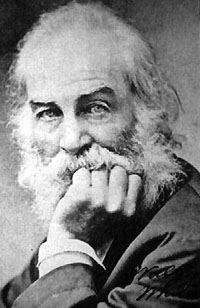
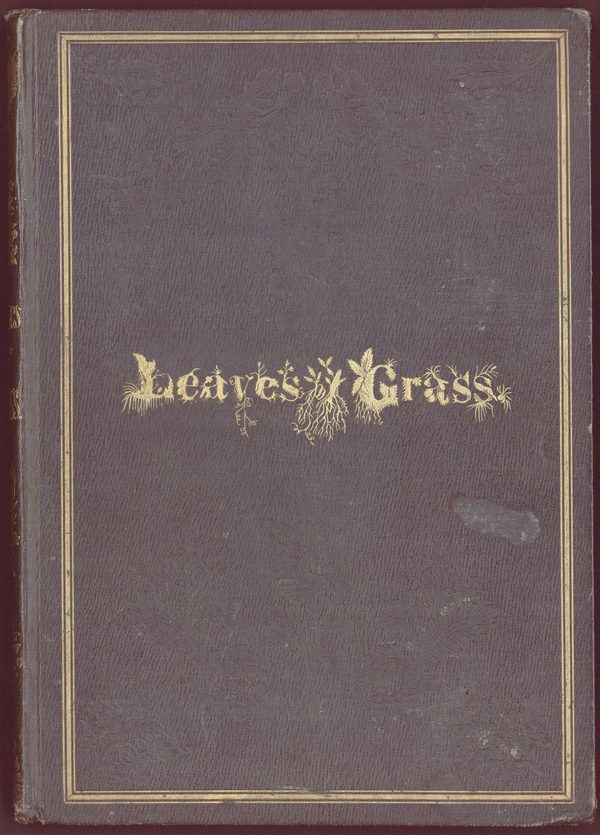
Walt Whitman lived from 1819 to 1892. The archive's text comes from a 1900 printing of Leaves of Grass. The poem has been on the site since 2004 and was its Poem of the Day on Christmas Day that year.
What readers have said
Jason (2005) could not see why a poem that ends with the soul has a spider in its title, which shows how easily the link between the stanzas can be missed. Jason, 2005
Marissa (2005) read the spider as building a home and compared the soul to one waiting for a body, making a bridge until the anchor holds. marissa, 2005
Anonymous (2006) rejected the idea of a soul waiting for a body and read the soul as searching for its own identity and spiritual fulfilment. anonymous, 2006
J (2006) saw a contrast rather than a likeness: the spider is confident in where it casts, while the soul second-guesses and only hopes to become like it. J, 2006
Mariposa (2006) read the poem as being about reaching out to other people, so that both the spider and the reader can break their isolation. Mariposa, 2006
Amanda Burchell (2007) planned to use the poem in her wedding vows because of its anchor image, reading it as an analogy for personal relationships. Amanda Burchell, 2007
this poem is very strange and i dont understand why the title has to do with a spider, i really dont get that
marissaUnited States
a noiseless patient spider: the spider is making a web, making a home for itself. kinda like a soul waiting for a body. the soul is making a bridge "till the ductile anchor hold, Till the gossamer thread you fling catch somewhere."
in Russia, spider is term for a womans vagina. My dogs spider is leaking right now!
anonymousUnited States
the spider is forever creating its web to explore its vast surroundings. this is compared to the speaker's soul because the soul is "ceaselessly musing." it is always searching for spiritual fulfillment within its "measureless oceans of space," similar to the spider's vast surroundings.
i don't think the soul is waiting for a body as stated below. I think the soul is trying to...kinda discover itself. its in search of its identity, which it will not find until it creates the bridge between itself and whatever it is that it needs to find.
i really quite like this poem, its awesome, i love the way he compares the spider, endlessly striving to reach its goal of spinning its web to the soul endlessly striving to find an identity! its such a random comparison and its awesome!
FrankUnited States
I think he is relating us to that spider, it's sending out hisself to his oppurtunities, evertirelessly unrealing trying to find more about his sourndings. Yet we are the same trying to acheive or goals, opening outselves to try to figure out the world around us. Were stuck where we are "till the gossamer thread you fling" i dunno this is what i got from it.
I belive that we are all like the spider. We have no consequnce of life or death, we start dying the moment we are born. We have to reach our goals, find our identity before it is too late and the final bell has toled. We are all patient to find our identity and compared to other creatures that may be out there we are noiseless and silent. We fling suicidally from branch to corner looking for somewhere to rest, something to be.
Mariposa
I think this poem deals with lost souls, yes, but I think it also deals with making connections to other people. The spider is casting its gossamer out, trying to make a connection, just like we all need to reach out and make connections with each other in order to break the "isolation" in which both we and the spider hang.
JUnited States
I believe that a spider wasnt just a random creature to compare to, rather Whitman brings it up to show what he has not yet achived. He is bringing up the idea of nature vs. man and that the spider doesn't second guess, but that it is confident in what it does, confident in where it casts its filament. On the other side, the personas soul is capable of second guessing, isolated and is merely "fling{ing}" his thread, hoping to someday be like the spider.
codyUnited States
yo yo yo i like this a lot i love it. It is one of the best pomes that i had read
filipUnited States
thanks i needed this for homework it was pretty good
Amanda BurchellAustralia
I'm hoping to incorporate this poem into my wedding vows on October 11th 2007. As my fiance & I share a 'thing' for anchors.. he wanted the 'anchor' incorporated into the ceremony. I researched poems & found Walt Whitman's'. It is also a clever analogy, I think for human/personal relationships... and particulary appropriate to my relationship. The 'anchor' was the first gift he gave me, on our 2nd meeting; he wears one himself.
"... till the bridge you will need be form'd - till the ductile anchor hold; till the gossamer thread you fling, catch somewhere, O my Soul."
Amanda J Burchell (m. Mike D. Cook: 11th October 2007)
BTW: Mike & I are both 50 years old... never too old! lol
this poem is very strange and i dont understand why the title has to do with a spider, i really dont get that
a noiseless patient spider: the spider is making a web, making a home for itself. kinda like a soul waiting for a body. the soul is making a bridge "till the ductile anchor hold, Till the gossamer thread you fling catch somewhere."
in Russia, spider is term for a womans vagina. My dogs spider is leaking right now!
the spider is forever creating its web to explore its vast surroundings.
this is compared to the speaker's soul because the soul is "ceaselessly musing." it is always searching for spiritual fulfillment within its "measureless oceans of space," similar to the spider's vast surroundings.
i don't think the soul is waiting for a body as stated below. I think the soul is trying to...kinda discover itself. its in search of its identity, which it will not find until it creates the bridge between itself and whatever it is that it needs to find.
i really quite like this poem, its awesome, i love the way he compares the spider, endlessly striving to reach its goal of spinning its web to the soul endlessly striving to find an identity! its such a random comparison and its awesome!
I think he is relating us to that spider, it's sending out hisself to his oppurtunities, evertirelessly unrealing trying to find more about his sourndings. Yet we are the same trying to acheive or goals, opening outselves to try to figure out the world around us. Were stuck where we are "till the gossamer thread you fling" i dunno this is what i got from it.
I belive that we are all like the spider. We have no consequnce of life or death, we start dying the moment we are born. We have to reach our goals, find our identity before it is too late and the final bell has toled. We are all patient to find our identity and compared to other creatures that may be out there we are noiseless and silent. We fling suicidally from branch to corner looking for somewhere to rest, something to be.
I think this poem deals with lost souls, yes, but I think it also deals with making connections to other people. The spider is casting its gossamer out, trying to make a connection, just like we all need to reach out and make connections with each other in order to break the "isolation" in which both we and the spider hang.
I believe that a spider wasnt just a random creature to compare to, rather Whitman brings it up to show what he has not yet achived. He is bringing up the idea of nature vs. man and that the spider doesn't second guess, but that it is confident in what it does, confident in where it casts its filament. On the other side, the personas soul is capable of second guessing, isolated and is merely "fling{ing}" his thread, hoping to someday be like the spider.
yo yo yo i like this a lot i love it. It is one of the best pomes that i had read
thanks i needed this for homework it was pretty good
I'm hoping to incorporate this poem into my wedding vows on October 11th 2007. As my fiance & I share a 'thing' for anchors.. he wanted the 'anchor' incorporated into the ceremony. I researched poems & found Walt Whitman's'.
It is also a clever analogy, I think for human/personal relationships... and particulary appropriate to my relationship. The 'anchor' was the first gift he gave me, on our 2nd meeting; he wears one himself.
"... till the bridge you will need be form'd - till the ductile anchor hold; till the gossamer thread you fling, catch somewhere, O my Soul."
Amanda J Burchell (m. Mike D. Cook: 11th October 2007)
BTW: Mike & I are both 50 years old... never too old! lol
this poem makes no sense at all, i have no idea why you would use this in your wedding vows. Peter(from Russia) you're disgusting.