Body wears the smile of accomplishment,
The illusion of a Greek necessity
Flows in the scrolls of her toga,
Her bare
Feet seem to be saying:
We have come so far, it is over.
Each dead child coiled, a white serpent,
One at each little
Pitcher of milk, now empty
She has folded
Them back into her body as petals
Of a rose close when the garden
Stiffens and odors bleed
From the sweet, deep throats of the night flower.
The moon has nothing to be sad about,
Staring from her hood of bone.
She is used to this sort of thing.
Her blacks crackle and drag.
✦
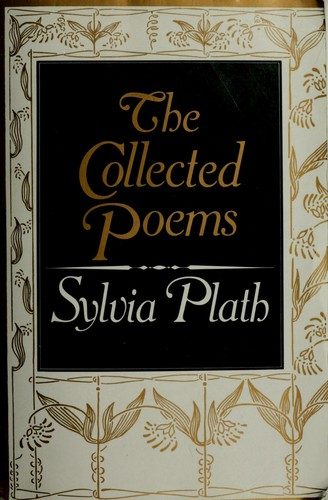
From the bookThe Collected PoemsFirst US edition, Harper & Row, 1981, in its dust jacket
Analysis
Edge: analysis
Introduction
'Edge' is a short poem of twenty lines in unrhymed couplets. It describes a dead woman laid out like a statue, with two dead children folded against her body. The speaker calls her "perfected" and dresses her in the pose of a figure from Greek tragedy.
The poem then turns from the woman to the moon, which looks on without grief. Its subject is death presented as completion. The poem never says whether the speaker accepts that view. Its calm, impersonal voice is a large part of what makes it disturbing.
Summary
The poem opens with a plain statement: "The woman is perfected". The second line, "Her dead", breaks off mid-phrase. The sentence carries on into the next stanza.
Her dead "Body wears the smile of accomplishment". The next line introduces "The illusion of a Greek necessity". This phrase starts a clause that runs into the third stanza.
The illusion "Flows in the scrolls of her toga". The woman is dressed in classical drapery. The stanza ends on "Her bare", another broken phrase.
Her feet "seem to be saying" something. What they say is line 8: "We have come so far, it is over." This is the only speech in the poem.
The poem turns to the children. "Each dead child" lies "coiled, a white serpent". Each lies "One at each little", and the line breaks off again.
The phrase ends with "Pitcher of milk, now empty". A new sentence begins: "She has folded". The object of the verb waits for the next stanza.
She has folded "Them back into her body". A simile compares this to the petals of a rose closing. The rose closes "when the garden", and the clause runs on.
The garden "Stiffens and odors bleed". The scents come "From the sweet, deep throats of the night flower." This ends the long sentence that began in line 12.
The poem now looks at the moon. "The moon has nothing to be sad about". It is "Staring from her hood of bone."
The last stanza stays with the moon. "She is used to this sort of thing." The poem closes with "Her blacks crackle and drag." No comment follows.
Themes and meaning
Death as completion. The poem describes death in the language of achievement. The woman is "perfected", and her body wears "the smile of accomplishment". Her feet announce "it is over" as if a long task were done. The word "perfected" can mean flawless, but also finished. Both senses are at work. The poem states this view without arguing for it or against it.
Illusion and performance. The scene is staged like a tragedy or a sculpture. The woman wears a toga, and a sense of fate hangs over her. Yet the poem calls this fate "The illusion of a Greek necessity". Her feet only "seem" to speak. The poem can be read as questioning the tragic pose even as it builds it. On that reading, the calm of the scene is a surface. The speaker shows the pose and names it as a pose.
Motherhood reversed. The children are "dead", and each is "coiled, a white serpent". Each lies at a "Pitcher of milk, now empty", so nourishment has ended. The mother folds them "back into her body", which reverses birth. The rose image makes this seem gentle and natural. But "Stiffens" and "bleed" bring in rigidity and injury. The serpent image is also double. It can suggest danger, or simply the coiled shape of a sleeping child.
An indifferent watcher. The last four lines turn to the moon. It "has nothing to be sad about" and is "used to this sort of thing". Its "hood of bone" suggests a skull or a mourner's hood. "Her blacks" can be read as mourning clothes. The poem ends on a sound, not a judgment. Nothing in the scene grieves. The poem leaves the reader to supply the grief the moon lacks.
Tone
The tone is cool and detached. The speaker uses the third person and short, flat statements. "The woman is perfected" sounds like a verdict, not a lament. There is no first-person speaker anywhere in the poem. The distance makes the scene feel observed rather than felt.
In lines 13–16 the language grows lush. The "sweet, deep throats of the night flower" are sensuous, even tender. "Stiffens" and "bleed" darken this beauty at once.
The ending turns colder still. The phrase "this sort of thing" is casual, almost dismissive. The moon's calm is the poem's last attitude. Readers differ on whether that calm expresses acceptance or horror. The text supports both, and the flatness is what unsettles.
Form and structure
The poem has 20 lines in 10 stanzas of 2 lines each. There is no rhyme and no regular metre. It is free verse. Line lengths range from 2 to 11 syllables.
Enjambment drives the form. Line 2, line 6, line 10, line 12 and line 14 end mid-phrase, and each break falls across a stanza gap. Very short lines, such as "Her dead" and "Her bare", leave single words hanging.
The long sentence of lines 12–16 flows like the closing rose. By contrast, lines 18–20 each end with a full stop. The poem slows into short, closed statements as it ends.
Poetic devices
Enjambment line 2
Her dead The phrase breaks across a stanza gap, so 'dead' hangs alone before we learn it describes her body.
Diction line 3
the smile of accomplishment Words for success are applied to a corpse, setting up the poem's idea of death as achievement.
Allusion line 4
The illusion of a Greek necessity Points to Greek tragedy, where fate must be fulfilled. 'Illusion' casts doubt on that sense of fate.
Personification line 7
Feet seem to be saying: The dead feet are given a voice. 'Seem' keeps the speech an interpretation of the pose.
Metaphor line 9
Each dead child coiled, a white serpent The curled bodies become pale snakes. The image is both still and faintly threatening.
Simile line 13
Them back into her body as petals The mother gathering the children is likened to a rose closing its petals at night.
Synaesthesia line 15
Stiffens and odors bleed Scent is said to bleed, joining smell to wounding. 'Stiffens' hints at rigor in the garden.
Personification line 18
Staring from her hood of bone The moon becomes a hooded female watcher. 'Bone' links her to a skull.
Understatement line 19
She is used to this sort of thing. The casual phrase shrinks the deaths to routine and shows the moon's indifference.
Consonance line 20
Her blacks crackle and drag The repeated hard 'k' sounds make the closing line harsh and audible.
Words worth knowing
perfected
Made perfect, but also completed or brought to an end.
necessity
Fate, what must happen, as in Greek tragedy.
toga
A draped classical garment. Here it makes the woman look like a statue.
hood
A head covering. With 'of bone' it suggests a skull or a mourner's cowl.
blacks
Black clothes, the dress of mourning.
What readers have said
Taylor reads the poem as achieving perfection through death, takes the moon as the mind going on without the body, and reads the title as the brink between living and dying. Taylor, 2004
natalie finds the poem haunting and frightening and reads it as Plath rewriting Greek mythology, with the woman as a modern Medea. natalie, 2004
Stephanie points to the simple, blunt statements and the use of the third person, and finds the main mood one of indifference. Stephanie, 2005
Jules reads the poem as about the suffering women go through, and how a piece of their children dies with them, however old they are. Jules, 2005
Aveo Immortalitas reads it as a poem of the ultra feminine, even of Mary Magdalene, citing the folds of the rose as an old symbol of female anatomy. Aveo Immortalitas, 2006
David Choate suggests the title may simply mean edge, and argues the words were not chosen as metaphor or associative imagery. David Choate, 2020
This is about her acheving perfection threw dealth, she wrote this poem 4 days before she commeted her sucide. The moon describes her miond and how it continues to go on though her body isn't there even the poems names means standing on the brenkof living and dying
natalieUnited States
this is 1 ofmy fave plath poems.it is haunting + frightening.plath is rewriting greek mythology.she's a modern-day medea in this poem-except medea kills herself.plath truely made dying an art asshe said in''lady lazaraus''.so creaive she was!
jesikaUnited States
this poem just rises above so many others knowing it was her last.beautiful.
LinZUnited States
Im glad i'm a free American so i can voice my oppinion. Sylvia Plath is stupid! This is the worst peom EVER!!! SUCK IT PIGS!!
ErinUnited States
This poem is so terribly sad. I wish I could race back through time and carry her to help. I want to rescue Sylvia from herself. She is so very sad, and her children left with her legacy. Such a tragic story...
KikiAustralia
this poem holds a despairing and reflective tone as the poet reaches the edge of her life, hence the title "Edge". plath uses powerful language throughout the poem ans the recurring image of the moon also appears in this particular plath poem, which in this case plath personifies as "staring from the hood of bone".
I think that this poem is beautiful. It makes me think about how terribly lost and sad she must have been to write something so powerful about her own forthcoming death.
Stephanie
Plath wrote the poem, Edge, four days before she committed her suicide. This poem is about her achieving perfection through death. It holds a despairing, reflecting tone as Plath reaches the edge of her life. The poem includes simple, blunt statements and the use of the third person. She no longer writes in the first person; the predominant mood seems to be one of indifference. Plath opens the poem with two short…
Read the whole comment
Plath wrote the poem, Edge, four days before she committed her suicide. This poem is about her achieving perfection through death. It holds a despairing, reflecting tone as Plath reaches the edge of her life. The poem includes simple, blunt statements and the use of the third person. She no longer writes in the first person; the predominant mood seems to be one of indifference. Plath opens the poem with two short lines which due to their brevity, directness and lack of punctuation immediately tie Plath’s perverse idea of perfection being found in the dead. This is followed by the line, describing her “smile of accomplishment” suggesting a smugness that she has won against the would that is causing her so much pain. The next line “flow like the toga” seems to suggest that once she has informed the reader of her intention her mind will be released. The use of rhyming assonance in “flows”, “scrolls” and “toga” effect this. And then the clipped abrasiveness of “Her bare” linking us bacl to the abruptness of “her dead”. These reminds the readers of the ugly reality of her intentions. Plath alludes to herself as the Grecian mythological character, Medea, who slayed her chilren in an act of vengegeance towards her cheating husband. Only instead of taking the lives of her children, Plath kills herself. The metaphor “each dead child coiled, a white serpent” suggests her emotional power of her children. They are both innocent in the diction “white” and capable of being used in a cunning manner in the noun “serpent”. The colour imagery is continued in the whiteness of the “milk” the “moon”, and the “bone” again reinforce the incorruptibility of the child. Added to the colour imagery of red in “rose” and “bleed” and black in the final line Plath, confronts the reader with the colours of purity, evil and life combined. Her vengeance towards her husband is through the harm she will be causing her children as she ends their relationship through her death.
Plath wrote this shortly before attempting to kill herself -- however, she had arranged for a baby-sitter to come roughly an hour after she went through the act. The baby-sitter was two hours late, so Plath obviously died. Some say Plath didn't actually intend to kill herself. I think the poem is talking about the suffering women must go through, and how a piece of their children die along with them, no matter how old they are. A good poem, but you all need to check out Tale of a Tub.
MichelleUnited States
This poem to me shows just how deep into depression Plath was. It seems as though she has taken a step outside of herself and is making a final anaylization in third person, commenting on how she had submitted to society. In turn she had backed so far away from society the only thing left was death. I think she wanted to die, I think she knew she was going to die soon. It seems a shame to me that a woman as…
Read the whole comment
This poem to me shows just how deep into depression Plath was. It seems as though she has taken a step outside of herself and is making a final anaylization in third person, commenting on how she had submitted to society. In turn she had backed so far away from society the only thing left was death. I think she wanted to die, I think she knew she was going to die soon. It seems a shame to me that a woman as idealistic, intelligent and articulate as her lived in a time when women were expected to be wives and raise children or be receptionists or secretaries. Perhaps if she had been born a generation later by the time she reached this point in her life the picture of what a woman was supposed to be would have been different. It's not that she didn't want to be picture perfect, it's that she couldn't. Even so, sometimes absract pictures hold to most curious and interesting beauty of all, you just have to look a little harder and use your imagination.
Aveo ImmortalitasUnited States
This poem is clearly about Mary Magdalene. Or rather, the ultra feminine. Check the rose metaphor. The folds of a rose in ancient symbolism refer to (parts) of the female anatomy. There is much symbolism here. They say with knowledge there is power. And with that, knowledge can become maddening. Go figure. I mean that literally.
solovino maruchoChile
this poem explains the depression state in which sylvia was. i think she was an awsome writer.
LuxFrance
Jule's comment is almost completely accurate, and I've been studying Plath extensively for some time now.
What I wanted to add was that the poem, written four days before her death, is a clear representation of herself and the children, of her children. As the the story goes, before she went through with the act she left each child a pitcher of milk and almost a whole loaf of bread each outside their door, do they wouldn't go hungry.
This is one of my favorites, there's almost too much to say. I'll complete this comment another day.
Or Edge could mean "edge". . I think her words were chosen not to be metaphor , The Imagery here is not one of metaphor association , in my opinion . Her words that ended up in the Lines are not associative Imagery because we all know death , and if you are not intimately aware of Death , I think of a female archetype when I think about death , I Loved her too much , though , and now I can not go within five hundred…
Read the whole comment
Or Edge could mean "edge". . I think her words were chosen not to be metaphor , The Imagery here is not one of metaphor association , in my opinion . Her words that ended up in the Lines are not associative Imagery because we all know death , and if you are not intimately aware of Death , I think of a female archetype when I think about death , I Loved her too much , though , and now I can not go within five hundred feet of her , says the court order .But I thing the word choices are directly as defined in a dictionary , meant to paint the Imagery direct ( red is red , black is black , not red to make the reader think anger , or blood , etc ), not metaphor association , Death is direct , quick , wanton , or unexpected , but is never in need of metaphors to describe it's astonishing effect on the Living ..I also did not think the " Grand Canyons " of spacing between the lines , certain lines , the grand canyon would be a Poetic use of metaphor . I just used line spacing in there to form my example sentence so you can "see what I mean "... The Line spaceings did require Me to read it three times before I had the pace of Her Poem right , and that may be intentional , To make the reader , to make them face Death , although it is often not desireable . These are just my opinionions , they may change tomorrow . I never read this until just now . but this was my impression of Her poem .
What are saying , She killed herself ? I did not know that . I'm more of a Herman Melville , Walt Whitman , with some Yeats , and Terence Mckenna sprinkled on top . But um, at least I got an honest interpretation of her in me before I found out That it's a Goddamm suicide note ! I was wondering why the Title was so out of place , She either gave it one , and someone kept it personally , or She did not Title it . My…
Read the whole comment
What are saying , She killed herself ? I did not know that . I'm more of a Herman Melville , Walt Whitman , with some Yeats , and Terence Mckenna sprinkled on top . But um, at least I got an honest interpretation of her in me before I found out That it's a Goddamm suicide note ! I was wondering why the Title was so out of place , She either gave it one , and someone kept it personally , or She did not Title it . My Guess is that She did , and the original Title , or beginning , tied into the ending Lines about the Moon , and the Darkness that is almost , (or is) liquid around the Luminary , cratered edges of the Moon . Especially if it was the last thing you choose to discern the beauty out of to write it as such a great line , a Last Line . Literally Her Last Line . I would have tied it conjugately to My first Line , or Title . This is again , just an opinion , and likely to change ..,, but Poets that people 'over eevaluate ' , spend much more effort trying to interpret simple imagery thoughts , than the Poet did in writing the thing , trust me ...
I was originally searching for a Poem "meanings Edge " , but that was the words in the Line I wanted , not the title which was " The Soul of Time"by Trumbull Stickney . T IME'S a circumference Whereof the segment of our station seems A long straight line from nothing into naught. Therefore we say " progress, " " infinity " — Dull words whose object Hangs in the air of error and delights Our boyish minds ahunt for…
Read the whole comment
I was originally searching for a Poem "meanings Edge " , but that was the words in the Line I wanted , not the title which was " The Soul of Time"by Trumbull Stickney . T IME'S a circumference Whereof the segment of our station seems A long straight line from nothing into naught. Therefore we say " progress, " " infinity " — Dull words whose object Hangs in the air of error and delights Our boyish minds ahunt for butterflies. For aspiration studies not the sky But looks for stars; the victories of faith Are soldiered none the less with certainties, And all the multitudinous armies decked With banners blown ahead and flute before March not to the desert or th' Elysian fields, But in the track of some discovery, The grip and cognizance of something true, Which won resolves a better distribution Between the dreaming mind and real truth.
I cannot understand you.
'T is because You lean over my meaning's edge and feel A dizziness of the things I have not said. " I think it fits well in The style , or as a a poem that She maybe enjoyed , and twisted my , to - - post it here for her ..search from out of her residence in the Aether.."
Knowledge is not worth much more than delusion , if knowledge does not become Wisdom , knowledge will become a delusion , and one that seems fun to entertain by it's holder .
This is about her acheving perfection threw dealth, she wrote this poem 4 days before she commeted her sucide. The moon describes her miond and how it continues to go on though her body isn't there even the poems names means standing on the brenkof living and dying
this is 1 ofmy fave plath poems.it is haunting + frightening.plath is rewriting greek mythology.she's a modern-day medea in this poem-except medea kills herself.plath truely made dying an art asshe said in''lady lazaraus''.so creaive she was!
this poem just rises above so many others knowing it was her last.beautiful.
Im glad i'm a free American so i can voice my oppinion. Sylvia Plath is stupid! This is the worst peom EVER!!! SUCK IT PIGS!!
This poem is so terribly sad. I wish I could race back through time and carry her to help. I want to rescue Sylvia from herself. She is so very sad, and her children left with her legacy. Such a tragic story...
this poem holds a despairing and reflective tone as the poet reaches the edge of her life, hence the title "Edge". plath uses powerful language throughout the poem ans the recurring image of the moon also appears in this particular plath poem, which in this case plath personifies as "staring from the hood of bone".
I for one think this poem is awesome *pokes Linz*
I think that this poem is beautiful. It makes me think about how terribly lost and sad she must have been to write something so powerful about her own forthcoming death.
Plath wrote the poem, Edge, four days before she committed her suicide. This poem is about her achieving perfection through death. It holds a despairing, reflecting tone as Plath reaches the edge of her life. The poem includes simple, blunt statements and the use of the third person. She no longer writes in the first person; the predominant mood seems to be one of indifference. Plath opens the poem with two short…
Read the whole commentPlath wrote the poem, Edge, four days before she committed her suicide. This poem is about her achieving perfection through death. It holds a despairing, reflecting tone as Plath reaches the edge of her life. The poem includes simple, blunt statements and the use of the third person. She no longer writes in the first person; the predominant mood seems to be one of indifference.
Plath opens the poem with two short lines which due to their brevity, directness and lack of punctuation immediately tie Plath’s perverse idea of perfection being found in the dead. This is followed by the line, describing her “smile of accomplishment” suggesting a smugness that she has won against the would that is causing her so much pain.
The next line “flow like the toga” seems to suggest that once she has informed the reader of her intention her mind will be released. The use of rhyming assonance in “flows”, “scrolls” and “toga” effect this. And then the clipped abrasiveness of “Her bare” linking us bacl to the abruptness of “her dead”. These reminds the readers of the ugly reality of her intentions.
Plath alludes to herself as the Grecian mythological character, Medea, who slayed her chilren in an act of vengegeance towards her cheating husband. Only instead of taking the lives of her children, Plath kills herself. The metaphor “each dead child coiled, a white serpent” suggests her emotional power of her children. They are both innocent in the diction “white” and capable of being used in a cunning manner in the noun “serpent”. The colour imagery is continued in the whiteness of the “milk” the “moon”, and the “bone” again reinforce the incorruptibility of the child. Added to the colour imagery of red in “rose” and “bleed” and black in the final line Plath, confronts the reader with the colours of purity, evil and life combined. Her vengeance towards her husband is through the harm she will be causing her children as she ends their relationship through her death.
Plath wrote this shortly before attempting to kill herself -- however, she had arranged for a baby-sitter to come roughly an hour after she went through the act. The baby-sitter was two hours late, so Plath obviously died. Some say Plath didn't actually intend to kill herself.
I think the poem is talking about the suffering women must go through, and how a piece of their children die along with them, no matter how old they are.
A good poem, but you all need to check out Tale of a Tub.
This poem to me shows just how deep into depression Plath was. It seems as though she has taken a step outside of herself and is making a final anaylization in third person, commenting on how she had submitted to society. In turn she had backed so far away from society the only thing left was death. I think she wanted to die, I think she knew she was going to die soon. It seems a shame to me that a woman as…
Read the whole commentThis poem to me shows just how deep into depression Plath was. It seems as though she has taken a step outside of herself and is making a final anaylization in third person, commenting on how she had submitted to society. In turn she had backed so far away from society the only thing left was death. I think she wanted to die, I think she knew she was going to die soon. It seems a shame to me that a woman as idealistic, intelligent and articulate as her lived in a time when women were expected to be wives and raise children or be receptionists or secretaries. Perhaps if she had been born a generation later by the time she reached this point in her life the picture of what a woman was supposed to be would have been different. It's not that she didn't want to be picture perfect, it's that she couldn't. Even so, sometimes absract pictures hold to most curious and interesting beauty of all, you just have to look a little harder and use your imagination.
This poem is clearly about Mary Magdalene. Or rather, the ultra feminine. Check the rose metaphor. The folds of a rose in ancient symbolism refer to (parts) of the female anatomy. There is much symbolism here. They say with knowledge there is power. And with that, knowledge can become maddening. Go figure. I mean that literally.
this poem explains the depression state in which sylvia was. i think she was an awsome writer.
Jule's comment is almost completely accurate, and I've been studying Plath extensively for some time now.
What I wanted to add was that the poem, written four days before her death, is a clear representation of herself and the children, of her children. As the the story goes, before she went through with the act she left each child a pitcher of milk and almost a whole loaf of bread each outside their door, do they wouldn't go hungry.
This is one of my favorites, there's almost too much to say. I'll complete this comment another day.
i am studying plath .
please help me with the tichniqes that plath used in her poem 'Edge'
Edge
What is death other than the gateway to eternity? Sylvia explained it so well. Edge can be a metaphor for gateway.
Or Edge could mean "edge". . I think her words were chosen not to be metaphor , The Imagery here is not one of metaphor association , in my opinion . Her words that ended up in the Lines are not associative Imagery because we all know death , and if you are not intimately aware of Death , I think of a female archetype when I think about death , I Loved her too much , though , and now I can not go within five hundred…
Read the whole commentOr Edge could mean "edge". . I think her words were chosen not to be metaphor , The Imagery here is not one of metaphor association , in my opinion . Her words that ended up in the Lines are not associative Imagery because we all know death , and if you are not intimately aware of Death , I think of a female archetype when I think about death , I Loved her too much , though , and now I can not go within five hundred feet of her , says the court order .But I thing the word choices are directly as defined in a dictionary , meant to paint the Imagery direct ( red is red , black is black , not red to make the reader think anger , or blood , etc ), not metaphor association , Death is direct , quick , wanton , or unexpected , but is never in need of metaphors to describe it's astonishing effect on the Living ..I also did not think the " Grand Canyons " of spacing between the lines , certain lines , the grand canyon would be a Poetic use of metaphor . I just used line spacing in there to form my example sentence so you can
"see what I mean "... The Line spaceings did require Me to read it three times before I had the pace of Her Poem right , and that may be intentional , To make the reader , to make them face Death , although it is often not desireable . These are just my opinionions , they may change tomorrow . I never read this until just now . but this was my impression of Her poem .
see my above reply , maybe I'll come to you after I digest the thing more , though.
What are saying , She killed herself ? I did not know that . I'm more of a Herman Melville , Walt Whitman , with some Yeats , and Terence Mckenna sprinkled on top . But um, at least I got an honest interpretation of her in me before I found out That it's a Goddamm suicide note ! I was wondering why the Title was so out of place , She either gave it one , and someone kept it personally , or She did not Title it . My…
Read the whole commentWhat are saying , She killed herself ? I did not know that . I'm more of a Herman Melville , Walt Whitman , with some Yeats , and Terence Mckenna sprinkled on top . But um, at least I got an honest interpretation of her in me before I found out That it's a Goddamm suicide note ! I was wondering why the Title was so out of place , She either gave it one , and someone kept it personally , or She did not Title it . My Guess is that She did , and the original Title , or beginning , tied into the ending Lines about the Moon , and the Darkness that is almost , (or is) liquid around the Luminary , cratered edges of the Moon . Especially if it was the last thing you choose to discern the beauty out of to write it as such a great line , a Last Line . Literally Her Last Line . I would have tied it conjugately to My first Line , or Title . This is again , just an opinion , and likely to change ..,, but Poets that people 'over eevaluate ' , spend much more effort trying to interpret simple imagery thoughts , than the Poet did in writing the thing , trust me ...
I was originally searching for a Poem "meanings Edge " , but that was the words in the Line I wanted , not the title which was " The Soul of Time"by Trumbull Stickney . T IME'S a circumference Whereof the segment of our station seems A long straight line from nothing into naught. Therefore we say " progress, " " infinity " — Dull words whose object Hangs in the air of error and delights Our boyish minds ahunt for…
Read the whole commentI was originally searching for a Poem "meanings Edge " , but that was the words in the Line I wanted , not the title which was " The Soul of Time"by Trumbull Stickney .
T IME'S a circumference
Whereof the segment of our station seems
A long straight line from nothing into naught.
Therefore we say " progress, " " infinity " —
Dull words whose object
Hangs in the air of error and delights
Our boyish minds ahunt for butterflies.
For aspiration studies not the sky
But looks for stars; the victories of faith
Are soldiered none the less with certainties,
And all the multitudinous armies decked
With banners blown ahead and flute before
March not to the desert or th' Elysian fields,
But in the track of some discovery,
The grip and cognizance of something true,
Which won resolves a better distribution
Between the dreaming mind and real truth.
I cannot understand you.
'T is because
You lean over my meaning's edge and feel
A dizziness of the things I have not said. " I think it fits well in The style , or as a a poem that She maybe enjoyed , and twisted my , to - - post it here for her ..search from out of her residence in the Aether.."
Just the last verse , not the whole Poem , it's a very Masculine Minded Poem until the last Line .
Knowledge is not worth much more than delusion , if knowledge does not become Wisdom , knowledge will become a delusion , and one that seems fun to entertain by it's holder .