The poem
A man said to the universe: "Sir I exist!" "However," replied the universe, "The fact has not created in me A sense of obligation."
The poem
A man said to the universe: "Sir I exist!" "However," replied the universe, "The fact has not created in me A sense of obligation."
"A man said to the universe:" is a five-line poem built as a tiny dialogue. A man announces to the universe that he exists. The universe replies that this fact places it under no obligation.
The poem is about the relation between a single person and everything else. It sets human insistence against cosmic indifference. It does so with dry humour, through a polite exchange that ends in a refusal. The final phrase, "A sense of obligation", sounds like the language of a letter or a contract.
The poem opens with a plain report. "A man said to the universe" (line 1). The colon at the end of the line introduces his words.
The man's speech takes one line. He says "Sir I exist!" (line 2). He addresses the universe as "Sir", as one might address a superior. The exclamation mark shows that he means the statement to carry weight.
The universe answers in lines 3–5. It begins with "However," a word that signals disagreement or qualification. The narrator notes that it "replied", so the universe does respond. It speaks in full sentences, as the man did.
The reply itself is a single sentence split over two lines. The universe accepts "The fact" of the man's existence. It does not dispute it. It says only that this fact "has not created in me / A sense of obligation." The poem ends there, with no further word from the man and no comment from the narrator.
Cosmic indifference. The universe does not deny that the man exists. It simply declines to owe him anything because of it. The poem presents a universe that registers a person without caring for him. This is the central idea, and the last line states it outright.
Human self-assertion. The man's cry "Sir I exist!" is short and emphatic. It reads as a claim, as if existence alone ought to earn something. The poem lets that claim stand briefly and then deflates it. Readers can take the man as proud, as frightened, or as asking for recognition.
Obligation and its limits. The key word is "obligation" (line 5). It belongs to law, debt and duty. By using it, the universe treats the man's cry as a demand for payment. The poem suggests that no such contract exists between a person and the world.
The fact of an answer. The universe "replied" (line 3). Some readers point out that it bothers to answer at all. On this reading the man is noticed, even if nothing is promised. The poem holds both points at once: acknowledgement without duty.
What the universe stands for. The poem never says whether the universe is God, nature or society. Religious, existential and political readings each find room in that silence.
The tone is dry and ironic. The poem treats a vast question as a brief, formal exchange between two speakers.
The man sounds urgent. His line "Sir I exist!" is short and ends in an exclamation. The respectful "Sir" adds a touch of pleading.
The universe sounds calm and official. Its reply opens with "However", a word of polite objection. Its phrasing, "The fact has not created in me", is abstract and bureaucratic. The contrast between the man's cry and this measured prose is the source of the poem's humour.
The ending is cool rather than cruel. The universe is not hostile. It is simply unmoved. The poem stops on that note and leaves the man without a reply.
The poem is a single stanza of 5 lines in free verse. The lines run from 4 to 9 syllables and follow no regular metre.
There is no true rhyme. The computed scheme links line 1 and line 3 only because both end on the same word, "universe". The other endings are unrelated.
The structure is a statement and a reply. Line 1 is narration, line 2 is the man's speech, and lines 3–5 are the universe's answer. The reply gets three lines to the man's one. That imbalance gives the universe the last and longest word. The break after "in me" holds back the key phrase until the final line.
A man said to the universeThe universe is treated as someone who can be spoken to. The whole poem depends on this move.
Sir I exist!The man addresses the universe directly and formally. The title "Sir" casts it as a superior.
"However," replied the universeThe poem is built as an exchange. The reply turns a one-sided cry into a conversation.
The fact has not created in meThe abstract, formal wording sounds like an official letter. It makes the universe seem detached.
created in meThe sentence runs on past the line end. It delays the key phrase until the final line.
A sense of obligationThe language of duty and debt answers a cry about existence. The mismatch is dry and deflating.
A sense of obligationThe universe does not say it despises the man. It says only that it owes him nothing, which is colder.
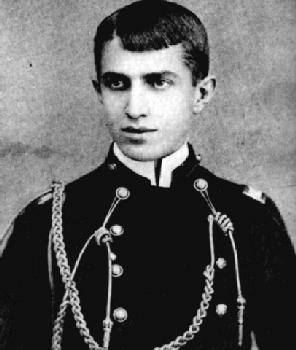
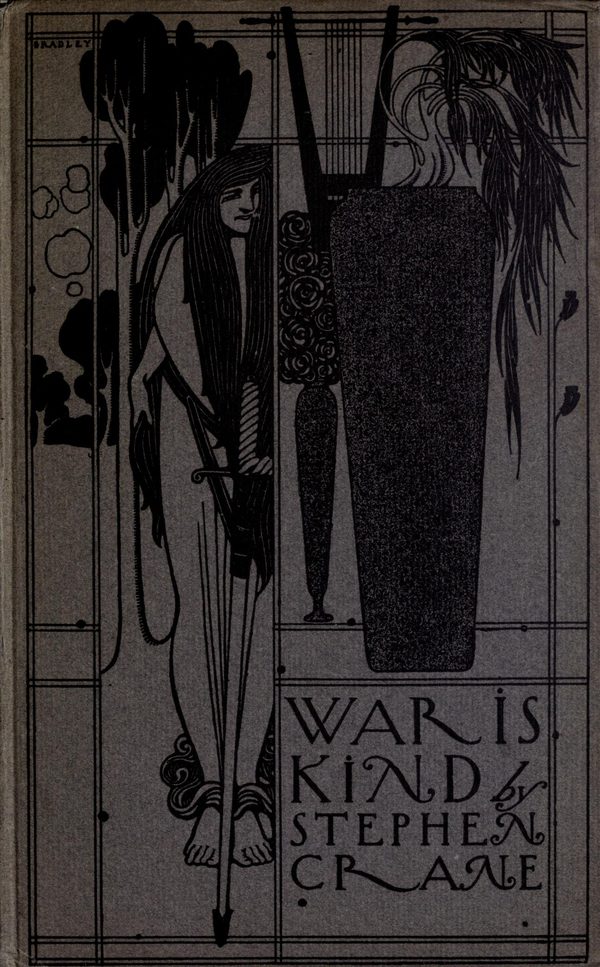
The poem is number 21 in War is Kind & Other Lines, published in 1899, by Stephen Crane (1871–1900). It has been on americanpoems.com since 2004 and was a Poem of the Day on June 4, 2003. Readers have left 35 comments on it, from 2004 to 2023.
Keep reading
Readers
"No sir," said the man, "There is a universe in every grain of sand... so am I in the universe."
this poem is so incredible i dont know what to do with myself...
Short. Simple and Profound.
Men shouldn't talk to the universe. That's for women.
I like this poem it has a harsh reality to it.
Does it not make you feel a little vulnerable, as though there is noone to look out for you, you're all alone and there's noone to fall back on?
the man said:'i exist!but the fact has not created in me a sense of obligation."i think the man is refer to the soldier,he want to take part to the war,or he is looking for something else.
This poem to me exemplifies the reality that man without God is insiginificant and as a result Crane pens that the Universe sees no obligation to man simply because he exists. Hence our sigificance could never be found in the creation but in the Creator
Actually, I believe that it could be seen that the Universe does represent a deity -- but that the "creator" does not hold an obligation to man merely because man exists. The universe -- including the creator and all of creation -- is not obligated to bring meaning and purpose into man's life.
And no, I do not agree that this poem has a harsh reality to it. It may be reality, but I believe that it is a rather invigorating reality. We do not have to depend on ethereal things to bring us meaning into our lives. We can BRING purpose into our own lives through the goals we create for ourselves. I find that prospect rather exciting.
The perfect poetic expression of the existentialist view of the human condition. Chilling, yet real, with a touch of humor.
The way that I see this poem is that Crane is only pointing out the fact that just because you exist does not mean that you are significant. Everyone and everything makes up the universe and not one person is going to be looked upon any different than the next person.
The man answers,
"Who do you think you are? I exist or not is none of your business!"
This is such a genius poem.It ties with the truths of man's being and sense of presece in the universe. However, man has no sense of obligation unless he can decide to have god as his existence or not!
"Consequently," responded the man,
"Since you are not bound by morals or reason, neither shall I be."
There is alot written here about man's insignificance. So thats all true, but did you notice the universe took notice of him. So the universe feels no obligation towards the man, but the universe turned around for whatever reason and said something. So maybe man is worthless, but you cant ignore him.
not only is this poem proving existenilism as we are responsable for ourselfs it also disagrees with darwin who was around at the time. the use of determiners is very clever because A refurind to the man is indifinate the refuring to the universe is difibate making it more imporatnt,
A Man, with great tenacity, gave chase,
Pleading his question: "Sir, I must ask:
How might I perceive you, wholly?"
The Universe, in no grave humor,
Countered, "You may certainly try."
Answer me now lord for
Man is worth much more;
I Eat, I Sleep, I Prey for YOU.
We are here, listen to Our cries!-
The Universe sleep...
what do you guys think??
FREE WILL. That's all it is, we have a choice in everything we do. We are not obliged to do anything not even celebrate life or the universe from whence we came. For good or bad, we make our own path in life.
I just had to comment on the atrocious speling of (nearly) all posters... I just couldn't take you seriously.
@ Bweos Slnng from Antigua and Barbuda:
"Men shouldn't talk to the universe. That's for women. "
--What do you mean by this remark?
English 2b
does the poem talk's about fate?
i do not think so........
This poem is about a man, who represents mankind as a whole, contemplating his existence. The universe represents a god-like figure. The man speaks to say he exists, and the universe is nonchalant and uncaring about it.
Political message
I don't think the poem is anything about religion. I think the poem is a representation of a kind a political message. The man represents the people, the Universe represents those in power. I think it is an anti-welfare message. (The man believes he is entitled to certain things while the Universe is telling him no.) A sense of obligation (again, in my opinion) is referring to things like Universal Healthcare, garrenteed rights and priveledges that should be earned instead. The Universe, in this poem, recognizes that they shouldn't necessarily give in to the desires of the man.
Gosh
This is an existentialist poem plain and simple. Stop trying to add subtext to it! Just appreciate it for what it is.
One of my favorites. The important question to ask yourself: Why, if the universe feels no sense of obligation to the man, does it bother to answer?
What does it mean?
Double rainbow all the way, what does this mean?
Poem is awesome!
God i dont understand this poem. i wish my mom would suck my toes and let me understand. my mom is really hot! i bet you wish that she would suck your toes. is it wierd to think that your mom is really hot i want to marry her.
To the guy who commented on the "atrocious speling of (nearly) all posters" you spelled the word spelling wrong. Just thought I should let you know.
i belive it is telling us that nature takes no notice of our struggles.
This is one of my favorite poems by Stephen Crane. I think one way to interpret this poem is that it is a simple description of how humans seek validation from sources outside of themselves, and specifically seek validation from entities they perceive to have power greater than themselves. This man is not saying to a blade of grass or a lady bug "I exist", he calls out to "the universe". When we are born we have a…
Read the whole commentThis is one of my favorite poems by Stephen Crane. I think one way to interpret this poem is that it is a simple description of how humans seek validation from sources outside of themselves, and specifically seek validation from entities they perceive to have power greater than themselves. This man is not saying to a blade of grass or a lady bug "I exist", he calls out to "the universe".
When we are born we have a biological imperative to be seen and have our existence validated by our caregivers who have all the power. In fact, infants who are not touched enough can die, so as infants our very life depends on validation of our existence. From the moment each of us is born and crying out for attention, we are asking "the universe" to acknowledge our existence. Yet, ultimately as children develop into adults and our primary caregivers are not all powerful, we inevitably demand external validation from society (the universe), depending on what part of the world we reside, we are likely to get a response of indifference from "the universe" (society).
But this is just one of many ways to interpret this poem.
Actually as a human nature we keep urging for approvals no matter large or less...we keep asking people how does we look ,whether it is right to do such things or not etc etc...here too the man (mankind) is asking to universe (society n everyone) that ..do I exist( done any recognizable stuff or people know me) ..to that universe replies that it's not in my hand whether you'll be recognized or not( the fact has not created IN ME)... it's all depends on you whatever you'll sow you'll reap...
Crane was a naturalist. Thus this poem, ironically.
Perhaps this poem was written to remind mankind that the "universe" does not owe us validation, or anything for that matter.
For the Universe, man is a boring creature, and boring creatures always ask for things that are beyond their prerogatives. The Universe represents the vast space of Wisdom, Before modernity and Industrial Civilization, the man looked to the Universe with deep questions, curiosity and amazement, Modern man looked at the Universe as a rival, this heavy burden over man`s shoulders caused him deep mental exhaustion, and…
Read the whole commentFor the Universe, man is a boring creature, and boring creatures always ask for things that are beyond their prerogatives.
The Universe represents the vast space of Wisdom,
Before modernity and Industrial Civilization, the man looked to the Universe with deep questions, curiosity and amazement,
Modern man looked at the Universe as a rival, this heavy burden over man`s shoulders caused him deep mental exhaustion, and when the man`s brains supports no more the pressure, and straightforward declared his arrogant existence to Whom ? The Universe !!!!
The Poem is telling how the man sacrificed the whole totality of Wisdom and elevated consciousness for the sake of Scientific Formulas and Industrial Development. For S. Crane, this bargain is a failure of human kind on how to appreciate important things in life, Instead, ruining the blessing of life to material ends, that`s why the Universe was careless and bored, knowing that earthly materialism is no more than a particles that keep shifting shapes and fading to nothingness yet consciousness and wisdom will always remain in a higher ranks which represents the fine minds, that`s what the Universe is looking for in this poem and couldn`t find