I went back to the clanging city,
I went back where my old loves stayed,
But my heart was full of my new love's glory,
My eyes were laughing and unafraid.
I met one who had loved me madly
And told his love for all to hear --
But we talked of a thousand things together,
The past was buried too deep to fear.
I met the other, whose love was given
With never a kiss and scarcely a word --
Oh, it was then the terror took me
Of words unuttered that breathed and stirred.
Oh, love that lives its life with laughter
Or love that lives its life with tears
Can die -- but love that is never spoken
Goes like a ghost through the winding years. . . .
I went back to the clanging city,
I went back where my old loves stayed,
My heart was full of my new love's glory, --
But my eyes were suddenly afraid.
✦
Analysis
The Ghost: analysis
Introduction
"The Ghost" is a lyric in five quatrains about returning to the past. The speaker goes back to a noisy city where two former loves live. Full of a new love, the speaker expects no danger.
The first old love, who declared his feelings openly, is easy to meet. The second, whose love was never spoken, brings sudden terror. The fourth stanza states the poem's idea: spoken love can die, but unspoken love lingers "like a ghost." The last stanza repeats the first, but ends in fear.
Summary
The first stanza describes a return. The speaker goes back "to the clanging city," where "my old loves stayed." The speaker's heart is "full of my new love's glory." The speaker's eyes are "laughing and unafraid."
In the second stanza the speaker meets the first former love. This man "had loved me madly" and told his love "for all to hear." Now the two talk "of a thousand things together." The past is "buried too deep to fear."
The third stanza brings a second meeting. This other person's love was given "With never a kiss and scarcely a word." At this meeting, "the terror took me." The speaker is frightened by "words unuttered that breathed and stirred."
The fourth stanza states a general truth. Love that lives "with laughter" or "with tears" can die. But "love that is never spoken" does not. It "Goes like a ghost through the winding years."
The fifth stanza repeats the first, with changes. The speaker again goes back to the city and again has a heart full of new love. The last line has shifted. Now the speaker's "eyes were suddenly afraid."
Themes and meaning
Spoken and unspoken love. The fourth stanza gives the poem's central claim. Love that is expressed, whether in joy or in grief, runs its course and "Can die." Love that is never spoken has no ending, so it cannot die. The poem contrasts two former loves to make the point. The open lover is now a friend to talk with, while the silent one brings terror.
The past that returns. The speaker goes back to the city expecting safety. The first meeting confirms that "The past was buried too deep to fear." The second meeting shows that some of the past was never buried at all. The ghost of the title is this unfinished feeling.
Fear and confidence. The poem turns on the word "afraid." The first stanza ends "unafraid," and the last ends "suddenly afraid." The change is small in wording and large in meaning. The new love is still present, but it no longer protects the speaker.
Silence as power. The unspoken words in line 12 "breathed and stirred." Silence is shown as alive, not empty. What was never said keeps its full force because it was never tested or spent.
Tone
The opening is bright and confident. The speaker's eyes are "laughing," and the heart is full of "glory." The second stanza keeps this easy mood, with friendly talk of "a thousand things."
The third stanza shifts suddenly. The cry "Oh, it was then the terror took me" breaks the calm. The tone becomes shaken and uneasy.
The fourth stanza is reflective and grave, like a lesson learned. Its trailing dots let the thought fade into silence. The final stanza is quiet but disturbing. It uses the same words as the opening, which makes the one changed line land with greater force.
Form and structure
The poem has 20 lines in 5 stanzas of 4 lines. Lines run from 7 to 11 syllables. Most carry four stresses in a loose rhythm that mixes iambs and anapests, as in "Goes like a ghost through the winding years." The second and fourth lines of each stanza are indented.
In each stanza the second and fourth lines rhyme or are meant to, as with "word" and "stirred." The computed scheme misses "hear" and "fear" and "tears" and "years." These pairs rhyme to the ear. The last stanza repeats the rhymes of the first, "stayed" and "afraid" echoing "stayed" and "unafraid." This return frames the poem and makes its one change stand out.
Poetic devices
imagery line 1
I went back to the clanging city The word clanging makes the city loud and harsh. It sets a restless scene for the return.
anaphora line 2
I went back where my old loves stayed The phrase I went back repeats from line 1. It stresses the act of returning to the past.
synecdoche line 4
My eyes were laughing and unafraid The eyes stand for the speaker's whole state of mind. The image returns, changed, in line 20.
metaphor line 8
The past was buried too deep to fear The past is a buried body. The first love is dead and safely laid to rest.
personification line 12
Of words unuttered that breathed and stirred Unspoken words are made to breathe and move. The silent love is still alive.
alliteration line 13
love that lives its life with laughter The repeated l sounds give the line a light, flowing sound. It suits love that is lived openly.
parallelism line 14
Or love that lives its life with tears The line mirrors line 13, changing only the last word. Joy and grief are set side by side as the two fates of spoken love.
simile line 16
Goes like a ghost through the winding years Unspoken love is a ghost that cannot rest. The simile gives the poem its title.
alliteration line 16
Goes like a ghost The hard g sounds tie the verb to the ghost. The sound gives the key line weight.
refrain with variation line 20
But my eyes were suddenly afraid The last stanza repeats the first until this line. The single change from unafraid to afraid carries the poem's meaning.
Words worth knowing
clanging
Making loud, harsh, metallic noises.
stayed
Lived or remained, not stopped.
unuttered
Never spoken aloud.
scarcely
Hardly, barely.
Context
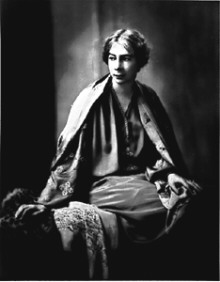
Sara Teasdale lived from 1884 to 1933. "The Ghost" has been on this site since 2003. Readers left comments on it here between 2005 and 2012.
What readers have said
Pamela reads the poem as showing how frightening it is to go back and see someone once loved. Pamela adds the hope that the heart can forgive, forget and move on. Pamela, 2005
Erin loves the poem for its meaning and addresses the poet directly with encouragement. Erin, 2005
wow that amazes me that this poem has been read over 773 times and no one took the time to comment! I for one loved it, its very deep and thought provoking... its always a scary thing going back to the past, seeing someone that we once loved, but thankfully the heart is made to forgive and forget and move on...thanks for sharing this poem! and best of luck to you and yours, Pamela
ErinUnited States
I love this poem it has so much great meaning to it!! you should go global with your spirt and attitude torward your work i am sure u will make it in the big time ! :D
DarrylUnited States
that was a very interesting poem.
KristinUnited States
Honestly, Don't comment a poem without knowing anything about the poet. No offense, but I'm sure Sara can't go global from her grave, nor can she appreciate you "best of luck." Sara Teasdale killed herself many many years ago people.
Li ZHENGChina
The Ghost
can anyone tell me why this poem is not included in the collected poems of sara teasdale (buccneer books)?
wow that amazes me that this poem has been read over 773 times and no one took the time to comment! I for one loved it, its very deep and thought provoking... its always a scary thing going back to the past, seeing someone that we once loved, but thankfully the heart is made to forgive and forget and move on...thanks for sharing this poem! and best of luck to you and yours, Pamela
I love this poem it has so much great meaning to it!! you should go global with your spirt and attitude torward your work i am sure u will make it in the big time ! :D
that was a very interesting poem.
Honestly, Don't comment a poem without knowing anything about the poet. No offense, but I'm sure Sara can't go global from her grave, nor can she appreciate you "best of luck." Sara Teasdale killed herself many many years ago people.
The Ghost
can anyone tell me why this poem is not included in the collected poems of sara teasdale (buccneer books)?