The poem
It will not change now After so many years; Life has not broken it With parting or tears; Death will not alter it, It will live on In all my songs for you When I am gone.
The poem
It will not change now After so many years; Life has not broken it With parting or tears; Death will not alter it, It will live on In all my songs for you When I am gone.
"It Will Not Change" is a very short lyric of eight lines about a lasting love. The poem never names what "It" is. The words "my songs for you" in line 7 suggest that it is the speaker's love for the person addressed.
The poem sets this love against three threats: the passing years, life's partings and tears, and death. None of them has changed it or will change it. The poem ends with the claim that the love will outlive the speaker in her songs.
The poem opens with a flat statement: "It will not change now." Line 2 adds a reason drawn from time. The feeling has lasted "so many years." The two lines form one clause that ends in a semicolon. The subject, "It," is never named.
Lines 3 and 4 look back over the past. "Life has not broken it / With parting or tears." The speaker names two kinds of hardship, separation and grief. Neither has broken what the poem calls "it." The clause again ends in a semicolon.
Lines 5 to 8 turn from the past and look forward. "Death will not alter it," the speaker says. Instead, "It will live on / In all my songs for you." The last line places this future after the speaker's own death, "When I am gone," and the poem closes on that phrase. The songs are addressed to "you," the person the poem speaks to.
Constancy. The main claim of the poem is in its title. Something has lasted "so many years" and will not change. The poem shows its steadiness by repeating "It" and "will not." The feeling is presented as fixed, beyond the reach of time.
Three threats. The poem tests the love against time, life and death in turn. Time has passed without wearing it down. Life has brought "parting or tears" without breaking it. Death, still to come, "will not alter it." The order moves from the past to the future, and from lesser threats to the greatest.
Poetry as survival. The poem ends by naming where the love will last. It will "live on / In all my songs for you." The speaker's songs, or poems, will carry the love after the speaker is "gone." The poem itself can be read as one of those songs, so it enacts its own promise.
The unnamed "It." The poem never uses the word love. The reader must supply what "It" means. This restraint keeps the poem quiet and private. It also lets the feeling seem too settled to need a name.
The tone is calm, certain and restrained. The speaker makes large claims in plain words. There are no exclamations and no images beyond the bare nouns "Life" and "Death."
The short lines give each statement weight. Phrases such as "It will not change now" sound like a vow, spoken quietly. The past tense of "Life has not broken it" carries a hint of what the speaker has endured.
The close is tender and composed. "When I am gone" faces death without fear or drama. The certainty of the ending feels earned by the years the poem mentions.
The poem is 1 stanza of 8 lines. The lines are very short, from 4 to 6 syllables. Most carry two or three stresses, and the rhythm often falls, as in "Death will not alter it." There is no fixed metre, but the short lines give the poem a hymn-like steadiness.
The computed scheme pairs line 3 with line 5, which both end on "it." To the ear, "years" and "tears" also rhyme, in line 2 and line 4. So do "on" and "gone," in line 6 and line 8. This gives the poem a loose pattern in which even lines rhyme. The whole poem moves through a series of clauses linked by semicolons and commas.
It will not change nowThe poem opens by stating what will not happen. The negative form makes constancy sound like a defiance of change.
Life has not broken itLife is made an agent that tries to break the love. It fails, which shows the love's strength.
Death will not alter itDeath is also made an agent. The parallel with line 3 shows that the greatest threat will fail too.
will not alter itThe line echoes the shape of line 1 and line 3. The repeated pattern builds a sense of certainty.
It will live onThe line runs on into the next to say where the love will live. The break stresses the idea of living on.
In all my songs for youSongs stands for the speaker's poems. The love will survive in the written work addressed to the other person.
When I am goneDeath is named softly as going away. The gentle phrase suits the calm tone of the poem.
ItThe pronoun It begins line 1, line 6 and several clauses between. The love is kept at the center of every statement, though never named.
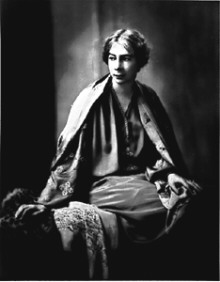
Sara Teasdale lived from 1884 to 1933. "It Will Not Change" has been on this site since 2003. It was Poem of the Day on June 28, 2008. Readers left comments on it here in 2005 and 2006.
Keep reading
Readers
that was a good poem perfect for what i needed.
This poem is very meaningful....i love it.
I HATED THAT MESS SAY SOMETHING ABOUT HOW YOU LOVE HIM THE GOOD STUFF OKAY.
I really like this poem. I think what sara was getting at is thet even if she dies she will still love her husband thru her poems. It was really nice!
that wus helpful i needed a poem on social change thx again