I have come to bury Love
Beneath a tree,
In the forest tall and black
Where none can see.
I shall put no flowers at his head,
Nor stone at his feet,
For the mouth I loved so much
Was bittersweet.
I shall go no more to his grave,
For the woods are cold.
I shall gather as much of joy
As my hands can hold.
I shall stay all day in the sun
Where the wide winds blow, --
But oh, I shall cry at night
When none will know.
✦
Analysis
Buried Love: analysis
Introduction
"Buried Love" is a short lyric in four quatrains. The speaker has come to bury "Love" under a tree in a dark forest, as if love were a body. She resolves to leave the grave unmarked and never return. She will spend her days in the sun and gather what joy she can.
The last two lines undo the brave front. "But oh, I shall cry at night / When none will know." The poem is about ending a love by an act of will, and about the grief that the will cannot bury.
Summary
The first stanza sets the scene. The speaker says, "I have come to bury Love / Beneath a tree." The place is a forest "tall and black." She chooses it because it is "Where none can see."
In the second stanza, the speaker refuses the usual signs of mourning. She will put "no flowers at his head, / Nor stone at his feet." She gives her reason in the next two lines. The mouth she "loved so much / Was bittersweet."
The third stanza looks ahead. The speaker says, "I shall go no more to his grave," because "the woods are cold." Instead she will turn toward happiness. She will gather "as much of joy / As my hands can hold."
The fourth stanza describes her plan for the days to come. She will "stay all day in the sun / Where the wide winds blow." Then the poem turns on "But oh." At night she will cry, and she will do it "When none will know."
Themes and meaning
Ending love by will. The poem treats love as something that can be killed and buried. The speaker acts on purpose. She has "come to bury" it, chooses the spot and refuses to mark it. The repeated "I shall" in lines 5, 9, 11, 13 and 15 sounds like a set of vows. The poem can be read as a record of someone deciding to stop loving.
Secrecy. The burial happens "Where none can see," and the crying happens "When none will know." These two lines frame the poem. Grief is hidden at the start and hidden at the end. No flowers or stone will tell anyone that something lies there. The speaker's sorrow is kept entirely private.
Mixed feeling. The reason given for the unmarked grave is that the loved mouth "Was bittersweet." The love brought pleasure and pain together. That mixture may explain why it deserves no stone. It may also explain why it cannot simply be forgotten.
The public face and the private self. The daylight plan is full of light and air: "the sun," "the wide winds" and "joy." The night belongs to tears. The poem does not say the daytime cheer is false. It shows that the burial succeeds only by day.
Tone
The opening stanzas are solemn and resolved. The speaker speaks like someone carrying out a rite. The short indented lines, such as "Beneath a tree," give her statements a clipped, firm sound.
In the third and fourth stanzas the tone grows brighter and more determined. "I shall gather as much of joy / As my hands can hold" sounds hopeful, even eager. The sun and "wide winds" open the poem out of the dark forest.
The cry "But oh" breaks that composure. The last two lines are simple and exposed. The speaker admits that her resolve has limits. The poem ends on hidden sorrow, spoken quietly.
Form and structure
The poem has 16 lines in 4 stanzas of 4 lines. Long and short lines alternate. The long lines run from 7 to 9 syllables and the short lines from 4 to 5. The short lines are indented on the page, which makes the pattern visible.
The long lines usually carry three stresses and the short lines two. The rhythm is loose, mixing iambs with quicker anapests, as in "Where the wide winds blow." In each stanza the second and fourth lines rhyme, as with "tree" and "see." The first and third lines are unrhymed. The final short line lands each stanza with a firm close.
Poetic devices
personification line 1
I have come to bury Love Love is capitalized and treated as a body to be buried. Later it is called "his," as if love were a dead man.
imagery line 3
In the forest tall and black The dark, towering forest suits a secret burial. It also sets up the contrast with the sun of the last stanza.
negation line 5
I shall put no flowers at his head The speaker lists the rites she will not perform. Refusing flowers and a stone keeps the grave unmarked and the loss unmourned in public.
oxymoron line 8
Was bittersweet The single word holds both pleasure and pain. It explains why the love is buried without honor.
synecdoche line 7
For the mouth I loved so much The loved person is recalled by the mouth alone. The detail suggests kisses and speech, both bittersweet.
anaphora line 11
I shall gather as much of joy The phrase "I shall" opens line after line in the second half. The repetition sounds like a vow the speaker is making to herself.
alliteration line 14
Where the wide winds blow The repeated w sounds give the line an open, airy feel. It is the freest image in the poem.
volta line 15
But oh, I shall cry at night The word "But" turns the poem. The cry "oh" breaks the calm, planned voice of the earlier stanzas.
framing repetition line 16
When none will know The last line echoes line 4, "Where none can see." Secrecy opens and closes the poem.
Words worth knowing
bittersweet
Pleasant and painful at once. Here it describes the loved one's mouth, and so the love itself.
Context
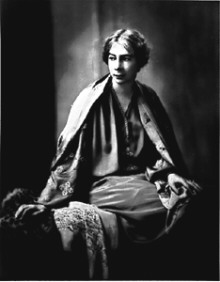
Sara Teasdale lived from 1884 to 1933. "Buried Love" has been on this site since 2003. It was Poem of the Day on January 1, 2013. Readers left comments on it here between 2005 and 2011.
What readers have said
Susan notes that many readers take the poem to be about the death of someone loved, but reads it as leaving a love behind and burying it. Susan, 2005
This reader takes "bittersweet" as a sign that the speaker and the one she loved grew apart. mystique, 2006
Michelle relates the poem to loving someone who shows no feeling in return, and says it makes that easier to bear. michelle, 2011
Iccess finds the poem affecting even for readers who do not share the experience, and also claims a buried love of one's own. Iccess, 2005
this poem is relly deap thow it doesnt relate to me i can still understand it
IccessUnited States
the poem Buried Love is so deep that even if you dont relate to it this pome has its way of still getting to you I Love this poem I to have Buried Love
SusanUnited States
This is one of my favorite poems that Sara Teasdale has written. The first time I read it, I felt like she was talking for me. Although many may think it has to do with the death of one she loved. I think that it also can mean she had to leave her love behind and bury it
mystiqueBosnia and Herzegovina
i think this poem is about someone who she used to love but they must have grown apart or something b/c she says their lips are bittersweet...maybe they raped her
michelleChina
i can so relate to this poem. i have buried love. the guy i feel for but he shows nothing for me. i can tell by the way he acts. this poem makes me feel better and i hope other people see it that way like i do.
this poem is relly deap thow it doesnt relate to me i can still understand it
the poem Buried Love is so deep that even if you dont relate to it this pome has its way of still getting to you I Love this poem I to have Buried Love
This is one of my favorite poems that Sara Teasdale has written. The first time I read it, I felt like she was talking for me. Although many may think it has to do with the death of one she loved. I think that it also can mean she had to leave her love behind and bury it
i think this poem is about someone who she used to love but they must have grown apart or something b/c she says their lips are bittersweet...maybe they raped her
i can so relate to this poem. i have buried love. the guy i feel for but he shows nothing for me. i can tell by the way he acts. this poem makes me feel better and i hope other people see it that way like i do.