Miniver Cheevy, child of scorn,
Grew lean while he assailed the seasons;
He wept that he was ever born,
And he had reasons.
Miniver loved the days of old
When swords were bright and steeds were prancing;
The vision of a warrior bold
Would set him dancing.
Miniver sighed for what was not,
And dreamed, and rested from his labors;
He dreamed of Thebes and Camelot,
And Priam's neighbors.
Miniver mourned the ripe renown
That made so many a name so fragrant;
He mourned Romance, now on the town,
And Art, a vagrant.
Miniver loved the Medici,
Albeit he had never seen one;
He would have sinned incessantly
Could he have been one.
Miniver cursed the commonplace
And eyed a khaki suit with loathing;
He missed the mediæval grace
Of iron clothing.
Miniver scorned the gold he sought,
But sore annoyed was he without it;
Miniver thought, and thought, and thought,
And thought about it.
Miniver Cheevy, born too late,
Scratched his head and kept on thinking;
Miniver coughed, and called it fate,
And kept on drinking.
✦
Analysis
Miniver Cheevy: analysis
Introduction
"Miniver Cheevy" is a comic portrait in eight short stanzas. Its subject is a man who believes he was born in the wrong age. Miniver longs for knights, legendary cities and Renaissance princes, and he despises the ordinary present.
The speaker describes him with mock sympathy. Each stanza builds up his grand longings and then lets them down with a short, flat last line. The final stanza reveals what Miniver actually does with his days: he thinks, blames fate and keeps on drinking. The poem is a satire of nostalgia used as an excuse.
Summary
The first stanza introduces Miniver Cheevy, "child of scorn." He grows thin while he complains about the times he lives in. He weeps that he was ever born. The speaker adds, drily, "And he had reasons."
Miniver loves "the days of old," when swords were bright and horses pranced. Just the thought of a bold warrior sets him dancing. His excitement is all in imagination.
He sighs for things that do not exist. He dreams and rests "from his labors," though no labors are shown. He dreams of Thebes and Camelot, cities of legend, and of "Priam's neighbors," the world of ancient Troy.
Miniver mourns the fame that made so many old names sweet to remember. He mourns that Romance has fallen low, "now on the town." Art, in his view, has become "a vagrant," a homeless wanderer.
He loves the Medici, the Renaissance rulers of Florence, though he has never met one. The speaker says he would have "sinned incessantly" if he could have been one. His admiration is for their power and their vices as much as their grandeur.
Miniver curses everything that is ordinary. He looks at a "khaki suit" with loathing. He misses the grace of the Middle Ages and its armor, which the speaker calls "iron clothing."
Miniver scorns the gold he is trying to get. Yet he is "sore annoyed" when he does not have it. He thinks about this over and over, and the stanza ends with him still thinking.
The last stanza calls him "born too late." He scratches his head and keeps thinking. He coughs, calls his situation fate, and "kept on drinking."
Themes and meaning
The central theme is nostalgia as escape. Miniver's past is not history but storybook: "swords were bright and steeds were prancing." He loves the Medici without having "ever seen one." His longing is for a dream, not a real age. The poem shows the dream serving to excuse him from the present.
A second theme is idleness disguised as sensitivity. Miniver weeps, sighs, dreams and mourns, but never acts. The phrase "rested from his labors" is ironic, since no labor is shown. His one repeated activity is thinking, and line 27 turns even that into a joke.
A third theme is money and hypocrisy. In line 25 Miniver "scorned the gold he sought." He claims to be above wealth, yet he is "sore annoyed" without it. The poem can be read as exposing how a romantic pose hides ordinary wants.
A fourth theme is self-deception. Miniver blames the age he lives in, then blames "fate." The last line gives a plainer cause for his decline: "And kept on drinking." The speaker never states the connection. The reader is left to see what Miniver refuses to see.
The poem also touches on the fate of art and romance in a practical age. Stanza 4 pictures Romance and Art as fallen and homeless. These are Miniver's complaints, so they are shown through his self-pity. Whether the poem shares any of them is open to reading.
Tone
The tone is mock-heroic and ironic. The speaker describes Miniver's longings in grand, old-fashioned words: "steeds," "renown," "mediæval grace." Then each stanza's short last line deflates them. "And he had reasons" sounds sympathetic but is dry. "Of iron clothing" turns noble armor into something clumsy and comic.
The speaker never mocks Miniver directly. The humor comes from understatement and from the jingling double rhymes, such as "seen one" and "been one." The repeated name at the start of stanzas gives the portrait a sing-song, storytelling feel.
In the final stanza the tone grows darker without changing its surface. The coughing and drinking suggest a man in real decline. The comedy remains, but pity enters with it.
Form and structure
The poem has 32 lines in 8 stanzas of 4 lines each. The long lines are loosely iambic with four stresses. The last line of every stanza is cut short to 5 syllables, as in "And he had reasons." These short lines work as punch lines.
The second and fourth lines of each stanza end in two-syllable feminine rhymes: "seasons" and "reasons," "prancing" and "dancing." Some are comic double rhymes, such as "seen one" and "been one." The computed scheme is ABAB in 6 of the 8 stanzas. In stanza 5, "Medici" and "incessantly" share only a weak final syllable. Many stanzas open with the name "Miniver," a stressed first syllable followed by two light ones.
Poetic devices
Anaphora line 5
Miniver loved the days of old Most stanzas begin with his name. The repetition makes the poem a list of his moods, each one leading nowhere.
Bathos line 4
And he had reasons The short, flat line undercuts his weeping. It sounds sympathetic but hints that his reasons are not worth much.
Epithet line 1
child of scorn The phrase sounds like a title from an old romance. It casts Miniver as scornful, and perhaps as scorned.
Allusion line 11
He dreamed of Thebes and Camelot Legendary cities from ancient and Arthurian story mark his longing as bookish. He dreams of places he knows only from tales.
Personification line 15
He mourned Romance, now on the town Romance is pictured as a fallen person. Line 16 does the same with Art, "a vagrant."
Irony line 19
He would have sinned incessantly Miniver's love of the Medici includes their sins. The line shows that his dream of grandeur is also a dream of license.
Deflating image line 24
Of iron clothing Plain words reduce knightly armor to heavy clothes. The phrase mocks the romance he admires.
Paradox line 25
Miniver scorned the gold he sought He despises what he pursues. The contradiction exposes his pose of being above money.
Repetition line 27
Miniver thought, and thought, and thought The repeated verb shows thinking that goes in circles. Line 28 adds one more "thought" for comic effect.
Feminine rhyme line 20
Could he have been one The rhyme with "seen one" in line 18 is deliberately clumsy and comic. It keeps the tone light.
Understatement line 32
And kept on drinking The last line quietly names the real habit behind his decline. The speaker lets the reader draw the conclusion.
Words worth knowing
assailed
Attacked; here, railed against the times he lives in.
Priam's
Priam was the legendary king of Troy, so "Priam's neighbors" means the heroes of the Trojan War.
fragrant
Used figuratively: sweet to remember, honored.
on the town
Fallen and destitute, living off public charity or the streets. The phrase could once also describe a woman gone astray.
Medici
The ruling family of Renaissance Florence, known for wealth, art patronage and ruthless politics.
khaki
A dull yellowish-brown cloth, used for practical work clothes and modern uniforms, in contrast to armor.
Context
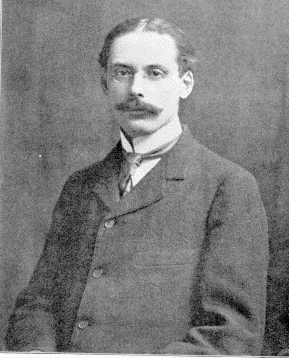
Edwin Arlington Robinson lived from 1869 to 1935. "Miniver Cheevy" was the archive's Poem of the Day on July 6, 2000. Readers left 12 comments on it here between 2006 and 2010.
What readers have said
Trevor sums up Miniver as a man who blames his problems and feelings on the time period he lives in. Trevor, 2006
Saris reads him bluntly as a complete failure who blames it on the age he was born into. Saris, 2006
Aria Collin takes a hopeful reading: the poem tells readers to keep striving for their dreams even when they seem out of reach. aria collin, 2007
Leonard Wilson calls it one of Robinson's lightest poems but finds a sharp bite under the humor. Cheevy is a type who never achieves much and blames being born at the wrong time. Leonard Wilson, 2010
Tom McLean sees Miniver escaping to a storybook world rather than facing things, and suggests he may find it in a bottle. Tom McLean, 2008
Agueda points to the contrast between his love and hatred of money, and to his faith in art for art's sake. Agueda, 2008
Keep reading
Discover more of Edwin Arlington Robinson’s poetry.
i am doing an eng. assignment and i need help annalizing this poem idk what it's about i need help,and fast.
TrevorIreland
Hahahaha you rock. Ok I'll help you, even though it's probably too late.
Miniver Cheevy is a man who who believes that the problems in his life and feelings are due to his environment, namely the time period he lives in. He dreams of being in olden times, times of "camelot", and "iron clothing".
If all your looking for is a general idea of what the poem is about, that is it, truly understanding each and every line and doing an analysis would take too long, so I'm not going to do it.
SarisUnited States
You the other great thing about Miniver...hes a failure! a complete and total failure, and he blaims it on being bored a little to late...a regular loser
KevinUnited States
This poem by Robinson represents his desire to live in the past. He refers to medieval times of Camelot and Thebes where bold knights and warriors glorified his image. Robinson despises the time period in which he is born and quotes, "He wept that he was ever born".
this poem i think represent a persons hopes and dreams. miniver dreams of living in the medevil times and hates the fact that he is stuck living in the present. i think everyone wishes they could live in a different place or time. Robinson only helps us remember our chilish desires in this poem.
Mike MUnited States
When the character in the poem drinks, he seems to imagine a completely different world. A wolrd of fantasy which he was never born into. He wishes he would have been born earlier, in a time of fantasy. He loathes the idea of having to live in the wolrd he lives in now.
Miniver Cheevy is a guy whose depressed and thinks the reason he is having problems is because of the time period he lives in. Miniver starts to think that he was born to late and he wishes he was born in the midevil times.
aria collinUnited States
I think that Robinson is telling the reader that no matter how frustarating a dream can be that someting you dream about and you know can never be obtained can still be something to strive for. Using your imagination only brings out your inner child and your real hopes and dreams. i think Robinson is telling the reader not to give up on themselves and keep pursuing what we want.
Ashley
Who is the audience of this poem???
AguedaSpain
One of problems of miniver is his nostalgyc strong connection to the past that enables somehow to live in the present/another contrast is the love/hatred for money . Society requires of him earn a living, and he belives in Art for Art sake
Tom McLeanUnited States
Miniver apparently wishes to escape to a simpler, storybook world rather than confront things as they are. Perhaps he may find it in a bottle.
Leonard WilsonUnited States
Miniver Cheevy
This is one of Robinson's lightest poems, but it has a sharp bite under the humor. Cheevy is a common kind of character, one who never does much, but has excuses for his lack of achievement. It isn't really his fault. In Cheevy's case, he was just born at the wrong time. There is nothing exciting or challenging in his own time and place, nothing to stir him up and cause him to exert his latent talents. Now if he…
Read the whole comment
This is one of Robinson's lightest poems, but it has a sharp bite under the humor. Cheevy is a common kind of character, one who never does much, but has excuses for his lack of achievement. It isn't really his fault. In Cheevy's case, he was just born at the wrong time. There is nothing exciting or challenging in his own time and place, nothing to stir him up and cause him to exert his latent talents.
Now if he could only have lived back in the romantic past, then he would have amounted to something. He would have swashbuckled with the best of those warriors of old. In his clever insinuations, Robinson gives us a pretty good hint that those ancient times weren't so hot either. Whatever "iron clothing" might have been like, it certainly didn't have much "grace" to it. And it is obvious that the bright swords and prancing steeds are part of an immature dreamer's fantasies.
I really can't see anything of Robinson himself in Miniver Cheevy. Maybe he was displeased with his own childhood and his early lack of recognition, but I could never imagine him just sitting around wishing that things were different. Robinson was a hard worker, a very prolific poet.
i am doing an eng. assignment and i need help annalizing this poem idk what it's about i need help,and fast.
Hahahaha you rock. Ok I'll help you, even though it's probably too late.
Miniver Cheevy is a man who who believes that the problems in his life and feelings are due to his environment, namely the time period he lives in. He dreams of being in olden times, times of "camelot", and "iron clothing".
If all your looking for is a general idea of what the poem is about, that is it, truly understanding each and every line and doing an analysis would take too long, so I'm not going to do it.
You the other great thing about Miniver...hes a failure! a complete and total failure, and he blaims it on being bored a little to late...a regular loser
This poem by Robinson represents his desire to live in the past. He refers to medieval times of Camelot and Thebes where bold knights and warriors glorified his image. Robinson despises the time period in which he is born and quotes, "He wept that he was ever born".
this poem i think represent a persons hopes and dreams. miniver dreams of living in the medevil times and hates the fact that he is stuck living in the present. i think everyone wishes they could live in a different place or time. Robinson only helps us remember our chilish desires in this poem.
When the character in the poem drinks, he seems to imagine a completely different world. A wolrd of fantasy which he was never born into. He wishes he would have been born earlier, in a time of fantasy. He loathes the idea of having to live in the wolrd he lives in now.
Miniver Cheevy is a guy whose depressed and thinks the reason he is having problems is because of the time period he lives in. Miniver starts to think that he was born to late and he wishes he was born in the midevil times.
I think that Robinson is telling the reader that no matter how frustarating a dream can be that someting you dream about and you know can never be obtained can still be something to strive for. Using your imagination only brings out your inner child and your real hopes and dreams. i think Robinson is telling the reader not to give up on themselves and keep pursuing what we want.
Who is the audience of this poem???
One of problems of miniver is his nostalgyc strong connection to the past that enables somehow to live in the present/another contrast is the love/hatred for money . Society requires of him earn a living, and he belives in Art for Art sake
Miniver apparently wishes to escape to a simpler, storybook world rather than confront things as they are. Perhaps he may find it in a bottle.
Miniver Cheevy
This is one of Robinson's lightest poems, but it has a sharp bite under the humor. Cheevy is a common kind of character, one who never does much, but has excuses for his lack of achievement. It isn't really his fault. In Cheevy's case, he was just born at the wrong time. There is nothing exciting or challenging in his own time and place, nothing to stir him up and cause him to exert his latent talents. Now if he…
Read the whole commentThis is one of Robinson's lightest poems, but it has a sharp bite under the humor. Cheevy is a common kind of character, one who never does much, but has excuses for his lack of achievement. It isn't really his fault. In Cheevy's case, he was just born at the wrong time. There is nothing exciting or challenging in his own time and place, nothing to stir him up and cause him to exert his latent talents.
Now if he could only have lived back in the romantic past, then he would have amounted to something. He would have swashbuckled with the best of those warriors of old. In his clever insinuations, Robinson gives us a pretty good hint that those ancient times weren't so hot either. Whatever "iron clothing" might have been like, it certainly didn't have much "grace" to it. And it is obvious that the bright swords and prancing steeds are part of an immature dreamer's fantasies.
I really can't see anything of Robinson himself in Miniver Cheevy. Maybe he was displeased with his own childhood and his early lack of recognition, but I could never imagine him just sitting around wishing that things were different. Robinson was a hard worker, a very prolific poet.