Women have no wilderness in them,
They are provident instead,
Content in the tight hot cell of their hearts
To eat dusty bread.
They do not see cattle cropping red winter grass,
They do not hear
Snow water going down under culverts
Shallow and clear.
They wait, when they should turn to journeys,
They stiffen, when they should bend.
They use against themselves that benevolence
To which no man is friend.
They cannot think of so many crops to a field
Or of clean wood cleft by an axe.
Their love is an eager meaninglessness
Too tense or too lax.
They hear in any whisper that speaks to them
A shout and a cry.
As like as not, when they take life over their door-sill
They should let it go by.
✦
Analysis
Women: analysis
Introduction
This is a short poem of five quatrains that passes harsh judgment on women as a group. The speaker says women "have no wilderness in them". They are cautious, narrow and tense. They miss the natural world, wait when they should travel and stiffen when they should bend. Their love is an "eager meaninglessness".
The poem speaks of women only as "they", never we. Readers divide over its purpose. Some take it as a bitter portrait of how women have been shaped to live. Others find it a damaging stereotype. The text supports a reading of frustration as much as contempt.
Summary
The first stanza says women have no wilderness in them. They are provident instead. They are content to eat dusty bread in the tight, hot cell of their hearts.
The second stanza lists what women miss in the natural world. They do not see cattle cropping "red winter grass". They do not hear snow water running under culverts, "Shallow and clear".
The third stanza says they wait when they should set out on journeys. They stiffen when they should bend. They turn against themselves a benevolence "To which no man is friend".
The fourth stanza says they cannot think of how many crops a field can bear. Nor can they think of clean wood split by an axe. Their love is an eager meaninglessness, "Too tense or too lax".
The fifth stanza says that in any whisper that speaks to them, they hear "A shout and a cry". The last two lines picture life arriving at the house. As like as not, when they take life over their door-sill, they "should let it go by".
Themes and meaning
Confinement is the poem's main theme. The images of women are images of enclosure, from the "tight hot cell of their hearts" to the "door-sill". They are "provident", saving and storing rather than spending. The "dusty bread" suggests a life lived on stale portions. Against this the poem sets wilderness, journeys and running water.
Nature as freedom is a second theme. The second and fourth stanzas list what women fail to see or think of. These include cattle on "red winter grass", "Snow water going down under culverts" and "clean wood cleft by an axe". These images are clear, open and unhurried. They stand for a calm, outward attention that the poem says women lack.
Self-harm through virtue is a third theme. Line 11 says women "use against themselves that benevolence". Their kindness and care turn inward and hurt them. The next line, "To which no man is friend", is ambiguous. It may mean men do not value this kindness, or that no one at all benefits from it.
Over-reaction is a fourth theme. Women "hear in any whisper" a "shout and a cry", and their love is "Too tense or too lax". The last lines advise letting life "go by" rather than seizing it at the door. Whether this is criticism or self-knowledge is the poem's central question. The steady "They" keeps the speaker apart, which makes the tone hard to fix.
Tone
The tone is severe and declarative. Almost every sentence begins with "They" and states a flaw as fact. There are no softening words and no exceptions.
Yet the poem is not simply cold. The images of nature in the second and fourth stanzas are clear and longing. They show what the speaker values and wishes women could have. The judgment can be read as frustration rather than scorn.
The last stanza is the most uncertain. "As like as not" is a hedge. The closing advice, "They should let it go by", sounds weary. It leaves the reader unsure whether the speaker is condemning women or describing a shared trap.
Form and structure
The poem has 20 lines in five quatrains. There is no regular metre. Lines range from 4 to 13 syllables. Long lines alternate with short ones, and the second and fourth lines of each stanza are usually shorter.
The even lines rhyme in most stanzas: "instead" and "bread", "bend" and "friend", "axe" and "lax", "cry" and "by". The odd lines do not rhyme. The short rhymed lines snap each stanza shut. Repetition of "They" at the start of lines builds a list of charges.
Poetic devices
Metaphor line 1
Women have no wilderness in them Wildness is pictured as a landscape inside a person. The opening line sets the poem's contrast between enclosure and open nature.
Metaphor line 3
the tight hot cell of their hearts The heart becomes a small, stifling room. The word cell suggests a prison or a nun's room.
Imagery line 7
Snow water going down under culverts The clear, quiet image stands for the calm attention to nature the poem says women lack.
Anaphora line 10
They stiffen, when they should bend. Lines begin again and again with "They". The repetition builds the poem as a list of charges.
Antithesis line 9
They wait, when they should turn to journeys, Each half of the line opposes what women do to what they should do. The balance sharpens the criticism.
Oxymoron line 15
Their love is an eager meaninglessness Eagerness and meaninglessness clash. Love is shown as intense but empty.
Ambiguity line 12
To which no man is friend The phrase no man can mean no male or no person. The line can blame men or simply call the benevolence useless.
Hyperbole line 18
A shout and a cry A whisper is heard as a shout. The exaggeration shows the over-sensitivity the speaker charges.
Rhyme line 16
Too tense or too lax The short line rhymes with "axe" and closes the stanza hard. The clipped rhyme matches the judgment.
Words worth knowing
provident
Careful to provide for the future, thrifty. Here it suggests caution rather than virtue.
cropping
Grazing, biting off grass.
culverts
Pipes or drains that carry water under a road.
cleft
Split, as wood is split by an axe.
door-sill
The threshold at the bottom of a doorway.
What readers have said
Georgia reads the poem as setting out stereotypes of women and how they keep women from a full life. georgia, 2008
Ameera reads it as written to break stereotypes about women at a time of deep legal and social inequality. Ameera, 2011
Raseena, a teacher, finds the poem's dark, pessimistic picture of feeble women harmful to empowerment. raseena.kk, 2012
Sabeel, also a teacher, says it does not show women's real condition and asks for it to be removed from school syllabuses. sabeel, 2013
Tammy says plainly that she cannot understand what the poem means. tammy, 2008
it is basically explaining the stereotypes of women and how it restrains them from living a full and complete life
tammyUnited States
i ran across this poem & i really can not understand what she means
Ameera zakariaEgypt
women are free
well, i think that we are all human beings men and women,when Allah created us ,created men and women have the same rights and duties ,some times you will find women are more successful than men ,i think it depends on mind ,thinking ,dreaming ,experiences ,trials of life and y ideology , yes definitely may be culture forms our perceptions and ideologies but i think ,dreams knows no bounds ,just trust on your self…
Read the whole comment
well, i think that we are all human beings men and women,when Allah created us ,created men and women have the same rights and duties ,some times you will find women are more successful than men ,i think it depends on mind ,thinking ,dreaming ,experiences ,trials of life and y ideology , yes definitely may be culture forms our perceptions and ideologies but i think ,dreams knows no bounds ,just trust on your self and on your talent . i think we as women have the desire to succeed ,whatever the field. but one of the points which we should take it in our consideration that if we are talking about women ,so still some people think that women who are wearing veil are oppressed , they could n"t understand and accept this woman . What goes through your mind? As you sit there looking at me Well I can tell from your looks That you think I’m so oppressed But I don’t need for you to liberate me
My head is not bare And you can’t see my covered hair So you sit there and you stare And you judge me with your glare You’re sure I’m in despair But are you not aware Under this scarf that I wear I have feelings, and I do care So don’t you see? That I’m truly free This piece of scarf on me I wear so proudly To preserve my dignity...
My modesty My integrity So don’t judge me Open your eyes and see... “Why can’t you just accept me?” she says “Why can’t I just be me?” she says Time and time again You speak of democracy Yet you rob me of my liberty All I want is equality Why can’t you just let me be free?
AmeeraEgypt
point of view
this poem , i think that written by bogan to break all the stereotypes of women in 19 century .they lived in gender inequality ,enjoyed few of legal rights .they could"t vote couldn"t testify in courts .have oppressions in education and marriage .they remained home ,not educated . so i think she wants to form the perception of the American community specifically and the west generally .
raseena.kkIndia
english
criticism may helps empowerment,but louises dark,pessimistic,feable women makes a negativ impact.As a teacher,i felt such an thearotical crisis consernig this poem
sabeelAndorra
nmvbc
this poem doesnt portrate the real conditio of the wome. As a teacher i requesting that to remove the poem frome school syllabus
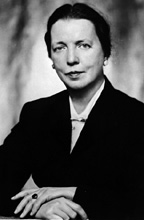
it is basically explaining the stereotypes of women and how it restrains them from living a full and complete life
i ran across this poem & i really can not understand what she means
women are free
well, i think that we are all human beings men and women,when Allah created us ,created men and women have the same rights and duties ,some times you will find women are more successful than men ,i think it depends on mind ,thinking ,dreaming ,experiences ,trials of life and y ideology , yes definitely may be culture forms our perceptions and ideologies but i think ,dreams knows no bounds ,just trust on your self…
Read the whole commentwell, i think that we are all human beings men and women,when Allah created us ,created men and women have the same rights and duties ,some times you will find women are more successful than men ,i think it depends on mind ,thinking ,dreaming ,experiences ,trials of life and y ideology , yes definitely may be culture forms our perceptions and ideologies but i think ,dreams knows no bounds ,just trust on your self and on your talent . i think we as women have the desire to succeed ,whatever the field. but one of the points which we should take it in our consideration that if we are talking about women ,so still some people think that women who are wearing veil are oppressed , they could n"t understand and accept this woman .
What goes through your mind?
As you sit there looking at me
Well I can tell from your looks
That you think I’m so oppressed
But I don’t need for you to liberate me
My head is not bare
And you can’t see my covered hair
So you sit there and you stare
And you judge me with your glare
You’re sure I’m in despair
But are you not aware
Under this scarf that I wear
I have feelings, and I do care
So don’t you see?
That I’m truly free
This piece of scarf on me
I wear so proudly
To preserve my dignity...
My modesty
My integrity
So don’t judge me
Open your eyes and see...
“Why can’t you just accept me?” she says
“Why can’t I just be me?” she says
Time and time again
You speak of democracy
Yet you rob me of my liberty
All I want is equality
Why can’t you just let me be free?
point of view
this poem , i think that written by bogan to break all the stereotypes of women in 19 century .they lived in gender inequality ,enjoyed few of legal rights .they could"t vote couldn"t testify in courts .have oppressions in education and marriage .they remained home ,not educated . so i think she wants to form the perception of the American community specifically and the west generally .
english
criticism may helps empowerment,but louises dark,pessimistic,feable women makes a negativ impact.As a teacher,i felt such an thearotical crisis consernig this poem
nmvbc
this poem doesnt portrate the real conditio of the wome. As a teacher i requesting that to remove the poem frome school syllabus