The day is cold, and dark, and dreary
It rains, and the wind is never weary;
The vine still clings to the mouldering wall,
But at every gust the dead leaves fall,
And the day is dark and dreary.
My life is cold, and dark, and dreary;
It rains, and the wind is never weary;
My thoughts still cling to the mouldering Past,
But the hopes of youth fall thick in the blast,
And the days are dark and dreary.
Be still, sad heart! and cease repining;
Behind the clouds is the sun still shining;
Thy fate is the common fate of all,
Into each life some rain must fall,
Some days must be dark and dreary.
The Rainy Day is a short lyric in three stanzas of five lines. It opens with a plain description of a cold, wet day. The second stanza then applies almost the same words to the speaker's own life. In the third stanza the speaker turns and addresses the heart directly.
The poem rests on one comparison, between weather and mood, worked out nearly line for line. Its close offers comfort, but a limited kind. The sun is "still shining" behind the clouds. Yet the last line insists that "Some days must be dark and dreary."
Summary
The first stanza describes the day. It is "cold, and dark, and dreary", and the rain keeps falling. The wind "is never weary", so it does not let up. A vine still clings to a crumbling wall, and every gust strips dead leaves from it. The stanza ends by repeating that the day is dark and dreary.
The second stanza repeats the pattern but turns it on the speaker. Now it is "My life" that is cold, dark and dreary, while the rain and wind go on. The speaker's thoughts cling to the past, as the vine clings to the wall. The hopes of youth fall like the leaves, blown down "thick in the blast". The stanza ends with "the days" in the plural, not "the day".
In the third stanza the speaker addresses the heart. It tells the heart to be still and to "cease repining". It reminds the heart that the sun is still shining behind the clouds. It says that this fate is "the common fate of all". Rain must fall into every life, and some days must be dark and dreary.
Themes and meaning
The main idea is that outer weather and inner feeling match. The second stanza copies the first almost word for word, swapping "The day" for "My life". The vine becomes the speaker's thoughts, and the dead leaves become "the hopes of youth". The parallel is so close that the landscape can be read as a picture of the mind.
The poem also sets holding on against loss. The vine "still clings to the mouldering wall", and the thoughts "still cling to the mouldering Past". In both cases something living holds on to something that is falling apart. The capital P makes the Past almost a place or a person. Meanwhile what was young and hopeful is stripped away "at every gust".
The third stanza answers grief with an argument, not with better weather. Its comfort is that the speaker is not singled out: "Thy fate is the common fate of all". Line 14 turns rain into a general law. Suffering becomes an ordinary part of every life rather than a personal punishment.
Hope in the poem is a matter of belief, not sight. The sun is "Behind the clouds", so the speaker cannot see it. The rain does not stop at the end. The refrain returns in the last line, now framed as something that "must be". Hope and gloom stand side by side at the close, and the poem does not choose between them.
Tone
The first stanza is flat and descriptive. The repeated "and" in line 1 slows the voice and piles up the gloom. The second stanza keeps the same words but becomes personal. "My life" and "My thoughts" put the speaker at the centre, and the tone turns to self-pity.
The third stanza shifts sharply. "Be still, sad heart!" is a command, marked by an exclamation. The speaker becomes stern and consoling at once, like an adult calming a child. The archaic "Thy" gives these lines the weight of a sermon or proverb.
The ending is calm rather than joyful. The word "must" appears twice in the last two lines. It suggests acceptance of what cannot be changed. The close can be read as hopeful or as resigned, and the text supports both.
Form and structure
The poem has 15 lines in 3 stanzas of 5 lines each. Lines run from 7 to 10 syllables. Most lines carry four strong stresses, mixing iambs with anapests, so the metre is a loose tetrameter. Many lines end on an unstressed syllable, as in "dreary", "weary" and "shining".
The first two stanzas rhyme AABBA and AACCA, so two couplets lead to a line that returns to the opening rhyme. The computed scheme for the third stanza marks line 11 as unrhymed, because "repining" is not in the rhyme dictionary. By ear it rhymes with "shining". Lines 13–14 bring back the "wall" and "fall" rhyme of the first stanza. Every stanza ends on "dreary", which works as a refrain.
Poetic devices
Polysyndeton line 1
cold, and dark, and dreary The repeated 'and' slows the line and heaps one bleak adjective on another.
Alliteration line 1
dark, and dreary The repeated d sound gives the gloom a heavy, dull beat that returns in every stanza.
Personification line 2
the wind is never weary The wind is given a tireless will, which makes the bad weather seem relentless.
Imagery line 4
at every gust the dead leaves fall A concrete picture of steady loss that the second stanza will apply to hope.
Refrain line 5
And the day is dark and dreary Each stanza closes on a version of this line, so the gloom keeps returning even after the consolation.
Metaphor line 8
My thoughts still cling to the mouldering Past The thoughts become the vine of line 3, holding on to a decaying past as the vine holds the wall.
Metaphor line 9
the hopes of youth fall thick in the blast Youthful hopes are dead leaves torn away by the wind, a loss that is heavy and sudden.
Apostrophe line 11
Be still, sad heart! The speaker talks to the heart as if it were a separate person, which marks the turn of the poem.
Symbol line 12
Behind the clouds is the sun still shining The hidden sun stands for a good that continues even when it cannot be seen.
Wordplay line 12
the sun still shining 'Still' here means 'even now', just after 'Be still' meant 'quiet', and it echoes the clinging vine and thoughts.
Aphorism line 14
Into each life some rain must fall A general saying that turns the private rain of the poem into a rule for everyone.
Words worth knowing
mouldering
Slowly crumbling or rotting away. The British spelling of 'moldering'.
blast
A strong gust of wind, not an explosion.
repining
Fretting or complaining in discontent, especially over what is lost.
still
Used in two senses: 'even now' in lines 3, 8 and 12, and 'calm, quiet' in line 11.
Thy
An old form of 'your', used here in addressing the heart.
Context
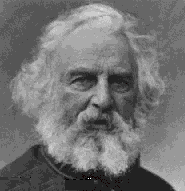
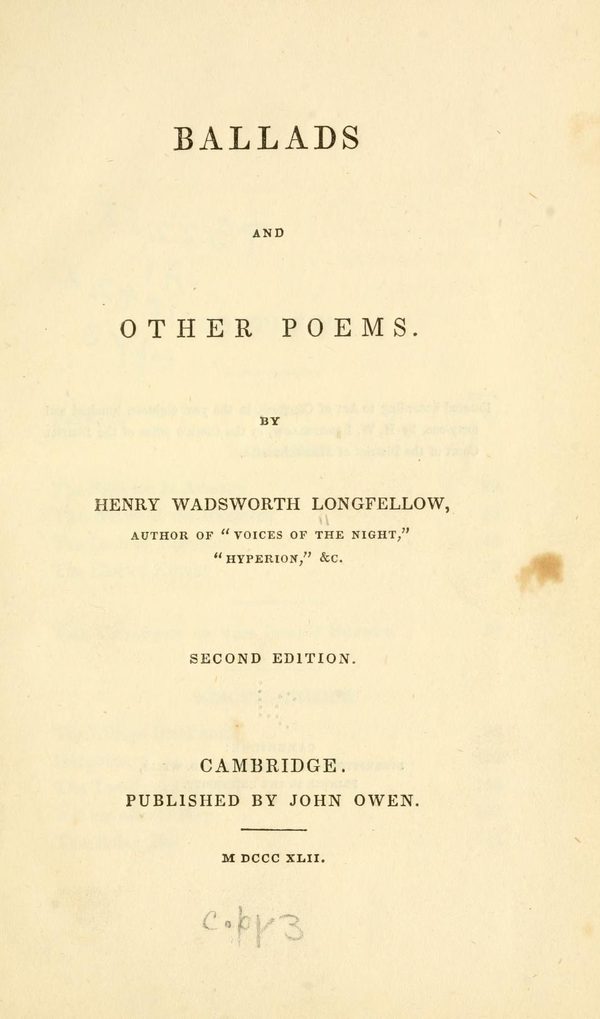
The poem appears in Longfellow's collection Ballads and Other Poems, where it is the sixth poem. Longfellow lived from 1807 to 1882.
What readers have said
Tammy Meihls says the poem may look very sad at first glance, but has always brought her hope and cheer. Tammy Meihls, 2004
MetalMilitia finds the vocabulary simple but efficient, and calls the atmosphere half depressing and half uplifting. MetalMilitia, 2004
Keeley sees Longfellow's Romanticism in the way he relates events in life to something in nature, and values the hope at the end that sad things must happen to all people. Keeley, 2004
amanda, a student pilot, reads the line about the sun behind the clouds as the image of breaking above the clouds into sunshine. amanda, 2004
Heather admires how the turn is phrased but found it somewhat expected, and wonders whether the poem's shortness is the reason. Heather, 2005
Larry Mesplé remembers the poem from childhood as beginning with 'dark, and dank, and dreary', and asks whether another rainy day poem exists. Larry Mesplé, 2004
Keep reading
Discover more of Henry Wadsworth Longfellow’s poetry.
This poem reaches me easily ....particularly now half a century down life timeline....I like the smooth way it pleasantly takes me as I reflect my choices ahead.
cvl
KeeleyUnited States
I've always liked Longfellow's work, but this one really encapsulates it. He has a sad way of relating events in life to something in nature, enforcing his Romanticism. I love the hope that is shown at the end, that sad things must happen to all people.
RobertUnited States
It was a good poem and he used repetition well. It said that everyone has had bad times and everyone can get through them and the sun will shine again.
BobbyUnited States
This is a very inspireing poem. Its use of repetition, rhyme, and rythme make it enjoyable to read. The word choice greatly alters the tone making sound like a sad poem even thogh it has an uplifting message
Tyler WashburnUnited States
This poem has a good use of imagery, and it is very descriptive in its descriptions about a rainy day. The use of repitition also adds to the flow of it.
amandaUnited States
the line "behind the clouds is the sun still shining" is such a great reminder that we can't always see the good in the day. being a student pilot, this line especially gives the image of breaking above the clouds and that great moment when the sunshine hits you.
i love this poem because when i read it i got touched it is sad but very heartfelt at the same time i love this poem and all of his other work anyways he is my decendant and i love his work love to everyone who loves his work like me love ya all bye brianna from florida
MetalMilitiaEstonia
To some extent it reminds of Shakespear's sonets.The vocabulary of this poem is poem is quite simple, but at the same time it is efficient.The atmosphere of poem is half depressing/half up bringing, quite an interesting case.
amonratThailand
i think this pome want to show about life that has variety things that happen in your life such as good lucky sad happyand the other but after rain and strom the sun will shine again.you will be happy and have power to livig again.....
cassandraUnited States
i think that this poem represents people's lives because everyone is bound to have a bad day once in awhile and sure it may seem cold and dark in your life but if you have a little faith you'll see that the sun is shinning on the other side. all you have to do is look for it and reach out for it.
This poem is compared to the poet's life. comparing "The day is cold dark and dreary" is compared to his sad life i liked this poem because it has a comparisim between nature and life it is a euphimisim poem thwe nature takes part in real life situation.
I really liked this poem, even though it was sad and all its good! :D
JadeJamaica
This is an excellent poem! I just love it. The very first time I read this poem it really grasped my emotions and I could empathise with the poet. It would appeal to even those who do not consider themselves to be poetically inclined based on the metaphoric comparison of a rainy day and feelings of melancholy. Even more interesting is the simplicity of the words used, yet they so strongly express the poet's feelings. Again I say, excellent!
Tony RomanoItaly
I loved this poem! I liked how it expressed the real mood of rainy days. I enjoyed the rhyming and use of rhyme and figurative language. I think that everyone should read this poem
Chiam Xin EnSingapore
i was amazed by this poem when i read it. I just simply loved the tones, the expression from this poem. There are also images that i can imagin. One word for it, lovely!
Bob CallahanCanada
As in life we are all going to experience days that are to us the darkest times of our lives, but the message is,if we have faith, things do improve with time.
theAmAnMalaysia
Just don't dwell in the past...move on. Take it one day at a time. There are bound to be rainy days...just remember... every cloud has a silver lining....cheer up!
Rick CopelandUnited States
What memories!! 50 years ago in 7th grade we read and had to recite from memory this poem. At our 45 HS reunion we were trying to see who could remember the most poems from our 7th grade class. All I could remember was "the days are dark and dreary." Thank you
I have no comment but i like the shortness of it for the fact that its for school and i have to report on it haha ~*~Kristen~*~ P.S. it was a good poem :P
christinaCanada
nice poem!
kimberlyGeorgia, Republic of
The poem was really good!
jenny
i like it! ! ! ! very short! ! ! !
JEFFUnited States
FOR 40+ YEARS, I HAVE REMEMBER THIS SHORT POEM....WHEN I AM BLUE OR DEPRESSED, IT ENCOURAGES ME WITH LAST VERSE....
RichardUnited States
Very goof poem helped me with my school project
HeatherUnited States
wow! my new fav poem- the turn WAS kind-of expected... but the way he said it? i applaud longfellow. as for the shortness? didn't do much for me. i would've liked it longer... maybe that's why you could expect the turn...?
Dear AnonymousAustralia
This is now officially my favourite poem. It's very alluring.
JulianUnited States
I really enjoyed this poem.Not cuz it's short but it really is true what he's saying
AmberUnited States
I liked the poem. It was easy to understand.
Uniuqe JonesUnited States
I like this poem.....it is very intresting to me......
BobUnited States
This poem is really deeep, and I love the theme of hope. My friend liked it so much that she choreographed it. Yay choreography!!!
Maricela
One of the most beautiful poems i have ever read.....
5th Graders at HighlandsUnited States
This was a very deep poem. We thought it was somewhat similar to "Stopping By Woods on a Snowy Evening". It was touching and felt like a sad poem.
PaulUnited States
A group made a song from this poem. It's called Rainy Days from Late Night Alumni. The singer's tone is haunting but its also optimistic. Check it out!
JosephUnited States
learned this poem in English class in 1933. I have repeated it thousands of times with great pleasure. I love the last stanza.
Ronnie TambunanIndonesia
this poem is an epic masterpiece! we should be optimistic about our entire life! there's still a bright path outside there! use your inextinguishable flashlight well on the right streets! Cheers!
karenChina
I like it when I first read it.
Nikki SuhUnited States
What a great poem! I liked how the words at the end rhymed. Thanks for the blog and the poem!
CrystalUnited States
What a lovely poem. Very truthful. The sun will always be shining behind the clouds.
This poem at first glance may seem to be very sad. But I have always found it to bring me hope and cheer. Be still sad heart...
This poem reaches me easily ....particularly now half a century down life timeline....I like the smooth way it pleasantly takes me as I reflect my choices ahead.
cvl
I've always liked Longfellow's work, but this one really encapsulates it. He has a sad way of relating events in life to something in nature, enforcing his Romanticism. I love the hope that is shown at the end, that sad things must happen to all people.
It was a good poem and he used repetition well. It said that everyone has had bad times and everyone can get through them and the sun will shine again.
This is a very inspireing poem. Its use of repetition, rhyme, and rythme make it enjoyable to read. The word choice greatly alters the tone making sound like a sad poem even thogh it has an uplifting message
This poem has a good use of imagery, and it is very descriptive in its descriptions about a rainy day. The use of repitition also adds to the flow of it.
the line "behind the clouds is the sun still shining" is such a great reminder that we can't always see the good in the day. being a student pilot, this line especially gives the image of breaking above the clouds and that great moment when the sunshine hits you.
i love this poem because when i read it i got touched it is sad but very heartfelt at the same time i love this poem and all of his other work anyways he is my decendant and i love his work love to everyone who loves his work like me love ya all bye brianna from florida
To some extent it reminds of Shakespear's sonets.The vocabulary of this poem is poem is quite simple, but at the same time it is efficient.The atmosphere of poem is half depressing/half up bringing, quite an interesting case.
i think this pome want to show about life that has variety things that happen in your life such as good lucky sad happyand the other but after rain and strom the sun will shine again.you will be happy and have power to livig again.....
i think that this poem represents people's lives because everyone is bound to have a bad day once in awhile and sure it may seem cold and dark in your life but if you have a little faith you'll see that the sun is shinning on the other side. all you have to do is look for it and reach out for it.
This poem is compared to the poet's life. comparing "The day is cold dark and dreary" is compared to his sad life i liked this poem because it has a comparisim between nature and life it is a euphimisim poem thwe nature takes part in real life situation.
Love the romantic melancholy ..
Esp the part "Into each life some rain must fall"..such a philosophical piece.
From my childhood, I recall the poem beginning "The day is dark, and dank, and dreary." Is there another Rainy Day poem?
I really liked this poem, even though it was sad and all its good! :D
This is an excellent poem! I just love it. The very first time I read this poem it really grasped my emotions and I could empathise with the poet. It would appeal to even those who do not consider themselves to be poetically inclined based on the metaphoric comparison of a rainy day and feelings of melancholy. Even more interesting is the simplicity of the words used, yet they so strongly express the poet's feelings. Again I say, excellent!
I loved this poem! I liked how it expressed the real mood of rainy days. I enjoyed the rhyming and use of rhyme and figurative language. I think that everyone should read this poem
i was amazed by this poem when i read it. I just simply loved the tones, the expression from this poem.
There are also images that i can imagin. One word for it, lovely!
As in life we are all going to experience days that are to us the darkest times of our lives, but the message is,if we have faith, things do improve with time.
Just don't dwell in the past...move on. Take it one day at a time. There are bound to be rainy days...just remember... every cloud has a silver lining....cheer up!
What memories!! 50 years ago in 7th grade we read and had to recite from memory this poem. At our 45 HS reunion we were trying to see who could remember the most poems from our 7th grade class. All I could remember was "the days are dark and dreary." Thank you
it is short and no big words, sweet
I have no comment but i like the shortness of it for the fact that its for school and i have to report on it haha ~*~Kristen~*~ P.S. it was a good poem :P
nice poem!
The poem was really good!
i like it! ! ! ! very short! ! ! !
FOR 40+ YEARS, I HAVE REMEMBER THIS SHORT POEM....WHEN I AM BLUE OR DEPRESSED, IT ENCOURAGES ME WITH LAST VERSE....
Very goof poem helped me with my school project
wow! my new fav poem- the turn WAS kind-of expected... but the way he said it? i applaud longfellow. as for the shortness? didn't do much for me. i would've liked it longer... maybe that's why you could expect the turn...?
This is now officially my favourite poem. It's very alluring.
I really enjoyed this poem.Not cuz it's short but it really is true what he's saying
I liked the poem. It was easy to understand.
I like this poem.....it is very intresting to me......
This poem is really deeep, and I love the theme of hope. My friend liked it so much that she choreographed it. Yay choreography!!!
One of the most beautiful poems i have ever read.....
This was a very deep poem. We thought it was somewhat similar to "Stopping By Woods on a Snowy Evening". It was touching and felt like a sad poem.
A group made a song from this poem. It's called Rainy Days from Late Night Alumni. The singer's tone is haunting but its also optimistic. Check it out!
learned this poem in English class in 1933. I have repeated it thousands of times with great pleasure. I love the last stanza.
this poem is an epic masterpiece! we should be optimistic about our entire life! there's still a bright path outside there! use your inextinguishable flashlight well on the right streets! Cheers!
I like it when I first read it.
What a great poem! I liked how the words at the end rhymed. Thanks for the blog and the poem!
What a lovely poem. Very truthful. The sun will always be shining behind the clouds.