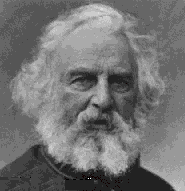
This poem by Henry Wadsworth Longfellow is spoken at nightfall by a tired speaker. The speaker watches village lights through rain and mist and feels a sadness that is hard to name. The speaker then asks a companion to read a poem aloud.
The request is specific. The speaker does not want the great poets, whose work calls up struggle and effort. The speaker wants a humble poet whose songs came from the heart. The poem ends with the hope that music will fill the night and the day's cares will slip away. It is a poem about weariness, and about what a simple poem, read aloud, can do for a tired mind.
Summary
Night falls. The speaker says the darkness falls from "the wings of Night". It comes down the way a feather drifts from an eagle in flight.
The speaker sees the lights of the village "Gleam through the rain and the mist". A feeling of sadness comes over the speaker. It is a feeling the soul "cannot resist".
The speaker describes the feeling more exactly. It is sadness and longing, but "not akin to pain". It resembles sorrow only as mist resembles rain.
The speaker asks someone to read aloud. The request is for "Some simple and heartfelt lay". It should soothe the restless feeling and banish the thoughts of the day.
The speaker rules out "the grand old masters" and "the bards sublime". Their footsteps echo from far off "Through the corridors of Time".
The speaker explains why. Their mighty thoughts sound like military music. They call up "Life's endless toil and endeavor". Tonight the speaker wants rest.
The speaker asks instead for "some humbler poet". This poet's songs came straight from the heart. They came as showers fall from summer clouds, or as tears start from the eyes.
This poet worked through "long days of labor" and restless nights. Even so, the poet still heard wonderful melodies within.
Such songs, the speaker says, can quiet "The restless pulse of care". They come like the blessing that follows a prayer.
The speaker asks the listener to read from "the treasured volume". The listener may choose the poem. The listener is to add "The beauty of thy voice" to the poet's rhyme.
The speaker predicts the result. The night will be filled with music. The day's cares will "fold their tents, like the Arabs" and silently steal away.
Themes and meaning
Weariness and the wish for rest. The poem begins with a mood, not an event. The sadness is carefully measured: it is "not akin to pain" and only resembles sorrow. Its cause is the day itself. The speaker says plainly, "And to-night I long for rest." The word "to-night" ties the wish to one evening.
Two kinds of poetry. The poem sets "the grand old masters" against "some humbler poet". The masters are distant and their thoughts are "mighty". They sound like "martial music" and bring to mind work and struggle. The humble poet's songs "gushed from his heart". The images for them are natural and unforced, showers and tears. The poem values feeling over grandeur. It can be read as practising what it asks for, since its own language is plain.
Art made amid labour. The humble poet is not idle. The poet lives through "long days of labor" and nights "devoid of ease". Yet the poet "Still heard in his soul the music". The difference from the masters is not an easier life. It is that the humble poet's songs do not make toil their subject.
Poetry as consolation. The poem gives reading aloud an almost religious power. Such songs come "like the benediction" after prayer. The book is "the treasured volume". In the plainest reading it is a book of poems, since line 39 speaks of "the rhyme of the poet". Some readers take it as the Bible, a reading the religious simile invites.
Music and the human voice. Music runs through the poem. It appears as "martial music", as "wonderful melodies", and in the last stanza's night "filled with music". The listener's voice matters too. The speaker does not ask for silence but for another person reading. Comfort comes from the poem and the voice together.
Tone
The poem opens in quiet melancholy. The images are soft: falling darkness, a drifting feather, lights through rain. The speaker qualifies the sadness with care, calling it "sadness and longing" but denying it is pain.
From the fourth stanza the tone becomes a gentle request. "Come, read to me some poem" is an invitation, not an order. The refusals that follow are firmer. The repeated "Not from" in lines 17–18 shows a clear preference.
The middle stanzas turn warm and admiring as the speaker describes the humble poet. The religious simile of the ninth stanza adds reverence.
The ending is calm and confident. The verb "shall" in lines 41 and 43 predicts peace rather than hoping for it. The last line, "And as silently steal away", closes on hushed sounds. The mood has moved from sadness to rest.
Form and structure
The poem has 44 lines in 11 quatrains of 4 lines each. In most stanzas the second and fourth lines rhyme, as in "Night" and "flight". The computed scheme finds this rhyme in ten of the eleven stanzas. In stanza eight, "ease" and "melodies" share only a final sound and are not counted as a rhyme.
Lines run from 6 to 10 syllables. The metre is a loose three-stress line mixing iambs and anapaests. Every odd-numbered line ends on an unstressed syllable, as in "darkness" and "village". Every even line ends on a stress. The word "music" recurs at line 21, line 31 and line 41, linking the parts of the argument.
Poetic devices
Personification line 2
Falls from the wings of Night Night becomes a great winged creature. Darkness is what falls from its wings, gently rather than suddenly.
Simile line 3
As a feather is wafted downward The fall of darkness is compared to a drifting feather. The image makes nightfall soft and slow.
Imagery line 6
Gleam through the rain and the mist The blurred lights set the mood of the poem. The speaker sees comfort at a distance, through damp and haze.
Analogy line 12
As the mist resembles the rain The speaker defines the feeling by comparison. Sadness is to sorrow as mist is to rain: lighter, finer, not a downpour.
Anaphora line 17
Not from the grand old masters Line 18 repeats the opening words. The repetition makes the refusal emphatic.
Metaphor line 20
Through the corridors of Time Time is imagined as a vast building. The great poets are heard only as distant, echoing footsteps.
Simile line 21
like strains of martial music The great poets' thoughts are likened to military music. It stirs effort and struggle, the opposite of rest.
Simile line 28
Or tears from the eyelids start The humble poet's songs come as naturally as tears. The image stresses sincerity and spontaneity.
Simile line 35
And come like the benediction Poetry is compared to the blessing at the end of a service. It brings peace after effort.
Simile line 43
Shall fold their tents, like the Arabs The day's cares are pictured as nomads who pack up and leave. The image makes their departure quiet and complete.
Alliteration line 44
And as silently steal away The repeated s sounds hush the final line. The sound matches the silence it describes.
Words worth knowing
o'er
A contraction of 'over', common in verse.
lay
A song or short poem meant to be sung or recited.
bards
Poets, especially poets of an old or heroic kind.
sublime
Lofty and awe-inspiring. It follows its noun here, so 'the bards sublime' means 'the sublime bards'.
martial
Military, warlike, as in marching music.
benediction
A blessing, especially the one spoken at the close of a church service.
Context
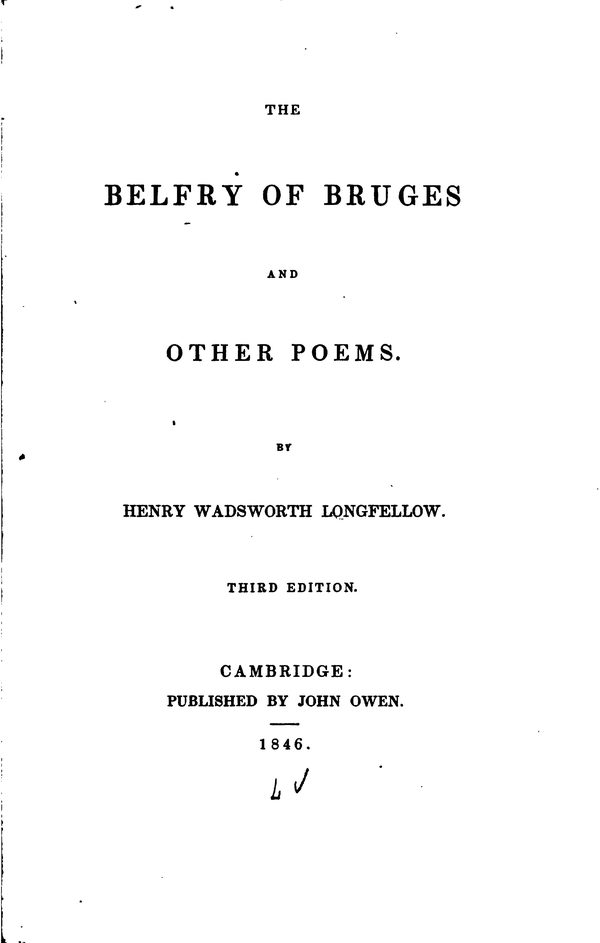
The poem appeared in Longfellow's collection The Belfry of Bruges and Other Poems. It is the twelfth poem in that book.
What readers have said
Anonymous reads the poem as a longing for death: the village is heaven, the treasured volume is the Bible, and rest means eternal rest. Anonymous, 2004
Amanda memorized the poem by accident during a rainy spring and finds it relaxing, but senses a longing for more than a night's sleep, a longing for eternal rest. amanda, 2004
Reva singles out the benediction image and reads it as a wish for inner quiet, letting the heart be at peace about things beyond one's control. Reva, 2004
Rebecca reads it as a poem for anyone at the end of a hard working day, noting that where a loved one once read aloud, people now turn to music or television. Rebecca, 2005
Peter Kocsis, a structural engineer, identifies with the great poets the speaker turns away from, hoping to be among those "Whose distant footsteps echo" after he is gone. Peter Kocsis, 2012
JJ dissents, calling it the most pointless poem ever written. JJ, 2004
Keep reading
Discover more of Henry Wadsworth Longfellow’s poetry.
I think this poem reflects Longfellow's desire for rest in life, as in, death. I think he wanted peace, and the village he refered to is heaven. The "treasured volume" is The Bible, and he wanted to hear good news, and things about peace and heaven, instead of reading poems of his time period about the struggles and hardships of life. I think he was ready to leave life behind and move on to rest in peace.
Ilove this poem. It suggests that heartfelt poetry is like a prayer which calms the soul. The beautiful sound of it drives one's cares away.
LexiUnited States
I love the imagery in this poem, especially in the last stanza. The pictures that come to mind are vivid and very detailed. Longfellow doesn't stop just at comparing two things, they become symbols of his longing for eternal rest.
amandaUnited States
i absolutely love this poem! i accidentally memorized it because i read it so often during an especially rainy spring a few years ago. it's all good, though, because i still quote it to myself, especially when i turn in for the night.
this poem has a very relaxing feeling to it. it does seem to have a sort of longing for more than just the rest you get at the end of the day--that feeling when you sink into bed and just get to forget about everything--and has a sort of longing for eternal rest. this would be a very intensified "sinking into bed and just forgetting about everything" feeling, i would imagine... plus the obvious excitement and contentment of having made it Home...
JJUnited States
Longfellow might be one of "America's greatest poets," but this is the most pointless poem ever written.
RevaUnited States
I particularly love the term "the benediction that follows after prayer". This, to me, is a desire for solitude devoid of the noise and tumult in your mind. When all is said that can be said then let the heart be at peace, leaving things that are out of your hands.
This poem means a lot. It was written with feeling, which is important, because it's one to relate with. I really liked it.
RebeccaUnited States
As with everyone else I too love this poem. I love it becuase it is a poem for every man and woman. After a hard days work and lifes daily stress, when finally at home all you wish is for some peace and quiet. In Longfellows time it was the sweet voice of a loved one reading you a story or poem. Today we usually turn to music or T.V. My favorite stanza is 'A sadness and a longing that's not akin to pain. And resembles sorrow only as mist resembles rain' I love the imagery of that simple line. The beauty of this poem is its simplicity.
i am using this poem as a related text to inner journeys. I think this poem has real depth and it is fantastic to read.
TiffanyUnited States
This poem touched me. At the beginging it was really sad but by the end i was shouting for joy. Henry Wadsworth Longfellow can really write poetry. He knows how to get the readers attention really well.
MelissaUnited States
I really liked this poem. its so peaceful and serene it makes me want to lie down and rest. I can really relate also because i am really tired during the day and it feels so nice to snuggle in bed at the end of the day.
lauraUnited States
I heard a stanza from this poem while watching a movie titled Last Chance. Both the words from the poem and the movie moved me. There was beauty in the words, and the way it which they was spoken by the actor. I look forward to reading the full poem in all its beauty.
brittUnited States
I must say this poem is quite spectacular, I am only fifteen years of age and I read this poem for school out of my literatue text book, and it even though I might not have as many years of experience as everyone else commenting on this site I feel that this poem has definitely touched me in some sort of way. Anyone who thinks poety is a waste of time, should think about what they're actually saying.
ToddUnited States
How wonderful to come across this work of Longfellow after so many years. I memorized this for a drama class in 7th grade, and am glad for the reintroduction. It spoke soothingly to me then and now.
Jennifer
There is a wonderful piece of music set to Longfellows text. The song is called "And the Night Shall Be Filled With Music" by Greg Gilpin. Heritage Choral Series is the publisher.
As a youngster growing up in Winnipeg, Manitoba in the mid 1950's, there was a local radio station that closed their broadcasting day with the first verse of this poignant peom. I has stayed with me all of these years and by chance came across the complete poem on this site. I could not state my feelings any better than the individual who posted the comments on October 10, [email removed]:35
SamBrazil
This poem is good.
imaneMorocco
i can't understand this poem i have an exposer tomorrow and still can't understand it sorry
DoloresCanada
Day is done..
My Grade Three teacher read this to the class on more than a few occasions..that was a long time ago. I wonder if teachers still do those kinds of things...Wadsworth Longfellow in Grade Three..thankyou Mrs. Hellofs.
Peter KocsisUnited States
Why I liked the poem.
As a structural engineer, I have written a variety of articles and two booklets on the subject of structural engineering. My hope is that long after I am gone my work will be remembered and used. My hope is that I will be among those "Whose distant footsteps echo Through the corridors of Time." That one line captures my feelings better than anything I can say. -Peter Kocsis
I think this poem reflects Longfellow's desire for rest in life, as in, death. I think he wanted peace, and the village he refered to is heaven. The "treasured volume" is The Bible, and he wanted to hear good news, and things about peace and heaven, instead of reading poems of his time period about the struggles and hardships of life. I think he was ready to leave life behind and move on to rest in peace.
Ilove this poem. It suggests that heartfelt poetry is like a prayer which calms the soul. The beautiful sound of it drives one's cares away.
I love the imagery in this poem, especially in the last stanza. The pictures that come to mind are vivid and very detailed. Longfellow doesn't stop just at comparing two things, they become symbols of his longing for eternal rest.
i absolutely love this poem! i accidentally memorized it because i read it so often during an especially rainy spring a few years ago. it's all good, though, because i still quote it to myself, especially when i turn in for the night.
this poem has a very relaxing feeling to it. it does seem to have a sort of longing for more than just the rest you get at the end of the day--that feeling when you sink into bed and just get to forget about everything--and has a sort of longing for eternal rest. this would be a very intensified "sinking into bed and just forgetting about everything" feeling, i would imagine... plus the obvious excitement and contentment of having made it Home...
Longfellow might be one of "America's greatest poets," but this is the most pointless poem ever written.
I particularly love the term "the benediction that follows after prayer". This, to me, is a desire for solitude devoid of the noise and tumult in your mind. When all is said that can be said then let the heart be at peace, leaving things that are out of your hands.
This poem means a lot. It was written with feeling, which is important, because it's one to relate with. I really liked it.
As with everyone else I too love this poem. I love it becuase it is a poem for every man and woman. After a hard days work and lifes daily stress, when finally at home all you wish is for some peace and quiet. In Longfellows time it was the sweet voice of a loved one reading you a story or poem. Today we usually turn to music or T.V.
My favorite stanza is 'A sadness and a longing that's not akin to pain. And resembles sorrow only as mist resembles rain' I love the imagery of that simple line. The beauty of this poem is its simplicity.
i am using this poem as a related text to inner journeys. I think this poem has real depth and it is fantastic to read.
This poem touched me. At the beginging it was really sad but by the end i was shouting for joy. Henry Wadsworth Longfellow can really write poetry. He knows how to get the readers attention really well.
I really liked this poem. its so peaceful and serene it makes me want to lie down and rest. I can really relate also because i am really tired during the day and it feels so nice to snuggle in bed at the end of the day.
I heard a stanza from this poem while watching a movie titled Last Chance. Both the words from the poem and the movie moved me. There was beauty in the words, and the way it which they was spoken by the actor. I look forward to reading the full poem in all its beauty.
I must say this poem is quite spectacular, I am only fifteen years of age and I read this poem for school out of my literatue text book, and it even though I might not have as many years of experience as everyone else commenting on this site I feel that this poem has definitely touched me in some sort of way. Anyone who thinks poety is a waste of time, should think about what they're actually saying.
How wonderful to come across this work of Longfellow after so many years. I memorized this for a drama class in 7th grade, and am glad for the reintroduction. It spoke soothingly to me then and now.
There is a wonderful piece of music set to Longfellows text. The song is called "And the Night Shall Be Filled With Music" by Greg Gilpin. Heritage Choral Series is the publisher.
As a youngster growing up in Winnipeg, Manitoba in the mid 1950's, there was a local radio station that closed their broadcasting day with the first verse of this poignant peom. I has stayed with me all of these years and by chance came across the complete poem on this site. I could not state my feelings any better than the individual who posted the comments on October 10, [email removed]:35
This poem is good.
i can't understand this poem i have an exposer tomorrow and still can't understand it sorry
Day is done..
My Grade Three teacher read this to the class on more than a few occasions..that was a long time ago. I wonder if teachers still do those kinds of things...Wadsworth Longfellow in Grade Three..thankyou Mrs. Hellofs.
Why I liked the poem.
As a structural engineer, I have written a variety of
articles and two booklets on the subject of structural
engineering. My hope is that long after I am gone my work will be remembered and used. My hope is that I will be among those "Whose distant footsteps echo
Through the corridors of Time." That one line captures
my feelings better than anything I can say.
-Peter Kocsis