Sleep softly ... eagle forgotten ... under the stone.
Time has its way with you there, and the clay has its own.
"We have buried him now," thought your foes, and in secret rejoiced.
They made a brave show of their mourning, their hatred unvoiced.
They had snarled at you, barked at you, foamed at you, day after day.
Now you were ended. They praised you ... and laid you away.
The others, that mourned you in silence and terror and truth,
The widow bereft of her crust, and the boy without youth,
The mocked and the scorned and the wounded, the lame and the poor,
That should have remembered forever, ... Remember no more.
Where are those lovers of yours, on what name do they call,
The lost, that in armies wept over your funeral pall?
They call on the names of a hundred high-valiant ones,
A hundred white eagles have risen, the sons of your sons,
The zeal in their wings is a zeal that your dreaming began.
The valor that wore out your soul in the service of man.
Sleep softly ... eagle forgotten ... under the stone.
Time has its way with you there, and the clay has its own.
Sleep on, O brave-hearted, O wise man that kindled the flame --
To live in mankind is far more than to live in a name,
To live in mankind, far, far more than ... to live in a name
✦
Analysis
The Eagle That is Forgotten: analysis
Introduction
"The Eagle That is Forgotten" is an elegy for a dead man the poem calls an "eagle." It never gives his name. His enemies, the poem says, pretended to mourn him and secretly rejoiced. The poor and the scorned, who truly mourned him, have now forgotten him too.
Yet his spirit lives on in "A hundred white eagles" who carry on his work. The poem ends with its central claim: "To live in mankind is far more than to live in a name." It is a poem about memory, hypocrisy and the kind of legacy that outlasts fame.
Summary
The speaker tells the "eagle forgotten" to sleep softly under the stone. Time works on the dead man there. The clay of the grave takes its own share of him.
His enemies thought, "We have buried him now," and rejoiced in secret. They made "a brave show of their mourning" and kept their hatred hidden. Day after day they had snarled, barked and foamed at him. Now that he was dead, they praised him and laid him away.
Others mourned him "in silence and terror and truth." They include the widow "bereft of her crust" and "the boy without youth." They are the mocked, the scorned, the lame and the poor. These people should have remembered him forever. Now they "Remember no more."
The speaker asks where his lovers are now, and whose name they call. These are the lost who wept "in armies" over his funeral pall. They now call on "a hundred high-valiant ones." A hundred white eagles, "the sons of your sons," have risen. Their zeal began in his dreaming, and his valour wore out his soul in the service of man.
The opening couplet returns: sleep softly, under the stone, while time and clay have their way. The speaker tells the "brave-hearted" and "wise man that kindled the flame" to sleep on. The poem closes by saying twice that to live in mankind is far more than to live in a name.
Themes and meaning
The first theme is forgetting. The title and refrain call him the "eagle forgotten." Even those who owed him most "Remember no more." The poem mourns not only a death but the loss of memory that follows. Line 10 stresses the failure: they "should have remembered forever."
A second theme is public hypocrisy. His foes "in secret rejoiced" and "made a brave show of their mourning." Line 5 shows how they treated him in life: "snarled at you, barked at you, foamed at you." The animal verbs make the enemies sound like dogs. Their praise, once he is dead, is shown to be false.
A third theme is loyalty to the poor. His true mourners are the outcast: the "boy without youth," the "mocked," the "scorned," "the lame and the poor." They mourned "in silence and terror and truth." The list implies he had fought for such people. The poem sides with them even as it records their forgetting.
A fourth theme is legacy through others. The fourth stanza turns from loss to renewal. "A hundred white eagles have risen, the sons of your sons." Their zeal "your dreaming began." His work continues in people who may not know his name.
This leads to the poem's closing idea. "To live in mankind is far more than to live in a name." A name can be forgotten, as his has been. But his influence lives on in the people he inspired. The poem turns the forgetting of the title into a kind of victory.
Tone
The tone opens as a tender, hushed elegy. The ellipses in "Sleep softly ... eagle forgotten ... under the stone" slow the voice to a murmur. It sounds like a farewell spoken at the grave.
In the second stanza the tone turns bitter and scornful. The foes' "brave show" is exposed as false. The harsh verbs "snarled," "barked" and "foamed" carry contempt.
The third stanza is sorrowful, even reproachful, toward the forgetful poor. The fourth grows hopeful and proud as the "white eagles" rise. The final stanza is calm and consoling. The repeated last line, with its halting "far, far more than ...," sounds like a quiet but firm conviction.
Form and structure
The poem has 21 lines in 5 stanzas of 2, 4, 4, 6 and 5 lines. The lines are long, from 12 to 16 syllables. The rhythm is a rolling triple beat, mostly anapests, as in "They had snarled at you, barked at you, foamed at you."
The lines rhyme in couplets, such as "stone" and "own," or "day" and "away." The last stanza ends on a triple rhyme, with "flame" and "name" twice. The opening couplet returns as a refrain at line 17 and line 18. Ellipses mark pauses throughout, and the final line repeats the one before it with a halting change.
Poetic devices
Metaphor line 1
eagle forgotten The dead man is called an eagle, a bird of strength and height. The word "forgotten" sets the poem's sorrow in its first line.
Personification line 2
Time has its way with you there Time acts on the buried man like a living force. The line quietly admits the body's decay.
Irony line 4
They made a brave show of their mourning The foes' grief is a performance. "brave show" exposes it as false display.
Anaphora line 5
They had snarled at you, barked at you, foamed at you The repeated "at you" and the dog-like verbs build a picture of constant attack. The enemies are reduced to snarling animals.
Polysyndeton line 7
in silence and terror and truth The repeated "and" slows the line. It gives weight to each part of the true mourners' grief.
Rhetorical question line 11
Where are those lovers of yours The question points to the forgetting of stanza 3. It then opens the answer that they have turned to new heroes.
Metaphor line 14
A hundred white eagles have risen The dead man's followers are new eagles. The image shows his spirit multiplied in others.
Refrain line 17
Sleep softly ... eagle forgotten The opening line returns. The repetition frames the poem as a graveside farewell.
Metaphor line 19
wise man that kindled the flame His work is pictured as lighting a fire that others keep burning. It links to the "zeal" of line 15.
Antithesis line 20
To live in mankind is far more than to live in a name Two kinds of survival are set against each other. The line states the poem's main idea in balanced phrases.
Repetition line 21
far, far more than ... to live in a name The last line repeats line 20 with a doubled "far" and a pause. The hesitation adds emphasis and ends the poem slowly.
Words worth knowing
clay
The earth of the grave; also, in older use, the human body.
unvoiced
Not spoken aloud; kept hidden.
bereft
Deprived of something; left without it.
crust
A piece of bread, the barest food.
pall
A heavy cloth spread over a coffin at a funeral.
high-valiant
Very brave; a compound made for the poem.
Context
Vachel Lindsay lived from 1879 to 1931. "The Eagle That is Forgotten" was the archive's Poem of the Day on July 23, 2000. Readers left 6 comments on it between 2005 and 2021.
What readers have said
Keiko Kitayama reads the poem literally, as a touching poem about eagles, and recommends it to animal lovers who want to preserve wildlife. Keiko Kitayama, 2005
David corrects that reading: the poem is a political statement about Altgeld, not about eagles at all. David, 2005
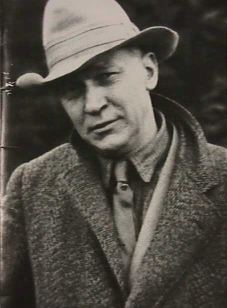
Jean Young, raised in Illinois, identifies the eagle as Governor John P. Altgeld. This reader says he was vilified for pardoning workers after the Haymarket riot, and endorses the poem's closing line. Jean Young, 2011
James King calls it a gorgeous poem, recommends Howard Fast's book on Altgeld, and says such courage deserves respect across political lines. James King, 2021
I just love this poem! It is just so touching to read about the eagle. Plus they are getting extinct too. This poem really touched my heart and I recommend it to all animal lovers out there that want to preserve wildlife.
rehana
if the are acceped, the will e added,together we can build a wealth of information, but it will take some discipline and determination.
DavidUnited States
Fellas, Lindsay's writing of Altgeld; this is a political statement; it's not about eagles at all.
SimonAustralia
Mates, this is the best, most touching poem I have ever read in my life!
Jean YoungUnited States
Who is the eagle mentioned in the poem?
I was raised in the state of Illinois. The eagle mentioned in the poem was John P. Altgeld, a governor of Illinois. In the early days of the labor movements, there was a riot in Chicago at a place called the Haymarket. Police were sent in and many were injured or killed. Altgeld pardoned the workers who rioted there because he felt that theirs was a just cause. For this action he was vilified by those in power; nevertheless, Lindsay was right. "To live in mankind is far more than to live in a name."
A gorgeous poem. For all of you who are interested in John P. Altgeld, Howard Fast wrote a tremendous book titled "The American". I read it first over 50 years ago for a book report in high school - no one knew who Altgeld was when I began, but everyone knew a lot about him when I'd finished. As I've grown older I've become much more conservative than I was then; however, a true Profile in Courage like Altgeld deserves extreme respect even from those who are on the other side of the spectrum.
I just love this poem! It is just so touching to read about the eagle. Plus they are getting extinct too. This poem really touched my heart and I recommend it to all animal lovers out there that want to preserve wildlife.
if the are acceped, the will e added,together we can build a wealth of information, but it will take some discipline and determination.
Fellas,
Lindsay's writing of Altgeld; this is a political statement; it's not about eagles at all.
Mates, this is the best, most touching poem I have ever read in my life!
Who is the eagle mentioned in the poem?
I was raised in the state of Illinois. The eagle mentioned in the poem was John P. Altgeld, a governor of Illinois. In the early days of the labor movements, there was a riot in Chicago at a place called the Haymarket. Police were sent in and many were injured or killed. Altgeld pardoned the workers who rioted there because he felt that theirs was a just cause. For this action he was vilified by those in power; nevertheless, Lindsay was right. "To live in mankind is far more than to live in a name."
A gorgeous poem. For all of you who are interested in John P. Altgeld, Howard Fast wrote a tremendous book titled "The American". I read it first over 50 years ago for a book report in high school - no one knew who Altgeld was when I began, but everyone knew a lot about him when I'd finished. As I've grown older I've become much more conservative than I was then; however, a true Profile in Courage like Altgeld deserves extreme respect even from those who are on the other side of the spectrum.