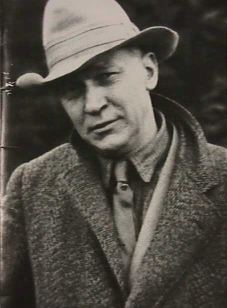
The poem
No doubt to-morrow I will hide My face from you, my King. Let me rejoice this Sunday noon, And kneel while gray priests sing.
It is not wisdom to forget. But since it is my fate Fill thou my soul with hidden wine To make this white hour great.
My God, my God, this marvelous hour I am your son I know. Once in a thousand days your voice Has laid temptation low.
This poem shows that faith isn't simple or one-dimensional, but ebbs and flows in the darkness and complexity of this often less-than-divine world. The faith expressed and explored here is human and real. And the poem is artful in its music and economy of language. Vachel Lindsay is a wonderful poet who's too often overlooked.
Hummer’s essay on Va
Hummer’s essay on Vachel Lindsay is very interesting.a0 These poems of his are a reoialtevn of sorts, so different in tone–but not in manner–from the ones that everybody of my generation knows. He feels like a precursor of rap, because of his snappy meters and repetitions and swift flow; there’s something almost “smart-alecky†about his lines, oddly out of synch with the moral earnestness and naive good…
Read the whole commentHummer’s essay on Vachel Lindsay is very interesting.a0 These poems of his are a reoialtevn of sorts, so different in tone–but not in manner–from the ones that everybody of my generation knows. He feels like a precursor of rap, because of his snappy meters and repetitions and swift flow; there’s something almost “smart-alecky†about his lines, oddly out of synch with the moral earnestness and naive good intentions that make him feel dated. Even the way he seems to turn against jazz and the saxophone in these poems, in favor of the romanticized Irish harp, suggests a kind of narrowness, an inability to love opposites, to hold two things in focus at the same time. But isn’t that particular faculty for creative ambivalence exactly what poetry is good at? More