One Train May Hide Another

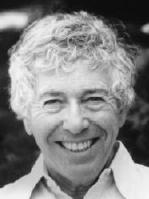
Portrait of Kenneth Koch
Kenneth Koch 1925–2002

(sign at a railroad crossing in Kenya)

In a poem, one line may hide another line, As at a crossing, one train may hide another train. That is, if you are waiting to cross The tracks, wait to do it for one moment at Least after the first train is gone. And so when you read Wait until you have read the next line— Then it is safe to go on reading. In a family one sister may conceal another, So, when you are courting, it's best to have them all in view Otherwise in coming to find one you may love another. One father or one brother may hide the man, If you are a woman, whom you have been waiting to love. So always standing in front of something the other As words stand in front of objects, feelings, and ideas. One wish may hide another. And one person's reputation may hide The reputation of another. One dog may conceal another On a lawn, so if you escape the first one you're not necessarily safe; One lilac may hide another and then a lot of lilacs and on the Appia Antica one tomb May hide a number of other tombs. In love, one reproach may hide another, One small complaint may hide a great one. One injustice may hide another—one colonial may hide another, One blaring red uniform another, and another, a whole column. One bath may hide another bath As when, after bathing, one walks out into the rain. One idea may hide another: Life is simple Hide Life is incredibly complex, as in the prose of Gertrude Stein One sentence hides another and is another as well. And in the laboratory One invention may hide another invention, One evening may hide another, one shadow, a nest of shadows. One dark red, or one blue, or one purple—this is a painting By someone after Matisse. One waits at the tracks until they pass, These hidden doubles or, sometimes, likenesses. One identical twin May hide the other. And there may be even more in there! The obstetrician Gazes at the Valley of the Var. We used to live there, my wife and I, but One life hid another life. And now she is gone and I am here. A vivacious mother hides a gawky daughter. The daughter hides Her own vivacious daughter in turn. They are in A railway station and the daughter is holding a bag Bigger than her mother's bag and successfully hides it. In offering to pick up the daughter's bag one finds oneself confronted by the mother's And has to carry that one, too. So one hitchhiker May deliberately hide another and one cup of coffee Another, too, until one is over-excited. One love may hide another love or the same love As when "I love you" suddenly rings false and one discovers The better love lingering behind, as when "I'm full of doubts" Hides "I'm certain about something and it is that" And one dream may hide another as is well known, always, too. In the Garden of Eden Adam and Eve may hide the real Adam and Eve. Jerusalem may hide another Jerusalem. When you come to something, stop to let it pass So you can see what else is there. At home, no matter where, Internal tracks pose dangers, too: one memory Certainly hides another, that being what memory is all about, The eternal reverse succession of contemplated entities. Reading A Sentimental Journey look around When you have finished, for Tristram Shandy, to see If it is standing there, it should be, stronger And more profound and theretofore hidden as Santa Maria Maggiore May be hidden by similar churches inside Rome. One sidewalk May hide another, as when you're asleep there, and One song hide another song; a pounding upstairs Hide the beating of drums. One friend may hide another, you sit at the foot of a tree With one and when you get up to leave there is another Whom you'd have preferred to talk to all along. One teacher, One doctor, one ecstasy, one illness, one woman, one man May hide another. Pause to let the first one pass. You think, Now it is safe to cross and you are hit by the next one. It can be important To have waited at least a moment to see what was already there.

One Train May Hide Another: analysis

Introduction

One Train May Hide Another is a long, playful poem built on a railroad warning sign, quoted in its epigraph. The sign's point is simple: when one train passes, another may be behind it. The poem applies that warning to reading, love, family, art, memory and much else. It appears in the collection One Train.

The poem moves by lists and examples, each a new case of one thing hiding another. Most are comic, a few are dangerous, and one is a sudden private loss. Its closing advice is to pause and see "what was already there".

Summary

The poem opens with an epigraph in brackets. It names its source as a sign at a railroad crossing in Kenya. The rest of the poem works as a long commentary on that sign.

The speaker begins with poetry. One line may hide another, as one train may hide another. So a reader should wait for the next line before going on. The same holds in families, where one sister may conceal another. A father or brother may hide the man a woman is waiting to love.

The examples multiply. Words stand in front of objects, feelings and ideas. A wish, a reputation, a dog, a lilac or a tomb may hide others. In love, a small complaint may hide a large one. One colonial may hide another, down to a whole column of red uniforms.

Ideas, sentences, inventions, evenings and shadows can hide their doubles. A painting by someone after Matisse appears. Twins hide each other. Then the speaker recalls living in the Valley of the Var, "my wife and I". He says "One life hid another life" and that she is gone.

More cases follow: a mother and daughter with bags in a station, hitchhikers, cups of coffee and love. A doubtful statement may hide a certain one. Adam and Eve may hide the real Adam and Eve. Jerusalem may hide another Jerusalem.

The speaker advises stopping to let things pass. Memory is full of hidden memories. One novel may hide another, and one Roman church another. Songs, friends, teachers and illnesses can all hide others. The poem ends with a warning and with the value of waiting a moment.

Themes and meaning

The central theme is attention. The sign warns that danger can be hidden by what we already see. The poem turns this into a general habit of mind. The repeated advice, "Pause to let the first one pass", asks the reader to look twice at everything.

Reading and language are a major thread. The poem starts with "one line may hide another line" and tells the reader to wait for the next line. Line 15 says words "stand in front of objects, feelings, and ideas". Language both shows things and blocks them. The poem's own long lines keep revealing new cases behind old ones.

Love and relationships form another theme. A sister may conceal a sister, and "one reproach may hide another". Yet hiddenness is not always bad. Behind a false "I love you" may be "The better love lingering behind". The friend you would rather talk to may be standing behind the first.

Loss and memory enter suddenly at lines 34 and 35. "One life hid another life" is the poem's most private moment. The speaker then says that memory works by hiding, "that being what memory is all about". The comic method makes room for grief without dwelling on it.

Finally, the poem celebrates abundance. Tombs, lilacs, shadows and Jerusalems multiply. The world seems to hold more than it first shows. Danger and delight both wait behind the obvious.

Tone

The tone is witty, conversational and generous. The speaker sounds like a teacher giving advice with a smile. Examples tumble out, some absurd, like the dog on the lawn or the bath followed by rain.

The humour often has a sly edge. The line about colonial uniforms, "a whole column", turns a joke into politics. The mother whose bag the helper ends up carrying is light comedy.

At lines 34 and 35 the tone changes sharply. "And now she is gone and I am here" is plain and sad. The poem does not linger, but the moment shades what follows. The ending returns to dry humour with a real warning: "you are hit by the next one". The final line is calm and wise.

Form and structure

The poem has a one-line epigraph and a second stanza of 67 lines. It is free verse with no rhyme scheme. Line lengths swing from 9 to 29 syllables, and the longest lines sprawl like the lists they carry.

The structure is a catalogue. The phrase "may hide another" and its variants return again and again, giving the poem its drive. Sentences often end mid-line and new ones begin, as in line 27. Enjambment does what the poem describes. Line 5 ends on the word "at", so the reader must wait for line 6 before the sense arrives.

Poetic devices

Simile line 3
As at a crossing, one train may hide another train. The governing comparison of the poem. It links reading poetry to waiting safely at a crossing.
Anaphora line 16
One wish may hide another. The pattern of One followed by may hide another recurs throughout. It drives the catalogue forward.
Enjambment line 5
The tracks, wait to do it for one moment at The line breaks after at, so the reader must wait for the next line. The form acts out the advice.
Bathos line 24
As when, after bathing, one walks out into the rain. A comic drop after a lofty pattern. It keeps the tone light and surprising.
Allusion line 26
as in the prose of Gertrude Stein Refers to a writer known for repeated, shifting sentences. It suits the idea of one sentence hiding another.
Allusion line 48
Adam and Eve may hide the real Adam and Eve. The biblical first couple may conceal truer figures. Even origin stories have hidden layers.
Tonal shift line 35
And now she is gone and I am here. A short, plain sentence of loss amid comic examples. Its simplicity gives it force.
Irony line 66
you are hit by the next one The feeling of safety is what puts the walker in danger. The joke delivers the sign's real warning.
Metaphor line 52
Internal tracks pose dangers, too The mind has its own railway lines. Memories can arrive like hidden trains.
Personification line 15
As words stand in front of objects Words stand like people blocking a view. Language is shown as something that can conceal.

Words worth knowing

Appia Antica
The ancient Appian Way outside Rome, an old road lined with tombs.
colonial
Here a person from a colonising power, such as a soldier or official, in a red uniform.
Valley of the Var
The valley of the Var river in the south of France.
Santa Maria Maggiore
A large and ancient church in Rome, among many similar churches there.
theretofore
Until that time. The novel stands there, formerly hidden.
Tristram Shandy
A novel paired with A Sentimental Journey in line 54. The poem suggests one book can hide a greater one by the same hand.

What readers have said

  • Having grown up around trains and their wrecks, finds the poem's philosophy entrancing, and links it to the motto festina lente, make haste slowly. Mike Schattman, 2005

This analysis was drafted from the poem’s text, the records of American Poems and the readers’ comments. Every quotation and line number was checked against the poem, scanned for unsupported claims, and the editor read and revised it before publication. Facts about the poet’s life appear only when a source is given. Corrections are welcome through the contact page.

Revised in October 2026.

Keep reading

Discover more of Kenneth Koch’s poetry.

Explore all poems

Readers

Reader discussion 5 comments

Add your reading ↓
Readers
5
Longest reading
Mike Schattman64 words
  1. Mike Schattman United States

    Having grown up in and around trains so that their comings, goings and wrecks were part of life I am simply entranced by the poem and its insight. I am too pedestrian to critique the art of the poem. But I love the philospohy which could also be rendered "... if there is a rattlesnake under the rock, don't move the rock." Festina Lente.

  2. brinamag United States

    mm.. attractive..

    mm.. really like this style :)

  3. Shaved Scrotum Pictures United States

    hm. cognitively :)

    yeah... good thread :))

  4. Black Hair Amateur United States

    hm... attractive

    yeah. interesting thread

  5. Real Spanking Nstitute United States

    mm. informative.

    mm... thank you for this thoughts )

Your turn

Shown with your comment.

Never published. Only so we can reach you.

Comments are read before they appear. See our terms.