The poem
Water, is taught by thirst. Land -- by the Oceans passed. Transport -- by throe -- Peace -- by its battles told -- Love, by Memorial Mold -- Birds, by the Snow.

The poem
Water, is taught by thirst. Land -- by the Oceans passed. Transport -- by throe -- Peace -- by its battles told -- Love, by Memorial Mold -- Birds, by the Snow.
"Water, is taught by thirst." is a very short list poem with one idea: a thing is learned from its lack or its opposite. Water is known through thirst, land through time at sea, peace through battles, love through the grave, birds through snow. Each line repeats one grammar with new terms. There is no speaker, story or scene. The poem teaches by example, and then it stops.
The poem opens with a statement: "Water, is taught by thirst." Thirst is what teaches a person what water is. Line 2 applies the same pattern to land, which is taught "by the Oceans passed". Those are seas that have been crossed, so the traveller learns land from the water. Line 3 pairs "Transport" with "throe". Rapture, the line says, is taught by a spasm of pain.
Line 4 turns to peace, which is taught "by its battles told". These are the battles fought for that peace, recounted or counted up. Line 5 says love is taught "by Memorial Mold". That is the earth of a grave, where the dead are remembered. Line 6 gives the last pair: "Birds, by the Snow." Birds are taught by the snow of winter, and the sentence stops on its full stop.
Each line names a thing first and its teacher second. The verb "is taught" appears only in line 1, and the reader supplies it for the other five.
Knowledge comes through lack. The verb "taught" turns need into a lesson. Thirst knows more about water than a full glass does. A person who has been at sea knows land in a way that someone on shore does not. The value of each thing appears only from the far side of it.
This knowledge costs something. The teachers grow graver as the list goes on: thirst, ocean, "throe", battle, grave. None of them is gentle. In "Peace -- by its battles told", the word "its" makes the battles belong to peace. "told" suggests that the lesson comes through stories or a count of what was lost.
The heaviest lesson sits in line 5. "Love, by Memorial Mold" says, on this reading, that love is fully known only at the grave. "Memorial" points to remembering, and "Mold" points to earth and decay. The line is the longest in the poem, and the list slows there. The consequence is hard, since the lesson comes too late to use.
The last pair changes the pattern. "Birds, by the Snow." is quieter, and snow is not the plain opposite of birds as thirst is of water. Snow brings the empty, silent winter that makes birds missed. Readers tend to think of migration. The poem leaves the link unstated, so the reader has to do the last piece of learning.
The tone is impersonal and certain, like a set of proverbs. There is no first person and no appeal to the reader. Line 1 and line 2 end in full stops, which makes them sound settled and final.
The voice does not console. It states hard facts with no adjectives of feeling, and "throe" and "Mold" are left bare. Dashes in "Peace -- by its battles told" add a short, stern pause.
A restrained sadness rises at line 5, where the subject comes closest to private loss. The last line then lightens the sound. "Birds, by the Snow." is gentle, but it does not bring comfort. It ends on cold and absence, and the full stop gives no opening for reply.
The poem is 6 lines in 1 stanza, and its syllable counts run from 4 to 7. Line 3 and line 6 are the shortest at 4 syllables. They divide the poem into two matching halves. Metre is loose, with most lines near a three-beat iambic pattern and many opening on a stressed word.
"told" and "Mold" rhyme fully. "thirst" and "passed" share only a closing sound. "throe" rhymes with "Snow", so the two halves close on the same sound.
taught by thirstThirst becomes a teacher and water its subject. The odd comma before the verb makes the reader pause on the word Water.
Land -- by the Oceans passed.The verb is dropped and a dash stands in. The reader has to carry the rule forward from line 1.
Transport -- by throeSets the height of joy directly against a spasm of pain. The shortness of the line makes the two words almost collide.
Peace -- by its battles toldThe dash divides peace from war within one line. The gap acts out the separation the line is about.
Memorial MoldThe two m sounds bind remembrance to decay. The joined phrase makes the grave a monument and a rot at once.
MoldRhymes fully with told in line 4. It joins battles and graves.
Birds, by the Snow.Repeats the form of the earlier lines in the fewest words. The repeated pattern lets the poem end without any explanation.
the SnowStands for winter, silence and absence. It is a quiet, cold image to end on after the earlier violence.
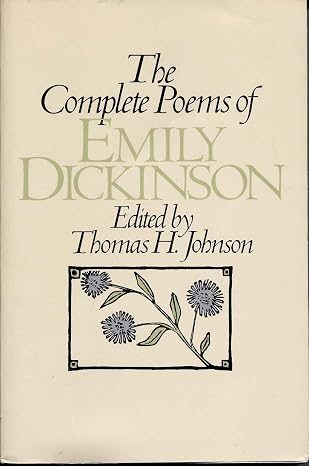
It is number 135 in the Complete Poems of Emily Dickinson. It was the site's Poem of the Day on February 13, 2002.
Keep reading
Readers
This poem is ok but makes no since. at all
I like this poem as well. but to me it makes sense. as like most poetry, the meaning does not jump out at you.
to me this poem means this:
In life we cannot appreciate, understand, comprehend anything until its gone or you need it more. Meaning that how do you know what pleasure is without pain? and how to know that you need water if your never thirsty. I think the last bird comment is that birds fly south in the winter...away from the snow. so we should appreciate all the other seasons when they are here- appreciate all the seasons for what they bring to us. we can only do that by having different ones to contrast them by.
and i find this poem speaking truth
Admittedly, this poem didn't seem to make much sense. But then I thought about it a bit. Dickenson's point is that only through polarities can we really understand things.....
Only when you are TRULY thirsty, can you really understand how wonderful, refreshing, and life-giving water is. How can you understand solid land any better than by leaving it completely behind? Peace means nothing without understanding what people have sacrificed to MAKE that peace. And only in death ("memorial mold") can you really understand how deep and wonderful love is. It really is a beautiful, resonant poem.
I'm trying to do my english homework, is about this poem and there's a question that I don't understand.
Here's the question: What is the relationship between each lines's first word and the following words?
Can somebody help me ?
THANK YOU
Maybe I am just a smarty (what can I say) but I understood the meaning right away. I didnt have to "wait" for it to "jump" out. Who knows. This poem is oh so very true.
I had to read this poem and I didn't understand it all. On top of that I had to add a second verse to it. Can someone please explain this poem and give me an example of what to add PLEASE!!
I think that this poem is really beautiful and has a great meaning! We really don't appreciate anything until it's taken away from us.
This poem is one of the best I've ever read. The first time i read this I was in class, when i read it at first i didn't understnad it. But now i do and i see how it relates to real life. I'm glad she wrote this poem because it can open alot of peoples eyes if they let it.
Okay, well I also have to find the relationships between the first and following words of each line.
Apparently, they're each polars. One goes without the other. There is no love in death, and no happiness in pain. Also, for the birds part, birds fly south for the winter to avoid snow
this poem makes sense after reading the comments
this poem is an inspiration to all people like me. It really makes me feel like i belong in society.
this poem "rocks" it speaks to me and my pilgrimage to Uganda from Russia.
I Think it is about cows.
This is one of the greatesat poems i have ever read in my life. I didn't understand it at first, but my teacher explained it. Once i realized what it meant i thought it was so true. People never realize what they have until they don't have it anymore. It's truly a beautiful poem
this poem is true, we cant appreciate the things we have untill we go without them.
This poem is very touchy it goes deep into your heart and makes you appreciate what you have in life.
You don't know what you have until it's gone.
This poem is a very good poem, it realy made me think whats in my life that i don't appreciate. You sould appreciate the thing you love or dont have before there gone.
This poems was great. It really touches you. it makes me appriciate everything i have!
Water flows freely through the tap, but it means so little until it dries up. When I am thirsty I long for something that means so little to me. I exist in a peaceful society, but I don't wake with gratitude everyday because I have not experienced the lack of peace first hand.
I think we should all stop and look around us and learn to be grateful for those things that are invisible to us until they are gone.
This poem really touched me, i lost someone who was really close to me and i didnt realize how much i needed her and loved her until she was gone!
poem
i think this poem is a little hard to understand at first but when one looks further at the meaning of it then you really appreciate the central themes
You Americans and your poems, how can you understand this?
Emily Dickinson rahiim
poem is compar word, showing thing are taugt by triel.
- water is taught by thirst: you learn is water is good for the body you and cuench thirst (only by being thirst can suffering
- Land - by the oceans passed: oppsite bring out peopel.
- transport by throe: you only feel can good if have good experiens only if you frist experiens pain
- peace- by its battles told: peace able only be establis by their is frist a battl 0r some sort
- Love by menorial mold: you onely reelis thet you reely love somone after depart
- Birds by teh snow: Birds suffer on snow similar the awthor also they leave sad, any you is sad
- Throe: viylent spasim
Hey yo Rahiim Abiymael Oyoo Abiyram......waht is you talkin bout? no homies can understand yo jibbrish
Gerp
This poem made me hard