"Success is counted sweetest" is a twelve-line poem by Emily Dickinson built on a paradox. It claims that success is best understood by those who never reach it. The first stanza states this as a general rule. The next two stanzas test the rule on a battlefield.
The winning army, the "purple Host", cannot define victory as clearly as one defeated man. He lies dying and hears the sounds of the other side's triumph. The poem is about want, knowledge and loss. It argues that need, not possession, teaches what a thing is worth.
Summary
The first stanza makes a general claim. Success is valued most highly by people who never succeed. Lines 3–4 add a second claim in the form of a comparison. To understand a nectar, a person must be in the sharpest need of it.
The second stanza turns to an army. The speaker calls it the "purple Host" and says it "took the Flag today". Not one member of this army can give a clear definition of victory. The sentence does not stop at the end of line 8. It runs on into the last stanza without a break in the grammar.
The third stanza completes the comparison. None of the victors can define victory as clearly as one man, who is "defeated -- dying --". His ear is described as "forbidden", and on it the far-off music of the winners' triumph falls. The sound bursts on him "agonized and clear". The poem ends on that line with an exclamation mark.
Themes and meaning
The first theme is that lack teaches more than having. Line 1 says success is "counted" sweetest, so the subject is how success is judged. Line 4 makes the condition strict: understanding "Requires sorest need". The word "comprehend" in line 3 frames this as knowledge, and the one who lacks a thing knows its meaning best.
The battle scene turns this rule into a contest between victory and defeat. The whole army that "took the Flag" is set against one man. The poem says none of them can define victory "So clear" as he can. Winning, on this reading, dulls the sense of what winning means. The defeated man grasps victory because it has been taken from him.
The poem also treats understanding as something the senses take in, not something reasoned out. The first stanza uses taste, with "sweetest" and "nectar". The last stanza uses hearing, with "strains" and "ear". The shift moves the idea from an appetite to a wound. The dying man does not argue about victory but receives it as a sound that hurts.
A last theme is exclusion and the pain it brings. The word "forbidden" in line 10 shuts the dying man out of the triumph he hears. The last line, "agonized and clear", joins the sharpest understanding with the sharpest pain. The poem does not say whether this knowledge is a reward or only a further loss.
Tone
The opening is calm and general. Lines 1–4 sound like a proverb, stated with confidence and no personal voice. The speaker does not say 'I' anywhere in the poem.
The second stanza stays measured. It denies that any victor can define victory, but it does so in plain terms. The run-on from line 8 builds suspense, since the comparison is left hanging across the stanza break.
The third stanza grows intense. The dashes around "dying" slow the line and isolate the word. The last line is loud and harsh, with "Burst" and "agonized" and a final exclamation mark.
The ending can be read two ways. It may be tender toward the defeated man, granting him a knowledge the winners lack. It may also be bleak, since his clarity arrives only with pain and at the point of dying.
Form and structure
The poem has 12 lines in 3 stanzas of 4 lines each. Line lengths run from 5 to 8 syllables. Most lines alternate between seven and six syllables, in the manner of short hymn or ballad stanzas. The base metre is iambic trimeter, and several odd-numbered lines add an unstressed syllable at the end, as in "sweetest" and "nectar".
Line 5 stretches to eight syllables, close to iambic tetrameter. Line 4 is the shortest, and its stresses crowd together on "sorest need". The computed rhyme scheme finds one rhyme pair, "succeed" and "need" in stanza one. The ends of lines 6 and 8 give at most a faint echo.
The poem is two sentences long. The second runs from line 5 to the end, across a stanza break. That long sentence holds the whole battle scene together.
Poetic devices
Paradox line 2
By those who ne'er succeed. Completes the opening claim that success is sweetest to those who never succeed. The statement seems self-contradictory, and the rest of the poem sets out to justify it.
Sibilance line 1
Success is counted sweetest Repeated s sounds bind the opening line together. They give the proverb-like claim a smooth, memorable sound.
Metaphor line 3
To comprehend a nectar Success becomes a sweet drink that must be tasted to be known. The verb 'comprehend' turns tasting into a kind of understanding.
Colour imagery line 5
the purple Host The winning army is marked by the colour purple. Purple can suggest royal splendour or the colour of blood, and the text does not settle which.
Metonymy line 6
Who took the Flag today Taking the flag stands for winning the battle. The single concrete act sums up the whole victory.
Enjambment line 8
So clear of Victory The comparison runs over the stanza break into line 9. The reader must wait for the dying man before the sentence can close. The word 'clear' returns in line 12.
Caesura line 9
defeated -- dying -- The dashes break the line and set off each word. They slow the reading at the point where the man's condition is revealed.
Synecdoche line 10
forbidden ear The man is reduced to the ear that hears. Calling it forbidden shows he can hear the triumph but has no share in it.
Auditory imagery line 11
The distant strains of triumph The victory reaches the man only as far-off music. The distance stresses how far he is from the winners.
Oxymoron line 12
Burst agonized and clear! Pain and clarity are joined in one phrase. The line suggests that the clearest understanding of victory comes through suffering.
Words worth knowing
counted
'Reckoned' or 'judged'. The word concerns how success is valued, not how often it is tallied.
ne'er
A contraction of 'never', kept to one syllable for the metre.
nectar
A sweet liquid, and in old myth the drink of the gods. Here it stands for success as something tasted.
Host
An army or a great company of soldiers, not a person who receives guests.
took the Flag
Won the battle, possibly by capturing the enemy's flag. The phrase can also mean raising a flag in victory.
strains
Passages of music. The word also carries a hint of strain as effort or pain, which suits line 12.
Context
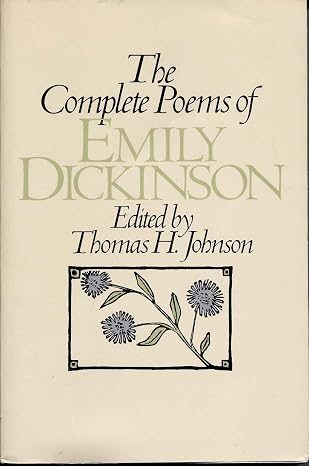
Emily Dickinson lived from 1830 to 1886. The archive's text comes from Complete Poems of Emily Dickinson, published in 1955. In that book it is poem number 67.
What readers have said
Anonymous (2005) reads the poem as about desire for what we lack, arguing that the victor no longer struggles and so no longer grasps the worth of winning. Anonymous, 2005
Shadae (2005) thinks winners are not focused on success because there is always a next stage to beat, while those who have not reached it cherish it more. Shadae, 2005
Steven (2006) takes the purple Host as a reference to the Purple Heart and reads the flag as one hoisted after a victory. Steven, 2006
Aaron (2006) rejects the Purple Heart reading, arguing that the decoration came into use long after the poem was written. Aaron, 2006
Brandy (2009) argues that the winners do value victory, but the dying soldier's real success would have been simply to live. Brandy, 2009
billie (2009) sees the poem as showing how opposites such as triumph and defeat depend on each other to be recognised. billie, 2009
Since nobody has taken the time to write a comment on this poem, I thought it would be my duty too. This poem is very deep and has alot of meaning for me. Those who have never won, can appreciate victory most, which is something i think we all can find in within ourselves. Emily had lost so many close family and friends and tells how those dying and dead truly know what it is to taste the "nectar" of success. To relate this to modern times, one could say this is the cry of the Boston Redsox, a team drowned in defeat, perhaps maybe they understand what it is truly to win.
GWB
Using a poetic shock by depending on these paradoxical relationship"success,failur or nectar,sorest"makes the meaning clearer and nobodycan tell you what is freedom and civilaization better than us.
AnonymousIceland
I think this poem is about desire that humans feel for what they do not have. The defeated understands the meaning of victory more than the victor because the victor does no longer needs to struggle for success and therefore does not understand its worth. Naturally, a person who won a battle does not comprehend the glory of the achievement as much as the soldier that is dying- loosing not only the battle, but his life. The pride that the winner feels in not as intense as the dying soldier who hears the triumphant shout bursting "agonized and clear." This is described as torture.
This poem describes something that you cant really explain only to feel and experince. Victory is the feeling that she is describing here. To understand this thought you need go out and find a challenge to experince what she wants.
AmberUnited States
Dickinson sees achievement and success as being sweet and compares it to one of the sweetest fruits of nature. She is respecting success by relating it with something from nature, which is successful and perfect in her mind
ShadaeUnited States
In this poem I beleive Emily is describing success. It shows you that those of us who acheive success aren't that focused on it. Because once you defeat one stage there is always a step above it that your going to try to beat next. However those of us who didn't reach success, cherish it more because you don't have yet and your anticpating on that victorious moment. So you keep striving for success.
BradUnited States
I think this poem is a call to us all for "appreciation" of our successes, our lives, and that which God gives us. The most successful don't always "appreciate" it as much as those of us who toil every day to make ends meet, yet find solice in small things; a child's smile, a small raise, a freebie, a gift, etc.. The most successful might seem to appreciate it because of the fine things they have, or the victor…
Read the whole comment
I think this poem is a call to us all for "appreciation" of our successes, our lives, and that which God gives us. The most successful don't always "appreciate" it as much as those of us who toil every day to make ends meet, yet find solice in small things; a child's smile, a small raise, a freebie, a gift, etc.. The most successful might seem to appreciate it because of the fine things they have, or the victor might seem to appreciate it because he's still living and receives the accolades, but most times they are just too used to it to actually appreciate it. Just ask the man dying on the battlefield how much he appreciates life, much more than the man celebrating with a cigar and waving his flag, I assure you. All things that make life worth living are gifts, appreciate the small things, even when they are few and far between. Appreciate them all as if you'll never see them again, and appreciate those around you that don't seem to find those small victories in life more than you admire the celebrities, the rich and famous, and the victors.
KelseyUnited States
I think this poem is speaking of war time, and how the acheivement of success often affects the "losers" more than the actual victors. To win is a great thing, but to lose and keep trying is even greater.
anryUnited States
Well, when i first started reading this poem, i don't understand the really meaning of it. But after i read it over and over again i sort of have ideas what the meaning of this poem. Dickson present the idea of success that is everyone have to face. It's not easy as we peel ripe banana. In fact, in our life " Sucessful" is really meaningful and very chalenge to everyone. Of course, this one word mean softer and sweeter but it's deepful meaning doesn't presence as itself presence here.
Oliver HagemanUnited States
Emily could have had success as a poet in her lifetime if she chose...however...she chose "immortality"....she knew she was gifted and preserved her physical identity which, in time to come, made her even more mysterious and sought after...she was willing to lose the battle in order to win the war...and she went for the whole enchilada...
i agree w/ brad n the guy from iceland's comments regarding the poem... people often take things for granted... a victory to a winner means nothing, only the defeated can explain the success/happiness associated w/ a vitory... For example, a person accustomed to getting A's will not be as grateful in receiving another "A" or even an "A-" as say someone who has never received an "A."
Lamar ColeUnited States
Life becomes so much sweeter for a person who is in love.
SeverenCanada
Different writing styles and various literary devices are used by the author to distinguish the themes in the poem. The first stanza is emphasized with punctuation and hyperboles. This stanza is telling the reader general information about success which can be applied to any context. The opening line used, “Success is counted sweetest by those who ne’er succeed.”, gives the reader the feeling that any person who is…
Read the whole comment
Different writing styles and various literary devices are used by the author to distinguish the themes in the poem. The first stanza is emphasized with punctuation and hyperboles. This stanza is telling the reader general information about success which can be applied to any context. The opening line used, “Success is counted sweetest by those who ne’er succeed.”, gives the reader the feeling that any person who is striving for a goal, desires it the most. In the next two lines, the reader is asked to remember the sweetness of success and that it is only obtained through the “sorest need.” “Sweetest,” and “sorest,” are hyperboles which stress the personal desire for greatness. Success is pictured as nectar which represents immortality to live on and is the first clue that this poem is not just about the Civil War. There is no punctuation in the second stanza. This verse is the most significant of the poem. On face value, it is describing the futility of the Civil War since neither side wins when one country is at war with itself. “Not one of all,” tells the reader that neither side of this battle knew who the winner was. However this stanza has three words capitalized and they are, “Host,” “Flag,” and “Victory.” Again if the poem is about the Civil War, the Host is the image of the country, the Flag represents the battle and the Victory stands for the northern victor. If Dickinson is writing metaphorically, these three words have different meanings. The “Host,” may refer to God, the “Flag,” is your soul as it goes onto Heaven, and “Victory,” is the cry of angels that greet you. In the third stanza punctuation re- appears with the use of hyphens around the word dying and the exclamation mark at the end. The use of hyphens is to make the reader pause at the end of an assonance phrase which emphasizes the idea of dying. This could be the “defeated,” death of a soldier on either side of the battle or your own death at the end of your life. The literary devices used in the last stanza are personification and irony. Personification is used to describe the “forbidden ear,” which prevents the dying soldier to hear who won. The cry of victory is describe ironically as “Burst agonized and clear!” since triumph in battle should be a happy event and not painful.
The second stanza truly is a tell-all to this poem, the purple host refers to the Purple Heart, the flag possibly refers to the hoisting of a flag after a victory. Those who can best define sucess are those who have suffered the most for it, and this is the message I believe Emily is trying to get across.
correct me if im wrong i've just started studying poetry today, but isnt it trying to say the winner didnt feel the success?? but the loser appreciates success more even tho being triumphed... n e ways i hope im not too far off ...
TaylorUnited States
I have taken the time to break down the three stanzas of Emily Dickinson's poem and have come to multiple conclusions about them all. But all of them have the same basic message, in any way you interpret it. The first stanza gives you a mix of messages, and doesnt bluntly come out and say anything of what you should be processing about the message and the poem itself, but once you understand the poem and if you look…
Read the whole comment
I have taken the time to break down the three stanzas of Emily Dickinson's poem and have come to multiple conclusions about them all. But all of them have the same basic message, in any way you interpret it.
The first stanza gives you a mix of messages, and doesnt bluntly come out and say anything of what you should be processing about the message and the poem itself, but once you understand the poem and if you look closely you realize that she is telling you exaclty what she wants you to get out of this poem. She shares her interpretation of success in the first few lines, and then elaborates on it more throughout the next few stanzas. It is telling you that success is meaningful to those who do not get it often. They are able to appreciate it more, than someone who is constantly succeeding in life.
Stanza two elaborates more on where she understands this from. The appretiation of success is not being brought out through the winner; they do not care as much because they are used to succeeding and believe they will have more success to come. They do not realize how much they have because its never been takin away from them.
The last stanza doesnt necessarily sum it all up which confuses you and leaves you pondering the whole message, but it does end her thought process so that you can somewhat see what she is meaning through this.] The one who has lost (or did not succeed) can hear the winner gloat and is getting frustrated and hurt inside. The winner is holding the triumph on the outside but being "sympathetic" while all along the loser can tell and see that they do not understand the true value and happiness that they have just earned.
I believe this poem relates to a game, in a sense that they have a flag, and when they retrieve the falg from the obstacles surrounding them, they have succeeding with triumph. (This game could relate you back to something such as capture the flag). Where as, you retrieve the flag from the people surrounding you and trying to grab a hold of you while you stand strong just to tear you and your hopes down ... just as people do when they are looking for succession wether it is earned or only gained by nothing.
I have thoroughly enjoyed reading everyone else's opinions about this poem, the relationship of this poem to the war, and purple hearts, like a purple host, is extraordinary. It really made you think and put yourself in a different position of the poem and determine new, and better interpretations and meanings of the poem, and life itself from Emily Dickinsons point of view.
Alright, this poem isn't exactly hard to grasp. Taylor pretty much covered it all. I must say that the Purple Heart idea, though a neat idea, is wrong on account of the time gap between the writing of Emily Dickenson and the appearance of the Purple Heart as a decoration of honor. Dickenson wrote Poem 67 ("Success is counted sweetest...") around 1859. The Purple Heart didn't come into service until 1917. It is also interesting to note that the poem was written before the Civil War, which began in 1861. As for the purple host then, purple has always been a sign of royalty and success, so the purple host could then mean the succussful portion of the populace.
In the poem “Success is counted sweetest” I think that this poem is about "appreciation" of successes. The most successful don't always "appreciate" it as much as those who work every day to make ends meet, yet find comfort in small things. The most successful might seem to appreciate it because of the fine things they have, or the victor might seem to appreciate it because he's still living and receives the praise,…
Read the whole comment
In the poem “Success is counted sweetest” I think that this poem is about "appreciation" of successes. The most successful don't always "appreciate" it as much as those who work every day to make ends meet, yet find comfort in small things. The most successful might seem to appreciate it because of the fine things they have, or the victor might seem to appreciate it because he's still living and receives the praise, but most times they are just too used to it to actually appreciate it. A person on their deathbed appreciates life much more than a person celebrating. All things that make life worth living is a gift, and everyone should appreciate the small things, even if they are few and far between.
Hannah and KirstenUnited States
Uhmm...You are wrong.Ok, Duh she's trying to say success is counted sweetest to people who don't succeed. But you have to be stupid to think winners dont feel success. You probably desended from the convicts of Great Britian.
JordieUnited States
The thing that most people don't realize about this poem is that she wrote it at the time of the civil war. I'm not claiming to be an expert on Emily, but if you take this into consideration the poem can be interpreted a little bit easier and with more clarity.
To me she's saying that those who won a battle, the purple host of brave men, can't count their victory as sweet as those who were defeated. because the man is dying, the victory seems sweeter to him, he values it more because he did not win it. You want what you can't have more than you want what you already do.
I hope people can understand what I'm trying to say, sometimes I confuse myself!
i think this poem is about how the losers know the meaning of victory better than the actual winner. success cannot be realized without the first knowing that desperation that comes with losing.
SavvyCanada
ha i did this peom for a project at school! I got assigned emily dickinson as a famous poet and this is the poem I chose!
BrandyUnited States
"Success is Counted Sweetest"
This is my personal interpretation of the poem- I believe as the fallen,defeated soldier lies there dying, he finally realizes just how important the victory was. Not that the winners did not apreciate the victory but they cannot possibly understand what it feels like to lose and while the winners are celebrating have to hear the sounds of victory as he lie there dying. The Ultimate success for this fallen soldier…
Read the whole comment
This is my personal interpretation of the poem- I believe as the fallen,defeated soldier lies there dying, he finally realizes just how important the victory was. Not that the winners did not apreciate the victory but they cannot possibly understand what it feels like to lose and while the winners are celebrating have to hear the sounds of victory as he lie there dying. The Ultimate success for this fallen soldier would be to live, not to win the war. It becomes a position of life and death, not who won the war. Like I first said, this is my interpretation. And I do not put others down on thiers and neither should anyone else. Everyone has different interpretations which is one of the great things about poetry!
billieUnited States
this poem is in my opinion a masterpiece, Dickinson displays the human-ness of unappreciation, but even more so than that, it is saying how everything is a compensation of each other..like triumph and defeat, dark and light--without one, we would not recognize the other as what it is.
JesseUnited States
greg
Greg, how can you say that you don't like Dickinson because she is messed up? All of histories greatest poets were a little messed up in the head. If you don't believe me how would you explain Poe? Whitman? Or T.S. Eliot?
frumpoUnited States
Only the unsuccessful can know and taste the meaning of success.
jonaPhilippines
lit.
my own interpretation of this poem is that you will value your greatest success if you yourself have been defeated many times..and still you strive hard to succeed..
MervatEgypt
American Literature
Emily Dickinson means in this poem that the losers know the meaning of victory better than the actual winners.Success cannot be realized without the first knowing of hopelessness that comes with losing.You want what you cannot have more than you want what you already do.all things that make life worth living is a gift,and everyone should appreciate the small things, even if they are few and far between.Success is meaningful to those who do not get often.they are able to appreciate it more than someone who is constantly succeeding in life.
monaEgypt
American Literature
the poem give a meassage that any one can feel success but the loser is the most one who taste success and feel it ...
AmeeraEgypt
success
this poem"s message is so clear the person who lacks ,understands whatever is lacking better than the person who possesses it
Emily Dickenson from the graveAntigua and Barbuda
Outside the box thinking
this poem might be a mask behind which is hidden a message,there is a code dating back from the Roman era possibly. FIND IT AND YOU WILL FIND A SURPRISE

Since nobody has taken the time to write a comment on this poem, I thought it would be my duty too. This poem is very deep and has alot of meaning for me. Those who have never won, can appreciate victory most, which is something i think we all can find in within ourselves. Emily had lost so many close family and friends and tells how those dying and dead truly know what it is to taste the "nectar" of success. To relate this to modern times, one could say this is the cry of the Boston Redsox, a team drowned in defeat, perhaps maybe they understand what it is truly to win.
Using a poetic shock by depending on these paradoxical relationship"success,failur or nectar,sorest"makes the meaning clearer and nobodycan tell you what is freedom and civilaization better than us.
I think this poem is about desire that humans feel for what they do not have. The defeated understands the meaning of victory more than the victor because the victor does no longer needs to struggle for success and therefore does not understand its worth. Naturally, a person who won a battle does not comprehend the glory of the achievement as much as the soldier that is dying- loosing not only the battle, but his life. The pride that the winner feels in not as intense as the dying soldier who hears the triumphant shout bursting "agonized and clear." This is described as torture.
This poem describes something that you cant really explain only to feel and experince. Victory is the feeling that she is describing here. To understand this thought you need go out and find a challenge to experince what she wants.
Dickinson sees achievement and success as being sweet and compares it to one of the sweetest fruits of nature. She is respecting success by relating it with something from nature, which is successful and perfect in her mind
In this poem I beleive Emily is describing success. It shows you that those of us who acheive success aren't that focused on it. Because once you defeat one stage there is always a step above it that your going to try to beat next. However those of us who didn't reach success, cherish it more because you don't have yet and your anticpating on that victorious moment. So you keep striving for success.
I think this poem is a call to us all for "appreciation" of our successes, our lives, and that which God gives us. The most successful don't always "appreciate" it as much as those of us who toil every day to make ends meet, yet find solice in small things; a child's smile, a small raise, a freebie, a gift, etc.. The most successful might seem to appreciate it because of the fine things they have, or the victor…
Read the whole commentI think this poem is a call to us all for "appreciation" of our successes, our lives, and that which God gives us. The most successful don't always "appreciate" it as much as those of us who toil every day to make ends meet, yet find solice in small things; a child's smile, a small raise, a freebie, a gift, etc.. The most successful might seem to appreciate it because of the fine things they have, or the victor might seem to appreciate it because he's still living and receives the accolades, but most times they are just too used to it to actually appreciate it. Just ask the man dying on the battlefield how much he appreciates life, much more than the man celebrating with a cigar and waving his flag, I assure you. All things that make life worth living are gifts, appreciate the small things, even when they are few and far between. Appreciate them all as if you'll never see them again, and appreciate those around you that don't seem to find those small victories in life more than you admire the celebrities, the rich and famous, and the victors.
I think this poem is speaking of war time, and how the acheivement of success often affects the "losers" more than the actual victors. To win is a great thing, but to lose and keep trying is even greater.
Well, when i first started reading this poem, i don't understand the really meaning of it. But after i read it over and over again i sort of have ideas what the meaning of this poem. Dickson present the idea of success that is everyone have to face. It's not easy as we peel ripe banana. In fact, in our life " Sucessful" is really meaningful and very chalenge to everyone. Of course, this one word mean softer and sweeter but it's deepful meaning doesn't presence as itself presence here.
Emily could have had success as a poet in her lifetime if she chose...however...she chose "immortality"....she knew she was gifted and preserved her physical identity which, in time to come, made her even more mysterious and sought after...she was willing to lose the battle in order to win the war...and she went for the whole enchilada...
i agree w/ brad n the guy from iceland's comments regarding the poem... people often take things for granted... a victory to a winner means nothing, only the defeated can explain the success/happiness associated w/ a vitory... For example, a person accustomed to getting A's will not be as grateful in receiving another "A" or even an "A-" as say someone who has never received an "A."
Life becomes so much sweeter for a person who is in love.
Different writing styles and various literary devices are used by the author to distinguish the themes in the poem. The first stanza is emphasized with punctuation and hyperboles. This stanza is telling the reader general information about success which can be applied to any context. The opening line used, “Success is counted sweetest by those who ne’er succeed.”, gives the reader the feeling that any person who is…
Read the whole commentDifferent writing styles and various literary devices are used by the author to distinguish the
themes in the poem. The first stanza is emphasized with punctuation and hyperboles. This stanza
is telling the reader general information about success which can be applied to any context. The
opening line used, “Success is counted sweetest by those who ne’er succeed.”, gives the reader
the feeling that any person who is striving for a goal, desires it the most. In the next two lines, the
reader is asked to remember the sweetness of success and that it is only obtained through the
“sorest need.” “Sweetest,” and “sorest,” are hyperboles which stress the personal desire for
greatness. Success is pictured as nectar which represents immortality to live on and is the first
clue that this poem is not just about the Civil War. There is no punctuation in the second stanza.
This verse is the most significant of the poem. On face value, it is describing the futility of the
Civil War since neither side wins when one country is at war with itself. “Not one of all,” tells the
reader that neither side of this battle knew who the winner was. However this stanza has three
words capitalized and they are, “Host,” “Flag,” and “Victory.” Again if the poem is about the
Civil War, the Host is the image of the country, the Flag represents the battle and the Victory
stands for the northern victor. If Dickinson is writing metaphorically, these three words have
different meanings. The “Host,” may refer to God, the “Flag,” is your soul as it goes onto
Heaven, and “Victory,” is the cry of angels that greet you. In the third stanza punctuation re-
appears with the use of hyphens around the word dying and the exclamation mark at the end. The
use of hyphens is to make the reader pause at the end of an assonance phrase which emphasizes
the idea of dying. This could be the “defeated,” death of a soldier on either side of the battle or
your own death at the end of your life. The literary devices used in the last stanza are
personification and irony. Personification is used to describe the “forbidden ear,” which prevents
the dying soldier to hear who won. The cry of victory is describe ironically as “Burst agonized and
clear!” since triumph in battle should be a happy event and not painful.
The second stanza truly is a tell-all to this poem, the purple host refers to the Purple Heart, the flag possibly refers to the hoisting of a flag after a victory. Those who can best define sucess are those who have suffered the most for it, and this is the message I believe Emily is trying to get across.
correct me if im wrong i've just started studying poetry today, but isnt it trying to say the winner didnt feel the success?? but the loser appreciates success more even tho being triumphed... n e ways i hope im not too far off ...
I have taken the time to break down the three stanzas of Emily Dickinson's poem and have come to multiple conclusions about them all. But all of them have the same basic message, in any way you interpret it. The first stanza gives you a mix of messages, and doesnt bluntly come out and say anything of what you should be processing about the message and the poem itself, but once you understand the poem and if you look…
Read the whole commentI have taken the time to break down the three stanzas of Emily Dickinson's poem and have come to multiple conclusions about them all. But all of them have the same basic message, in any way you interpret it.
The first stanza gives you a mix of messages, and doesnt bluntly come out and say anything of what you should be processing about the message and the poem itself, but once you understand the poem and if you look closely you realize that she is telling you exaclty what she wants you to get out of this poem. She shares her interpretation of success in the first few lines, and then elaborates on it more throughout the next few stanzas.
It is telling you that success is meaningful to those who do not get it often. They are able to appreciate it more, than someone who is constantly succeeding in life.
Stanza two elaborates more on where she understands this from.
The appretiation of success is not being brought out through the winner; they do not care as much because they are used to succeeding and believe they will have more success to come. They do not realize how much they have because its never been takin away from them.
The last stanza doesnt necessarily sum it all up which confuses you and leaves you pondering the whole message, but it does end her thought process so that you can somewhat see what she is meaning through this.]
The one who has lost (or did not succeed) can hear the winner gloat and is getting frustrated and hurt inside. The winner is holding the triumph on the outside but being "sympathetic" while all along the loser can tell and see that they do not understand the true value and happiness that they have just earned.
I believe this poem relates to a game, in a sense that they have a flag, and when they retrieve the falg from the obstacles surrounding them, they have succeeding with triumph. (This game could relate you back to something such as capture the flag). Where as, you retrieve the flag from the people surrounding you and trying to grab a hold of you while you stand strong just to tear you and your hopes down ... just as people do when they are looking for succession wether it is earned or only gained by nothing.
I have thoroughly enjoyed reading everyone else's opinions about this poem, the relationship of this poem to the war, and purple hearts, like a purple host, is extraordinary. It really made you think and put yourself in a different position of the poem and determine new, and better interpretations and meanings of the poem, and life itself from Emily Dickinsons point of view.
Alright, this poem isn't exactly hard to grasp. Taylor pretty much covered it all. I must say that the Purple Heart idea, though a neat idea, is wrong on account of the time gap between the writing of Emily Dickenson and the appearance of the Purple Heart as a decoration of honor. Dickenson wrote Poem 67 ("Success is counted sweetest...") around 1859. The Purple Heart didn't come into service until 1917. It is also interesting to note that the poem was written before the Civil War, which began in 1861. As for the purple host then, purple has always been a sign of royalty and success, so the purple host could then mean the succussful portion of the populace.
In the poem “Success is counted sweetest” I think that this poem is about "appreciation" of successes. The most successful don't always "appreciate" it as much as those who work every day to make ends meet, yet find comfort in small things. The most successful might seem to appreciate it because of the fine things they have, or the victor might seem to appreciate it because he's still living and receives the praise,…
Read the whole commentIn the poem “Success is counted sweetest” I think that this poem is about "appreciation" of successes. The most successful don't always "appreciate" it as much as those who work every day to make ends meet, yet find comfort in small things. The most successful might seem to appreciate it because of the fine things they have, or the victor might seem to appreciate it because he's still living and receives the praise, but most times they are just too used to it to actually appreciate it. A person on their deathbed appreciates life much more than a person celebrating. All things that make life worth living is a gift, and everyone should appreciate the small things, even if they are few and far between.
Uhmm...You are wrong.Ok, Duh she's trying to say success is counted sweetest to people who don't succeed. But you have to be stupid to think winners dont feel success. You probably desended from the convicts of Great Britian.
The thing that most people don't realize about this poem is that she wrote it at the time of the civil war. I'm not claiming to be an expert on Emily, but if you take this into consideration the poem can be interpreted a little bit easier and with more clarity.
To me she's saying that those who won a battle, the purple host of brave men, can't count their victory as sweet as those who were defeated. because the man is dying, the victory seems sweeter to him, he values it more because he did not win it. You want what you can't have more than you want what you already do.
I hope people can understand what I'm trying to say, sometimes I confuse myself!
i think this poem is about how the losers know the meaning of victory better than the actual winner. success cannot be realized without the first knowing that desperation that comes with losing.
ha i did this peom for a project at school! I got assigned emily dickinson as a famous poet and this is the poem I chose!
"Success is Counted Sweetest"
This is my personal interpretation of the poem- I believe as the fallen,defeated soldier lies there dying, he finally realizes just how important the victory was. Not that the winners did not apreciate the victory but they cannot possibly understand what it feels like to lose and while the winners are celebrating have to hear the sounds of victory as he lie there dying. The Ultimate success for this fallen soldier…
Read the whole commentThis is my personal interpretation of the poem- I believe as the fallen,defeated soldier lies there dying, he finally realizes just how important the victory was. Not that the winners did not apreciate the victory but they cannot possibly understand what it feels like to lose and while the winners are celebrating have to hear the sounds of victory as he lie there dying. The Ultimate success for this fallen soldier would be to live, not to win the war. It becomes a position of life and death, not who won the war.
Like I first said, this is my interpretation. And I do not put others down on thiers and neither should anyone else. Everyone has different interpretations which is one of the great things about poetry!
this poem is in my opinion a masterpiece, Dickinson displays the human-ness of unappreciation, but even more so than that, it is saying how everything is a compensation of each other..like triumph and defeat, dark and light--without one, we would not recognize the other as what it is.
greg
Greg, how can you say that you don't like Dickinson because she is messed up? All of histories greatest poets were a little messed up in the head. If you don't believe me how would you explain Poe? Whitman? Or T.S. Eliot?
Only the unsuccessful can know and taste the meaning of success.
lit.
my own interpretation of this poem is that you will value your greatest success if you yourself have been defeated many times..and still you strive hard to succeed..
American Literature
Emily Dickinson means in this poem that the losers know the meaning of victory better than the actual winners.Success cannot be realized without the first knowing of hopelessness that comes with losing.You want what you cannot have more than you want what you already do.all things that make life worth living is a gift,and everyone should appreciate the small things, even if they are few and far between.Success is meaningful to those who do not get often.they are able to appreciate it more than someone who is constantly succeeding in life.
American Literature
the poem give a meassage that any one can feel success but the loser is the most one who taste success and feel it ...
success
this poem"s message is so clear
the person who lacks ,understands whatever is lacking better than the person who possesses it
Outside the box thinking
this poem might be a mask behind which is hidden a message,there is a code dating back from the Roman era possibly. FIND IT AND YOU WILL FIND A SURPRISE