The poem
Much Madness is divinest Sense -- To a discerning Eye -- Much Sense -- the starkest Madness -- 'Tis the Majority In this, as All, prevail -- Assent -- and you are sane -- Demur -- you're straightway dangerous -- And handled with a Chain --

The poem
Much Madness is divinest Sense -- To a discerning Eye -- Much Sense -- the starkest Madness -- 'Tis the Majority In this, as All, prevail -- Assent -- and you are sane -- Demur -- you're straightway dangerous -- And handled with a Chain --
"Much Madness is divinest Sense" is an argument in a few short lines about who gets to define sanity. It opens with a paradox: much that is called madness is really sense, and much sense is madness. A "discerning Eye" can see this, but the majority cannot, and the majority decides. Agree and you count as sane, but object and you are put in chains. The poem moves quickly from a puzzle about words to a threat of force.
The poem opens with a claim about madness. Much of what is called madness is "divinest Sense", at least to "a discerning Eye". An eye that can judge finds the finest good sense in it. Line 3 reverses the terms: "Much Sense -- the starkest Madness". Much of what passes for good sense is, to that same eye, madness of the plainest kind. The verb is left out, so the reader carries it over from line 1.
Line 4 brings in a new subject, "the Majority". The next line says the Majority prevails in this matter, as it does in all matters. Line 6 and line 7 then give the two possible outcomes, each in a short clause. "Assent -- and you are sane". To agree is enough to be counted sane. "Demur", and you are at once "dangerous". To object is enough to be counted a threat.
The last line adds a consequence for the one who objects. That person is "handled with a Chain". The poem closes on this image of restraint.
Sanity is settled by numbers, not by truth. "'Tis the Majority" names the authority outright. Line 6 then reduces being sane to agreeing. "Assent -- and you are sane" contains no test of reason at all. Sanity here is a vote, and the poem shows it being counted.
True perception belongs to the few. "divinest" and "starkest" are superlatives, so the poem's claim is strong. The judge of this is singular, "a discerning Eye", set against the crowd. The word "Much" is careful, though, and does not say that every kind of madness is wise. Some madness may remain madness.
Violence stands behind conformity. The poem moves in a few lines from a verbal paradox to "a Chain". "straightway" shows how fast the punishment comes. "handled" treats the dissenter as an object or an animal. The verb has no named agent, so society acts without anyone taking responsibility.
The poem's own position is implied, not stated. The speaker never says "the Majority" is wrong in so many words. kaila asks how we know the speaker disagrees with it. The words "discerning" and "divinest" are the evidence, since they give value to the minority view. The poem sides with the one who demurs. The second-person "you" also places the reader inside the choice.
The tone is dry, sharp and controlled. The opening sounds like a maxim, and the reversal in line 3 has the neatness of a riddle. There is no pleading and no open anger.
The irony grows in the middle. "'Tis the Majority" has an air of mock formality. "Assent -- and you are sane" imitates a rule being read aloud, and its simplicity works as a sneer.
The close turns cold. "Demur -- you're straightway dangerous" is clipped and quick. The courteous, legal word "Demur" sits beside the alarm of "dangerous". "handled with a Chain" is said without any change of voice, and that evenness makes it menacing. The speaker's indignation shows only in how calmly the outrage is reported.
The poem has 8 lines in 1 stanza. It is one block, which suits a single argument pressed through without a break. The metre is iambic. Most lines have three beats, while line 1 and line 7 stretch to four, and the poem echoes common metre in this loose way.
The only exact rhyme is "sane" with "Chain", at line 6 and line 8. That pairing is the poem's bitterest point, since sanity and captivity come to sound alike. "Eye" and "Majority" share only a faint echo at line 2 and line 4. Dashes force sharp pauses throughout.
Much Madness is divinest SenseStates an apparent contradiction as if it were plain fact. The reader is made to rethink both key words at once.
Much MadnessThe paired m sounds give the opening the ring of a saying. The same opening word returns in line 3.
a discerning EyeOne organ stands in for a person who sees clearly. The singular sets this viewer apart from the crowd.
Much Sense -- the starkest MadnessReverses the order of Madness and Sense from line 1. The crossed pattern makes the two terms trade places.
'Tis the MajorityThe old contraction lends a stiff, proclamation-like air. The capital M makes the crowd sound like an institution.
In this, as All, prevailAll can mean all matters or all people. Either way, the phrase extends the rule far beyond this one case.
Assent -- and you are saneForms one half of a stark pair with the next line. The direct you pulls the reader into the choice.
Demur -- you're straightway dangerousThe d of the first word returns in the last. The sound binds the mild act of objecting to its harsh label.
Demur --The dash after a single word makes the objection stand alone. The verdict follows at once, and it allows no reply.
handled with a ChainEnds an abstract argument on a hard, physical object. The verb handled suggests treating a person like a beast or cargo.
ChainAnswers sane in line 6, the poem's only exact rhyme. The sound itself ties sanity to restraint.
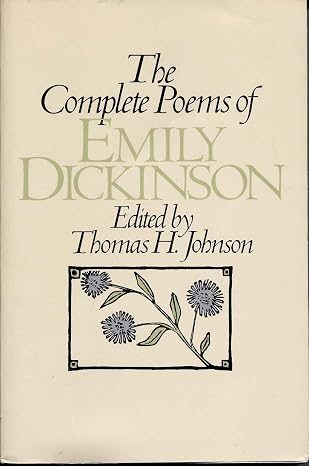
It is number 435 in the Complete Poems of Emily Dickinson. It was the site's Poem of the Day on February 21, 2002.
Keep reading
Readers
This particular poem has the ability to confuse the pupil who happens to be reading it.
This poem made more perfect sense to me than anything ever has before. No words hold truer.
I love this poem, because it's the most truthful thing known to mankind.
When most people read this poem the first time, they become very confused but after reading it over and over and completely understanding the hidden ideas behind each and every word, and read it one last time, the poem becomes totally different with Emily Dickinson's powerful yet clear simplicity
This poem was difficult the first time reading it but it began to unfold as I read it more. I think this is Dickinson's insight to her our life and how people viewed her. She seemed almost crazy the way she rarely left the house but it could be that the rest our the world is mad. The way people follow trends and beliefs systems just to keep from being labeled is mind boggling enough. It's no wonder why half of us aren't locked up "and handled with a chain".
this poem is all about conformity of people in a society... simply put--it reminds me of Lois Lowry's THE GIVER...
the way this poem is so difrent for mi is because this poem has become in mi life so in the way of mi teacher mr linquis and que realy loves his poem so we have to make a essay about it......
This was so toching i loved it man i admire her so much, i cant wait to see her live at collage station next month. man i am going to read somemore about her type later!
This powerful poem is the true epitiome of society. It reflects the volitile reaction of a close-minded society to one's objection to a common belief. Dickson clearly felt society scorn in her lifetime, as is clearly read in this poem.
Wo, guys. This poem is really hard to understand. I'm not the native speeker of English, so it's a real challenge for me to understand it.
Well, I have no right to chose.... I need to present it tomorrow to my class...
I'll try. thanks for your comments about the poem!
After reading this several (probably 50) times, I finally came to the conclusion as to what it is about...Emily is defining that chaos (madness) is natural (from God, divine). The only way to overcome that chaos is to stick together (as All, prevail). When you "assent," you concur with the general idea, and you are therefore "sane." When you "demur," you object, and you are therefore "dangerous," and should be punished. All she is saying that if we ban together (which it all relates back to her Puritan-ish background and to the ideal utopia of a "city upon a hill with all eyes upon us"), then we can overcome any adversity that confronts us.
Much Madness = Truth with a capital "T". Divinest Sense = The ability to see Truth amidst distracting voices, sights, and sound. Much Sense = Whatever society deems of worth (good, bad, and ugly). The Starkest Maddness = Accolades for that which socially "makes sense" is madness (Emperor's New Clothes? 7 immediate golden globe nominations for a movie about gay cowboys with explicit scenes?) The rest of the poem…
Read the whole commentMuch Madness = Truth with a capital "T".
Divinest Sense = The ability to see Truth amidst distracting voices, sights, and sound.
Much Sense = Whatever society deems of worth (good, bad, and ugly).
The Starkest Maddness = Accolades for that which socially "makes sense" is madness (Emperor's New Clothes? 7 immediate golden globe nominations for a movie about gay cowboys with explicit scenes?)
The rest of the poem follows reason: Assent and you are part of the group. Demur and one finds oneself ostracized or marked as dangerous (Read 1984 or Brave New World for more on this).
Emerson said: It is easy in the world to live after the world's opinion, it is easy in solitude to live after one's own. But great is the man who in midst of the crowd keeps with perfect sweetness the independence of solitude.
I have found this poem to be compelling and rich! I was deeply moved by the sincerity of Ms. Dickinson's interpretation of life. God bless that woman.
This poem is one of the easiest Emily Dickinson poems to understand. In a nutshell it says that if you go along with the "norm" and try to act as society says you should, that you are losing your soul and your originality altogether. On top of that, society is judging you and you're "handled with a chain." Beautiful work, Emily. This means SO much to so many people who are not Donna Reed.
mi poem es so good... i love it and i want to be like mily so much.... I love you emily....
well how do you know that the speaker does not believe that the majoriyt is correct and how do the last five lines of the poem extend the subject beyond a contrast between sanity and insanity
What is supposed to be sane oftentimes is so much against our grain, our silent spirit, but we do not take the time or the stillness to ask ourselves,"is this right" because we are told it is. No thinking required. Maybe we like it that way.(^>^) There are 2 kinds of "madness" There is that kind which is characterized by deviating from the norm because of what you have thought through and belive according to your…
Read the whole commentWhat is supposed to be sane oftentimes is so much against our grain, our silent spirit, but we do not take the time or the stillness to ask ourselves,"is this right" because we are told it is. No thinking required. Maybe we like it that way.(^>^)
There are 2 kinds of "madness" There is that kind which is characterized by deviating from the norm because of what you have thought through and belive according to your principles,(I would call this following intuition even aginst the grain) ANd then, there is that other tragic madness when you can not control the way you think or how the thoughts run wild in your head. Who knows if the 2nd type is really divine sense. If so, then it is a most destructive and painful thing to have such a sense. And if it indeed devine and painful then doesn't that make the sufferer akin to the christ figure in some ways...to suffer to bring devine sense to the world as some people with schizophrenia may belive?
It seems that this poem is all about thinking apart from the crowd. Or in other words not conforming. The poem does not appear to be difficult to understand. Lets take a look "Much madness is the divinest sense to a discerning eye" In other words, it's mad to do what society would call "the divinest sense". "Much Sense the starkest madness, Tis the Majority" The majority's "much sense" is actually Mad (crazy or…
Read the whole commentIt seems that this poem is all about thinking apart from the crowd. Or in other words not conforming. The poem does not appear to be difficult to understand.
Lets take a look
"Much madness is the divinest sense to a discerning eye"
In other words, it's mad to do what society would call "the divinest sense".
"Much Sense the starkest madness, Tis the Majority"
The majority's "much sense" is actually Mad (crazy or insane).
"In this as all prevail, assent and you are sane"
Society appears to rule, and the majority will win, if you agree with them, then you are not labeled crazy.
"Demure (disagree or dissent) you're straightaway dangerous and handled with a chain"
If one disagrees with society, or the norm, what has been established by the majority, they are percieved as a threat, and persecuted.
Well, I think this poem can be seen as Dickinson's response to people who think she is insane. Basically the poem is saying that it's always up to the majority of people to decide what is sanity and what is not, and once they determine you're insane, you'll be "handled with a Chain--". The majority isn't necessarily right all the time, but still, as individual, you cannot be accepted unless you agree with them. This poem seems like a hidden complaint about the unfairness of general society of not attempting to understand and appreciate Emily; it's also like a rebellion, pointing out that sometimes the world could be so harsh with individuals to repress them.
hi i think that all of mad man are divinest signs. and thank you for this poem my friend emily i love this poem because its reality and true.
to be great is to be misunderstood
emily is fantastiv
this poem is basically saying that to be crazy is to be sane and to be sane is to be crazy. to people with deceptive eyes the sanest ones are actually the crazy ones. the majority who thinks of themselves as being sane are really the crazyones.
Demur from society
Dickinson is telling us that it is better to be masters of our own decisions than to worry about what society accepts. "Madness" is the demurring from society, rejecting their views and becoming "dangerous". To "Assent" is to remain a quiet shadow, not to be bothered with.
the poem
I was trying to understand what ths poem meant for my english 2 class but all I can understand is that its about being different and if your different then your "insane", is this right? Email me if you can help :)
Thanks
PgVXwzhgrRkmj
“too happy in my saprrow chance for ampler coveting”…….oh man…..as for your poem, I wish you’d been in MY class!