The poem
Heart! We will forget him! You and I -- tonight! You may forget the warmth he gave -- I will forget the light!
When you have done, pray tell me That I may straight begin! Haste! lest while you're lagging I remember him!
The poem
Heart! We will forget him! You and I -- tonight! You may forget the warmth he gave -- I will forget the light!
When you have done, pray tell me That I may straight begin! Haste! lest while you're lagging I remember him!
"Heart! We will forget him!" is a short lyric of two quatrains. In it a speaker addresses the speaker's own heart. The two agree to forget a man, and the speaker divides the work between them. The heart is to forget "the warmth he gave", and the speaker will forget "the light".
In the second stanza the speaker urges the heart to hurry, so that the speaker's own share can begin. The last line undoes the plan. The fear is that, while the heart delays, the speaker will "remember him". The poem is about trying to end a love by an act of will. It is also about how that very effort keeps the man in mind.
The speaker opens by addressing the heart and announcing that together they will forget a man. Line 2 names the partners, "You and I", and sets the time for the task as "tonight". Lines 3 and 4 divide the work. The heart may forget "the warmth he gave", while the speaker will forget "the light". The man is never named, and he is described only through these two things he gave the speaker.
The second stanza turns to the order of the work. The speaker asks the heart to report when it has finished, so that the speaker "may straight begin". The speaker will not start forgetting until the heart has finished its own share of the work. Line 7 urges the heart to hurry with a one-word command and accuses it of "lagging". The last line gives the reason for the hurry: the speaker fears that, while waiting, "I remember him!"
The poem treats forgetting as a task that can be scheduled. The speaker fixes a time, "tonight", and divides the labour. Yet forgetting cannot be done on purpose. To try to forget someone is to keep that person in mind. The last line shows this, since the effort produces the remembering it was meant to prevent.
The speaker is also divided in two. The heart is addressed as a partner, "You and I", as if it were a second person. The poem never names the other party, though many readers call it the mind. The heart takes "the warmth", which suggests feeling. The speaker keeps "the light", which can be read as the man's brightness, or as what the speaker saw by.
A third idea is that love resists being ended. The heart is "lagging", and the speaker blames it for the delay. But in line 8 it is the speaker, not the heart, who is at risk of remembering. This can be read as a quiet admission. The heart's slowness may be the speaker's own reluctance, handed to someone else.
The poem is also about control. The speaker gives orders and sets conditions, as in "pray tell me" and "Haste!" The commands suggest a mind trying to govern feeling by rule. The ending suggests that feeling will not be governed. The plan is still unfinished when the poem stops.
The tone begins resolute. Three of the first four lines end in exclamation marks, which gives the opening the sound of a vow. "We will forget him!" is phrased as a certainty, not a hope.
In the second stanza the tone turns impatient. The phrase "pray tell me" is formal, almost courteous. But "Haste!" and "lagging" are sharp, and they scold the heart. Under the impatience lies anxiety.
The last line exposes that anxiety. The speaker's real fear is not the heart's slowness but the return of memory. Some readers hear a wry, self-mocking note in the whole scheme. The poem does not settle whether the resolve is sincere or already failing.
The poem has 8 lines in 2 stanzas of 4 lines each. Lines run from 5 to 8 syllables. The metre is loosely iambic. Most lines carry three stresses, and line 3 carries four.
The metre is irregular at the line openings. Line 1 and line 7 begin on a stressed command, "Heart!" and "Haste!" This gives them a trochaic, forceful start. In the first stanza the second and fourth lines rhyme, "tonight" with "light".
The second stanza has no full rhyme of its own. Its final word, "him", repeats the final word of line 1. The poem therefore closes on the word it opened on. Dashes in line 2 and line 3 mark pauses, and exclamation marks end most lines.
Heart!The speaker addresses the heart directly, as if it could hear and answer. This sets up the whole poem as a conversation within one person.
You and IThe heart becomes a partner with its own share of the work. Treating it as a second person lets the speaker assign it duties and later blame it.
the warmth he gaveWarmth stands for the comfort or affection the man gave. It is given to the heart to forget, which fits the heart as the seat of feeling.
I will forget the light!The line mirrors line 3 in structure, pairing warmth with light. The balance makes the division of labour look neat and orderly.
lightThe word rhymes with "tonight" in line 2. It is the only full rhyme between different words in the poem, and it closes the first stanza firmly.
When you have done, pray tell meThe request runs on into line 6 without a pause. The syntax carries the reader forward, like the speaker waiting to start.
lest while you're laggingThe repeated l sounds slow the line down. The sound imitates the lagging it complains of.
Haste!The one-word command marks the shift from calm planning to impatience. It echoes the stressed opening of line 1.
I remember him!A poem about forgetting ends on remembering. The effort to forget is what calls the man back to mind.
him!The last word repeats the last word of line 1. The poem returns to the man it set out to forget, and so enacts its own failure.
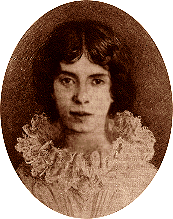
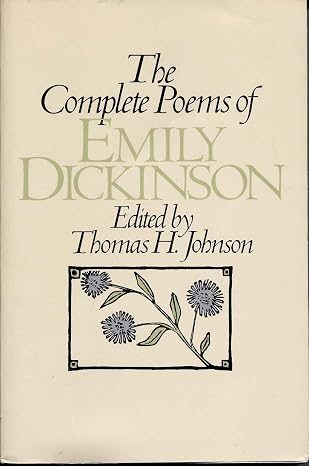
Emily Dickinson lived from 1830 to 1886. The text here follows Complete Poems of Emily Dickinson, published in 1955, where the poem is number 47. It has been on americanpoems.com since January 2004. It was Poem of the Day on 20 May 2008. Readers left 44 comments on it between 2004 and 2016.
Keep reading
Readers
In this beautifully written poem, the poet, Emily Dickinson battles between her mind and her heart. In lines 1&2 she quotes, "Heart! We will forget him! You and I -tonight!". Her mind is telling her heart that they will both forget their loved one. The heart begins by imagining itself and it's lover together when the mind interupts, insisting that the heart forget about it tonight. There is a connection between the…
Read the whole commentIn this beautifully written poem, the poet, Emily Dickinson battles between her mind and her heart. In lines 1&2 she quotes, "Heart! We will forget him! You and I -tonight!". Her mind is telling her heart that they will both forget their loved one. The heart begins by imagining itself and it's lover together when the mind interupts, insisting that the heart forget about it tonight.
There is a connection between the poem and modern-day life. Sometimes when you feel a connection between you and another individual you have an internal conflict. One part of you wants to think and daydream about the person, while the other scolds you and contradicts what you feel.
Literary analysis questions:
1.) Which part of the author is more powerful, the mind or the heart?
2.) The lover gave botht the heart and the mind something different, why is each gift important?
3.) What do the exclamation points add to the poem?
4.) Why does the mind give up on the heart?
5.) What feeling does the author want the reader to feel while reading this poem?
I love the meaning of the poem besides that its beauty period.
This poem has been set to music by James Mullholand for women's chorus, piano and french horn. It is a gorgeous piece that really captures Dickinson's meaning.
I think this poem is about how she lost a loved one and wants to forget the tragedy that she has suffered from for such a long time.
this poem is one out of many wonderful poems Emily Dickinson wrote and it should be rememberd. i loved this poem cuz i can relate to what she is saying :)
everything in her poetry has a meaning u just have to look a little deeper to find it.
This poem is soooooo great! I can relate to it. She tells of hoe she has been hurt so bad by someone, that she wants to forget about him, but her heart won't let her.
This poem is soooooo great! I can relate to it. She tells of how she has been hurt so bad by someone, that she wants to forget about him, but her heart won't let her.
I like this poem, too. It is better than pie! Ok, seriusly though, if anyone knows a site about her and can give me info... EMAIL ME!!! Thanks
The theme is about Emily Dickinson trying to persuade her heart to forget the guy she loved. It is compulsory to forget him because of the circumstances, and on the other hand, he gave her the warmth and light. Her conflict in this poem is between her heart and her mind. She is trying to tell her heart to forget him otherwise she can’t go on with her life.
I really think that Emily Dickinson was one of the most fasinating poets. She wrote in a very gloomy way,and in very interesting ways.This well written poem is simply telling you that she is having trouble choosing weather she should beleive in her heart or if she should listen to her mind. I really do think she was a great poet and it's a shame she died.
i think this poem is talking about how she wants to forget the man she loved but her heart won't let her forget him.
I think this poem is a good one, it went straight to my heart,I felt identified with it. This guy, Juan doesn't know anything about poems He probably doesn't even get the point of it, he shoul take a poetry class and a writing one too doesn't even spelled some words the right way.
What i think it means is she DOESNT want to forget. She suffered a great loss and the image of him is slowly slipping away and she doesnt want to lose it. When i first read it i thought the same thing but after keep reading and reading it for an english paper this new meaning came to me.
i love this poem. i think it is about the pain of getting over a man that she loves. she still loves him because she talks about "the warmth he gave". i think it is about the pain of unrequited love because he is still perfect in her mind. when we love someone from afar it is easy to believe they are perfect and idealize them. she wants to forget him because loving someone who doesnt love you can only really cause pain. believe me that is something i know too well.
in this poem emily sort of jokes about how she knows she needs to forget about her loved one, but she doesn't want to, so she blames it on her heart. it's sort of darkly humorous, if you think about it.
i love this poem, she wants so hard not to forget him and all the memories she has but knows she has to and cant find the stength to do so through all the pain. She tells her heart to forget him so the next time she thinks about him the pain will go away
Emily Dickinson is writing about the pain this one man brought her and is asking for some relief from her heart as it is too painful to think about this person. When she does begin to think about him she blames her heart for failing her. I think a lot of individuals, including myself can certainly identify with her pain.
Heart! We will forget him! Heart, you know I love him! You and I to-night The night knows my tears You may forget the warmth he gave I am still burning I will forget the light And his light defies the bitter darkness When you are done, pray tell me I pray that grief will be my companion That I may straight begin In the night I begin Haste! Lest while you’re lagging My heart is slow to forget I remember him I…
Read the whole commentHeart! We will forget him!
Heart, you know I love him!
You and I to-night
The night knows my tears
You may forget the warmth he gave
I am still burning
I will forget the light
And his light defies the bitter darkness
When you are done, pray tell me
I pray that grief will be my companion
That I may straight begin
In the night I begin
Haste! Lest while you’re lagging
My heart is slow to forget
I remember him
I remember him
I won't presume to think that my lonely ramblings are even remotely comparable to Dickinson's masterpiece, but her poem was my mantra for a long time. I wanted desperately to forget someone, but love him so much that I just couldn't. One night, when I was all out of tears, I wrote a response to the words I'd been repeating over and over in my head. And I finally felt peace. Her poetry speaks to me in a way no living person has ever spoken to me, and I thank her for her words! Maluhia... peace.
Emily lives...
Reading this poem makes me realize that what im going through is normal. Though it could have been a year now, yet still the pain is there. I see him daily and he is unaffected. Why cant it not be the same for me?
This poem came to me as a vocalist. I was learning Aaron Coplands setting of it, and the words just struck me. I was going through a painful break-up, and Emily's poem was so real. It was what I was feeling. And even though a year has passed, I still think of him, and I then listen to this poem/art song.
i love ur poem so much
This poem shows how Emily is trying to get over a love that went sour...
I have evaluated this poem many times, yet the meaning never fails to touch me. The mind talking to the heart in hope that the heart will forget first of the man she loved dearly. Ironicly, the mind wants to forget, but has trouble letting go. It tells the heart that when it is finished forgetting about him to tell it so it can begin to forget. It is always a struggle between the mind and heart when it comes to…
Read the whole commentI have evaluated this poem many times, yet the meaning never fails to touch me. The mind talking to the heart in hope that the heart will forget first of the man she loved dearly. Ironicly, the mind wants to forget, but has trouble letting go. It tells the heart that when it is finished forgetting about him to tell it so it can begin to forget. It is always a struggle between the mind and heart when it comes to love.
Heart! We will forget him!(It is almost demanding itself and the heart to forget.)
You and I -- tonight!(Here, just the two of them. The dash emphasizes the word "tonight" to give the poem a violence and a difference in the way it is written.)
You may forget the warmth he gave --(heart is accociated with love in most ways, but in all reality, it is only an organ. The warmth is the feeling of acceptance and joy in this man. To forget the warmth would be to ease the pain she felt in the absence thereof.)
I will forget the light!(Light not being the physical term. She gives his radiance a form as to light. The light is the internal glow that your mind percieves in people.)
When you have done, pray tell me(She tells the heart to tell her mind when it is finished forgetting, here. So the mind would not have as much trouble forgetting the man, it lets the heart forget first.)
That I may straight begin!(Again, when the heart is finished, the mind is looking to make it easier on it to forget the person she once loved. It would be very difficult to just drop a feeling like this and forget.)
Haste! lest while you're lagging ("Hurry!" the mind tells the heart. While the heart has not forgotten, the mind is still thinking on him, and the pain is rough.)
I remember him! (The mind will remember the pain as the heart attempts to forget. Here, the point is though it wants to ease the pain, the effort to ease it is harder. In the deep ends of the mind, it doesn't want to forget the man because of the good times, but the pain expressed in the poem is too much.)
i loved this poem because it has a great meaning. The way the author expresses her feelings is very good and it can help in peoples lifes.
i really enjoyed this poem. the meaning touched my heart and appealed to me . overall the poem was beautiful!
This has been arranged into an incredibly beautiful SSA *soprano, soprano, alto* arrangement, and was sung at Delta State Honor's Choir last year. It was so amazing ^_^
You open your heart and let him in. Looking for everlasting relationship, it turned out in vain.
When your heart been torn in two...The pain will
be there wherever you go.
In the version of this beautiful poem that I know, instead of saying "That I may straight begin!" it says "That I my thoughts may dim," which I like more.
The poem seems to me to contain a sense of 'stepping back' from emotion, even if the emotion has been keenly felt. The stepping back is important for the creation of the poem, which has beauty but also precision and formality. - Emily never wallows. The love affair with the word will outlast the love affair with the man.
this poem reminds me of ancient ninja folklore. the way the ninja moves is similar to the diction that Emily uses in Heart! the samuri blade is sharp and stings with truth as does the words of my dear close and personal friend, Emily Dickenson. by examining and analyzing the attacking and blocking techniques of the japaneese ninjas (these moves are i llegal in the United States) we can observe the subtle intracacies of this poem.
i like and love you poetry alot
This is such a wonderful poem. I think it's easy for most of us to relate to the inner conflict between the heart and mind.
Poetry makes me feel all warm and fuzzy inside. I like to curl up for hours with a blankie and enjoy a nice poem. My boyfriend and I read poetry to each other before we uh-huhhh....
omg! i sang this in choir as a freshman last yr in high school
what does the poem means. and i love the poem very much but i dont know what it means.
I think Dickinson is one of the best American poet. In this poem, she has conflict between her heart and her mind to choose her love, so his mind spoke to her heart trying to persuade the heart to give up this love which is impossible.
This is very wonderfull poem. I love it! But, I still confuse about the meaning of the poem.
this poem is really touching.and it has great emotion
we looooooooove this poem soooo much! first we hated poetry, but now we're addicted to this poem. it helps us in bad times! often we read it for each other in times of trouble. and it makes us feel better, because it's soooooooooo deep !
sometimes we don't go to school, and we stay home, so we can read this poem all day long! its just the best poem of the world!
oh my god its so amazing, how someone can write something this beautifull. we didnt know this was possible!
-------------
() ( __ _ )
[] ( o )
[:::] ( \____/ )
[:::] ( --------- ) doei
What an amazing poem! It really touches my deep heart, but i still wonder how we could forget those who once gave us warmth and love, those impressed us so deeply. We can try to forget but at some unexpected moment we will still miss them from the bottom of heart. That feeling is so strong that you feel like your heart bleeding. Yes we are keeping bleeding as in the song sung by Leona Lewis. This is called Bleeding Love.
student
it is the most intersting poem i have ever seen
Comparing Heart! We will forget him! compared to another poem, looking at the elements
The Parable of the old man and the young vs. Heart! We will forget him! Have you ever thought about how love and war compare together? By comparing two poems you can see all the elements that make up the poem and also the effects the elements have on the poem. In the poem “The Parable of the Old Man and the Young” Wilfred Owen compares the parable of Abraham and Isaac to the start of World War 1. In the poem “Heart!…
Read the whole commentThe Parable of the old man and the young vs. Heart! We will forget him!
Have you ever thought about how love and war compare together? By comparing two poems you can see all the elements that make up the poem and also the effects the elements have on the poem. In the poem “The Parable of the Old Man and the Young” Wilfred Owen compares the parable of Abraham and Isaac to the start of World War 1. In the poem “Heart! We Will Forget Him!” Emily Dickenson writes about wanting to forget a man and the feelings he had given. The two poems are similar in the metaphor and symbol, and their free verse, but are different in the imagery, personification, and alliteration and this causes both poems to give off different emotions.
First, the alliteration in these two poems is different because of the ‘voice’ it gives off in the poems make you feel different things. Different letters make you have different feelings and in these two poems the different alliteration has different effects on the overall poem. In “The Parable of the Old Man and the Young” the alliteration occurs with ‘A’s this is on line 10, “An Angel,” also “Abraham” occurs a lot in this poem. The many A’s bring attention and shows emphasis on the word or phrases. In the poem “Heart! We Will Forget Him!” The alliteration occurs with ‘W’s on line 1, “We Will…” this gives a weepy sounds. She is sad because of the man that left and the ‘W’s create the weepy ‘voice’ of the poem. Although, alliteration occurs in both of these poems it is different because the alliteration has different effects on both of the poems.
Also, the free verse in both poems is similar because of the changing emotions through the poems. Both poems have changing emotions and the free verse gives that feeling it also has the effect on the poems of being shaky and not orderly. In “The Parable of the Old Man and the Young” there is no set meter because the story changes and the emotions through the poem change. An example of this is in line 14 and 15, “Offer the Ram of pride instead of him. But the old man would not so, but slew his son.” These lines show the changes in the moods of the story, the positive of him not having to kill his son then negative of him killing his son. Also in the poem “Heart! We Will Forget Him!” The free verse changes because she wants to forget him but then remembers the love. The meter through the poem changes because the emotion she is showing changes. First she is upset (torque) line 1, “Heart we will forget him.” Then iamb because she knows she still loves him line 8, “I remember him.” This shows how the emotions in this story make the story free verse. Both poems are similar because of the free verse types and the effects on the poem.
Third, these poems have such a different feel to them with there imagery, because one pictures discomfort and the other you picture joyful things. Thanks to the way they display their imagery you can feel opposite emotions. For poem 1 close your eyes and picture “being bond and beat”(line 7) give the physical ora of hate discomfort and fear. I hate being bonded it takes it makes me mad violent and want to fight back. And for poem 2 you look deep in your heart upon the memories of life. “I will forget the light. When you have done, pray tell me,” line 4 &5. The joys of a companion by you to give you hope love and security. If you close your eyes and think about “Parable” and then “Heart” they make you feel completely and orderly different using there imagery to paint the picture for you.
Next, due to the metaphors helping these 2 poems feel different they have the ability to feel happy or sad. Thanks to the way they put there metaphors theses poems felt the soul differently. In “Parable,” “The fire and iron,” implies the binding and killing of the kid. The fire symbolize the pain of death well the iron is bring compared to oppression. Well in “Heart” the light is like the good and brightness “I will forget the light,” line 4. The emotions that can be brought by love is very close to what light does for ones body. Comparing things in this manner helps us know if the poem gives us the filling of joy or pain.
Fifth, through the personification in these poems it is different because the fact that “Parable” just has negative feelings to it and the other poem has a tainted joy attached to it. With being a pacifist and having mostly pacifistic friends we tend to have a distaste for violence, but most of us under stand the taint to the joy of a relationship with the way our life have been driven. For “Parable,” “ram of pride”(line 14) the ram is representing one of mans biggest characteristic week points that leads them to do many things. In “Heart,” “Heart! We will forget him!” line 1she tries to have her heart and mind be as one person to force the pain from her body. With the personification making some of humanities worse traits take form forces us to fill the bad and good in us all.
Finally, another similarity is in the symbols of the poems and the meanings of the symbols. In both the poems the symbols stand for ‘heavenly’ type of position. “In Heart! We Will Forget Him!” One of the symbols is shown on line 4, “I will forget the light.” The light is referring to her life being dark and he came into her life bringing light and goodness and purity. In “The Parable of the Old Man and the Young” one of the symbols is found on line 10, “An Angel…” This poem is comparing World War 1 to the story of Abraham and Isaac and the ram and the angel in the story I think is also representing higher officer officials and how they didn’t have to sacrifice those soldiers. The angel is like the official because it has divine power. The two poems are similar in the symbols because the effect on the poems is similar in the sense of both poems had sacrifice and the symbols gave you a sense of hope then sadness. There was hope given by the ‘angel’ but the boy was still sacrificed and the ‘light’ was all the good he brought to her but then he took it away. In these poems the symbols are not the same but the meaning and effects are similar.
These two poems are similar in a few ways such as metaphor and symbol while they are also different in imagery, personification, alliteration, and meter. The metaphors are similar because they both are comparing oppression of war or love. Next, the symbols are similar because they are both symbolizing heavenly positive aspects. Also, it is different in personification because in “Parable” the ram is given characteristics of pride and in ”Heart” she gives her heart human characteristics to forget. The alliteration also has a different feel in both poems because in ”Parable” it uses A for the alliteration cause a more bold sound and in ”Heart” the alliteration uses W’s making it a weepy sad sound. They are also similar in the effects of their free verse because it shows the changing emotions the characters are going through. By comparing these two poems you get a feel for love being compared to war and they pains they both have.
Gary, great advice!
Gary, great advice! We will be in MT later this year- around 23 Sept for a week or so then on to ID and OR. Usually, we are much earlier in MT. Hopeyullf, it will be a little cooler. Are those Blue Grouse you chase in the hills? My buddies want Mountain Quail in OR, but I'd rather look for a Blue Grouse. Does ID have them? I'll need to look that up.