The poem
A Bird came down the Walk -- He did not know I saw -- He bit an Angleworm in halves And ate the fellow, raw,
And then he drank a Dew From a convenient Grass -- And then hopped sidewise to the Wall To let a Beetle pass --
He glanced with rapid eyes That hurried all around -- They looked like frightened Beads, I thought -- He stirred his Velvet Head
Like one in danger, Cautious, I offered him a Crumb And he unrolled his feathers And rowed him softer home --
Than Oars divide the Ocean, Too silver for a seam -- Or Butterflies, off Banks of Noon Leap, plashless as they swim.
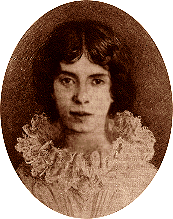
Emily Dickenson is a great poet. She expresses her talent in this poem. It is short but good.
I think this poem is very well constructed and i really like the first stanza
I like the simplicity Emily Dickinson has displayed in writing this poem. An excellent piece of prose.
easy to understand.
hard for exam
it is a wondeful poem. it also tells sus the way a bird acts and also if u look at it closely u will notice. i liked the simplicity of the poet and the poem.but i also want to say that plz make poems with same title but different with a different meaning.
Short but sweet
it is abeautiful poem for her in which she utlizes the bird to reflect the dual nature of the humanbeigs at large and to reinforce the idea of the beauty and danger of nature as an intgeral to it
The poem is very well written and it is an easy read but really hard to understand but, i think that the bird resembles herself and how she is cutoff from society.
if you read the poem, you notice that the tone of the poem is first, content, happiness. Then in the 3rd stanza it becomes more of a panic tone. And as the bird begins to fly away, the tone turns to calm and back to happiness. i think that emily is comparing this scene in nature to show us how this bird and humans are alike. For instance, when the bird is eating, its happy. This is the same when we humans are eating…
Read the whole commentif you read the poem, you notice that the tone of the poem is first, content, happiness. Then in the 3rd stanza it becomes more of a panic tone. And as the bird begins to fly away, the tone turns to calm and back to happiness. i think that emily is comparing this scene in nature to show us how this bird and humans are alike. For instance, when the bird is eating, its happy. This is the same when we humans are eating too. i mean no one eats in anger. Then when the bird is finished eating the bird becomes frantic because it feels as if its going to be attacked since its on the gound--unfamiliar territory--where it can not run away or defend itself as easily as in the air. Which leads to when the bird flies away and into the sky--familiar territory--the poem thus becomes calm again. Also, i think that in the last two lines of the 4th stanza and the first two lines of the 5th stanza, emily is comparing the air and the sky.
American literature
poem talk about abird in garden and there is some one eager to see what the bird do poet want to make asort of connetion with the bird and give him the qualities of man0As bird cut worm to pecies as human do
this poem is very good and shows a lot of feelings .
literature
this poem is very simple,esay and interesting.so please read it.