Good-by, proud world, I'm going home,
Thou'rt not my friend, and I'm not thine;
Long through thy weary crowds I roam;
A river-ark on the ocean brine,
Long I've been tossed like the driven foam,
But now, proud world, I'm going home.
Good-by to Flattery's fawning face,
To Grandeur, with his wise grimace,
To upstart Wealth's averted eye,
To supple Office low and high,
To crowded halls, to court, and street,
To frozen hearts, and hasting feet,
To those who go, and those who come,
Good-by, proud world, I'm going home.
I'm going to my own hearth-stone
Bosomed in yon green hills, alone,
A secret nook in a pleasant land,
Whose groves the frolic fairies planned;
Where arches green the livelong day
Echo the blackbird's roundelay,
And vulgar feet have never trod
A spot that is sacred to thought and God.
Oh, when I am safe in my sylvan home,
I tread on the pride of Greece and Rome;
And when I am stretched beneath the pines
Where the evening star so holy shines,
I laugh at the lore and the pride of man,
At the sophist schools, and the learned clan;
For what are they all in their high conceit,
When man in the bush with God may meet.
✦
Analysis
Good-by: analysis
Introduction
"Good-by" is a farewell spoken to the "proud world." The speaker says he is tired of its crowds, flattery and ambition, and is "going home." Home is a quiet place in the green hills, among groves, blackbirds and pines.
The first two stanzas say goodbye to society and its vanities. The last two describe the place he is going to. There, alone in nature, he laughs at human pride and learning. The poem ends by claiming that in the wild a person may meet God directly. Readers disagree over whether "home" means a real retreat or death.
Summary
The speaker bids goodbye to the "proud world" and says he is going home. The world is no friend to him, and he is no friend to it. He has long wandered through its weary crowds. He has been tossed like foam, a river boat lost on the salt sea. Now he is going home.
The second stanza is a list of farewells. He says goodbye to Flattery, Grandeur, upstart Wealth and supple Office. He says goodbye to crowded halls, courts and streets, and to cold hearts and hurrying feet. He says goodbye to all who come and go. The stanza ends with the same line as the first.
The third stanza describes where he is going. It is his own hearth, set alone among green hills. It is a secret nook whose groves seem planned by fairies. Green arches echo the blackbird's song all day. No common feet have walked there, and the spot is sacred to thought and God.
The last stanza describes the speaker's days in that "sylvan home." There he treads on the pride of Greece and Rome. Stretched under the pines, beneath the evening star, he laughs at human learning and pride. He laughs at the sophists and the learned. He asks what they are worth, when a man may meet God in the bush.
Themes and meaning
The poem rejects the pride of society. Each figure in the second stanza is a social vice made into a person. There is "Flattery's fawning face," "Grandeur" with a "wise grimace," and "upstart Wealth." The repeated address to the "proud world" names pride as the world's central fault.
Nature is presented as the true home. The world of crowds leaves the speaker "tossed like the driven foam." The hills give him a "hearth-stone" and a "secret nook." The contrast is between restless drifting and rest. Home here means belonging, which the crowded world cannot give.
A third theme is nature as holy ground. The nook is "sacred to thought and God." The evening star "so holy shines." The last line says "man in the bush with God may meet." The poem locates the sacred in the woods, not in churches or halls.
The poem also sets direct experience above learning. The speaker laughs at "the lore and the pride of man." He dismisses "the sophist schools" and "the learned clan" as full of "high conceit." Even the pride of Greece and Rome is trodden underfoot. What counts is the personal meeting with God, not inherited knowledge.
Solitude runs through the whole poem. The home is "alone" in the hills, and "vulgar feet have never trod" there. The speaker's freedom depends on being apart from others. The poem treats being alone as a source of peace, not loneliness.
Tone
The tone of the first stanza is weary but relieved. The speaker has been tossed "Long" and the word repeats. "But now" marks a turn toward rest.
The second stanza is scornful and brisk. Each vice is dismissed in a single line. Phrases like "fawning face" and "upstart Wealth" carry open contempt.
The third stanza becomes calm and tender. The language softens into "pleasant land," "frolic fairies" and the "blackbird's roundelay." The mood is peaceful and a little dreamy.
The last stanza mixes joy with superiority. "Oh" opens it with delight. Yet the speaker also says "I laugh at the lore and the pride of man," and the final question is proud in its own way. Some readers hear sadness in the farewell, and others hear only release.
Form and structure
The poem has 30 lines in 4 stanzas. The first stanza has 6 lines, and the other three have 8. Most lines have 8 syllables, and the range is 5 to 10. The first three stanzas are mostly iambic tetrameter. The last stanza loosens into longer lines of 9 and 10 syllables, with a quicker, lilting rhythm.
The poem rhymes mainly in couplets. The first stanza rhymes alternately before closing on a couplet. The refrain "Good-by, proud world, I'm going home" ends the first two stanzas. Its rhyme sound returns in the last stanza with "home" and "Rome," tying the ending back to the opening.
Poetic devices
Apostrophe line 1
Good-by, proud world, I'm going home The speaker addresses the world as if it were a person. The adjective "proud" names its main fault from the first line.
Metaphor line 4
A river-ark on the ocean brine The speaker is a small river boat lost at sea. The image shows how out of place he has felt in the world.
Simile line 5
like the driven foam Foam is pushed about by wind and waves. The comparison stresses helplessness and restless movement.
Personification line 7
Flattery's fawning face Flattery is given a face. The alliteration on "f" mimics a soft, false, fawning sound.
Personification line 9
To upstart Wealth's averted eye Wealth is a newcomer who looks away from those beneath it. The image shows its snobbery.
Synecdoche line 12
To frozen hearts, and hasting feet Hearts and feet stand for whole people. They sum up city life as cold and hurried.
Refrain line 14
Good-by, proud world, I'm going home The line repeats the opening. It rounds off each of the first two stanzas with the same decision.
Alliteration line 18
the frolic fairies The playful "f" sounds contrast with "Flattery's fawning face" in line 7. The same sound now signals delight instead of falseness.
Hyperbole line 24
I tread on the pride of Greece and Rome The speaker claims to walk over the greatest ancient civilisations. The exaggeration shows how little their glory matters to him in the woods.
Rhetorical question line 29
For what are they all in their high conceit The question expects the answer nothing. It dismisses all learned pride in favour of the meeting with God in line 30.
Words worth knowing
Office
Public office, and the people who hold it. The phrase "supple Office" means officials who bend to please others.
roundelay
A short, simple song with a refrain. Here, the blackbird's repeated song.
sylvan
Of the woods, wooded.
sophist
A teacher of clever but misleading argument. The phrase "sophist schools" means schools of empty cleverness.
conceit
Vanity, an inflated opinion of oneself. It does not mean a figure of speech here.
bush
Wild, uncleared country, not a single shrub.
Context
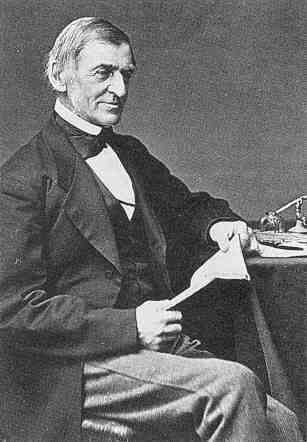
Ralph Waldo Emerson lived from 1803 to 1882. "Good-by" has been on this site since 2003. It was the archive's Poem of the Day on August 17, 2014. Readers left 7 comments on it here between 2004 and 2021. They disagree mainly over whether the speaker is dying.
What readers have said
Grace Richards finds the poem sad and sweet, and reads "going home" as the speaker dying. Grace Richards, 2005
Elise reads the poem as leaving the petty problems of earth to go on to heaven. Elise, 2007
Theresa hears both sadness and happiness in it, and takes home as heaven and eternal life with God. theresa, 2007
Taylor disagrees that the speaker is dying. This reader sees someone worn out by city materialism who retreats alone to the hills and laughs at self-absorbed people. Taylor, 2010
Jennie Combs reads the poem as the life of a mouse, pointing to the secret nook and the hearth-stone in the hills. jennie combs, 2021
I really like this poem. It's sad and sweet at the same time. I think that he is telling people that he is going HOME. He's dying.
Karen
i LOVE THIS POEM!
EliseUnited States
I love this poem!!!! It talks about how he leaves all the petty problems of Earth to go on to Heaven.
theresaPhilippines
the poem itself is sad but at happy at the same time, for finally finding your way home and making heavens gate as your eternal home with god is pleasing to one's soul
Taylor
I personally don't think that he is dying in this poem. I think that he has been consumed by the materialistic lifestyle of the city for too long and he wants to get out. So he is saying goodbye to all the petty ways. He goes to a place where he is all alone, maybe the hills, mountains, just somewhere by himself. Where materialistic things cannot touch him. As he lays there under the stars he can simply laugh at all the people who are self absorbed and trapped by the city life and he can be all at one with himself and God when he is all alone and not persuaded by other distracting things.
jennie combs
I believe "Goodbye" is about the life of a mouse: "I’m going to my own hearth-stone Bosomed in yon green hills, alone, A secret nook in a pleasant land,"
I love this poem
I really like this poem. It's sad and sweet at the same time. I think that he is telling people that he is going HOME. He's dying.
i LOVE THIS POEM!
I love this poem!!!! It talks about how he leaves all the petty problems of Earth to go on to Heaven.
the poem itself is sad but at happy at the same time, for finally finding your way home and making heavens gate as your eternal home with god is pleasing to one's soul
I personally don't think that he is dying in this poem. I think that he has been consumed by the materialistic lifestyle of the city for too long and he wants to get out. So he is saying goodbye to all the petty ways. He goes to a place where he is all alone, maybe the hills, mountains, just somewhere by himself. Where materialistic things cannot touch him. As he lays there under the stars he can simply laugh at all the people who are self absorbed and trapped by the city life and he can be all at one with himself and God when he is all alone and not persuaded by other distracting things.
I believe "Goodbye" is about the life of a mouse:
"I’m going to my own hearth-stone
Bosomed in yon green hills, alone,
A secret nook in a pleasant land,"