That you are fair or wise is vain,
Or strong, or rich, or generous;
You must have also the untaught strain
That sheds beauty on the rose.
There is a melody born of melody,
Which melts the world into a sea.
Toil could never compass it,
Art its height could never hit,
It came never out of wit,
But a music music-born
Well may Jove and Juno scorn.
Thy beauty, if it lack the fire
Which drives me mad with sweet desire,
What boots it? what the soldier's mail,
Unless he conquer and prevail?
What all the goods thy pride which lift,
If thou pine for another's gift?
Alas! that one is born in blight,
Victim of perpetual slight;—
When thou lookest in his face,
Thy heart saith, Brother! go thy ways!
None shall ask thee what thou doest,
Or care a rush for what thou knowest,
Or listen when thou repliest,
Or remember where thou liest,
Or how thy supper is sodden,—
And another is born
To make the sun forgotten.
Surely he carries a talisman
Under his tongue;
Broad are his shoulders, and strong,
And his eye is scornful,
Threatening, and young.
I hold it of little matter,
Whether your jewel be of pure water,
A rose diamond or a white,—
But whether it dazzle me with light.
I care not how you are drest,
In the coarsest, or in the best,
Nor whether your name is base or brave,
Nor for the fashion of your behavior,—
But whether you charm me,
Bid my bread feed, and my fire warm me,
And dress up nature in your favor.
One thing is forever good,
That one thing is success,—
Dear to the Eumenides,
And to all the heavenly brood.
Who bides at home, nor looks abroad,
Carries the eagles, and masters the sword.
✦
Analysis
Fate: analysis
Introduction
"Fate" argues that the good qualities people work for count for little on their own. Beauty, wisdom, strength and wealth are "vain" without something more. That something is an "untaught strain," a gift that cannot be learned or earned.
The poem then contrasts two people. One is "born in blight" and ignored by everyone. The other is born "To make the sun forgotten." The speaker admits he cares only whether a person dazzles and charms him.
The poem closes by naming success as the one thing "forever good." The title suggests that such gifts are handed out by fate, not earned. Whether the speaker approves of this, or only accepts it, is left open.
Summary
The poem opens by telling the reader that being fair, wise, strong, rich or generous is in vain. One must also have "the untaught strain" that gives the rose its beauty. Virtue alone, the opening says, is not enough.
There is a melody born of melody that melts the world into a sea. Toil could never reach it. Art could never hit its height, and wit never produced it. Such music may well scorn the gods Jove and Juno.
The speaker then asks a series of questions. What use is beauty if it lacks the fire that drives him mad with desire? What use is a soldier's armour unless he wins? What use are all one's goods if one longs for another person's gift?
The speaker laments that one person is born in blight, always slighted. Looking at him, the heart says, "Brother! go thy ways!" No one asks what he does or cares what he knows. No one listens to him, remembers where he lies, or notices his soggy supper.
Another person is born "To make the sun forgotten." He seems to carry a talisman under his tongue. He is broad-shouldered and strong, with a scornful, threatening, young eye.
The speaker says it matters little whether a jewel is flawless. What matters is whether it dazzles him. He does not care how a person is dressed, whether the name is humble or proud, or how the person behaves. He cares whether that person charms him. Such a person makes his bread feed him and his fire warm him, and dresses nature in their favour.
The poem ends by naming one thing as forever good. That thing is success, dear to the Eumenides and to all the gods. The last two lines speak of one who stays at home and does not look abroad. That person "Carries the eagles, and masters the sword."
Themes and meaning
The central theme is the gap between merit and gift. The first lines list real virtues, from wisdom to generosity. Yet all are "vain" without "the untaught strain." This quality cannot be taught, worked for or made. "Toil could never compass it" and "Art its height could never hit."
A second theme is the unfairness of fate. The poem sets two births side by side. One person is "born in blight" and meets "perpetual slight." Another is born "To make the sun forgotten." The title presents this difference as fate.
The poem also values effect over worth. Beauty matters only if it has "the fire" that stirs desire. Armour matters only if the soldier will "conquer and prevail." A jewel matters only if it can "dazzle me with light." The speaker judges people by what they do to him, not by what they are.
The last theme is success. Lines 45 and 46 call success the one thing "forever good." It is "Dear to the Eumenides," the avenging spirits, and to the gods. The closing couplet can be read as saying the fortunate person wins without effort, staying "at home" yet mastering the sword.
The poem's attitude to all this is ambiguous. "Alas!" in line 18 shows pity for the slighted one. Yet the speaker also admits he judges by charm and dazzle himself. The poem can be read as a lament over fate or as a hard acceptance of it.
Tone
The tone opens as blunt and instructive. "That you are fair or wise is vain" dismisses the listener's virtues in one line. In the lines on music the tone lifts into wonder. The "melody born of melody" melts the world, and even gods may be scorned by it.
The questions in lines 14 to 17 are impatient and challenging. "What boots it?" sounds almost scornful. With "Alas!" the tone turns to sorrow for the one "born in blight." The list of things nobody notices, down to his "sodden" supper, is sad and somewhat bitter.
The portrait of the favoured man is admiring but uneasy. His eye is "scornful" and threatening. The speaker's own confession, "I care not how you are drest," is frank and even hard. The ending is firm and declarative, naming success with no hint of doubt.
Form and structure
The poem is a single stanza of 50 lines. The lines run from 4 to 11 syllables, and most have 7 or 8. The base movement is a loose four-beat line, but the metre shifts often. Very short lines, such as "Under his tongue," break the pattern at key moments.
The poem rhymes mostly in couplets, with some triplets and some unrhymed lines. The words "compass it," "hit" and "wit" form a run of three. The computed scheme marks several lines as unknown, because words like "doest" and "drest" are not in its dictionary. Other pairs, like "good" and "brood," are rhymes it did not match. The long, unbroken, irregular shape reads like an argument that keeps gathering examples.
Poetic devices
Polysyndeton line 2
Or strong, or rich, or generous The repeated "or" piles up virtues one after another. The list makes the dismissal in line 1 sound larger.
Repetition line 5
There is a melody born of melody The word repeats to describe something that comes only from itself. It cannot be made from anything else. Line 10 echoes it in "a music music-born."
Metaphor line 6
Which melts the world into a sea The gift is shown dissolving the solid world. The image stresses its overwhelming power.
Rhyme line 9
It came never out of wit The word "wit" completes a run of three rhymes with "compass it" and "hit." The triple rhyme hammers home that effort cannot reach the gift.
Allusion line 11
Well may Jove and Juno scorn Naming the king and queen of the Roman gods shows the gift is above even the gods. The alliteration of "Jove" and "Juno" adds grandeur.
Rhetorical question line 14
What boots it? The question needs no answer. It dismisses beauty without fire as useless.
Anaphora line 24
Or listen when thou repliest The repeated "Or" at the start of lines 23 to 25 builds a list of neglect. Each line adds one more way the blighted man is ignored.
Hyperbole line 28
To make the sun forgotten The favoured person outshines the sun itself. The exaggeration marks the extreme gap between the two births.
Metaphor line 35
Whether your jewel be of pure water A person's quality is compared to a gem's clarity. The speaker says such purity matters less than the power to dazzle.
Personification line 44
And dress up nature in your favor Nature is pictured as dressing itself to please the charming person. The whole world seems to take their side.
Symbol line 50
Carries the eagles, and masters the sword Eagles and the sword stand for victory and command. The fortunate one wins them without leaving home.
Words worth knowing
compass
To achieve or bring about. Toil could never achieve the gift.
boots
Avails or profits. "What boots it?" means what good is it.
mail
Armour made of linked metal rings, worn by a soldier.
rush
A marsh plant, used to mean a thing of no value. Not to care a rush is not to care at all.
water
The clearness and brilliance of a gem. A jewel of pure water is flawless.
Eumenides
In Greek myth, the Furies, spirits of vengeance. The name means the kindly ones.
Context
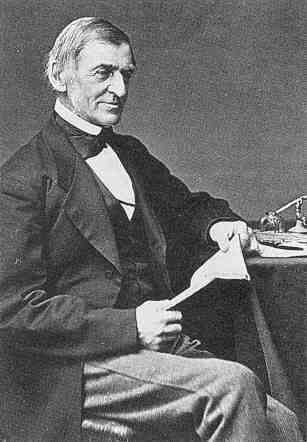
Ralph Waldo Emerson lived from 1803 to 1882. "Fate" has been on this site since 2003. Readers left 6 comments on it here between 2004 and 2011. Several of them read it as a poem about inner beauty.
What readers have said
Caitlin reads the poem as saying that fortune, in anything deeper than the surface, favours no one. This reader sees people scorning the unfavoured while all have the power to see inner beauty. Caitlin, 2005
Ana agrees that the poem is about inner beauty and says it inspired a wish to be known for more than looks. Ana, 2010
Evelin Diaz reads the poem as optimistic and as a statement of the pursuit of success. Evelin Diaz, 2010
Wow, this is a truly beautiful poem. I love the poems of the Transcendentalists. I believe what he is saying (summed up) is that fortune, in ways that are not superficial, favors no one. People, though, think otherwise and scorn those "not favored" and praise those "fortunate ones". But all people are born with the ability to see true beauty, inner beauty, though too often people never do this. And at the end of the poem, Emerson tells us that success (which is "forever good") can only be acheived by finding that beauty within yourself. And once you have been able to understand yourself, only then can you "carry the eagles, and master the sword."
How strange it was after googling this link - the poem was on one side of the web page and an advertisement directly to the right of it with a girl laying down her lush breasts popping out of black lingerie - the internet is a strangely perverse thing at times...
AnaUnited States
Poem
Well this poem is amazing and I have to agree with the eprson who stated that tis meanign si the show inner beauty and i also have to agree that most disregard that at times, i do it all the time and this poem inspired me to make others look beyond hwo I look and actually know who i am !
Evelin DiazEl Salvador
Poem basically supports all the transcendentalists historical path of the american dream and also has a sentence where describes the revolutionaries of belief of god and optimistic,the poem is a great poem to use to compare with the "Self-Reliance" text i believe fate is one great poem to use to describe transcendentalists.
Yeah I am very confuzzled also.
Wow, this is a truly beautiful poem. I love the poems of the Transcendentalists. I believe what he is saying (summed up) is that fortune, in ways that are not superficial, favors no one. People, though, think otherwise and scorn those "not favored" and praise those "fortunate ones". But all people are born with the ability to see true beauty, inner beauty, though too often people never do this. And at the end of the poem, Emerson tells us that success (which is "forever good") can only be acheived by finding that beauty within yourself. And once you have been able to understand yourself, only then can you "carry the eagles, and master the sword."
strange
How strange it was after googling this link - the poem was on one side of the web page and an advertisement directly to the right of it with a girl laying down her lush breasts popping out of black lingerie - the internet is a strangely perverse thing at times...
Poem
Well this poem is amazing and I have to agree with the eprson who stated that tis meanign si the show inner beauty and i also have to agree that most disregard that at times, i do it all the time and this poem inspired me to make others look beyond hwo I look and actually know who i am !
Poem basically supports all the transcendentalists historical path of the american dream and also has a sentence where describes the revolutionaries of belief of god and optimistic,the poem is a great poem to use to compare with the "Self-Reliance" text i believe fate is one great poem to use to describe transcendentalists.
i think this poem was diffcult