WE were very tired, we were very merry—
We had gone back and forth all night on the ferry.
It was bare and bright, and smelled like a stable—
But we looked into a fire, we leaned across a table,
We lay on a hill-top underneath the moon;
And the whistles kept blowing, and the dawn came soon.
We were very tired, we were very merry—
We had gone back and forth all night on the ferry;
And you ate an apple, and I ate a pear,
From a dozen of each we had bought somewhere;
And the sky went wan, and the wind came cold,
And the sun rose dripping, a bucketful of gold.
We were very tired, we were very merry,
We had gone back and forth all night on the ferry.
We hailed, "Good morrow, mother!" to a shawl-covered head,
And bought a morning paper, which neither of us read;
And she wept, "God bless you!" for the apples and pears,
And we gave her all our money but our subway fares.
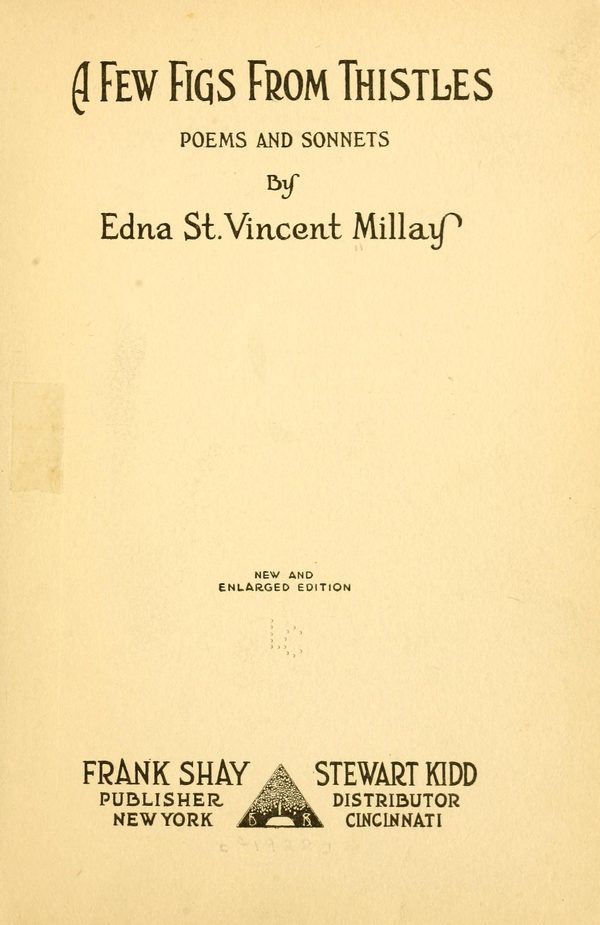
"Recuerdo" is a poem of three six-line stanzas about a night two young people spend riding a ferry back and forth until dawn. Its title is the Spanish word for a memory or keepsake. It appeared as the third poem in A Few Figs From Thistles in 1921.
The speaker remembers small, vivid details: a fire, a table, fruit, the sunrise and an old woman met in the morning. Each stanza begins with the same two-line refrain about being tired and merry. The poem is about the joy of shared, aimless time, and about how that happiness spills over into generosity to a stranger.
Summary
The speaker recalls, "We were very tired, we were very merry." The two had gone back and forth all night on the ferry. The boat was "bare and bright" and smelled like a stable. Even so, they looked into a fire, leaned across a table and lay on a hill-top under the moon. Whistles kept blowing, and dawn came soon.
The refrain returns. This time the two eat fruit: "you ate an apple, and I ate a pear." They had bought a dozen of each somewhere. The sky turns pale and the wind turns cold. Then the sun rises "dripping, a bucketful of gold."
After the third refrain, the two greet a woman in a shawl with "Good morrow, mother!" They buy a morning paper, which neither of them reads. The woman weeps "God bless you!" for the apples and pears they give her. They also give her all their money except their subway fares.
Themes and meaning
The first theme is memory. The title names the poem as a remembrance, and everything is told in the past tense. The refrain returns like a recollection the speaker keeps coming back to. The details chosen are the kind that stay in the mind: a smell, a fruit, a sunrise.
The second theme is carefree happiness. The pair are "very tired" and "very merry" at the same time. The night has no purpose beyond riding "back and forth." The paper they buy goes unread. Joy here comes from company, not from any goal.
The third theme is shared intimacy. The poem moves between "we" and "you" and "I" without naming either person. They could be lovers or close friends, and the text does not say. What it shows is closeness: leaning across a table, lying under the moon, eating side by side.
The fourth theme is generosity. At dawn the pair give the old woman their fruit and "all our money but our subway fares." Their happiness overflows onto a stranger. The poem can be read as showing that joy makes people open-handed. It can also be read as youthful carelessness with money.
Tone
The tone is giddy and affectionate. The refrain, "We were very tired, we were very merry," has the lilt of a song. The long, bouncing lines carry the excitement of a night without sleep.
The second stanza adds wonder. The dawn is described with delight: "the sun rose dripping, a bucketful of gold." Even the cold wind and the pale sky are noticed with pleasure rather than complaint.
The third stanza is playful and tender. "Good morrow, mother!" is a cheerful, slightly theatrical greeting. The aside "which neither of us read" carries a gentle joke at their own expense. The poem ends in warmth, with the woman's blessing and the pair left with only their fares home.
Form and structure
The poem has 18 lines in 3 stanzas of 6 lines each. Each stanza is made of rhymed couplets, AABBCC. The first couplet of every stanza is the same refrain, rhyming "merry" with "ferry." Only the punctuation of the refrain changes.
The lines are long, from 10 to 15 syllables. The metre is loose, with about four stresses to a line. Quick unstressed syllables fall between the beats, which gives a rolling, ballad-like movement. Many lines begin with "And," so events are added one after another, as in a remembered story.
Poetic devices
Juxtaposition line 1
we were very tired, we were very merry Tiredness and merriment are set side by side in matching halves. The balance catches the mixed state of a sleepless, happy night.
Refrain line 7
We were very tired, we were very merry The opening couplet returns in every stanza. It works like a chorus and marks the poem as a memory being revisited.
Alliteration and simile line 3
bare and bright, and smelled like a stable The repeated b and the stable comparison make the ferry plain and unromantic. The pair's happiness does not depend on the setting.
Parallelism line 4
we looked into a fire, we leaned across a table Matching clauses list what they did together. The simple actions add up to a picture of closeness.
Polysyndeton line 9
And you ate an apple, and I ate a pear Clauses are strung together with "and." The effect is breathless and childlike, like someone eagerly recounting a night.
Alliteration line 11
the wind came cold The line echoes the w of "went wan" and the hard c of "came cold." The sounds make the chill of early dawn felt.
Metaphor line 12
a bucketful of gold The rising sun is a bucket of gold, dripping as if hauled from the water. The image makes dawn a treasure the pair receive for free.
Archaic diction line 15
Good morrow, mother! The old-fashioned greeting sounds playful and theatrical. It shows the pair's high spirits as they meet a stranger.
Irony line 16
which neither of us read They buy a paper and ignore it. The detail shows that the news of the world matters less to them than the moment.
Imagery line 18
all our money but our subway fares The exact detail ends the poem on a concrete act of giving. They keep only what they need to get home.
Words worth knowing
Recuerdo
Spanish for a memory, remembrance or keepsake. The title frames the whole poem as something recalled.
wan
Pale, colorless. The sky loses the dark of night just before sunrise.
hailed
Called out a greeting to someone.
morrow
Good morrow is an old greeting meaning good morning.
mother
Here a familiar form of address to an older woman, not the speaker's own mother.
Context
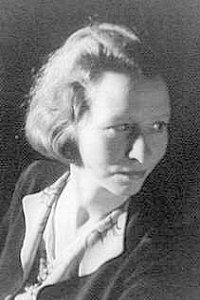
"Recuerdo" is the third poem in A Few Figs From Thistles, published in 1921. Edna St. Vincent Millay lived from 1892 to 1950. The poem has been on this site since February 2004. Readers commented on it here between 2004 and 2019.
What readers have said
Edward Kickham reads it as an optimistic, romantic picture of lovers spending a night together, perhaps newly met. The comment places it in the New York imagery found elsewhere in Millay's work. Edward Kickham, 2004
Amber agrees it is about time with a special person but adds that it shows making the best of a poor situation. On this reading, the ferry is dull and the speaker dwells on the high points. Amber, 2005
gabriella questions the romantic reading and suggests the relationship may be platonic, perhaps between two friends. gabriella, 2006
Ryan says others overlook the last stanza. Ryan reads the pair as doing a kindness for an old woman, giving her their fruit and money. Ryan, 2006
Catherine sees a sexual undertone, reading the back-and-forth of the ferry and the exhaustion as images of lovemaking. Catherine, 2011
STU LEWIS rejects symbolic readings and calls it a cheap date. The comment sees in it the nostalgia of later life for carefree, penniless youth. STU LEWIS, 2019
Keep reading
Discover more of Edna St. Vincent Millay’s poetry.
Recuerdo is a beautiful ballad of a poem full of the concrete New York imagery that marks much of Millay's work. It's an optimistic, romantic description of lovers who spend a night just being with one another. Perhaps they recently met. It is very distinct from the sad, regretful, even cynical tone of much of Millay's other work
andrewUnited Kingdom
this poem pinpoints what love is all about most days you just spend time with your lover you dont always do something incredible if your lover can share a pair with you and your both happy that is special!
Shanethia
Recuerdo is a great poem about memory or rememberance as well as being or sharing a night with your lover.
AmberUnited States
Now, I am still a high school senior, so I admit I am no expert on interpreting poetry. I agree with everyone's comments about this poem being about spending time with that special someone. But I got something else from it as well. Couldn't it also be about making the best out of a not so great situation? She complains about having to ride the ferry back and forth all night long; however she concentrates on the high points of the trip for a majority of the poem. Does anyone agree?
Actually, this poem is about two male friends who thought that WW1 had just ended. They were too tired to sleep so they went out and celebrated.
annaUnited States
this poem is about the relationship of 2 lovers, enjoying what is known as a 'cheap date' (the ferry rides are free) b/c this couple is poor and overworked. it is a celebration of a poor couple's experience, mentally, physically, and sexually.
gabriellaCanada
Today I read this poem for the fist time in my English class. It really reached out to me in a way that I am unable to fully express. It was just so easy for me to elaborate how I felt about this poem when the teacher inquired. I will have to agree, but only to a certain extent. Do you not think that this poem could even be talking about two guys? Absurd? Maybe. But I think that the relationship between these two…
Read the whole comment
Today I read this poem for the fist time in my English class. It really reached out to me in a way that I am unable to fully express. It was just so easy for me to elaborate how I felt about this poem when the teacher inquired. I will have to agree, but only to a certain extent. Do you not think that this poem could even be talking about two guys? Absurd? Maybe. But I think that the relationship between these two people are very platonic and that their is no sign or motive to state that it is a "couple" involved in a romantic way so to say. It seems to me these two know eachother so well and have a way with one another that they are able to enjoy eachother's company in any circumstance. It does not matter that they had to ride a ferry all day, I mean it was exaughsting. These two had one another to look past that and make the best out of a night that did not seem to be a rendevous. It is the times like these in life that you truly appreciate the little things. Everyweight is taken off of you when you have someone to easily confide in and can put you at ease the way this friendship couple could.
RyanUnited States
I agree with everyone else on the fact that the peom is about two people spending time together, but it seems that everyone is missing the last stanza. "And She wept, "God bless you!" for the apples and pears,/ And we gave her all out money but our subway fares." It seems to me that they were doing a favor for some old woman. They gave all their money to hear and apples and pears they bought. They spent time together while doing something nice for someone else.
The meaning i get from this poem is completely different, and you may call me crazy, but at least appreciate my thought process. I think the poem is about immigrants when they arrive in this country on Staten Island, and the handlers who help them cross. The fruit~symbolizes the fruit of America, they're not sure where they got it,but they have it. The sun is a bucket of gold. Perhaps the golden opportunity, a beacon of light in a new land. The shawl covered head represents an immigrant woman they helped on the ferry, and she thanks them for the fruit, the opportunity. And finally they gave her all their money because their help was the richest gift to give.
I feel that Gabriella's thoughts on the poem are what I also see. Although, my teacher made faces when I used it in my presentation of this poem. But, for example, the part "It was bare and bright, and smelled like a stable." I think that isn't literal but more symmbolic for their boredom and that it stank and was not much fun.
Edward K has the gist of it! It is first and foremost a New York experience. The ferry ride cost a nickel, each way - lovers could spend hours in New York harbor watching the stars and skyline for virtually no outlay. Even though the Ferry was public transportation, riders were sparse at night - granting a degree of privacy, and even intimacy despite it being "Bare and bright" They're overflowing joy of being with each other spills over, by chance, to an early morning denizen of the streets, who I'm sure was unprepared for the gaeity with which their minimal but whole-hearted philanthropy was bestowed. The couple was wise enough to retain subway fare home (survival 101 in NYC)
actually its about how no matter where the place, whether great or not the couple is just glad to be with each other. obviously. if it smells like a stable its not a romantic setting, but the couple is happy just to be with each other and in love. towards the end they get so happy that they want to spread it. they do so by giving the lady money and fruit.
I think the poem has a very sexual overtone. If you read the ferry ride as the act of love making back and forth to and fro, the exhaustion, the fruit, the newspaper is knowledge, you get a very specific theme. Perhaps it was their first time, but they definiately were in love, anyone agree with me?
thepoem was great but what i wanna know is hat figurtive language wsa used in recuerdo
STU LEWIS
I have read a number of comments on this site, and I am reminded of the adage that "sometimes a cigar is just a cigar." We don't need to get into Freudian symbolism here. As someone else commented, they were on a "cheap date." Though many people don't have a lot of money when they are young, when they reach middle age and are more successful, they become nostalgic for the carefree days of youth. I remember a number of years ago reminiscing with some college friends, when one of them asked, "How could we be so happy with so little money?" This phenomenon may be one of the reasons that the opera "La Boheme" is so popular.
Recuerdo is a beautiful ballad of a poem full of the concrete New York imagery that marks much of Millay's work. It's an optimistic, romantic description of lovers who spend a night just being with one another. Perhaps they recently met. It is very distinct from the sad, regretful, even cynical tone of much of Millay's other work
this poem pinpoints what love is all about most days you just spend time with your lover you dont always do something incredible if your lover can share a pair with you and your both happy that is special!
Recuerdo is a great poem about memory or rememberance as well as being or sharing a night with your lover.
Now, I am still a high school senior, so I admit I am no expert on interpreting poetry. I agree with everyone's comments about this poem being about spending time with that special someone. But I got something else from it as well. Couldn't it also be about making the best out of a not so great situation? She complains about having to ride the ferry back and forth all night long; however she concentrates on the high points of the trip for a majority of the poem. Does anyone agree?
Actually, this poem is about two male friends who thought that WW1 had just ended. They were too tired to sleep so they went out and celebrated.
this poem is about the relationship of 2 lovers, enjoying what is known as a 'cheap date' (the ferry rides are free) b/c this couple is poor and overworked. it is a celebration of a poor couple's experience, mentally, physically, and sexually.
Today I read this poem for the fist time in my English class. It really reached out to me in a way that I am unable to fully express. It was just so easy for me to elaborate how I felt about this poem when the teacher inquired. I will have to agree, but only to a certain extent. Do you not think that this poem could even be talking about two guys? Absurd? Maybe. But I think that the relationship between these two…
Read the whole commentToday I read this poem for the fist time in my English class. It really reached out to me in a way that I am unable to fully express. It was just so easy for me to elaborate how I felt about this poem when the teacher inquired. I will have to agree, but only to a certain extent. Do you not think that this poem could even be talking about two guys? Absurd? Maybe. But I think that the relationship between these two people are very platonic and that their is no sign or motive to state that it is a "couple" involved in a romantic way so to say. It seems to me these two know eachother so well and have a way with one another that they are able to enjoy eachother's company in any circumstance. It does not matter that they had to ride a ferry all day, I mean it was exaughsting. These two had one another to look past that and make the best out of a night that did not seem to be a rendevous. It is the times like these in life that you truly appreciate the little things. Everyweight is taken off of you when you have someone to easily confide in and can put you at ease the way this friendship couple could.
I agree with everyone else on the fact that the peom is about two people spending time together, but it seems that everyone is missing the last stanza. "And She wept, "God bless you!" for the apples and pears,/ And we gave her all out money but our subway fares." It seems to me that they were doing a favor for some old woman. They gave all their money to hear and apples and pears they bought. They spent time together while doing something nice for someone else.
The meaning i get from this poem is completely different, and you may call me crazy, but at least appreciate my thought process. I think the poem is about immigrants when they arrive in this country on
Staten Island, and the handlers who help them cross. The fruit~symbolizes the fruit of America, they're not sure where they got it,but they have it. The sun is a bucket of gold. Perhaps the golden opportunity, a beacon of light in a new land. The shawl covered head represents an immigrant woman they helped on the ferry, and she thanks them for the fruit, the opportunity. And finally they gave her all their money because their help was the richest gift to give.
I feel that Gabriella's thoughts on the poem are what I also see. Although, my teacher made faces when I used it in my presentation of this poem. But, for example, the part "It was bare and bright, and smelled like a stable." I think that isn't literal but more symmbolic for their boredom and that it stank and was not much fun.
Edward K has the gist of it! It is first and foremost a New York experience. The ferry ride cost a nickel, each way - lovers could spend hours in New York harbor watching the stars and skyline for virtually no outlay. Even though the Ferry was public transportation, riders were sparse at night - granting a degree of privacy, and even intimacy despite it being "Bare and bright" They're overflowing joy of being with each other spills over, by chance, to an early morning denizen of the streets, who I'm sure was unprepared for the gaeity with which their minimal but whole-hearted philanthropy was bestowed. The couple was wise enough to retain subway fare home (survival 101 in NYC)
lol [:
actually its about how no matter where the place, whether great or not the couple is just glad to be with each other. obviously. if it smells like a stable its not a romantic setting, but the couple is happy just to be with each other and in love. towards the end they get so happy that they want to spread it. they do so by giving the lady money and fruit.
Recuerdo by Edna St. Vincent Milay
I think the poem has a very sexual overtone. If you read the ferry ride as the act of love making back and forth to and fro, the exhaustion, the fruit, the newspaper is knowledge, you get a very specific theme. Perhaps it was their first time, but they definiately were in love, anyone agree with me?
comment
thepoem was great but what i wanna know is hat figurtive language wsa used in recuerdo
I have read a number of comments on this site, and I am reminded of the adage that "sometimes a cigar is just a cigar." We don't need to get into Freudian symbolism here. As someone else commented, they were on a "cheap date." Though many people don't have a lot of money when they are young, when they reach middle age and are more successful, they become nostalgic for the carefree days of youth. I remember a number of years ago reminiscing with some college friends, when one of them asked, "How could we be so happy with so little money?" This phenomenon may be one of the reasons that the opera "La Boheme" is so popular.