Listen, children:
Your father is dead.
From his old coats
I'll make you little jackets;
I'll make you little trousers
From his old pants.
There'll be in his pockets
Things he used to put there,
Keys and pennies
Covered with tobacco;
Dan shall have the pennies
To save in his bank;
Anne shall have the keys
To make a pretty noise with.
Life must go on,
And the dead be forgotten;
Life must go on,
Though good men die;
Anne, eat your breakfast;
Dan, take your medicine;
Life must go on;
I forget just why.
✦
Analysis
Lament: analysis
Introduction
"Lament" is a short poem of 22 lines in which a parent tells two young children that their father has died. The speaker, presumably their mother, says so in a single blunt line. The rest of the poem turns at once to practical matters: clothes, pocket contents, breakfast and medicine.
The poem is about grief held under the surface of daily life. It repeats "Life must go on" three times, like a rule the speaker is trying to obey. The last line, "I forget just why," lets the hidden despair show through. The title promises mourning, and the poem delivers it almost entirely through what it does not say.
Summary
The speaker calls the children together with "Listen, children." The news comes in the next line: "Your father is dead." There is no explanation and no comfort. The speaker moves straight on.
The speaker plans to cut down the father's clothes for the children. His old coats will become "little jackets." His old pants will become "little trousers." The dead man's clothing is to be reused by his children.
The speaker then thinks of what is in his pockets. There will be "Keys and pennies / Covered with tobacco." Dan is to have the pennies to put in his savings bank. Anne is to have the keys "To make a pretty noise with." The father's things are shared out between the two children.
The speaker now states, "Life must go on, / And the dead be forgotten." The phrase is repeated with "Though good men die." Then come two ordinary orders: Anne is to eat her breakfast, and Dan is to take his medicine. The speaker says "Life must go on" a third time. The poem ends with "I forget just why."
Themes and meaning
The central theme is grief suppressed by duty. The speaker announces the death in five syllables and never describes a feeling. Instead the speaker makes plans, gives orders and repeats a rule. The children must be clothed, fed and dosed with medicine. The grief shows only in how tightly the speaker holds to these tasks.
A second theme is how objects outlive people. The father's coats and pants are cut down into children's clothes. The "Things he used to put there" stay in his pockets after he is gone. The pennies and keys lose their old purpose. The keys, which once opened doors, become a toy to "make a pretty noise with."
A third theme is the demand to move on. "Life must go on" appears three times, each time with a harder addition. The first adds "And the dead be forgotten." The second adds "Though good men die." These lines read like public wisdom that the speaker repeats without believing.
The last theme is the loss of meaning. "I forget just why" undoes the rule it follows. It can be read as despair: the speaker can no longer find a reason to go on. It can also be read as weary, dry resilience: life continues even without a reason. The text allows both, and readers here take it both ways.
Tone
The tone for most of the poem is flat and controlled. "Your father is dead" is stated with no softening word. The plans for jackets and trousers are brisk and practical. The speaker sounds like someone keeping busy so as not to feel.
There is tenderness under the control. The clothes are "little" and the keys will make "a pretty noise." The speaker thinks of what each child will like. These small details show care for the children in the middle of loss.
The repeated "Life must go on" sounds like a lesson being recited. The orders "Anne, eat your breakfast" and "Dan, take your medicine" keep the voice firm. The last line breaks the control. "I forget just why" is quiet, but it admits exhaustion or despair. The shift is small in volume and large in effect.
Form and structure
"Lament" is a single stanza of 22 lines. It is written in free verse, with no regular metre. The lines are short, running from 4 to 7 syllables. Most carry two or three stresses.
There is almost no rhyme. The main exception is "die" at line 18 and "why" at line 22, which ties the last line to the thought of death. The refrain "Life must go on" provides the structure instead, at line 15, line 17 and line 21.
The syntax is simple, with short clauses joined by semicolons. There are no long sentences or difficult words. The plain form suits a speaker talking to young children.
Poetic devices
Apostrophe line 1
Listen, children The speaker addresses the children directly. The reader overhears a private family moment rather than a public statement.
Understatement line 2
Your father is dead The death is reported in a flat, plain sentence. The lack of emotion makes the news more shocking.
Chiasmus line 6
From his old pants Lines 3 to 6 run coats, jackets, trousers, pants, a mirrored pattern. The father's clothes frame the children's, as he once did.
Imagery line 10
Covered with tobacco Loose tobacco on the coins is a small, physical trace of the man's habits. It makes his absence concrete.
Irony line 14
To make a pretty noise with The keys lose their use and become a toy. The cheerful phrase sits hard against the loss behind it.
Refrain line 17
Life must go on The phrase occurs three times. Repetition makes it sound like a rule the speaker is imposing on the speaker as much as on the children.
Juxtaposition line 19
Anne, eat your breakfast An everyday order follows straight after "Though good men die." Ordinary life is set directly beside death.
Rhyme line 22
I forget just why The word "why" rhymes with "die" in line 18, one of the poem's few rhymes. The sound links the doubt of the ending to death.
Anticlimax line 22
I forget just why After three firm statements, the reason for them is lost. The line undercuts the whole lesson the speaker has been teaching.
Words worth knowing
Lament
A song or poem of mourning. The title sets up a grief that the poem mostly keeps hidden.
pants
In American use, trousers. The father's pants are cut down to make the children's trousers.
bank
Here a child's money box or piggy bank, where Dan will save the pennies.
Context
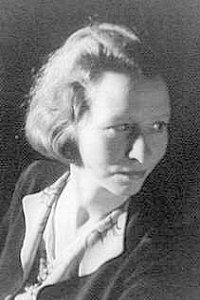
Edna St. Vincent Millay lived from 1892 to 1950. The poem has been on this site since February 2003. Readers commented on it here between 2005 and 2010.
What readers have said
victoria admires how the poem keeps an appearance of calm throughout and then destroys it in the shocking last line. victoria, 2005
Jean has quoted "I forget just why" as a favorite saying for many years. Jean reads it as a prompt to take a deep breath and carry on. Jean, 2005
John first read the poem in high school and never forgot the last line. After losing an only child, John found that the poem spoke to that grief, though the story is different. John, 2006
Kate wonders about "Dan, take your medicine" and asks whether the father died of the same illness the son now has. Kate, 2005
Kathy lost a father at eleven and carried the poem in a wallet for many years. Kathy reads it as comfort: we keep things to remember the dead but go on living. Kathy, 2010
Keep reading
Discover more of Edna St. Vincent Millay’s poetry.
I have loved this poem ever since I first came across it in sixth grade. I think this is the first poem that ever really resonated with me. I love the way Millay preserves an appearance of calmness throughout the poem, then destroys it in that shocking last line. She conveys a wealth of emotion in such a simple piece.
Jennifer
Megan Mullally created a song using the lyrics of this poem. You might want to check it out. Megan Mullally has made several songs and has been inspired by Edna St. Vincent Millay and they are all very touching.
So agree with victoria. first read this about 50 yrs ago. first & last line always stuck & something in the middle about making do. Given me much strength through hard times. As in "finding nemo"==just keep swimming!
JeanUnited States
I became an Edna fan while in junior high school in the fifties. This was my first love of poetry and the pain this poem exudes has always haunted me. One of my favorite sayings is "life must go on, I forget just why." It makes me take a deep breath, stand up a bit taller and carry on. Thank you, Edna.
I love this poem. First came across it in Megan Mullally's album, the song was arranged by Jeff Blumenkrantz. The music conveys the same illusion of calmness. Makes me wonder about the line "Dan, take your medicine". Did the dad die of the same illness the son has now? Or is it just going on with life still? Sigh. Love this poem. I want to paint it on something.
I really like this poem. I came across it in one of my mothers books and it struck me. I just picked it to be the topic of a english project. I wonder what was going on in her life about the time that she wrote it.
JohnUnited States
The first time I read it was in high school in the early 1960's and I never forgot the last line. We lost our only child last year and the last line has often haunted me. I never remembered the name of the poem or poet. I am so thankful there is an internet! Even though the story the poem tells is very different than mine, somehow, at least for me, it also speaks perfectly to our suffering and loss.
StefanieUnited States
my brother actually introduced me to this poem when i was in 8th grade. i am now doing a project on good poetry and this is one of my main supporters on what a good poem should be. i also lost my mother at the age of seven, so the lines that say "life must go on and the dead be forgotten...life must go on , though good men die, life must go on, i forgot just why" stick with me whenver i think about her.
Kira- I liked this poem because it is not lying because it shows that when something bad happens, you can not let it stall your life, like you said, Life must go on.
My teacher gave me this book to read just recently and I just happened to read this exact poem. I like the way that it is so simple but somehow catches your attention. I wonder what atually happened in the story and if the boy was actually sick.
AshleyUnited States
I recently picked this poem to recite in speech class. It is so easy to read the that is portrayed through the words of Edna St. Vincent Millay. It struck me and Im guessing makes not only me but everyone else stop and take the time to remember that life will go on, no matter what hardships and trials we face. It emits hope and strength yet sorrow and mourning. Love it!
KathyUnited States
Lament
I lost my dad when I was eleven. I carried this poem in my wallet for atleast 25 years since his death. It somehow comforted me during sad times. I retyped it and put it in a favorite place. I send to anyone who loses a parent. We do keep things to remember them by but continue our lives with their memories.
I have loved this poem ever since I first came across it in sixth grade. I think this is the first poem that ever really resonated with me. I love the way Millay preserves an appearance of calmness throughout the poem, then destroys it in that shocking last line. She conveys a wealth of emotion in such a simple piece.
Megan Mullally created a song using the lyrics of this poem. You might want to check it out. Megan Mullally has made several songs and has been inspired by Edna St. Vincent Millay and they are all very touching.
So agree with victoria. first read this about 50 yrs ago. first & last line always stuck & something in the middle about making do. Given me much strength through hard times. As in "finding nemo"==just keep swimming!
I became an Edna fan while in junior high school in the fifties. This was my first love of poetry and the pain this poem exudes has always haunted me. One of my favorite sayings is "life must go on, I forget just why." It makes me take a deep breath, stand up a bit taller and carry on. Thank you, Edna.
I love this poem. First came across it in Megan Mullally's album, the song was arranged by Jeff Blumenkrantz. The music conveys the same illusion of calmness.
Makes me wonder about the line "Dan, take your medicine". Did the dad die of the same illness the son has now? Or is it just going on with life still? Sigh. Love this poem. I want to paint it on something.
I really like this poem. I came across it in one of my mothers books and it struck me. I just picked it to be the topic of a english project. I wonder what was going on in her life about the time that she wrote it.
The first time I read it was in high school in the early 1960's and I never forgot the last line. We lost our only child last year and the last line has often haunted me. I never remembered the name of the poem or poet. I am so thankful there is an internet! Even though the story the poem tells is very different than mine, somehow, at least for me, it also speaks perfectly to our suffering and loss.
my brother actually introduced me to this poem when i was in 8th grade. i am now doing a project on good poetry and this is one of my main supporters on what a good poem should be. i also lost my mother at the age of seven, so the lines that say "life must go on and the dead be forgotten...life must go on , though good men die, life must go on, i forgot just why" stick with me whenver i think about her.
sara- this was really good and true.
Kira- I liked this poem because it is not lying because it shows that when something bad happens, you can not let it stall your life, like you said, Life must go on.
My teacher gave me this book to read just recently and I just happened to read this exact poem. I like the way that it is so simple but somehow catches your attention. I wonder what atually happened in the story and if the boy was actually sick.
I recently picked this poem to recite in speech class. It is so easy to read the that is portrayed through the words of Edna St. Vincent Millay. It struck me and Im guessing makes not only me but everyone else stop and take the time to remember that life will go on, no matter what hardships and trials we face. It emits hope and strength yet sorrow and mourning. Love it!
Lament
I lost my dad when I was eleven. I carried this poem in my wallet for atleast 25 years since his death. It somehow comforted me during sad times. I retyped it and put it in a favorite place. I send to anyone who loses a parent. We do keep things to remember them by but continue our lives with their memories.