I thought, as I wiped my eyes on the corner of my apron:
Penelope did this too.
And more than once: you can't keep weaving all day
And undoing it all through the night;
Your arms get tired, and the back of your neck gets tight;
And along towards morning, when you think it will never be light,
And your husband has been gone, and you don't know where, for years.
Suddenly you burst into tears;
There is simply nothing else to do.
And I thought, as I wiped my eyes on the corner of my apron:
This is an ancient gesture, authentic, antique,
In the very best tradition, classic, Greek;
Ulysses did this too.
But only as a gesture,—a gesture which implied
To the assembled throng that he was much too moved to speak.
He learned it from Penelope...
Penelope, who really cried.
✦
Analysis
An Ancient Gesture: analysis
Introduction
"An Ancient Gesture" is a two-stanza poem spoken by a woman wiping her eyes on her apron. As she does so, she thinks of Penelope, the wife in Homer's Odyssey who waited years for Odysseus to come home. She feels that Penelope must have cried in just this way.
The second stanza turns to Ulysses, Penelope's husband. He wept too, the speaker says, but only as a gesture for an audience. The poem sets a woman's real, private tears against a man's public show of feeling. It is about grief, waiting and the difference between feeling something and performing it.
Summary
The speaker wipes her eyes on the corner of her apron and thinks that "Penelope did this too." She imagines Penelope weaving all day and undoing it all night, with tired arms and a tight neck. Toward morning, the speaker says, it seems as though it will never be light again. The absent husband "has been gone, and you don't know where, for years." Then "Suddenly you burst into tears," because "There is simply nothing else to do."
The second stanza repeats the opening line, with the speaker again wiping her eyes on her apron. This, she reflects, is "an ancient gesture," authentic, antique and "classic, Greek." She adds, in a line that echoes the first stanza, that "Ulysses did this too." But for him it was only a gesture, meant to show "the assembled throng" that he was too moved to speak. He learned it from Penelope, the speaker says, "Penelope, who really cried."
Themes and meaning
The first theme is shared grief across time. A modern woman in an apron recognises herself in a figure from ancient Greek story. The line "Penelope did this too" links them directly. The act of wiping the eyes becomes a bond between women separated by thousands of years.
The second theme is waiting. The first stanza describes Penelope's endless task of weaving by day and undoing by night. It dwells on physical strain: "Your arms get tired." The husband "has been gone, and you don't know where, for years." The poem shows waiting as work, not as idle patience.
The third theme is real feeling against performed feeling. Penelope cries because there is "simply nothing else to do." Ulysses cries "only as a gesture" before "the assembled throng." His tears are for show, and he "learned it from Penelope." The contrast can be read as a criticism of how men display emotion in public while women bear it in private.
A fourth theme is self-awareness. The speaker notices her own gesture while making it and names it "authentic, antique." This can be read as a moment of irony, where grief watches itself. The final line insists, though, that the original grief was real. The speaker's own tears seem to share in that reality.
Tone
The poem begins in a tired, homely tone. The apron and the plain words "you can't keep weaving all day" make the grief ordinary. The long run of lines beginning "And" sounds like exhaustion building up.
The second stanza turns wry. The string "authentic, antique, / In the very best tradition, classic, Greek" mocks the grandeur of the gesture. It sounds like a sales pitch or a museum label. The speaker is half-amused at her own tears.
The tone sharpens into irony with Ulysses. The phrase "much too moved to speak" is plainly sarcastic. The ellipsis after "He learned it from Penelope" is a pause for effect. The final line returns to sympathy. "Penelope, who really cried" is quiet, loyal and bitter at once.
Form and structure
The poem has 17 lines in 2 stanzas of 9 and 8 lines. It is written in free verse, with lines from 6 to 16 syllables. There is no fixed metre.
Rhyme appears irregularly but often. Line 4 to line 6 end on a run of rhymes: "night," "tight" and "light." The words "too" and "do" chime across the first stanza and return in the second. The second stanza rhymes "antique," "Greek" and "speak," and closes with "implied" and "cried."
Each stanza opens with the same line, varied only by an added "And." The two stanzas mirror each other, first Penelope and then Ulysses. Each also has a line ending "did this too."
Poetic devices
Imagery line 1
wiped my eyes on the corner of my apron The domestic detail places the speaker in a kitchen or household. It makes the grief humble and physical.
Allusion line 2
Penelope did this too The speaker compares herself to the faithful wife of the Odyssey. The link gives an everyday act an ancient history.
Second-person address line 3
you can't keep weaving all day The shift to "you" makes Penelope's experience general. It invites the reader to feel the strain as their own.
Rhyme line 5
the back of your neck gets tight The word "tight" rhymes with "night" and "light" on the lines around it. The run of rhymes presses in like the sleepless hours.
Polysyndeton line 6
And along towards morning Lines 3 to 7 begin with "And." The piling clauses mimic the long night and the build-up to tears.
Understatement line 9
There is simply nothing else to do Crying is presented as the only remaining option. The plain phrasing makes it sound practical rather than dramatic.
Refrain line 10
And I thought, as I wiped my eyes on the corner of my apron The first line returns to open the second stanza. The repetition shows the speaker still crying and still thinking.
Accumulation line 11
authentic, antique Adjectives are stacked as if describing a valuable object. The overstatement is gently mocking.
Irony line 15
much too moved to speak The phrase describes a man's feeling in the language of performance. The alliteration of m adds a mock-solemn weight.
Ellipsis line 16
He learned it from Penelope... The trailing dots create a pause before the last line. They let the accusation sink in.
Contrast line 17
Penelope, who really cried The word "really" separates her grief from his display. The poem ends by siding with the one who suffered.
Words worth knowing
Penelope
In Homer's Odyssey, the wife of Odysseus who waits many years for his return. She holds off suitors by weaving a cloth by day and unpicking it by night.
Ulysses
The Latin name for Odysseus, Penelope's husband and the hero of the Odyssey.
antique
Old, from the ancient world, especially Greece and Rome.
throng
A crowd. The assembled throng is the audience watching Ulysses.
Context
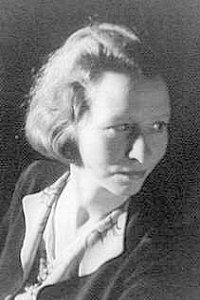
Edna St. Vincent Millay lived from 1892 to 1950. The poem has been on this site since February 2003. It was Poem of the Day on September 24, 2016. It has drawn 33 comments here, between 2004 and 2020.
What readers have said
Mage reads the speaker's absent husband as away at war. Mage explains that Penelope unwove her weaving at night to delay choosing a new husband from her suitors. Mage, 2005
Melanie disagrees that the husband is at war and suggests he may simply have left. For Melanie, Ulysses stands for men and Penelope for women: those who leave and those left behind. Melanie, 2005
MArtha takes the gesture to be wiping tears on an apron, something women have always done. MArtha stresses how hard Penelope's life was while she waited. MArtha, 2006
hannah reads the gesture as Odysseus's crying. It is a formality for the crowd, while Penelope's crying is real. hannah, 2007
Susan reads it as a poem about making art. The speaker notices her own emotion while crying, so the tears become a self-conscious gesture. Susan, 2007
Jacqueline sees the speaker recognising that the gesture is old and has become a symbol of women's grief. In the end the speaker realises it is still authentic. Jacqueline, 2007
Keep reading
Discover more of Edna St. Vincent Millay’s poetry.
This Poem es very good because it has alot of thruth in it. Alot of women suffer of domestic violence but the men is the one how suffers thats not right and this poem is very good.
KyleUnited States
Srry but this poem is not about violence...geese where did you get that? He is sleeping with other women and he cries but not with feeling. She cries because she misses him and she truly cares about him. Nowhere does it talk about violence. Odysseus (Ulysses) is a nice guy, he would not hurt Penelope. He came back to be with her again, not to hurt her. stupid
To Kyle, why so negative? Even if the girl didn't understand the poem fully, she was moved by it and that counts for quite a bit. Calling her "stupid" is not cool.
Kyle, you think that you could elaborate on how exactly Ulysseus has been involved in the story line of this poem? I have an analysis paper due in a few days on this poem.. I absolutely love it, but need a bit more info in order to go in depth with it. Would be appreciated really. Thanks..!
MageUnited States
Well, Millay is comparing her husband going off to a present-day war to Penelope, King Ulysses's wife. The bit about weaving all day and undoing it all night refers to when she promises her suitors to consider marriage when she completes her tapestry. She obviously doesn't want to marry any one of them, so she undos all of her work. Hope that helps...and hope it wasn't too late. If you need any more info, just email me.
Hey, I have to memorize this poem and recite it in school tomorrow i only know all of it! Isnt that terrible!!!!!!
GiannaUnited States
What is the gesture she is talking about?
MelanieUnited States
The gesture she refers to is the act of crying. However, I don't think this poem implies that the modern-day husband is at war...perhaps he just left, or perhaps they are divorced. I would even suggest that Ulysses represents all men and Penelope all women. She is really commenting on a universal pattern which is unfortunately tied to gender roles: those who leave, and those left behind.
Like Melanie, I believe the ancient gesture is one of crying, or maybe love. However, I think that this refers to the scene of the Odyssy, reflecting Penelope's loyalty in hoping that Odysseus will come home one day.
codesUnited States
I think there is more to the gesture than love or crying. The poem mentions "Ulysses did this too./ But only as a gesture". If the gesture is love, than Ulysses is simply doing it as if it is no big deal--I don't think the poem is trying to get a message across like that. A gesture most nearly means a movement of the part of the body, esp. a hand or the head to express an idea or meaning. Ulysses is very much in love with Penelope--thus why he returns home after all the sumptuous temptations he encounters on his voyage, so why would he show just a small movement of his love to appease the throng? Or maybe I am just not understanding the poem.
Characters: The woman who is crying(Penelope) and the man who made her cry(Odysseus) Theme: Every gesture is made by a cause and an effect~ Cause is Odysseus leaving effect is Penelope crying Setting: Not positively sure but probably Ithaca Symbols: The way "Penelope" crys is smbolic to how everybody cries and also the way she wipes her eyes on her dress(or whatever)
mage's critique of this poem is right on the money.
MArthaAustralia
The gesture is wiping tears from your eyes on your apron. Women have done this since forever. Penelope cries because Ulysses has been gone for 20 years and she is alone at home, raising a son, ruling a kingdom and keeping away suitors who want to force a marriage on her.She does this by weaving a shroud during the day and unravelling it at night. Her life has been hard without her husband. While she is struggling…
Read the whole comment
The gesture is wiping tears from your eyes on your apron. Women have done this since forever. Penelope cries because Ulysses has been gone for 20 years and she is alone at home, raising a son, ruling a kingdom and keeping away suitors who want to force a marriage on her.She does this by weaving a shroud during the day and unravelling it at night. Her life has been hard without her husband. While she is struggling and not even knowing if her husband will return, Ulysses, her husband, is off fighting monsters and enemies, but he is also having adventures and women are loving his heroic image. He is the hero of the poem, but when he cries, he often cries for show. Ulysses likes being the center and will take advantage of any situation to make himself look good. The question posed by the poem is who has the more difficult position during war; is it the man who is away risking his life, but living glories and receiving adulation, or is the woman who stays at home waiting, worrying, and keeping the homeland together? To me, Millay thinks that Penelope and all women suffer the most and get the least credit. Wiping your eyes on your apron is an ancient getsture, and taking an ill-deserved secondary role to the hardship of a warrior is also an ancient role. Penelope, and all women in wartime, really cried and still dry today; not knowing what is happening is worse than being there.
I agree with Martha in that the gesture is the wiping of her eyes on her apron, but I think it's a little more than that too. It's the fact that she IS wiping them, not just sitting there and sobbing in utter hopelessness and misery. Penelope is very strong--not knowing if her husband is still alive or not, but determined to stay faithful to him. Imagine having to weave all day and unweave all night for three years;…
Read the whole comment
I agree with Martha in that the gesture is the wiping of her eyes on her apron, but I think it's a little more than that too. It's the fact that she IS wiping them, not just sitting there and sobbing in utter hopelessness and misery. Penelope is very strong--not knowing if her husband is still alive or not, but determined to stay faithful to him. Imagine having to weave all day and unweave all night for three years; I think I'd go completely crazy. The point is, I don't really think that the author was referring to a lost husband in her poem. Rather, she was referring to the fear you get when you are fighting something that seems inevitable, and don't know if your efforts are ever going to pay off. Penelope really didn't have any idea if Odysseus was going to make it back or not; she operated for ten years in uncertainty. There are times when the struggle just seems to crash down on you all at once, and you cry because you just don't know what to do. But the strength of Penelope, and of the author, is shown by the gesture of wiping their eyes on their aprons. You cry, you wipe the tears and you keep fighting. It's a kind of strength Odysseus did not possess. And that, I believe, is what the poem is really about.
I really enjoyed every comment and I do belive is ok to disagree without calling people names. Next, please analyze the title and look at the figurative meaning of this poem. Everybody went for the literary meaning. It is an "Ancient" gesture. And that is that women are ment to tend for their husbands. It is an "Ancient" tradition. "The apron" symbolizes the domestic nature of women who were content to tend to their…
Read the whole comment
I really enjoyed every comment and I do belive is ok to disagree without calling people names. Next, please analyze the title and look at the figurative meaning of this poem. Everybody went for the literary meaning. It is an "Ancient" gesture. And that is that women are ment to tend for their husbands. It is an "Ancient" tradition. "The apron" symbolizes the domestic nature of women who were content to tend to their husbands. Considering Milay's sexual orientation one might conclude that she wants to break the traditions and not follow the "ancient" ones. The poem is a symbolic poem that relates to the family life. One can always try to speculate but unless you are the poet that is all one can do.
hannahUnited States
The gesture is Odysseus' crying. The author is obviously trying to show that Penelope's crying is real while when Odysseus cries, it is just a gesture or formality. The poet uses words like tradition and gesture to describe Odyssesus' crying. The "assembled throng" is the crowd of people that gathered to see their king and queen together. Ulysseus' crying is just for the crowd.
I have to do an analysis of this poem for an AP english class. If anyone knows of any good sources for critical essays or analytical papers over this particular poem it would be greatly appreciated.
SusanUnited States
I always thought this poem was about the nature of making art. Who was it that said that poetry is "emotion, recollected in tranquility?"
Millay is crying in the first stanza, but even as she cries, she notices her own emotion, her own attitude. The crying becomes self-conscious, a gesture that indicates grief.
Penelope though, is like most of us, going through the day without producing anything of lasting value, going through the motions the endless routine (weaving, unweaving, weaving, unweaving) and for what? Poetry, like Millay's, or the epic of Ulysses, is what endures.
Yet something is lost to the poet, the directness of the emotion, of being Penelope "who really cried"
I just have one question, what is the MEANING of this poem?
GinnyUnited States
Let me get this straight, is Ulysses just another name for Odysseus?
JacquelineUnited States
I think she recognizes that the gesture is ancient and universal; as such, it has become a symbol of a woman's grief. At the end of the poem, she realizes that it is, nonetheless, authentic. She is acknowledging that her gesture of grief is beautiful and timeless because it's real.
FrankUnited States
Ulysses is our 18th president, not the husband of Penelope. This mut be referring to his reaction to the civil war. Odysseus's only name is Odysseus.
Akram AbdallahUnited States
Does anyone know what the theme of this poem is? Please help me out someone
saraUnited States
ulysses is another name for Odysseus, it is his name in roman language learned that from english teacher
the manUnited States
Ha! you have this for AP? im a freshman and im doing this in our 2nd six weeks and have to have a resource paper for it. Still a good poem.
bradUnited States
In the story odysseus has been gone for about 20 years and penelope is being pestered to choose a new king and she tells her people that as soon as she finishes the quilt she will choose a king so by day she quilts and at night she undo's it. Thought id throw that in
This Poem es very good because it has alot of thruth in it. Alot of women suffer of domestic violence but the men is the one how suffers thats not right and this poem is very good.
Srry but this poem is not about violence...geese where did you get that? He is sleeping with other women and he cries but not with feeling. She cries because she misses him and she truly cares about him. Nowhere does it talk about violence. Odysseus (Ulysses) is a nice guy, he would not hurt Penelope. He came back to be with her again, not to hurt her. stupid
To Kyle, why so negative? Even if the girl didn't understand the poem fully, she was moved by it and that counts for quite a bit. Calling her "stupid" is not cool.
Kyle, you think that you could elaborate on how exactly Ulysseus has been involved in the story line of this poem? I have an analysis paper due in a few days on this poem.. I absolutely love it, but need a bit more info in order to go in depth with it. Would be appreciated really. Thanks..!
Well, Millay is comparing her husband going off to a present-day war to Penelope, King Ulysses's wife. The bit about weaving all day and undoing it all night refers to when she promises her suitors to consider marriage when she completes her tapestry. She obviously doesn't want to marry any one of them, so she undos all of her work. Hope that helps...and hope it wasn't too late. If you need any more info, just email me.
Hey, I have to memorize this poem and recite it in school tomorrow i only know all of it! Isnt that terrible!!!!!!
What is the gesture she is talking about?
The gesture she refers to is the act of crying. However, I don't think this poem implies that the modern-day husband is at war...perhaps he just left, or perhaps they are divorced. I would even suggest that Ulysses represents all men and Penelope all women.
She is really commenting on a universal pattern which is unfortunately tied to gender roles: those who leave, and those left behind.
Like Melanie, I believe the ancient gesture is one of crying, or maybe love. However, I think that this refers to the scene of the Odyssy, reflecting Penelope's loyalty in hoping that Odysseus will come home one day.
I think there is more to the gesture than love or crying. The poem mentions "Ulysses did this too./ But only as a gesture". If the gesture is love, than Ulysses is simply doing it as if it is no big deal--I don't think the poem is trying to get a message across like that. A gesture most nearly means a movement of the part of the body, esp. a hand or the head to express an idea or meaning. Ulysses is very much in love with Penelope--thus why he returns home after all the sumptuous temptations he encounters on his voyage, so why would he show just a small movement of his love to appease the throng? Or maybe I am just not understanding the poem.
Characters: The woman who is crying(Penelope) and the man who made her cry(Odysseus)
Theme: Every gesture is made by a cause and an effect~ Cause is Odysseus leaving effect is Penelope crying
Setting: Not positively sure but probably Ithaca
Symbols: The way "Penelope" crys is smbolic to how everybody cries and also the way she wipes her eyes on her dress(or whatever)
By the way Kyle, your the stupid one
mage's critique of this poem is right on the money.
The gesture is wiping tears from your eyes on your apron. Women have done this since forever. Penelope cries because Ulysses has been gone for 20 years and she is alone at home, raising a son, ruling a kingdom and keeping away suitors who want to force a marriage on her.She does this by weaving a shroud during the day and unravelling it at night. Her life has been hard without her husband. While she is struggling…
Read the whole commentThe gesture is wiping tears from your eyes on your apron. Women have done this since forever. Penelope cries because Ulysses has been gone for 20 years and she is alone at home, raising a son, ruling a kingdom and keeping away suitors who want to force a marriage on her.She does this by weaving a shroud during the day and unravelling it at night. Her life has been hard without her husband. While she is struggling and not even knowing if her husband will return, Ulysses, her husband, is off fighting monsters and enemies, but he is also having adventures and women are loving his heroic image. He is the hero of the poem, but when he cries, he often cries for show. Ulysses likes being the center and will take advantage of any situation to make himself look good. The question posed by the poem is who has the more difficult position during war; is it the man who is away risking his life, but living glories and receiving adulation, or is the woman who stays at home waiting, worrying, and keeping the homeland together? To me, Millay thinks that Penelope and all women suffer the most and get the least credit. Wiping your eyes on your apron is an ancient getsture, and taking an ill-deserved secondary role to the hardship of a warrior is also an ancient role. Penelope, and all women in wartime, really cried and still dry today; not knowing what is happening is worse than being there.
I agree with Martha in that the gesture is the wiping of her eyes on her apron, but I think it's a little more than that too. It's the fact that she IS wiping them, not just sitting there and sobbing in utter hopelessness and misery. Penelope is very strong--not knowing if her husband is still alive or not, but determined to stay faithful to him. Imagine having to weave all day and unweave all night for three years;…
Read the whole commentI agree with Martha in that the gesture is the wiping of her eyes on her apron, but I think it's a little more than that too. It's the fact that she IS wiping them, not just sitting there and sobbing in utter hopelessness and misery. Penelope is very strong--not knowing if her husband is still alive or not, but determined to stay faithful to him. Imagine having to weave all day and unweave all night for three years; I think I'd go completely crazy.
The point is, I don't really think that the author was referring to a lost husband in her poem. Rather, she was referring to the fear you get when you are fighting something that seems inevitable, and don't know if your efforts are ever going to pay off. Penelope really didn't have any idea if Odysseus was going to make it back or not; she operated for ten years in uncertainty. There are times when the struggle just seems to crash down on you all at once, and you cry because you just don't know what to do. But the strength of Penelope, and of the author, is shown by the gesture of wiping their eyes on their aprons. You cry, you wipe the tears and you keep fighting. It's a kind of strength Odysseus did not possess. And that, I believe, is what the poem is really about.
I really enjoyed every comment and I do belive is ok to disagree without calling people names. Next, please analyze the title and look at the figurative meaning of this poem. Everybody went for the literary meaning. It is an "Ancient" gesture. And that is that women are ment to tend for their husbands. It is an "Ancient" tradition. "The apron" symbolizes the domestic nature of women who were content to tend to their…
Read the whole commentI really enjoyed every comment and I do belive is ok to disagree without calling people names. Next, please analyze the title and look at the figurative meaning of this poem. Everybody went for the literary meaning. It is an "Ancient" gesture. And that is that women are ment to tend for their husbands. It is an "Ancient" tradition. "The apron" symbolizes the domestic nature of women who were content to tend to their husbands. Considering Milay's sexual orientation one might conclude that she wants to break the traditions and not follow the "ancient" ones.
The poem is a symbolic poem that relates to the family life. One can always try to speculate but unless you are the poet that is all one can do.
The gesture is Odysseus' crying. The author is obviously trying to show that Penelope's crying is real while when Odysseus cries, it is just a gesture or formality. The poet uses words like tradition and gesture to describe Odyssesus' crying. The "assembled throng" is the crowd of people that gathered to see their king and queen together. Ulysseus' crying is just for the crowd.
I have to do an analysis of this poem for an AP english class. If anyone knows of any good sources for critical essays or analytical papers over this particular poem it would be greatly appreciated.
I always thought this poem was about the nature of making art. Who was it that said that poetry is "emotion, recollected in tranquility?"
Millay is crying in the first stanza, but even as she cries, she notices her own emotion, her own attitude. The crying becomes self-conscious, a gesture that indicates grief.
Penelope though, is like most of us, going through the day without producing anything of lasting value, going through the motions the endless routine (weaving, unweaving, weaving, unweaving) and for what? Poetry, like Millay's, or the epic of Ulysses, is what endures.
Yet something is lost to the poet, the directness of the emotion, of being Penelope "who really cried"
I just have one question, what is the MEANING of this poem?
Let me get this straight, is Ulysses just another name for Odysseus?
I think she recognizes that the gesture is ancient and universal; as such, it has become a symbol of a woman's grief. At the end of the poem, she realizes that it is, nonetheless, authentic. She is acknowledging that her gesture of grief is beautiful and timeless because it's real.
Ulysses is our 18th president, not the husband of Penelope. This mut be referring to his reaction to the civil war. Odysseus's only name is Odysseus.
Does anyone know what the theme of this poem is? Please help me out someone
ulysses is another name for Odysseus, it is his name in roman language learned that from english teacher
Ha! you have this for AP? im a freshman and im doing this in our 2nd six weeks and have to have a resource paper for it. Still a good poem.
In the story odysseus has been gone for about 20 years and penelope is being pestered to choose a new king and she tells her people that as soon as she finishes the quilt she will choose a king so by day she quilts and at night she undo's it. Thought id throw that in
I hate this poem!!!!!!!!!
you have that in high school.. HA im in middle school and began this in the firrst week of school
I'm doing this in 8th grade. I'm in a high school class as an 8th grader.
me too except I've seen this poem since i was in 6th grade
You're not wrong but Ulysses is the Roman name for Odysseus. This poem is in fact talking about "The Odyssey".
Yes, it is the Roman version.
You want a cookie?