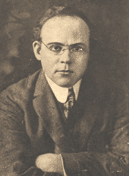
The poem
Not in that wasted garden Where bodies are drawn into grass That feeds no flocks, and into evergreens That bear no fruit -- There where along the shaded walks Vain sighs are heard, And vainer dreams are dreamed Of close communion with departed souls -- But here under the apple tree I loved and watched and pruned With gnarled hands In the long, long years; Here under the roots of this northern-spy To move in the chemic change and circle of life, Into the soil and into the flesh of the tree, And into the living epitaphs Of redder apples!
The poem Conrad Siever was in my opinion a wonderfully written piece of work. I enjoyed reading it. The vivid picture painted by the poet expressed his deep love of poetry.
Mrs. Bangert,
Conrad Siever: It tell a story of a man. It tells how he lived and what he wanted to do with his life. I thought that he was saying that he just sat around like an apple on a tree. He sat and watched as the dayse went by and now that he is dead he is barried under the apple tree and again he just sits and watches the days go by.
He's talking about how he wouldn't go into (that is, be buried) a graveyard or a cemetary with others who wish to be reunited with loved ones in heaven, but rather into his own apple orchard - that is where he will be buried - and feed the soil of future fruit. It expresses a naturalist's or perhaps one might say a pagan point of view. These poems from Master's Spoon River Anthology are all epitaphs about everyone…
Read the whole commentHe's talking about how he wouldn't go into (that is, be buried) a graveyard or a cemetary with others who wish to be reunited with loved ones in heaven, but rather into his own apple orchard - that is where he will be buried - and feed the soil of future fruit. It expresses a naturalist's or perhaps one might say a pagan point of view.
These poems from Master's Spoon River Anthology are all epitaphs about everyone who lived in that town and told from each person's point of view - how they really felt about what went on in that small town and in their own lives, as opposed to the ad hock stuff that always gets recorded on gravestones or said in eulogies. It's a fascinating treasure, this collection - many of the poems are interwoven and you make the connections to the other people in the town through them - you can recognize the relationships if you read them all and read them randomly from time to time. It is really a stunning piece of literature, the whole is greater than the sum of its parts.
If you read "Hare Drummer", first: "How many are with me, how many, In the old orchards along the way to Siever's", And then read :"I loved and watched and pruned with gnarled hands in the long,long years, here under the roots of this northern-spy...into living epitaphs of redder apples!", this becomes more like a horror story. A serial child killer, who buries his victims under the trees of his orchard.