Let It Enfold You

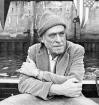
Portrait of Charles Bukowski
Charles Bukowski 1920–1994

either peace or happiness, let it enfold you

when i was a young man I felt these things were dumb,unsophisticated. I had bad blood,a twisted mind, a precarious upbringing.

I was hard as granite,I leered at the sun. I trusted no man and especially no woman.

I was living a hell in small rooms, I broke things, smashed things, walked through glass, cursed. I challenged everything, was continually being evicted,jailed,in and out of fights,in and about of my mind. women were something to screw and rail at,i had no male friends,

I changed jobs and cities,I hated holidays, babies,history, newspapers, museums, grandmothers, marriage, movies, spiders, garbagemen, english accents,spain, france,italy,walnuts and the color orange. algebra angered me, opera sickened me, charlie chaplin was a fake and flowers were for pansies.

peace and happiness to me were signs of inferiority, tenants of the weak and addled mind.

but as I went on with my alley fights, my suicidal years, my passage through any number of women-it gradually began to occur to me that I wasn't different

from the others, I was the same,

they were all fulsome with hatred, glossed over with petty grievances, the men I fought in alleys had hearts of stone. everybody was nudging, inching, cheating for some insignificant advantage, the lie was the weapon and the plot was empty, darkness was the dictator.

cautiously, I allowed myself to feel good at times. I found moments of peace in cheap rooms just staring at the knobs of some dresser or listening to the rain in the dark. the less i needed the better i felt.

maybe the other life had worn me down. I no longer found glamour in topping somebody in conversation. or in mounting the body of some poor drunken female whose life had slipped away into sorrow.

I could never accept life as it was, i could never gobble down all its poisons but there were parts, tenuous magic parts open for the asking.

I re formulated I don't know when, date,time,all that but the change occurred. something in me relaxed, smoothed out. i no longer had to prove that i was a man,

I didn't have to prove anything.

I began to see things: coffee cups lined up behind a counter in a cafe. or a dog walking along a sidewalk. or the way the mouse on my dresser top stopped there with its body, its ears, its nose, it was fixed, a bit of life caught within itself and its eyes looked at me and they were beautiful. then- it was gone.

I began to feel good, I began to feel good in the worst situations and there were plenty of those. like say, the boss behind his desk, he is going to have to fire me.

I've missed too many days. he is dressed in a suit, necktie, glasses, he says, "i am going to have to let you go"

"it's all right" i tell him.

He must do what he must do, he has a wife, a house, children. expenses, most probably a girlfriend.

I am sorry for him he is caught.

I walk onto the blazing sunshine. the whole day is mine temporarily, anyhow.

(the whole world is at the throat of the world, everybody feels angry, short-changed, cheated, everybody is despondent, disillusioned)

I welcomed shots of peace, tattered shards of happiness.

I embraced that stuff like the hottest number, like high heels,breasts, singing,the works.

(dont get me wrong, there is such a thing as cockeyed optimism that overlooks all basic problems just for the sake of itself- this is a shield and a sickness.)

The knife got near my throat again, I almost turned on the gas again but when the good moments arrived again I didn't fight them off like an alley adversary. I let them take me, i luxuriated in them, I bade them welcome home. I even looked into the mirror once having thought myself to be ugly, I now liked what I saw,almost handsome,yes, a bit ripped and ragged, scars, lumps, odd turns, but all in all, not too bad, almost handsome, better at least than some of those movie star faces like the cheeks of a babys butt.

and finally I discovered real feelings for others, unheralded, like lately, like this morning, as I was leaving, for the track, i saw my wife in bed, just the shape of her head there (not forgetting centuries of the living and the dead and the dying, the pyramids, Mozart dead but his music still there in the room, weeds growing, the earth turning, the toteboard waiting for me) I saw the shape of my wife's head, she so still, i ached for her life, just being there under the covers.

i kissed her on the forehead, got down the stairway, got outside, got into my marvelous car, fixed the seatbelt, backed out the drive. feeling warm to the fingertips, down to my foot on the gas pedal, I entered the world once more, drove down the hill past the houses full and empty of people, i saw the mailman, honked, he waved back at me.

Let It Enfold You: analysis

Introduction

"Let It Enfold You" is a long free-verse poem about learning to accept peace and happiness. It opens with a short instruction: "either peace or happiness, / let it enfold you". The rest tells how the speaker came to follow it.

As a young man he hated nearly everything and saw peace as weakness. Slowly he sees that he is like everyone else. He begins to notice small things, feel sympathy and let good moments in. The poem ends on an ordinary morning, with a kiss, a drive and a wave from the mailman.

Summary

The poem runs to 297 lines, so this summary follows its main movements rather than each stanza. It opens with a two-line instruction: "either peace or happiness, / let it enfold you". The rest of the poem tells how the speaker came to accept that advice.

Lines 3–52 describe the speaker as a young man. He had "bad blood" and was "hard as granite". He lived "a hell in / small rooms", smashing things, fighting and being jailed. He hated a long list of things, from holidays to walnuts and "the color / orange". Peace and happiness seemed "signs of / inferiority".

In lines 53–79 his view begins to change. Through his "alley fights" and "suicidal years", he sees that he is no different from others. They are full of hatred and cheat for "some insignificant / advantage". To him, "darkness was the / dictator".

From line 80 he lets himself "feel good / at times". He finds peace staring at dresser knobs or "listening to the / rain". He no longer enjoys "topping somebody / in conversation" or sex with drunken women. At a time he cannot date, "the change" comes, and he no longer has to prove he is a man.

Lines 130–150 show him beginning to see things. He notices coffee cups, a dog and a mouse on his dresser. The mouse is "a bit of life / caught within itself", and then it is gone.

Now he feels good "in the worst situations". Fired by a boss in a suit, he answers "it's all right" and pities the man, who "is caught". He walks into "blazing / sunshine". He welcomes "shots of / peace" but warns against "cockeyed optimism". The knife comes near again, yet he lets good moments "take me".

The last movement shows "real feelings" for others. Leaving for the track, he sees "the shape of my / wife's head" in bed. He kisses her forehead and drives off, "feeling warm to / the fingertips". He honks at the mailman, who waves back.

Themes and meaning

The main theme is change, from a life of hatred to one that lets peace in. The poem is built as a before and after. At first peace and happiness are "signs of / inferiority". By the end the speaker is "feeling warm to / the fingertips". The title's instruction is what he learns to do.

Toughness as a pose is a second theme. The young man is "hard as granite" and trusts "no man". His hatreds run from marriage to "the color / orange", which makes the anger look absurd. Change comes when he no longer has "to / prove that i was a / man". Letting go of that proof lets peace in.

Recognition of others is a third theme. The speaker sees that he "wasn't different" from others, who are also full of hatred. Later this becomes sympathy. The boss who fires him is pitied because "he is caught". At the end he aches for the woman asleep in bed, and the mailman waves back.

Attention to small things is a fourth theme. Peace arrives through coffee cups, a dog and a mouse. The mouse is "a bit of life / caught within itself", and its eyes are "beautiful". Then "it was / gone". The poem values these moments because they do not last.

The happiness on offer is limited and hard-won. Peace comes in "shots" and "tattered shards", and the day is his only "temporarily, / anyhow". The speaker still nearly turns on the gas. He calls optimism that ignores real problems a sickness. The poem claims only that good moments can be accepted when they come.

Tone

The opening is calm and direct, like advice. The account of the young man is harsh but also comic. The list of hatreds, ending with "walnuts and / the color / orange", mocks the speaker's old self. The line "flowers were for / pansies" repeats his old sneer without endorsing it.

The middle sections are careful. The speaker allows himself to feel good only "cautiously". He admits that the old life may simply have worn him down. The scene with the boss is dry and wry, with its guess of "most probably / a girlfriend".

The bracketed stanzas add a skeptical voice. They keep the poem from turning into simple uplift. The close is tender and warm. The last image, the mailman who "waved / back", is small and quietly glad.

Form and structure

The poem is free verse, with no rhyme scheme and no regular metre. The archive's text has 297 lines in 28 stanzas. Stanzas range from 2 lines to 36 lines. Lines are very short, from 1 to 12 syllables, and most carry only a few words.

The short lines break phrases at odd points, as in "the lie was the / weapon". This slows the reading and gives single words weight. Sentences run over many lines, so the long poem reads like talk.

Three passages are set in brackets, starting at line 181, line 195 and line 251. They step outside the story to comment on the world or to qualify the speaker's claims.

Poetic devices

Imperative line 2
let it enfold you The poem opens with a command to the reader. The rest of the poem shows how the speaker learned to obey it.
Simile line 9
I was hard as granite The young man compares himself to stone. The image fixes his hardness as cold, heavy and unfeeling.
Catalogue line 36
english accents This item sits in a long list of hatreds that includes spiders, garbagemen and whole countries. The range makes the anger absurd and faintly comic.
Personification line 79
dictator Darkness is made a ruler. The metaphor shows how completely hatred governed the world the speaker saw.
Metaphor line 111
poisons Life's hardships become poisons that cannot be swallowed whole. The speaker accepts only its better parts.
Imagery line 144
caught within itself The mouse is held still in a moment of pure being. The image shows the new, patient attention the speaker has learned.
Irony line 174
he is caught The boss has the power, yet he is the one trapped. The fired speaker walks out free into the sunshine.
Metaphor line 188
tattered shards of Happiness arrives broken and worn, not whole. The phrase keeps the poem's joy modest.
Simile line 212
like an alley The simile recalls the alley fights of the early stanzas. He no longer fights good moments as he once fought men.
Simile line 236
like the cheeks of Smooth movie star faces are compared to a baby's bottom. The joke lets the speaker prefer his own scarred face.
Juxtaposition line 256
Mozart dead Death and lasting music sit side by side. The aside sets one morning against the long run of the living and the dead.
Closing image line 295
he waved The poem ends on a small, returned gesture. The speaker's goodwill is answered by another person.

Words worth knowing

tenants
Here almost certainly a slip for tenets, meaning principles or beliefs. Peace and happiness seemed to be the beliefs of the weak.
addled
Confused or muddled. The young man thought peace belonged to a muddled mind.
fulsome
Usually excessive or overdone. Here it means brimming over with hatred.
topping
Outdoing or getting the better of someone, as in winning an argument.
cockeyed
Crooked or absurd. Cockeyed optimism is cheerfulness that does not see straight.
toteboard
The large board at a racetrack that shows the betting odds and payouts. It waits for the speaker at the track.

Context

Charles Bukowski lived from 1920 to 1994. "Let It Enfold You" has been on americanpoems.com since February 2003. Readers left 20 comments on it between 2005 and 2023.

What readers have said

  • Kevin reads it as a poem anyone can relate to, about moving from sadness and stress to looking on the bright side. Kevin, 2005
  • Scott Tudehope finds little to analyse, calling it an essay on rage and despondency whose lesson about found joy is obvious. Scott Tudehope, 2005
  • Ben admires the early wildness, still smashing bottles with bad blood, and reads the poet as a man who knew how to live. Ben, 2005
  • Chad says the band Senses Fail based a song on the poem, borrowing its line about the lie being a weapon. Chad, 2007
  • JA admires the poem but complains that the version on the site is full of misspellings and typos. JA, 2007
  • Raelynn says the poem changed this reader's view of life, enough to have its title tattooed. Raelynn, 2010

This analysis was drafted from the poem’s text, the records of American Poems and the readers’ comments. Every quotation and line number was checked against the poem, scanned for unsupported claims, and the editor read and revised it before publication. Facts about the poet’s life appear only when a source is given. Corrections are welcome through the contact page.

Revised in September 2026.

Keep reading

Discover more of Charles Bukowski’s poetry.

Explore all poems

Readers

Reader discussion 20 comments

Add your reading ↓
Readers
20
Stanzas quoted
3of 28
Most quoted
“I didn't have to prove”1 reader
Longest reading
Fisher129 words
  1. Kevin United States

    This is one of the worlds greatist poems because every one can relate to it. every one goes thru a stage of sadness and depression and stress. but you have to look on the bright sides of things because life mit not always be fair but there is always good and happiness and open your mind and heart to the world, let it enfold you.

  2. Jim United States

    From what the other guy said, the poem must be interesting, but it was quite long and i didn't get past the second line.

  3. William Brazil ↩ replying to Kevin

    Kevin says it's one of the world's greatest poems.
    Jim says it's one of the world's longest poems.

    Jim sucks.

  4. Joshua United States

    Senses Fail wrote a song called "Let it Enfold You" and it's based off of this poem. You should listen to it, Senses Fail is awesome.

  5. Ben Australia

    I still smash bottles and have bad blood. Old Bukowski, now theres a man who knew how to live.

  6. Zach United States ↩ replying to Joshua

    Joshua is right. Everyone who reads this poem should check out "let it enfold you" and vice versa. Senses Fail singer Buddy Nielsen is a genius and a great poet as well as song writer.

  7. Chay

    Sometimes you feel like there isn't anything to live for. This man felt so many reasons to die but felt so many reasons to live. There isn't a person in this world who could say they can't relate to this scenario. The poem is long but that is needed to create the mood of the poem.

  8. Scott Tudehope United States

    I don't see a lot of analysis going on here. Where are the comments on his meter, tempo and mood?

    This reads more like a brief essay on rage, sorrow, anger and despondency. "Found joy" is wherever you can get it. Isn't that obvious?

    He certainly doesn't stack up next to Shakespeare, Benet or Yolenzo of Spain.

  9. megan United States

    this poem is great, but you should check out some of Bukowski's other stuff- it's also amazing!!

  10. Fisher Mexico

    this long piece is an excellent example of just why Buk was able to spread literature into the penial system and down at the docks.he's an achetype "everyman" writer (if, of course, you are an aging white male American). the Formalists always smash away at his methods, flogging the Dead Greats and disappearing up their own navels. this does nothing to detract from his base appeal. when you read his works, you get in…

    Read the whole comment

    this long piece is an excellent example of just why Buk was able to spread literature into the penial system and down at the docks.he's an achetype "everyman" writer (if, of course, you are an aging white male American). the Formalists always smash away at his methods, flogging the Dead Greats and disappearing up their own navels. this does nothing to detract from his base appeal. when you read his works, you get in on the ground floor of a mans ambitions to destoy the academic snobbery that has left poetry hanging in the lurch like proses' ugly cousin. he despised those "dilletanttes...playing piss-in-the-hat" that always railed against him. if the tone of this poem appeals to you, beg, borrow or steal 'Dangling in the Tournefortia'. you'll love it.

  11. nicole United States

    senses fail did wirte a song named after this poem and it is by far the best song ever...buddy writes this most amazing songs! check it out

  12. mark United States ↩ replying to nicole

    This is a great poem. However, Nicole, SF didn't write a song after it, the album was titled after it.

  13. Mike Canada

    can anyone or does anyone even know which one of his books this poem can be found in?

  14. Jazzmin Mathews United States

    This poem is the best I have ever read. Poets like Charles Bukowski make me happy to have an English project on American Poets.

  15. tess Canada

    this poem is found in "Betting on the Muse: (96).

  16. Chad United States

    well bro, Buddy of Senses Fail did write the song 'Let It Enfold You' after this poem, he read the poem nd if you notice closly to some of the stanzas, he took some of words and made them int parts of the songs, like ''the lie is the weapon'' the opening to the song goes ''so the lie now is my weapon'' so actually he did base it off this poem..

  17. JA United States

    Bukowski is one of the greatest poets in recent history, and this work certainly proves that. Still, whoever transcribed this version did a terrible job. It is full of misspellings and typos. Though CB may have hated himself, he was very proud of his work and this really doesn't do it justice.

  18. Every Portugal

    I agree with JA. this is an amazing piece of Bukowski's work but someone ought to edit the insane amount of typos here. it disrupts the reading and full enjoyment of the poem.

  19. Raelynn United States

    Fantastic.

    This poem definately hit me deep in the soul. It changed my view on life. So much, in fact, that I had to get "Let it Enfold You" tattooed on my body. Marvelous.

  20. Chloe ↩ replying to Raelynn

    me too, it changed me. got me through some of the darkest times and also appreciating the beauty in the simple things and the better times. I got it tatted as well, as a reminder to try and always focus on the powerful beauty of the soul and how that is all reflected in life. it’s also a line in the Tim Buckley song “song of the siren” who is Jeff Buckleys dad , my favorite artist .

Your turn

Shown with your comment.

Never published. Only so we can reach you.

Comments are read before they appear. See our terms.