I AM glad God saw Death
And gave Death a job taking care of all who are tired
of living:
When all the wheels in a clock are worn and slow and
the connections loose
And the clock goes on ticking and telling the wrong time
from hour to hour
And people around the house joke about what a bum
clock it is,
How glad the clock is when the big Junk Man drives
his wagon
Up to the house and puts his arms around the clock and
says:
"You don't belong here,
You gotta come
Along with me,"
How glad the clock is then, when it feels the arms of the
Junk Man close around it and carry it away.
✦
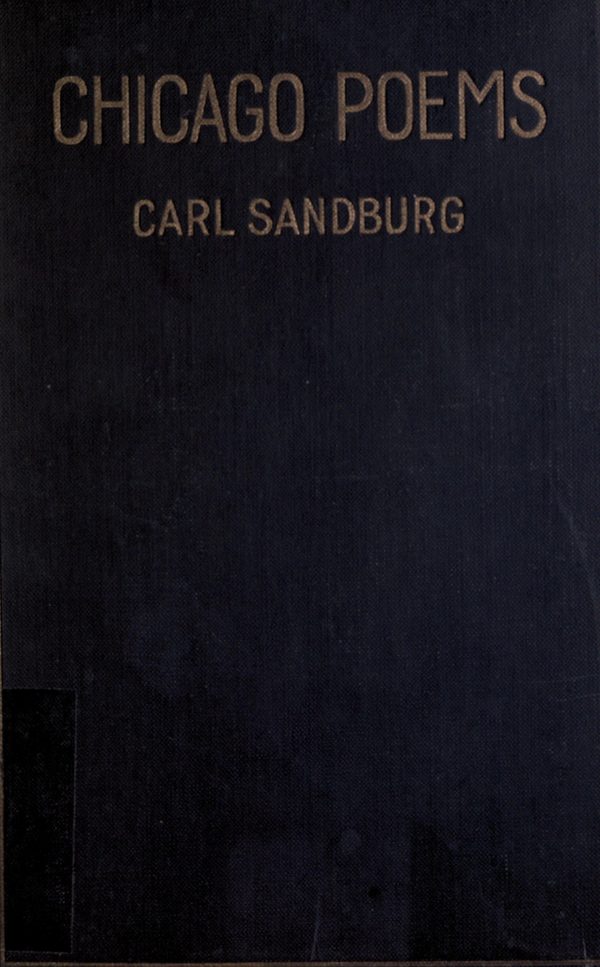
From the bookChicago PoemsFirst edition, Henry Holt, 1916
Analysis
The Junk Man: analysis
Introduction
"The Junk Man" is a short poem about death as a welcome release. The speaker is glad that God gave Death "a job taking care of all who are tired / of living". He then tells a small household parable.
An old clock has worn out and keeps telling the wrong time. The family jokes about it. Then the Junk Man arrives with his wagon, embraces the clock and carries it away. The poem asks the reader to see the clock's gladness as the feeling of the old and weary when death comes.
Summary
The first stanza is a statement of thanks. The speaker says "I AM glad God saw Death". God gave Death a job, which is caring for those who are "tired / of living". The stanza ends with a colon, which introduces an example.
The second stanza describes an old clock. Its wheels are "worn and slow" and its connections "loose". It keeps "ticking and telling the wrong time" hour after hour. People in the house "joke about what a bum / clock it is".
Then "the big Junk Man" drives up in his wagon. He "puts his arms around the clock" and speaks to it. He says "You don't belong here". He adds that it has to come along with him.
The last two lines repeat the clock's feeling. "How glad the clock is then", the speaker says. The clock feels "the arms of the / Junk Man" close around it. The Junk Man carries it away, and the poem ends.
Themes and meaning
The main theme is death as mercy. The speaker is "glad" that Death exists. Death is not an enemy here but a worker with "a job taking care of" the weary. The clock's gladness when taken away mirrors the relief of those who are ready to die.
Old age and decline form a second theme. The clock's worn wheels and loose connections suggest an ageing body and mind. It still "goes on ticking", but it tells "the wrong time". It keeps functioning without working properly, which can be read as a picture of long illness or confusion.
The poem also touches on how the old are treated. The people in the house "joke about what a bum / clock it is". Their mockery is casual, not cruel. Yet it shows the clock no longer has a respected place. "You don't belong here" confirms this, but the Junk Man says it kindly.
A fourth theme is the ordinariness of death. Death is a junk man with a wagon, a familiar figure of city streets. The scene is domestic: a house, a clock, a visit. The poem removes terror from death by making it homely.
Faith appears briefly. The poem begins with God, who "saw Death" and gave it work. This frames death as part of a plan, not an accident. The poem stops there and does not describe what follows death.
Tone
The tone is gentle, grateful and tender. The opening "I AM glad" sets a note of thanks, not grief. The speaker sounds calm, as if the matter were settled long ago.
There is warm, homely humour in the middle. The clock is called a "bum" clock, a slangy, affectionate word. The Junk Man speaks in plain street speech: "You gotta come".
The tenderness deepens at the end. The repeated "How glad the clock is" stresses joy. The Junk Man's arms suggest an embrace rather than a seizure.
Some readers may find the tone unsettling. Treating the dying as 'junk' is blunt. The poem balances this bluntness with kindness, so the effect is comfort rather than contempt.
Form and structure
The poem has 18 lines in 2 stanzas, of 3 and 15 lines. It is free verse with no rhyme and no regular metre. Lines vary widely, from 1 to 14 syllables, because long lines run over onto short continuations.
The short first stanza states an idea, and the long second stanza illustrates it. A colon joins them, so the story reads as proof of the statement.
The second stanza is one long sentence. Its clauses build with "When" and "And" before arriving at "How glad the clock is". The Junk Man's speech is set apart as three short lines in quotation marks. The phrase "How glad the clock is" returns near the end, giving the poem a circling shape.
Poetic devices
Personification line 1
God saw Death Death is a figure who can be seen and given work. This makes death a servant of God, not a force of chaos.
Extended metaphor line 4
all the wheels in a clock are worn and slow The failing clock stands for an ageing person. Its worn parts suggest a body and mind wearing out.
Anaphora line 6
And the clock goes on ticking Lines 6 and 8 both begin with 'And'. The repeated opening piles up the clock's failings.
Colloquialism line 8
what a bum The slang word 'bum' brings in the everyday talk of the household. It makes the scene familiar and slightly comic.
Metaphor line 10
the big Junk Man drives The Junk Man stands for Death. A familiar tradesman replaces the frightening figures often linked to death.
Personification line 10
How glad the clock is The clock feels joy. This lets the object speak for the feelings of the dying.
Imagery line 12
puts his arms around the clock The gesture looks like an embrace. Death is shown as tender and protective.
Dialogue line 15
You gotta come The Junk Man speaks in plain, friendly speech. The informality removes fear from the summons.
Repetition line 17
How glad the clock is then The line echoes line 10. Returning to the clock's gladness gives the poem a gentle, affirming close.
Words worth knowing
Junk Man
A man who collects and buys scrap and worn-out goods, often going door to door with a cart or wagon.
bum
Slang for useless or broken. It is used of the clock, not of a person.
gotta
Spoken form of 'have got to', meaning must.
connections
The joints and links between the moving parts of the clock's mechanism.
Context
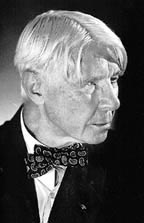
Carl Sandburg lived from 1878 to 1967. The archive lists "The Junk Man" as part of his collection Chicago Poems, published in 1916. The archive's current record dates from February 2004. It was Poem of the Day on 7 July 2012. Readers left 9 comments on it between 2004 and 2007.
What readers have said
Peter Raines reads the poem as about old people whose bodies are winding down, who are glad to die because moving has become painful. Peter Raines, 2004
Kasia reads it as reassurance that death is not the end, taking the Junk Man to lead to eternal happiness after old age and its ridicule. Kasia, 2005
Laurel's mother carried the poem in her wallet and feared being a prisoner of her body and mind. Laurel believes she was relieved when the Junk Man came. laurel, 2005
Joe Chanley heard the poem on the radio, and answers a reader who called it stupid by pointing to lonely, dying people in nursing homes, for whom the Junk Man would be welcome. Joe Chanley, 2006
Kate compares the poem to Wallace Stevens's The Emperor of Ice Cream, since both treat death as part of ordinary life and not as the enemy. Kate, 2007
Ann, at 80, has seen many people grateful to feel the Junk Man's loving arms. Ann, 2007
This poem is about older peole whose bodies are winding down. In the end, they are happy to die because their bodies make it painful to move
jackEgypt
its the best poem ever and the junkman is tryin to symbolize that everything is gonna be poli kala
KasiaUnited States
This poem symbolizes the reassurance at the end of life, because really it is not the end at all. Everyone goes through old age in life, which includes ridicule and the malfunctioning of the body in everyway. No matter what there is always hope in life, and once you have lived and served your part, you will be taken away to eternal happiness.
laurelUnited States
My mom recently died. She used to carry a copy of this poem around in her wallet. She shared it with me many years ago. She really loved it, so do I. Unfortunately she lived it too. It was her greatest fear to be a prisoner of her body and mind. I am sure she was relieved when the junk man came. I will miss her terribly! Thank you for showing me this poem mommy it means so much to me. Love, Laurel
Tieu MaiVietnam
I think this poem is somewhat stupid .
bobUnited Kingdom
THIS POEM IS THE BEST. WHO EVER THINKS OTHERWISE IS A
COMUNIST
Joe ChanleyUnited States
I was listening on WGN, Chicago last night and heard this. I do not know much about Carl Sandburg, but after hearing this, I soon will. Moving! To the person that commented afore that this was some what stupid, I say, they have never walked passed a person in a nursing home sitting in a wheel chair w/o any attention, near death already, and that the Junk Man would be welcome at any time there. It sure would be for me.....JC
KateUnited States
Ann, how beautifully you express yourself, like Sandburg. This poem reminds me of "The Emperor of Ice Cream" by Wallace Stevens, and not just because both are about death, but because both equate death with the ordinary aspects of life. Death is final, but it is not the enemy, nor is the junk man, the emperor of ice cream, the run-down clock or the "sheet on which she embroidered fan tails once", these are all just part of the whole. As are we.
AnnUnited States
At 80 I have great appreciation for Sandburg's poem. I have seen many who were grateful to feel those loving arms of the junk man.
This poem is about older peole whose bodies are winding down. In the end, they are happy to die because their bodies make it painful to move
its the best poem ever and the junkman is tryin to symbolize that everything is gonna be poli kala
This poem symbolizes the reassurance at the end of life, because really it is not the end at all. Everyone goes through old age in life, which includes ridicule and the malfunctioning of the body in everyway. No matter what there is always hope in life, and once you have lived and served your part, you will be taken away to eternal happiness.
My mom recently died. She used to carry a copy of this poem around in her wallet. She shared it with me many years ago. She really loved it, so do I. Unfortunately she lived it too. It was her greatest fear to be a prisoner of her body and mind. I am sure she was relieved when the junk man came. I will miss her terribly! Thank you for showing me this poem mommy it means so much to me. Love, Laurel
I think this poem is somewhat stupid .
THIS POEM IS THE BEST. WHO EVER THINKS OTHERWISE IS A
COMUNIST
I was listening on WGN, Chicago last night and heard this. I do not know much about Carl Sandburg, but after hearing this, I soon will. Moving! To the person that commented afore that this was some what stupid, I say, they have never walked passed a person in a nursing home sitting in a wheel chair w/o any attention, near death already, and that the Junk Man would be welcome at any time there. It sure would be for me.....JC
Ann, how beautifully you express yourself, like Sandburg.
This poem reminds me of "The Emperor of Ice Cream" by Wallace Stevens, and not just because both are about death, but because both equate death with the ordinary aspects of life. Death is final, but it is not the enemy, nor is the junk man, the emperor of ice cream, the run-down clock or the "sheet on which she embroidered fan tails once", these are all just part of the whole. As are we.
At 80 I have great appreciation for Sandburg's poem.
I have seen many who were grateful to feel those loving arms of the junk man.