The poem
DESOLATE and lone All night long on the lake Where fog trails and mist creeps, The whistle of a boat Calls and cries unendingly, Like some lost child In tears and trouble Hunting the harbor's breast And the harbor's eyes.
The poem
DESOLATE and lone All night long on the lake Where fog trails and mist creeps, The whistle of a boat Calls and cries unendingly, Like some lost child In tears and trouble Hunting the harbor's breast And the harbor's eyes.
"Lost" is a nine-line poem about the sound of a boat's whistle on a foggy lake at night. The whistle "Calls and cries unendingly". The poem compares it to a lost child searching for its mother.
The whole poem is a single sentence built around one simile. It turns a mechanical noise into a cry of loneliness and need. The harbor becomes a mother, with a "breast" and "eyes" that the boat is trying to find. The poem is brief, but its feeling is strong and clear.
Lines 1–3 set the scene on the water. Something is "DESOLATE and lone" through "All night long on the lake". The lake is covered in fog and mist: "fog trails and mist creeps". Both are moving slowly over the water. The poem does not yet say what is lonely, so the reader waits for the subject.
Lines 4–5 finally give the subject. It is "The whistle of a boat". The whistle "Calls and cries unendingly" across the water. It does not stop through the night. No boat, crew or shore is described, only the sound.
Lines 6–9 compare the whistle to a child. It is "Like some lost child / In tears and trouble". The child is "Hunting the harbor's breast", as a small child seeks its mother. It is also hunting "the harbor's eyes". The poem ends there, with the search still going on and no sign that the boat reaches the harbor.
Loneliness is the central theme. The first words, "DESOLATE and lone", set the mood before anything else is named. The boat is alone on a dark lake. Its whistle calls all night, and nothing answers.
A second theme is the need for comfort and home. The harbor is given a "breast" and "eyes", like a mother. The boat seeks not just a place to dock but a source of safety and recognition. The eyes suggest the wish to be seen and known.
Fear and confusion form a third theme. Fog and mist hide the way. The child is "In tears and trouble", which suggests distress, not calm searching. The poem captures the panic of being unable to find one's way.
The poem also turns a machine into something human. A boat's whistle is a signal, not a feeling. By hearing it as a crying child, the speaker gives the night a human voice.
The title leaves open who is lost. It may be the boat, the child in the simile, or the listener. The poem never names a speaker. Some readers take the loneliness as the listener's own, heard in the whistle.
The tone is mournful, lonely and tender. The opening "DESOLATE and lone" is heavy and slow. The fog that "trails" and mist that "creeps" add an eerie, uneasy feeling.
The tone grows more pitiful with the simile. The phrase "some lost child" invites sympathy and even alarm. The pairing "tears and trouble" stresses distress.
The last two lines are gentle. The words "breast" and "eyes" bring in warmth and longing. The poem does not resolve, so the tone ends in unrest. The listener seems moved but unable to help.
The poem has 9 lines in 1 stanza. It is free verse, with no rhyme scheme. The lines are short and fairly even, from 4 to 6 syllables each. There is no regular metre, though the short lines give a steady, murmuring rhythm.
The whole poem is one sentence. Its subject, "The whistle of a boat", is held back until line 4. This delay creates suspense, as a sound heard in fog might be.
Lines 8 and 9 repeat "the harbor's", ending the poem with a paired search. The two lines share a rhythm, so the poem closes on an echo. Nothing rhymes, but the repetition does the work of an ending.
Like some lost childThe boat's whistle is compared to a lost child's cry. The comparison turns a signal into a sound of human grief.
Hunting the harbor's breastThe harbor is given a mother's body. It becomes a source of comfort that the boat longs to reach.
Where fog trails and mist creepsThe verbs make the weather move like living things. The image of hidden, drifting air sets an uneasy mood.
Calls and criesThe repeated hard 'c' sound mimics the repeated blasts of the whistle. It makes the sound seem insistent.
In tears and troubleThe paired 't' sounds join two kinds of distress. The phrase stresses how helpless the child is.
DESOLATE and loneThe description comes before the thing described, which only appears in line 4. The mood is felt before its source is known.
And the harbor's eyesThe line repeats 'the harbor's' from line 8. The doubled phrase shows the search reaching again and again for the same place.
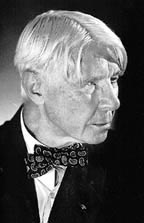
Carl Sandburg lived from 1878 to 1967. The archive lists "Lost" as part of his collection Chicago Poems, published in 1916. It was Poem of the Day on the old americanpoems.com on 3 October 2003. The archive's current record dates from February 2004. Readers left 10 comments on it between 2005 and 2010.
Keep reading
Readers
When i read this poem i stopped froze with my mouth dropped this made me quiver this was an AMAZING poem ofcourse im young and never really into poems this much but when i read this poem in the library i got so into poetry i read more and mor every day i even copied some of the poems for Carl Sandburg and put it up on a wall i call it my poetry wall this poem inspired me to write poems even though im not great i will always apperciate Carl Sandburg
i was doing my english report on day and i had to wright this poem so i thought i need to go back and put a comment in b/c this is so much like me and made me like poetry!
so, for my english poem, i chose to do Carl Sandburg becasue i liked the name not even knowing who he was. but once i found this poem, it makes me want to learn more about him. this poem means to me that he was alone on one day and he heard a lot of noises and was still all alone.
This is a lovley peom, but unfornatully, my mouth didnot drop. Sry Kendall from the united States.
I interpret it as he is trying to say that being alone can be scary. It can give you a feeling of not knowing where you are or what is going on and make you be afraid. but i probably suck at interpreting poetry, whatever
i think the poem lost really show his vast thinking side really one of his early works, since then if you look at his other work it's far superior. But indeed I have nothing wrong to say about the poem Lost.
I really like this poem it really sohws how he feels. And it shows he has true feelings.
something about being on the water in the dark is supernatural. sandburg really captures that spooky feeling.
The poem "Lost"
Actually theres a simile in this poem, not a metaphor.
eating
moo moo the super sea cow is better that you and is eating PUDDING THAT HAS A TASTE OF CHOCOLATE COVERED PURPLE POPCORN!