I ASKED the professors who teach the meaning of life to tell
me what is happiness.
And I went to famous executives who boss the work of
thousands of men.
They all shook their heads and gave me a smile as though
I was trying to fool with them
And then one Sunday afternoon I wandered out along
the Desplaines river
And I saw a crowd of Hungarians under the trees with
their women and children
and a keg of beer and an
accordion.
✦
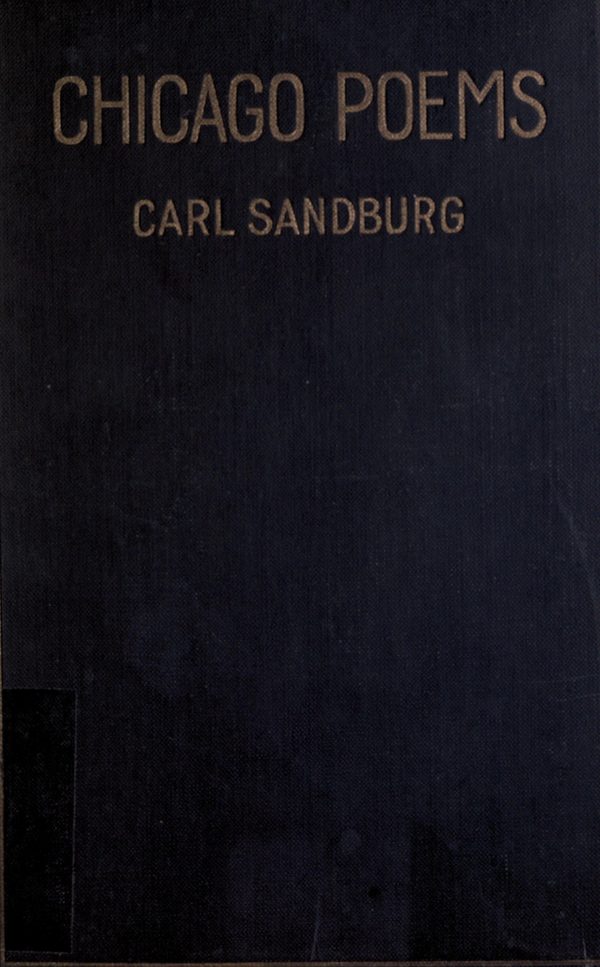
From the bookChicago PoemsFirst edition, Henry Holt, 1916
Analysis
Happiness: analysis
Introduction
"Happiness" is a short free-verse anecdote about looking for a definition. The speaker asks professors and executives what happiness is. They only smile and shake their heads. Then, on a Sunday walk by the Desplaines river, he sees a group of Hungarian families picnicking with "a keg of beer and an / accordion."
The poem never states its answer. It sets the experts' silence beside a plain scene of shared leisure and lets the scene answer the question. It contrasts learning and power with ordinary pleasure.
Summary
In lines 1–2 the speaker says he asked "the professors who teach the meaning of life" to tell him "what is happiness". The question is simple and direct. He starts with people whose subject is life itself.
In lines 3–4 he goes to "famous executives who boss the work of / thousands of men". These are people of power and success. He puts the same question to them.
In lines 5–6 both groups react the same way. "They all shook their heads" and gave him a smile. They acted "as though / I was trying to fool with them". Nobody gives an answer.
In lines 7–8 the scene changes. On "one Sunday afternoon" the speaker wanders out along "the Desplaines river". The walk seems aimless, not part of his search.
In lines 9–12 he sees "a crowd of Hungarians under the trees". They are there with "their women and children". They have "a keg of beer" and an accordion. The poem ends with the word "accordion", standing alone on the last line. The speaker adds no comment.
Themes and meaning
The central idea is that happiness cannot be defined by experts. The professors "teach the meaning of life", yet cannot answer a simple question. The executives command thousands, yet have nothing to say. Their smiles suggest the question seems foolish or unanswerable to them.
A second theme is that happiness is found in ordinary life. The Hungarians are not famous or learned. They are families at rest by a river, with beer and music. The scene suggests happiness lies in company, leisure and simple pleasure, not in knowledge or position.
The poem also sets work against rest. The executives "boss the work" of others. The Hungarians are seen on a Sunday afternoon, a day off. The contrast can be read as saying that happiness belongs to free time more than to working life.
Class is part of the contrast too. The first people asked stand at the top of society. The people who seem to hold the answer are a crowd of immigrant families. The poem gives no names to either group, but it clearly favours the second.
Finally, the poem shows rather than tells. It never says 'this is happiness'. The answer is an image, and the reader must draw the conclusion. Many readers do, some adding that the speaker has answered his own question by looking.
Tone
The tone is plain, conversational and gently ironic. The speaker reports his questions without fuss. There is quiet irony in "the professors who teach the meaning of life", since they cannot say what happiness is. The phrase "boss the work" is blunt and slightly mocking.
The smiles and head-shakes in lines 5–6 leave the speaker feeling dismissed. He reports this without bitterness. He simply moves on to what happened next.
The tone warms in the second half. The verb "wandered" suggests ease rather than searching. The final list is relaxed and affectionate, joined by repeated "and". The speaker stops without a conclusion, and the silence feels content rather than puzzled.
Form and structure
The poem has 12 lines in 1 stanza. It is free verse with no rhyme and no regular metre. Line lengths vary sharply, from 4 to 15 syllables.
The lines alternate long and short, because each long line spills over onto a brief continuation. This gives the poem the rhythm of a spoken story. The short lines act like breaths between clauses.
The poem is built as a narrative in two halves. The first half, lines 1–6, reports failure. The second, lines 7–12, reports a discovery. Lines 3, 7 and 9 begin with "And", which keeps the telling casual. The last line holds only "accordion", so the final image stands alone.
Poetic devices
Irony line 1
the professors who teach the meaning of life Those who teach the meaning of life cannot say what happiness is. The gap between their title and their silence is the poem's first joke.
Diction line 3
boss the work of The blunt, informal verb 'boss' deflates the executives' importance. It presents power as control over other men's labour.
Understatement line 5
They all shook their heads and gave me a smile The experts' non-answer is reduced to a gesture. The smile suggests they find the question naive.
Colloquialism line 6
trying to fool with them The everyday phrase keeps the voice plain. It shows the experts treat a real question as a joke.
Anaphora line 7
And then one Sunday afternoon Like lines 3 and 9, this line opens with 'And'. The repeated conjunction makes the poem sound like a story told aloud.
Imagery line 9
a crowd of Hungarians under the trees A concrete outdoor scene replaces abstract talk. Shade, family and a crowd make the answer something seen, not stated.
Polysyndeton line 11
and a keg of beer and an The repeated 'and' piles up simple pleasures. The list feels easy and generous rather than ordered.
Enjambment line 11
and an The line breaks after 'an', so 'accordion' is delayed to a line of its own. The pause gives the last image extra weight.
Words worth knowing
Desplaines
The Des Plaines River, which flows through the Chicago area. The poem spells it as one word.
boss
Used as a verb: to direct or control. It is informal and a little disrespectful.
fool
In 'fool with them', to joke with or tease them, rather than to deceive them.
executives
Business managers, the people who run companies and direct workers.
Context
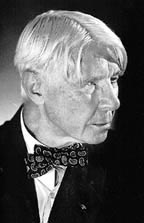
Carl Sandburg lived from 1878 to 1967. The archive lists "Happiness" as part of his collection Chicago Poems, published in 1916. It was Poem of the Day on the old americanpoems.com on 26 January 2003. The archive's current record dates from February 2004. Readers left 21 comments on it between 2005 and 2022.
What readers have said
Katie takes the poem to show that happiness cannot be explained, since it is whatever makes a person feel good and is usually found in simple things. Katie, 2005
Bettie Malofie objects to the phrase about the Hungarians and their women and children, which seems to count only the men as Hungarians. Bettie Malofie, 2005
George Kloss, who lived by the Des Plaines, says the river is nothing much to look at and its people were not famous, and feels the poem shows what most people miss. George Kloss, 2005
Ofelia Austria reads happiness as a personal experience no one else can define, and says the speaker answers his own question in the end. ofelia austria, 2008
One reader argues that the poem shows wisdom comes from experience rather than education, and that happiness is shared with loved ones, not earned by success. IamrightarentI?, 2021
Hilton sees a picture of families rich in spirit, showing that material wealth does not guarantee lasting happiness. Hilton, 2011
This poem is too true. Just think about it. Try to explain happiness
Kelsey WardUnited States
Hey i really like the poem and the reason is; is that it is true and it means a lot to many people that live around here and some who dont anyways I'm a poet and I think that he was a really great one love your poetry and well always remember someone like you in my prayers and forever.
KatieUnited States
I liked this poem because it shows that you can't explain happiness. It's whatever makes you feel good. You can ask a teacher of life what happiness is and their response could be totally different from what one of their students might say. Happiness is usually the simple things like being outside with your women and children playing the accordian.
I started reading this poem and I thought it was pretty good...I got confused. I guess he meant that happiness was in being with his children. Now that I say it, it makes more sense. Good poetry...I love Carl Sandburg's THE FOG. It's so cool!
George KlossUnited States
The Des Plaines river is nothing much to look at. The people who lived around there with me were not famous or overly happy. But Carl Sandburg knows more than most and put it down so we could feel what most people never feel.
JackUnited States
"Having food and raiment let us be therewith content." Are these the essentials for happiness, or just for existence? The answer lies in the context. It was written down in the first century by a man named Paul to a younger man named Tim. It's actually in the sixth chapter of the first book named after Tim in the King James English Bible. It's interesting to look up. -- Jack
Bettie MalofieCanada
Nice poem, I could see where it was going - until I read "Hungarians and THEIR women and children" Ugh. Women and children can't be Hungarians? Only Hungarian men are Hungarians? Couldn't he just as easily have said, "Hungarians - men, women and children" etc.
I don't work at "showing my ignorance." Like everyone else here, I expressed an opinion, and if you think I am ignorant, please explain why you think so. We are all ignorant on something or other, and are not in that condition deliberately. If you are so smart (i.e., non-ignorant), show me why I should believe you.
samUnited States
I say that this poem says that hppines is not somthing you could some up in a pome or letter its just thare
LyannefePhilippines
I read the poem Happiness and I recite it in the class. The poem expresses that Hapiness is gained through contentment.
jessexiang
it is love, here, in this poem that keeps happiness on. cause' love is nothing more to ask and nothing more to give.
ElviePhilippines
Yeah! Happiness must be experienced..
ofelia austriaDominica
happiness must not be asked to anyone cause it is a personal experience. in the poem, carl sandburg is trying to find answers of what happiness is, but in the end, he himself answered his own question.=)
SteveUnited States
Happiness
I think what Sandburg is really trying to say is that one cannot truly be happy unless one takes accordion lessons.
RandyUnited States
Sandburg is simply saying: Happeness is relative. The Hungarians were just one example.
rhexa janePhilippines
yes happiness is what we express when we are happy and what we fill when we are in our special someone..
HiltonSouth Africa
Happiness
This poem captures the essence of spiritually rich and blessed families. In a sick society it is good to take a snapshot of those that benefit from those that cling to good values. The instance of happiness under a tree, a keg of beer, an accordian, alongside a river transcends the materialistic economy. Material wealth does not ensure enduring happiness. Unless you have not experienced this you will not relate to meaning of Happiness by Carl Sandburg
What Carl is trying to say is To live in the present. Wisdom is earned by experience not through Education. Happiness is a feeling which isn't earned by success, fame or wealth. It's a feeling to share with your loved ones. The Hungarians showed him what the true meaning of happiness is. They showed him that happiness can be felt even when you don't have the things you desire for, it's just the memories you create With your loved ones,I.e, it could be even achieved by living a simple life.
Aashritha
I think finding real happiness is making our dear one's happy.Money doesn't bring happiness making money not spending time with family is a major problem of not finding true happiness.
sabapathy
Profession and position won't bring happiness. Until we decide to live in the moment, we can't get happiness.
This poem is too true. Just think about it. Try to explain happiness
Hey i really like the poem and the reason is; is that it is true and it means a lot to many people that live around here and some who dont anyways I'm a poet and I think that he was a really great one love your poetry and well always remember someone like you in my prayers and forever.
I liked this poem because it shows that you can't explain happiness. It's whatever makes you feel good. You can ask a teacher of life what happiness is and their response could be totally different from what one of their students might say. Happiness is usually the simple things like being outside with your women and children playing the accordian.
I started reading this poem and I thought it was pretty good...I got confused. I guess he meant that happiness was in being with his children. Now that I say it, it makes more sense. Good poetry...I love Carl Sandburg's THE FOG. It's so cool!
The Des Plaines river is nothing much to look at. The people who lived around there with me were not famous or overly happy. But Carl Sandburg knows more than most and put it down so we could feel what most people never feel.
"Having food and raiment let us be therewith content." Are these the essentials for happiness, or just for existence? The answer lies in the context. It was written down in the first century by a man named Paul to a younger man named Tim. It's actually in the sixth chapter of the first book named after Tim in the King James English Bible. It's interesting to look up. -- Jack
Nice poem, I could see where it was going - until I read "Hungarians and THEIR women and children" Ugh. Women and children can't be Hungarians? Only Hungarian men are Hungarians? Couldn't he just as easily have said, "Hungarians - men, women and children" etc.
Oh, dear Bettie. Try not to show your ignorance.
I don't work at "showing my ignorance." Like everyone else here, I expressed an opinion, and if you think I am ignorant, please explain why you think so. We are all ignorant on something or other, and are not in that condition deliberately. If you are so smart (i.e., non-ignorant), show me why I should believe you.
I say that this poem says that hppines is not somthing you could some up in a pome or letter its just thare
I read the poem Happiness and I recite it in the class. The poem expresses that Hapiness is gained through contentment.
it is love, here, in this poem that keeps happiness on. cause' love is nothing more to ask and nothing more to give.
Yeah! Happiness must be experienced..
happiness must not be asked to anyone cause it is a personal experience. in the poem, carl sandburg is trying to find answers of what happiness is, but in the end, he himself answered his own question.=)
Happiness
I think what Sandburg is really trying to say is that one cannot truly be happy unless one takes accordion lessons.
Sandburg is simply saying: Happeness is relative. The Hungarians were just one example.
yes happiness is what we express when we are happy and what we fill when we are in our special someone..
Happiness
This poem captures the essence of spiritually rich and blessed families. In a sick society it is good to take a snapshot of those that benefit from those that cling to good values. The instance of happiness under a tree, a keg of beer, an accordian, alongside a river transcends the materialistic economy. Material wealth does not ensure enduring happiness. Unless you have not experienced this you will not relate to meaning of Happiness by Carl Sandburg
What Carl is trying to say is
To live in the present.
Wisdom is earned by experience not through Education.
Happiness is a feeling which isn't earned by success, fame or wealth.
It's a feeling to share with your loved ones.
The Hungarians showed him what the true meaning of happiness is.
They showed him that happiness can be felt even when you don't have the things you desire for, it's just the memories you create
With your loved ones,I.e, it could be even achieved by living a simple life.
I think finding real happiness is making our dear one's happy.Money doesn't bring happiness making money not spending time with family is a major problem of not finding true happiness.
Profession and position won't bring happiness. Until we decide to live in the moment, we can't get happiness.