PILE the bodies high at Austerlitz and Waterloo.
Shovel them under and let me work—
I am the grass; I cover all.
And pile them high at Gettysburg
And pile them high at Ypres and Verdun.
Shovel them under and let me work.
Two years, ten years, and passengers ask the conductor:
What place is this?
Where are we now?
I am the grass.
Let me work.
✦
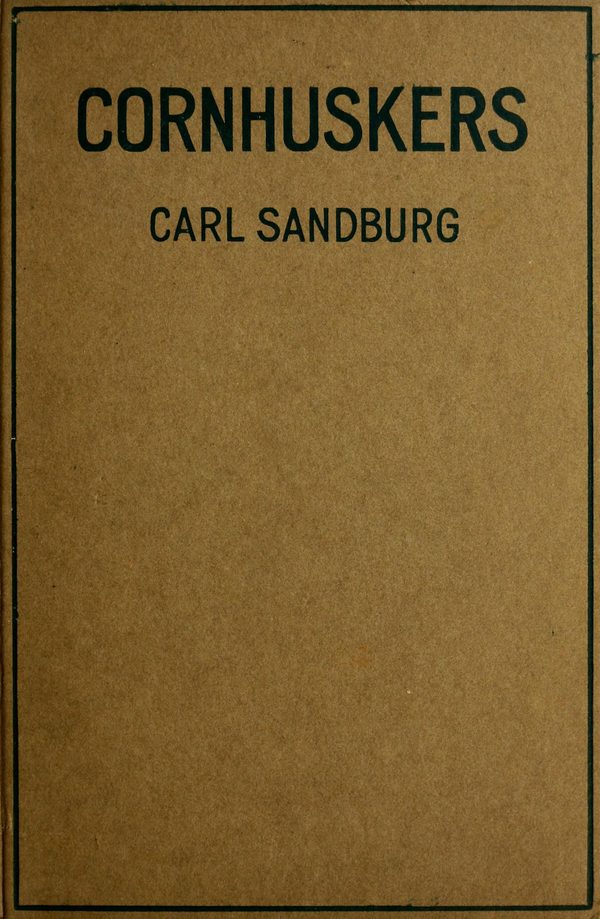
From the bookCornhuskersFirst edition, Henry Holt, 1918
Analysis
Grass: analysis
Introduction
"Grass" is a short dramatic monologue spoken by the grass that grows over battlefields. It names five famous battles, from Austerlitz and Waterloo to Ypres and Verdun. In each case the grass asks only to be allowed to cover the dead.
The poem is about how war's slaughter is buried and then forgotten. Within a few years, travellers pass the same ground and must ask where they are. The grass has one refrain: "I am the grass". It says this with calm, unsettling indifference.
Summary
The first stanza opens with a command: "PILE the bodies high at Austerlitz and Waterloo." The speaker then says "Shovel them under and let me work". In line 3 the speaker names itself: "I am the grass". It adds "I cover all." The bodies are to be buried, and the grass will do the rest.
The second stanza repeats the command for three more battlefields. Line 4 names Gettysburg, and line 5 names Ypres and Verdun. Line 6 repeats the refrain from line 2, now ending with a full stop. The stanza shows the same pattern of slaughter and burial across different wars.
The second stanza then jumps forward in time. "Two years, ten years" pass, and the scene is a train. Passengers ask the conductor two questions, set apart on their own lines: "What place is this?" and "Where are we now?" The battlefield has become a place they do not recognise.
The last stanza has two short lines. The grass repeats its name, "I am the grass." It ends with its request, now cut down to three words: "Let me work."
Themes and meaning
The central theme is forgetting. The grass promises "I cover all", and the passengers prove it. Within "Two years, ten years" they cannot tell a battlefield from any other stretch of country. Their questions show that the grass has done its work. The deaths are no longer visible, and nobody on the train seems to know what happened there.
A second theme is the repetition of war. The poem lists battles from different centuries and countries in one breath. The same verbs, "pile" and "Shovel", apply to all of them. This flattening suggests that each war repeats the last. It also suggests that each is forgotten in the same way.
Nature's indifference is a third theme. The grass does not mourn, judge or remember. It asks only to "work", and its work is covering. It can be read as a figure for time or for nature, and readers use both labels.
The poem is ambiguous about whether forgetting is good. One reading takes the grass as healing, since it lets the living move on. Another takes it as a warning that forgetting lets the slaughter happen again. The text supports both. The grass sounds patient and almost kind, yet its opening command treats the dead as heaps to be shovelled.
Finally, the poem implicates the living. The commands "PILE" and "Shovel" are addressed to someone. That someone may be the generals, the burial parties, or humanity at large. The grass needs people to provide the bodies before it can cover them.
Tone
The tone is cold, flat and commanding. The grass speaks in imperatives: "PILE the bodies high" and "Shovel them under". It shows no pity for the dead and no anger at those who killed them. The word "work" makes burial sound like routine labour.
The passage about the train brings a quiet irony. The passengers' questions are innocent and ordinary. Set against the piled bodies, they show how complete the forgetting is. The poem makes no comment on this, which makes the irony sharper.
The last stanza is calmer still. "I am the grass." and "Let me work." sound final and patient. The grass seems certain it will outlast every war it names.
Form and structure
The poem has 11 lines in 3 stanzas of 3, 6 and 2 lines. It is free verse with no regular metre. Lines range from 3 to 13 syllables. There is no rhyme scheme, though the phrase "let me work" and its variant close lines 2, 6 and 11.
The form relies on repetition. "And pile them high" opens lines 4 and 5. The refrain "Shovel them under and let me work" returns in line 6.
The lines spoken as the grass's own statements, and the passengers' questions, are indented. The indented lines are short. They stand apart from the long lines of command, like a second voice. The poem shortens as it ends, down to the two brief lines of the last stanza.
Poetic devices
Personification line 3
I am the grass; I cover all. The grass speaks and has purposes of its own. Giving it a voice lets the poem view war from outside human memory.
Imperative mood line 1
PILE the bodies high The poem opens with a blunt command. The dead are treated as material to be stacked, which shocks through its coldness.
Allusion line 1
Austerlitz and Waterloo Naming real battles ties the poem to history. The names carry the weight of the dead without the poem describing them.
Anaphora line 5
And pile them high at Ypres and Verdun The line repeats the opening of line 4. The repeated start makes the battles seem interchangeable, one pile after another.
Refrain line 6
Shovel them under and let me work This repeats line 2 almost exactly. The return of the same words mimics the return of the same slaughter.
Euphemism line 2
let me work Burial and decay are called 'work'. The mild word hides the physical process of bodies turning into soil.
Rhetorical question line 8
What place is this? The passengers' question is sincere, but the reader knows the answer. The gap between the two shows how complete the forgetting is.
Irony line 7
passengers ask the conductor Ordinary travel passes over ground where armies died. The everyday scene makes the forgotten deaths feel more disturbing.
Asyndeton line 7
Two years, ten years The two spans are set side by side with no linking word. Time seems to pass quickly and without event.
Words worth knowing
Austerlitz
A battle of the Napoleonic Wars, fought in what is now the Czech Republic. It was one of Napoleon's great victories.
Waterloo
The battle in present-day Belgium where Napoleon was finally defeated.
Gettysburg
A town in Pennsylvania and the site of one of the bloodiest battles of the American Civil War.
Ypres
A town in Belgium, the site of several battles of the Great War, the war of the trenches.
Verdun
A town in north-eastern France, the site of a long and very costly battle of the Great War.
conductor
Here the official on a train who checks tickets and answers passengers' questions, not a leader of an orchestra.
Context
Carl Sandburg lived from 1878 to 1967. The archive lists "Grass" as number 4 in his collection Cornhuskers, published in 1918. It has been on americanpoems.com since February 2004. It was Poem of the Day on 16 August 2007. Readers left 24 comments on it between 2004 and 2010.
What readers have said
Michelle Turner Unwin reads the grass as time and nature working to erase and heal, so that even watershed events fade from memory. Michelle Turner Unwin, 2004
Emilie N reads the grass as memory itself, showing how eager people are to work on bad experiences until they go away. Emilie N, 2005
Danny agrees with that reading but turns it into a warning: if we do not remember the past, we are condemned to repeat it. DANNY, 2007
Stephanie V sees society set against nature, with nature winning, since the grass keeps growing and covers everything people have done. Stephanie V, 2006
Jon Handel took from the poem a message of indifference, and recalled it on finding his late grandparents' gardens overgrown with weeds and grass. Jon Handel, 2005
Nick corrects another reader who thought all the battles were Napoleonic, noting that Gettysburg belongs to the Civil War and Ypres and Verdun to the Great War. Nick, 2005
"Grass" is a reminder that tragedies, even those of paramount importance, are eventually forgotten with time. "What is this place? Where are we now?", in this poem, grass evidences the working of time and nature to erase and heal. Even watershed events are eventually erased from memory. Bodies are buried, names and lives forgotten, the details of history are forgotten: very gradually, erased from the surface of our awareness. I am grass let me work.
I really believe that this poem shows when given time all events are eventually forgotten. "What place is this?", "Where are we now?", it all shows that what was once a devastating event will be eventually forgotten just like how we considered Pearl Harbor to be a major event and with time most forgot about it unless they lived it.
This poem is about dying and getting over it. It is a free verse poem. They are basically saying that things are devistating, but life can and must go on.
AbdUnited States
If you notice Sandburg uses places of important events in history. Waterloo, Gettysburg these things were important, but for some reason I can't remember why.
Joel VUnited States
Simply put, an incredible poem.
Jon HandelUnited States
I read this poem long ago and was impacted by the simple message of indifference I came away with. Several years have passed since both of my grandparents were killed together and their estate has remained untended until just recently when I bought the property. Looking around, I saw how nearly everything had been overgrown and choked with weeds and grass. Gone were the flower borders, the berry patches, and the…
Read the whole comment
I read this poem long ago and was impacted by the simple message of indifference I came away with. Several years have passed since both of my grandparents were killed together and their estate has remained untended until just recently when I bought the property. Looking around, I saw how nearly everything had been overgrown and choked with weeds and grass. Gone were the flower borders, the berry patches, and the vegetable gardens that they used to keep so meticulously. Immediately I thought of the line 'I am grass; I cover all'. I was reminded that even our most sacred of places, whether they be battlegrounds or back yards, are still just pieces of earth and eventually fall victim to the insidious forces of Mother Nature.
Ineresting! after I got back from my world literature class and done reading a Haiku by Basho, I found things in common in those two poems; war glorious, and the grass being the witness.
TohruUnited States
I was told to compare my analysis with others', and it turned out quite well. It seems to me that the poem is about, as many others said, how eventually, so-calledly 'important' things are erased and forgotten. I'm almost positive that the battles are connected because they all involved Napolean. (...research) In fact, there was another poem by Mr. Sandburg that I read immediately afterward that was all about Napolean. Coincedece? (sp?) ...I think not...
jackUnited States
this poem was awesome
Emilie NNorway
I think this poem is about our eager to forget "bad" things. "Grass" means memory. In the moment something unpleasant occurs, we start at once "working" on it, so that the bad memories will eventually go away.
This is a good poem, but I know for a fact that half the battles aren't Napolianic. Gettysburg is civil war, and Ypres and Verdun are both WWI. Tohru needs to check his sources.
i love this poem who the grass is the soldiers memories and the \y died on this grass and know covers them after they have died
Vanna
i think this poem is about dying and getting over it. Devistating things happen but life still goes on.
jumperooUnited States
this is good
Stephanie VUnited States
This dramatic monologue relates the growing of grass and past battles. This poem shows society versus nature and how nature wins. The grass grows and covers all the work that man has done, and the grass conquers it. Years later, no one would have ever known anything had happened there. This is because the grass moves on; It keeps on growing and doesn’t pause for a second. The grass is ubiquitous; It appears everything and is ever-present. This poem also shows how the cycle of life is apathetic to man’s affairs. The bodies fertilize the ground and the grass grows. The cycle of nature never stops.
ShannonUnited States
Ypres and Verdun are towns in Europe that were almost completely destroyed during World War One. But now they are rebuilt, the grass has grown over everything and there is nothing left to show that some big battle happened there and that people died except a few plaques and stuff. Gettysburg was a major turning point in the Civil War and was a very bloody battle. Austerlitz and Waterloo are both major battles in the Napoleonic Wars.
OBVIOUSLY EMILLIE FROMNORWAY IS THE ONLY ONE WITH A REALISTIC VIEW OF THIS POEM. IF WE DO NOT REMEMBER THE PAST WE ARE CONDEMMED TO REPEAT IT.
lorryUnited States
The grass is time. This poem is about how time covers all, how the dead are forgotten over time.
KelseyUnited States
The grass in this poem functions as a private symbol for the world’s forgetfulness of the horrors of war and destruction. It can also be viewed as a symbol of time.
tzviUnited States
"those who cannot remember the past are condemned to repeat it." Santayana
MorganUnited States
I feel this poem is about how the grass covers the battle fields in which the bodies of the soliders have been buried. Everytime you look at a big field remember Carl Sanburg.... "I am the grass; I cover all"
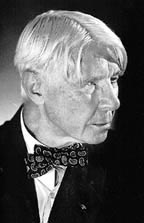
"Grass" is a reminder that tragedies, even those of paramount importance, are eventually forgotten with time. "What is this place? Where are we now?", in this poem, grass evidences the working of time and nature to erase and heal. Even watershed events are eventually erased from memory. Bodies are buried, names and lives forgotten, the details of history are forgotten: very gradually, erased from the surface of our awareness.
I am grass let me work.
I really believe that this poem shows when given time all events are eventually forgotten. "What place is this?", "Where are we now?", it all shows that what was once a devastating event will be eventually forgotten just like how we considered Pearl Harbor to be a major event and with time most forgot about it unless they lived it.
This poem is about dying and getting over it. It is a free verse poem. They are basically saying that things are devistating, but life can and must go on.
If you notice Sandburg uses places of important events in history. Waterloo, Gettysburg these things were important, but for some reason I can't remember why.
Simply put, an incredible poem.
I read this poem long ago and was impacted by the simple message of indifference I came away with. Several years have passed since both of my grandparents were killed together and their estate has remained untended until just recently when I bought the property. Looking around, I saw how nearly everything had been overgrown and choked with weeds and grass. Gone were the flower borders, the berry patches, and the…
Read the whole commentI read this poem long ago and was impacted by the simple message of indifference I came away with. Several years have passed since both of my grandparents were killed together and their estate has remained untended until just recently when I bought the property. Looking around, I saw how nearly everything had been overgrown and choked with weeds and grass. Gone were the flower borders, the berry patches, and the vegetable gardens that they used to keep so meticulously. Immediately I thought of the line 'I am grass; I cover all'. I was reminded that even our most sacred of places, whether they be battlegrounds or back yards, are still just pieces of earth and eventually fall victim to the insidious forces of Mother Nature.
Ineresting! after I got back from my world literature class and done reading a Haiku by Basho, I found things in common in those two poems; war glorious, and the grass being the witness.
I was told to compare my analysis with others', and it turned out quite well. It seems to me that the poem is about, as many others said, how eventually, so-calledly 'important' things are erased and forgotten. I'm almost positive that the battles are connected because they all involved Napolean. (...research) In fact, there was another poem by Mr. Sandburg that I read immediately afterward that was all about Napolean. Coincedece? (sp?) ...I think not...
this poem was awesome
I think this poem is about our eager to forget "bad" things. "Grass" means memory. In the moment something unpleasant occurs, we start at once "working" on it, so that the bad memories will eventually go away.
This is a good poem, but I know for a fact that half the battles aren't Napolianic. Gettysburg is civil war, and Ypres and Verdun are both WWI. Tohru needs to check his sources.
i love this poem who the grass is the soldiers memories and the \y died on this grass and know covers them after they have died
i think this poem is about dying and getting over it. Devistating things happen but life still goes on.
this is good
This dramatic monologue relates the growing of grass and past battles. This poem shows society versus nature and how nature wins. The grass grows and covers all the work that man has done, and the grass conquers it. Years later, no one would have ever known anything had happened there. This is because the grass moves on; It keeps on growing and doesn’t pause for a second. The grass is ubiquitous; It appears everything and is ever-present. This poem also shows how the cycle of life is apathetic to man’s affairs. The bodies fertilize the ground and the grass grows. The cycle of nature never stops.
Ypres and Verdun are towns in Europe that were almost completely destroyed during World War One. But now they are rebuilt, the grass has grown over everything and there is nothing left to show that some big battle happened there and that people died except a few plaques and stuff. Gettysburg was a major turning point in the Civil War and was a very bloody battle. Austerlitz and Waterloo are both major battles in the Napoleonic Wars.
OBVIOUSLY EMILLIE FROMNORWAY IS THE ONLY ONE WITH A
REALISTIC VIEW OF THIS POEM.
IF WE DO NOT REMEMBER THE PAST WE ARE CONDEMMED TO
REPEAT IT.
The grass is time. This poem is about how time covers all, how the dead are forgotten over time.
The grass in this poem functions as a private symbol for the world’s forgetfulness of the horrors of war and destruction. It can also be viewed as a symbol of time.
"those who cannot remember the past are condemned to repeat it."
Santayana
I feel this poem is about how the grass covers the battle fields in which the bodies of the soliders have been buried. Everytime you look at a big field remember Carl Sanburg.... "I am the grass; I cover all"
hey guys can someone talk abt the figurative language in this poem coz i have an exam on this poem plzzzzzz
thanks alot
cool
its gay
Annotations
I love this poem! It's one of my facourites. But can someone please tell me a good website for annotations about 'Grass'?