The poem
THE fog comes on little cat feet.
It sits looking over harbor and city on silent haunches and then moves on.
The poem
THE fog comes on little cat feet.
It sits looking over harbor and city on silent haunches and then moves on.
"Fog" is a six-line poem about fog passing over a harbor and a city. It treats the fog as a cat without ever saying 'like' or 'as'. The fog arrives "on little cat feet", sits "on silent haunches", and then "moves on".
The whole poem is one metaphor, held steady across two short stanzas. It records a brief event in the weather. It gives that event the quiet, self-contained manner of an animal.
The first stanza has two lines and describes the fog's arrival. It opens with a plain statement in the present tense: "THE fog comes". The second line gives the manner of its coming: "on little cat feet". The word 'cat' works as an adjective, so the fog is not called a cat, only given a cat's small, soft feet. The stanza says nothing of the fog's colour, thickness or source, and names no place yet.
The second stanza has four lines and shows the fog at rest. "It sits looking / over harbor and city", as if watching the whole scene below it. It sits "on silent haunches", the posture of a cat resting on its folded back legs. No person, ship or sound appears anywhere in the scene it overlooks. In the last line the fog simply "moves on", and the poem ends at the very moment it leaves the scene.
The main idea is transience. The fog "comes", "sits" and "moves on", and the poem ends there. It stays only for the length of three verbs. It leaves no mark on the harbor or the city. The poem can be read as a small lesson in how weather, and perhaps any mood or event, passes.
A second theme is the meeting of nature and the built world. The fog looks "over harbor and city", two places made and used by people. Yet no people appear. The fog commands the scene, and the city is simply what it looks at.
The poem also suggests watchful indifference. A cat that "sits looking" observes without taking part. The fog does not threaten, help or explain itself. Some readers find this calm restful. Others sense something aloof in a presence that watches a whole city and then leaves.
Silence runs through the poem. The cat's feet make no noise, and its haunches are "silent". Fog muffles sound and hides sight, and the poem copies that quiet by using very few words. The reader notices the scene much as someone on the shore might notice fog: slowly, and without being told what it means.
Readers disagree about whether the poem means more than it says. Some take it purely as a picture of weather. Others read the fog as a figure for trouble that settles over a life and then lifts. The text names only fog, harbor and city. The second reading is therefore an extension of the poem, not a statement in it.
The tone is calm, observant and gentle. The speaker describes without comment, in the plain present tense throughout. Words like "little" and "silent" make the fog seem soft and harmless rather than dangerous.
There is a slight air of mystery in "It sits looking". The fog seems to have attention, even intention, yet it gives nothing away. The ending, "and then moves on", is casual. The speaker neither mourns the fog's leaving nor welcomes it.
The voice stays even and unhurried from the first line to the last. There is no shift in attitude, and no raised feeling. That steadiness matches the fog itself, which comes and goes without fuss.
"Fog" has 6 lines in 2 stanzas: a stanza of 2 lines followed by a stanza of 4. It is free verse. The lines are very short, from 3 to 7 syllables, and there is no regular metre. Nothing rhymes.
Each stanza is a single sentence. Line breaks do much of the work. The break after "It sits looking" makes the reader pause, as if waiting with the fog. The final line, "and then moves on", is as short and plain as the opening. The poem closes in the same key it began.
Its few descriptive words, such as "little" and "silent", all stress softness and quiet. Its brevity and single natural image lead some readers to compare it with haiku. It does not follow that form's syllable pattern, and it has two stanzas rather than three lines.
on little cat feetThe fog is given a cat's feet with no 'like' or 'as'. This implied comparison sets up the whole poem and makes the fog's arrival soft and silent.
It sits lookingThe fog sits and looks, as a living creature would. It seems to pay attention, though the poem never says what it sees or thinks.
It sits lookingThe sentence runs on into line 4. The pause at the line end holds the fog still for a moment before the reader learns what it looks over.
over harbor and cityThe fog's feet are 'little', yet it looks over a whole harbor and city. Small, delicate movement is set against great size.
on silent haunchesA precise picture of a seated cat. The adjective 'silent' adds the absence of sound to the visual image.
moves onThe word 'on' closes the poem, as it opened lines 2 and 5. The small repeated word links the fog's steps, its sitting and its leaving.
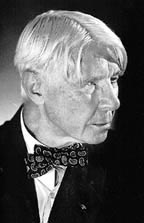
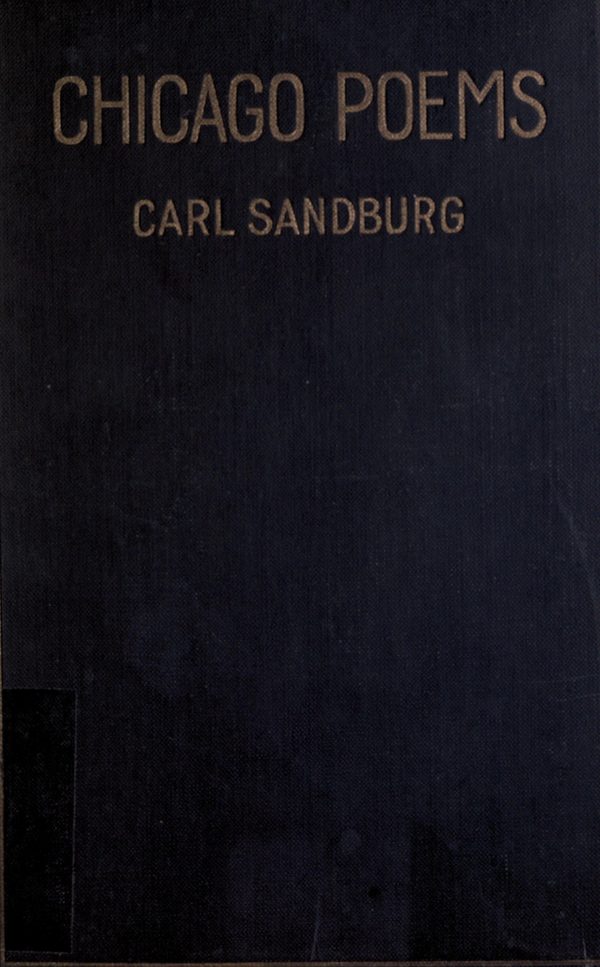
Carl Sandburg lived from 1878 to 1967. The archive lists "Fog" as part of his collection Chicago Poems, published in 1916. It has been on americanpoems.com since February 2004. Readers left 14 comments on it between 2004 and 2011.
Keep reading
Readers
At first it just is a couple of words but if you read it again it will really make you think.
"Little cat feet" immediately gives the fog a personality it is easy to imagine standing on the pier watching the fog come in then move on into the city.Very frugal with the wording unlike other Sandburg poems.
The poet has presetnted fog as a living creature, comes,sits looking and then moves on.
Growing up in the Virgin Islands We don't have much fog. So as a child reading the FOG, as simple as it is, gave me a vision of fog acting like a cat of which i had several.
It is a beauty to see the poet compare rather personify fog to a cat.
The immediate feeling that one gets at the very utterance of the word 'fog' is lack of definitude and opacity. But the personificatio of fog to a cat gives it a new dimension, aesthetics...???
Although it envelopes vast area, from harbor to the city, yet it does not come with a fanfare as flood or tsunami would. It comes silently "on cat feet".
Like a true feline it is "aloof" and "unsocial" (coldness of heart???). it silently watches the area under its spell and moves on further.
Does it in anyway suggest of coldness in human relationships? Response will be appreciated
this poem really touches me i love how he personificates the fog to a living creature (cat)
Cat - silent - here now; present, changes our surroundings, indifferent, leaves without a trace
I had to memorize this poem in 8th grade, and i still have not forgotten it. HOOAH!
In elementery school, the nuns would have your come to the front of the class and recite a poem you had memorized. Fog was the shortest one I could find, since I didn't like being up at the front of the class.
The nun didn't fall for my tactic and made me do another. Oh, well, I tried. To this day, I am still a cat lover.
I memorized this poem this year
it is a great poem with ggreat metaphores!
i love it
I believe that this poem is referring to the difficult situations that we as humans cannot see through, like we cannot see through 'fog'. These situations, sometimes sneak up on us like 'little cat feet'. The situation hangs over our heads, 'it sits looking'. But, eventually, 'moves on'.
carl is werid
there is this picture of him writing on a typewriter
he looks like he's playin g an instrument and has that whole julia robert's brother thing going for him- which isn't a good thing to have going
THIS POEM IS...CATTY
Fog by Carl Sandburg
You know, we all tend to analyze things to death. Not being an intimate of Carl Sandburg, I can't say what he was thinking when he wrote it. However, as a writer, I believe his thought could have been as basic and spare as the haiku form it emulates. "Fog moves like cat." Only how much more evocative are the words and placement of those words in Carl's poem. The talent of an artist.
Is there anyone who has ever read this poem, that from that first moment and for the rest of their lives does not involuntarily think of cats and Carl Sandburg when they encounter fog? Or indeed start to recite it to themselves silently?