Hog Butcher for the World,
Tool Maker, Stacker of Wheat,
Player with Railroads and the Nation's Freight Handler;
Stormy, husky, brawling,
City of the Big Shoulders;
They tell me you are wicked and I believe them, for I have seen your
painted women under the gas lamps luring the farm boys.
And they tell me you are crooked and I answer: Yes, it is true I have
seen the gunman kill and go free to kill again.
And they tell me you are brutal and my reply is: On the faces of women
and children I have seen the marks of wanton hunger.
And having answered so I turn once more to those who sneer at this my
city, and I give them back the sneer and say to them:
Come and show me another city with lifted head singing so proud to be
alive and coarse and strong and cunning.
Flinging magnetic curses amid the toil of piling job on job, here is a tall
bold slugger set vivid against the little soft cities;
Fierce as a dog with tongue lapping for action, cunning as a savage pitted
against the wilderness,
Bareheaded,
Shoveling,
Wrecking,
Planning,
Building, breaking, rebuilding,
Under the smoke, dust all over his mouth, laughing with white teeth,
Under the terrible burden of destiny laughing as a young man laughs,
Laughing even as an ignorant fighter laughs who has never lost a battle,
Bragging and laughing that under his wrist is the pulse, and under his
ribs the heart of the people,
Laughing!
Laughing the stormy, husky, brawling laughter of Youth, half-naked,
sweating, proud to be Hog Butcher, Tool Maker, Stacker of Wheat,
Player with Railroads and Freight Handler to the Nation.
✦
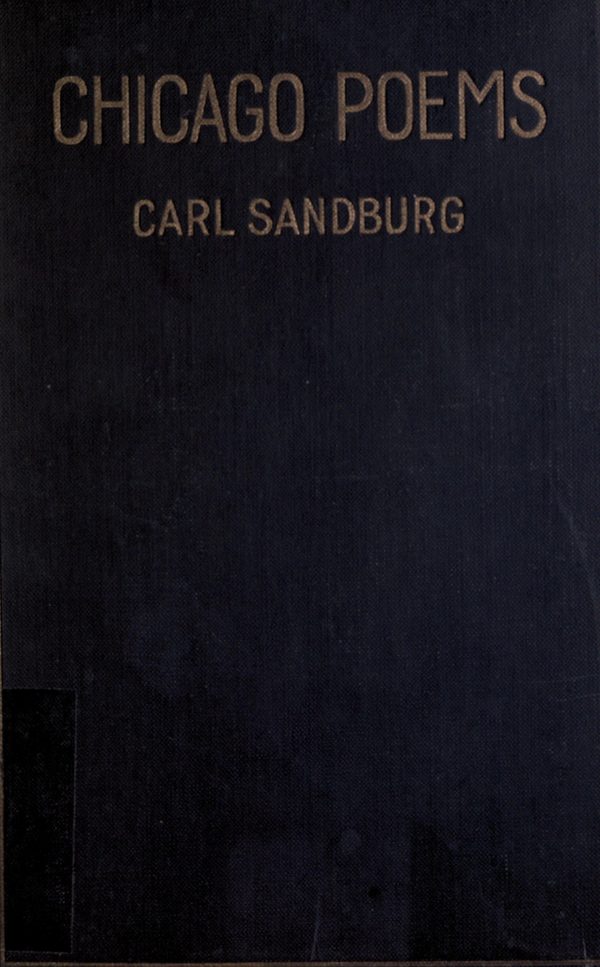
From the bookChicago PoemsFirst edition, Henry Holt, 1916
Analysis
Chicago: analysis
Introduction
"Chicago" is a portrait of an industrial city, spoken directly to the city itself. It opens with a string of names for Chicago's trades, such as "Hog Butcher for the World". It then admits the charges made against the city: that it is wicked, crooked and brutal.
The speaker agrees with each charge. He then turns on those who sneer and praises the city's strength, work and laughter. By the end Chicago has become a young man, proud, dirty and full of life. The poem's pride does not deny the city's faults. It takes them in.
Summary
The first stanza names the city by its work. It is "Hog Butcher for the World", "Tool Maker, Stacker of Wheat" and the "Nation's Freight Handler". It is "Stormy, husky, brawling", and finally "City of the Big Shoulders".
The second stanza begins with three charges. "They tell me you are wicked", and the speaker believes them, having seen "painted women under the gas lamps luring the farm boys". They say the city is crooked, and he agrees, having seen "the gunman kill and go free to kill again". They say it is brutal, and he has seen "the marks of wanton hunger" on women and children.
In lines 12–15 the speaker turns to "those who sneer". He gives them "back the sneer". He challenges them to show him another city "so proud to be / alive and coarse and strong and cunning".
Lines 16–19 describe the city as "a tall / bold slugger" set against "the little soft cities". It is "Fierce as a dog" and "cunning as a savage". Lines 20–24 are a list of single actions: "Bareheaded", "Shoveling", "Wrecking", "Planning", then building, breaking and rebuilding.
Lines 25–30 show the city laughing. It laughs "Under the smoke" with "dust all over his mouth". It laughs "as a young man laughs" and like "an ignorant fighter" who has never lost. It brags that it holds "the heart of the people". Line 30 is one word: "Laughing!"
The last three lines gather everything together. The laughter is the "laughter of Youth", half-naked and sweating. The poem ends by repeating the names from its opening lines.
Themes and meaning
The main theme is pride that includes shame. The speaker does not deny the city's crimes. He says "Yes, it is true" and names prostitution, murder and hunger. His pride rests on the city's energy, not its virtue. This honesty is what gives his defence force.
Work is a second theme. The city is named for its trades, and later for its actions: "Shoveling", "Wrecking", "Planning". The poem values labour that is hard and dirty. It praises "the toil of piling job on job". The city is great because it works, not because it is refined.
Youth and vitality form a third theme. The city laughs "as a young man laughs". It is "half-naked" and "sweating". It is set against "the little soft cities", which seem older, weaker and more comfortable.
The poem also links the city to its people. It brags that "under his ribs" is "the heart of the people". The city is not buildings but the workers, the poor and even the gunmen in it. Its pulse is their pulse.
There is a note of doubt as well. The city laughs like "an ignorant fighter" who "has never lost a battle". This can be read as a warning that its confidence is untested. Readers differ on whether the speaker defends the city or simply refuses to apologise for it.
Tone
The opening tone is proud and declamatory. The capitalised titles, such as "Tool Maker", sound like praise shouted aloud. Each name is a boast about the work the city does.
In lines 6–11 the tone becomes blunt and candid. The speaker concedes each charge without softening it. "Yes, it is true" is plain and almost weary.
From line 12 the tone turns defiant. He will "give them back the sneer". The challenge to "show me another city" is combative.
The close is exuberant. The repeated "laughing" builds to the single shout "Laughing!" in line 30. Yet the phrase "ignorant fighter" keeps the praise from being naive. The speaker admires the city's confidence while seeing that it has not yet been tested.
Form and structure
The poem is free verse, with no rhyme and no regular metre. The archive's text has 33 lines in 2 stanzas of 5 and 28 lines. Line length varies widely, from 1 to 21 syllables.
Several long lines run over onto a following line, as in lines 6–7 and 14–15. Against these, lines 20–23 are single words. The contrast between long, sweeping lines and short, blunt ones mimics bursts of physical effort.
The poem is built on catalogues and repetition. The first stanza is a list of epithets. "And they tell me" opens lines 8 and 10. "Laughing" begins line 27, line 30 and line 31. The last lines repeat the opening titles, so the poem ends where it began.
Poetic devices
Epithet line 1
Hog Butcher for the World The city is named by its trade, like a title. The capitals make each job sound like a rank or a nickname.
Asyndeton line 4
Stormy, husky, brawling Three adjectives with no linking word. The quick list feels rough and energetic, like the city it describes.
Personification line 5
City of the Big Shoulders The city is given a labourer's body. Broad shoulders suggest strength and the ability to carry heavy loads.
Apostrophe line 6
They tell me you are wicked The speaker addresses the city as 'you'. This makes the poem a conversation with Chicago, not just a description of it.
Anaphora line 8
And they tell me you are crooked The repeated opening, used again in line 10, sets up the charges one by one. Each is answered in turn.
Imagery line 7
painted women under the gas lamps luring the farm boys A concrete street scene stands for the city's vice. The farm boys show the city drawing in the young from the country.
Simile line 18
Fierce as a dog with tongue lapping for action The city is compared to an eager, dangerous animal. The image makes its energy seem both admirable and threatening.
Contrast line 17
the little soft cities Other cities are made small and soft. The contrast makes Chicago's toughness a mark of superiority.
Metaphor line 28
under his wrist is the pulse The city is a man whose pulse is that of the people. Its life and theirs are one body.
Repetition line 30
Laughing! The word has run through lines 25–29. Set alone with an exclamation mark, it becomes the climax of the poem.
Irony line 27
an ignorant fighter The praise contains a doubt. A fighter who has never lost may simply not yet know defeat.
Words worth knowing
Hog Butcher
One who slaughters pigs. It points to the meatpacking trade for which the city was known.
Stacker of Wheat
One who stores and ships grain. It presents the city as a centre of the grain trade.
husky
Big, strong and burly. It does not mean hoarse, and it does not refer to the dog.
wanton
Here, cruel and needless. The hunger seen on women and children is undeserved and unchecked.
slugger
A hard hitter, such as a boxer or a batter in baseball.
cunning
Clever and quick-witted, with a hint of craftiness rather than open wickedness.
Context
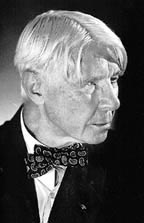
Carl Sandburg lived from 1878 to 1967. The archive lists "Chicago" as part of his collection Chicago Poems, published in 1916. It was Poem of the Day on the old americanpoems.com on 26 June 2003. The archive's current record for the poem dates from February 2004. Readers left 50 comments on it between 2004 and 2014.
What readers have said
Will Gardner reads the poem as a defence of the city, which admits its crime and vice but claims every city has such problems. Will Gardner, 2004
Sara Hartburn argues there is no defence at all, since the speaker agrees with the charges and makes no apology, showing pride through strong language instead. Sara Hartburn, 2007
Anja Plommer dislikes the poem, feeling that the speaker never disagrees with the city's accusers and shows no emotion, as if he does not care. Anja Plommer, 2007
Staci compares the city to a strong family whose members defend one another whatever problems they face. Staci, 2005
Aunna notes the personification of the city through its people, and hears the repeated sounds as echoing physical work or a train yard. Aunna, 2007
MJ reminds other readers that the poem pictures a polluted, poor meatpacking city of its own time, not modern Chicago. MJ, 2006
it is my educated opinion that mr carl is defending his home city of chicago. this city is gettin a bad rap for crime and free sex. though this is true and carl knows it, he stands by chiacgo claiming that all cities have their problems like they do, and they're getting through it together.
Jahdi LeanilloNigeria
Ammmmm...this poem is really inspiring because it shows nationalism, since in this poem Mr. Carl is defending his own country the Chicago although he knew that its really in a bad condition. that's all and i love you!!!!!
JerricaUnited States
Even though Carl Sandburg is talking about Chicago and he did live there. It was not this home town. Just thought I might state that.
jjUnited States
Carl Sandburg defends the city that most inspored him. He only lived there for the last half of his life. He lived in Galesburg for over 20 years before he went to Chicago to live.
andyUnited States
i think that this poem is bad, its boring. i love poems but not this one
ErinUnited States
I love the way Mr.Sandburg describes Chicago as the people's town. It may not be perfect, but it's hard working, and it's real. I love it, I love everything about this poem. It's hearty, like meat and potatoes and it really speaks to anyone who's fought for a place to call home.
In a way, Chicago seems like that of a family as he portrays it in this poem. He describes the city and the inhabitants as they work and he defends. He is a defender for a place he calls his home (understood) no matter what problems may be going on; much is the same for a family - in a family who is strong and in love with one another, no matter what happens to the family, they will continually stand up and defend one another.
J. Slick
To me, this poem shows how important it is to write about that which we know. Sandburg makes the city come alive with all it's sweet icing as well as it's crusty near foul core. The life and energy of the city itself is shown in all it's clarity.
Gotta love it!
Peace, Slick
Zaki OmarMalaysia
Sandburg is vitually unknown to me until I came across the "Chicago" poem. It's pretty amazing to see how a single man has stand up and defend the city where he belongs though its a common knowledge that Chicago is well known for its high crime rate, probably the highest among all the metropolitans. Anyway, full credit to Sabdburg and I really love this poem very much!
EmileeUnited States
I think that this is a good poem because it shows patriotism and loyalty to a place. This poem describes how Sandburg loved Chicago. It is obvious in this poem that he is standing up for his city and that he understands that it is not perfect but that he likes it. There may be many bad things in the city but there are many good things too. I think that he wrote this poem because someone said something about the city and he did not like it.
DebbieUnited States
I had to recite this poem with my eighth grade graduation class, 28 years ago, and I can still hear it in my head. It's powerful and moving - a vivid picture of the Chicago of his time, that wasn't that different from the Chicago of mine.
Bob MarleyJamaica
Yo mon! I really liked this poem, it trully spoke to me deep down.
ianTaiwan
Powerful poem. Really awesome.
MJUnited States
I wanted to remind some of you guys commenting that the Chicago he's writing about was the packinghouse central of America during the early 1900s, was polluted, poor, and - well, if anyone has read The Jungle, you'll know what I mean. So keep in mind what situation he's talking about here - this is not your modern day Chicago. So don't say Chicago is getting a "bad rap" for whatever if you are talking about modern day Chicago.
RhinoUnited States
I think when carl was writing these poems he was definetly smokin thats why the names of his poems are like Haze, Grass, and Fog. He was definetly in a haze in some thick fog when he was writin this.
Aunna
I think Sandburg does a wonderful job personifying Chicago with it's population. Also, his word choice and sound repeatition to create the effect of physical work or even the trainyard. A good perspective work.
Mike MUnited States
The author is trying to create an image for the reader of how Chicago (to Sandburg) is like. He shares that it is a thriving city as well as a problematic city that lets it stand out from the cities around it. He also explains how the city survives from day to day with the addition of what Chicago has to offer in an economic/occupational sense.
ariaUnited States
i think this poem is the poets idea of what the city of Chicago is. He describes it as a hard city. Not a place for a weary person. this poem isdirected at the readers and its harshness makes me think twice about the seeminly glamorous city.
Ian HartUnited States
He talks in this poem as if he knows the city personally. He acts as if the city of Chicago is his family. He knows its not perfect but her loves it.
Drew A.United Kingdom
I thought this was a great poem. Sandburg really does a great job portraying Chicago as he sees it. He knows it has flaws, but overall he is defending his city and showing why it is superior to other cities.
There is no defense in this poem. In fact, he agrees with the critics. Sandburg makes no apologies for his city, nor does he try to "sell" its better side to others. The entire poem is a metaphor and a personification, bringing the city alive to those who will look and see. The obvious pride Sandburg feels for his city is displayed in strong words and strident language. But, then, isn't that what real life is . . .…
Read the whole comment
There is no defense in this poem. In fact, he agrees with the critics. Sandburg makes no apologies for his city, nor does he try to "sell" its better side to others. The entire poem is a metaphor and a personification, bringing the city alive to those who will look and see. The obvious pride Sandburg feels for his city is displayed in strong words and strident language. But, then, isn't that what real life is . . . strong, vibrant, strident, energetic? The poem was shocking to some at the time it was written (especially those who lived is "soft cities" on the East Coast). And I doubt very much whether Sandburg's marvelous portrayal fits the Chicago of 2007. It's a slice of time and history, beautifully portrayed.
I have to say that I do not like this poem. The author descibes Chicago as dark and dangerous indirectly, because he doesn't disagree with the people who describe Chicago. Even though it seems to be his hometown, he doesn't show any emotion towards it; it just seems that he doesn't really care. And honestly, this poem makes me sad.
Marc DicksonUnited States
In the poem Chicago, the author talks about the city as if it were a person. He talks about all the bad things in the city but also says how he likes it.
Jan AlvaroUnited States
The city Chicago, according to Carl Sandburg is a city filled with misdemeanor. A City not worth living in, but a place filled with flourish materials, and a center of resources that Americans need.
Klara HardinUnited States
In this poem written by Carl Sandburg, he talks about the city as a person. Carl uses what is called an apostrophe which is a digression in the form of an address to someone not present, or to a personified object or idea. Carl Sandburg personified the city by giving it human characteristics, "Under the smoke, dust all over his mouth, laughing with white teeth..."
Mrs. Bangert, Chicago: I think that this poem was about how different people are. I also think that it depends on were they are and who they are with in there soroundings.I think that this poem was showing no matter were you are in the would there in no place that is better or worse than Chicago. Ariel Ceballos 3rd Period
Nicole BeckUnited States
In this poem by Carl Sandburg, he uses apostrophes to mock the cities flaws like poverty and hunger. By reading this you think that the author is criticizing Chicago, but he ends up saying how proud and honorable it is. He states that there is no town that has this many problems and can still be so famous and glamourous.
Kevin TUnited States
In the poem "Chicago", Carl Sandburg portrays the city as a person and mentions the problems within the city. However, he accepts and embraces Chicago despite all the problems within such as poverty and prostitution. He is comfortable with his mindset because he is already aware that the problems that is taking place in Chicago also exist in other cities.
jeff keyUnited States
this poem was about how sandburg felt towards his city. he treats the city like a human and admires many aspects of the city. his writting style enables him to be able to make this connection.
In the poem "Chicago, the author Carl Sandburg portrays chicago as a big family. How a family can still maintain itself through the ups and downs. He also shows pride in his city, and how he will defend it no matter what condition it is in.
Tara Alizadeh
This poem is quite interesting. It shows me how Sandburg portrays Chicago in his own eyes. He describes it as a very hard city, yet it shows patriotism. What he’s saying is that he really loves Chicago. He’s standing up for his adored city, it’s very hearty.
aria collinUnited States
I think that Sandburg is using this poem to display the real difficulties in life. A city that is usually portayed as aplace of glamour and good times is portrayed in this poem as a harsh and unruly place to live. I think sandburg is demonstrating to the reader that life isnt always what it seems.
josh sengerUnited States
I believe that in the poem "Chicago" it is talking about how the working people in the city. Thay are always doing thier best to provide for thier families but it is hard to just get by. It is saying that the city is hard to work in and that it is dirty and always trying to put you down.
In the poem "Chicago" I believe that it is talking about the traits of people in certain cities, and that anywhere you live, you will see all different types of people. It shows the city as having people whom are good, and some of which are not so good. But they are all connected in some way.
Erika RoybalUnited States
In the poem "Chicago" by Carl Sandburg, he is telling us about the city Chicago. In each stanza he describes the different problems that go on in the city life downtown. Sandburg writes as if Chicago is a living person.
Celina WilliamsonUnited States
This poem by Carl Sandburg seems like it is about the hard times and wickedness of the city Chicago, but it isn't. We hear of all the crime, labor, and conditions of this city which leaves an impression that the writer is shameful of this city, that he is pitying those who work or live in it but we soon are told that he would sneer at anyone who would sneer at his city. The workers in this city are proud of their city, proud of the vivacity and energy that is a result of their labor, a theme that is noticeable in the lively, rthymic tone of the poem.
Reece LudwigUnited States
This poem is about the urban city of Chicago. It uses alot of personification in the way that Sandburg describes the city. He describes the city in a very negative way, talking about robbers and murderers and the big city life. The whole peom, he talks to Chicago as if it were a person.
“Chicago” according to Carl Sandburg is a place where there are things that you should be proud of and other things you should not be proud of. In the first stanza, Carl Sandburg shows that Chicago is a big city filled with industries that are really important and shows a positive vibe about Chicago. In the second stanza, it is filled with Chicago’s negativity like crimes and immorality. In the third stanza, it shows that whatever obstacle Chicago goes through it will strive to solve the problems and maintain to be the Chicago that the people know.
chris cardinaleNew Zealand
Carl Sandburg is known for writing about the true meaning of life. In this essay Chicago it shows how fast pace and rugged this city is and how everyone wants to blame other people for the problems in the city. He depicts the city of being fast pace and that he isnt enjoying it. Maybe he wants to get out of Chicago and into a new city and find out what real happiness in life is all about.
TabariUnited States
The poem Chicago really tell how the city can be so harsh and not inviting. The use of apostrophy gives life to the city. Sandburg has little respect for the city and tells how he really feels.
Conlan Tereschuk
"Chicago" by Carl Sandberg demonstrates Sandberg's respect and possible fear of the city of Chicago. His use of apostrophe in this poem really brings it to life. The use of adjectives also creates strong imagery and reflection of Sandberg's outlook on the city.
Matthew NourmohamadianNew Zealand
Sandurg uses an evil dog as a metaphor to the city of Chicago. He uses personifcation to give both the city and the dog human like qualities.
shyamalaIraq
this poem is highly touhing sandburg makes his true defence for his city
Gerald MendrixUnited States
i just hate this poem
asasBelarus
i love it
this great writer shows emotion in his work. I looooooooooooooooovve iiiiiiiiiiiiittttttttttt.
LarissaUnited States
I hate it
i absolutely hate this poem it is so stupid and gay
ShawntayBelgium
This poem was simply Amazing! I swear on my KFC chicken and Kool-Aid that this poem is outstanding!
bob no jobbobKazakhstan
dis poeem
this poeeem make my peen0r vury hard and i liek this poem as much as my 8 wives
allolimo09Bangladesh
www.allolimo.com
Welcome To Allo Chicago Limo, Provider of luxury Airport Limo Service, Book Online and travel in style and Comfort, Learn about our Service in Chicago or Book your Limo Online Here. If you want to know more about it then please Follow the link
FizalCongo, Democratic Republic of
Chicago The Hotel
Chicago The Hotel Blake, ideally sitiatuon in the South Loop, features 162 charming rooms with warm, jewel-toned hues and richly finished woods along with 12-foot vaulted ceilings and expansive windows that showcase stunning views of downtown. The Meet the Parents package is a current package with Great Features!
it is my educated opinion that mr carl is defending his home city of chicago. this city is gettin a bad rap for crime and free sex. though this is true and carl knows it, he stands by chiacgo claiming that all cities have their problems like they do, and they're getting through it together.
Ammmmm...this poem is really inspiring because it shows nationalism, since in this poem Mr. Carl is defending his own country the Chicago although he knew that its really in a bad condition. that's all and i love you!!!!!
Even though Carl Sandburg is talking about Chicago and he did live there. It was not this home town. Just thought I might state that.
Carl Sandburg defends the city that most inspored him. He only lived there for the last half of his life. He lived in Galesburg for over 20 years before he went to Chicago to live.
i think that this poem is bad, its boring. i love poems but not this one
I love the way Mr.Sandburg describes Chicago as the people's town. It may not be perfect, but it's hard working, and it's real. I love it, I love everything about this poem. It's hearty, like meat and potatoes and it really speaks to anyone who's fought for a place to call home.
In a way, Chicago seems like that of a family as he portrays it in this poem. He describes the city and the inhabitants as they work and he defends. He is a defender for a place he calls his home (understood) no matter what problems may be going on; much is the same for a family - in a family who is strong and in love with one another, no matter what happens to the family, they will continually stand up and defend one another.
To me, this poem shows how important it is to write about that which we know. Sandburg makes the city come alive with all it's sweet icing as well as it's crusty near foul core. The life and energy of the city itself is shown in all it's clarity.
Gotta love it!
Peace,
Slick
Sandburg is vitually unknown to me until I came across the "Chicago" poem. It's pretty amazing to see how a single man has stand up and defend the city where he belongs though its a common knowledge that Chicago is well known for its high crime rate, probably the highest among all the metropolitans. Anyway, full credit to Sabdburg and I really love this poem very much!
I think that this is a good poem because it shows patriotism and loyalty to a place. This poem describes how Sandburg loved Chicago. It is obvious in this poem that he is standing up for his city and that he understands that it is not perfect but that he likes it. There may be many bad things in the city but there are many good things too. I think that he wrote this poem because someone said something about the city and he did not like it.
I had to recite this poem with my eighth grade graduation class, 28 years ago, and I can still hear it in my head. It's powerful and moving - a vivid picture of the Chicago of his time, that wasn't that different from the Chicago of mine.
Yo mon!
I really liked this poem, it trully spoke to me deep down.
Powerful poem. Really awesome.
I wanted to remind some of you guys commenting that the Chicago he's writing about was the packinghouse central of America during the early 1900s, was polluted, poor, and - well, if anyone has read The Jungle, you'll know what I mean. So keep in mind what situation he's talking about here - this is not your modern day Chicago. So don't say Chicago is getting a "bad rap" for whatever if you are talking about modern day Chicago.
I think when carl was writing these poems he was definetly smokin thats why the names of his poems are like Haze, Grass, and Fog. He was definetly in a haze in some thick fog when he was writin this.
I think Sandburg does a wonderful job personifying Chicago with it's population. Also, his word choice and sound repeatition to create the effect of physical work or even the trainyard. A good perspective work.
The author is trying to create an image for the reader of how Chicago (to Sandburg) is like. He shares that it is a thriving city as well as a problematic city that lets it stand out from the cities around it. He also explains how the city survives from day to day with the addition of what Chicago has to offer in an economic/occupational sense.
i think this poem is the poets idea of what the city of Chicago is. He describes it as a hard city. Not a place for a weary person. this poem isdirected at the readers and its harshness makes me think twice about the seeminly glamorous city.
He talks in this poem as if he knows the city personally. He acts as if the city of Chicago is his family. He knows its not perfect but her loves it.
I thought this was a great poem. Sandburg really does a great job portraying Chicago as he sees it. He knows it has flaws, but overall he is defending his city and showing why it is superior to other cities.
There is no defense in this poem. In fact, he agrees with the critics. Sandburg makes no apologies for his city, nor does he try to "sell" its better side to others. The entire poem is a metaphor and a personification, bringing the city alive to those who will look and see. The obvious pride Sandburg feels for his city is displayed in strong words and strident language. But, then, isn't that what real life is . . .…
Read the whole commentThere is no defense in this poem. In fact, he agrees with the critics. Sandburg makes no apologies for his city, nor does he try to "sell" its better side to others. The entire poem is a metaphor and a personification, bringing the city alive to those who will look and see. The obvious pride Sandburg feels for his city is displayed in strong words and strident language. But, then, isn't that what real life is . . . strong, vibrant, strident, energetic? The poem was shocking to some at the time it was written (especially those who lived is "soft cities" on the East Coast). And I doubt very much whether Sandburg's marvelous portrayal fits the Chicago of 2007. It's a slice of time and history, beautifully portrayed.
I have to say that I do not like this poem. The author descibes Chicago as dark and dangerous indirectly, because he doesn't disagree with the people who describe Chicago. Even though it seems to be his hometown, he doesn't show any emotion towards it; it just seems that he doesn't really care. And honestly, this poem makes me sad.
In the poem Chicago, the author talks about the city as if it were a person. He talks about all the bad things in the city but also says how he likes it.
The city Chicago, according to Carl Sandburg is a city filled with misdemeanor. A City not worth living in, but a place filled with flourish materials, and a center of resources that Americans need.
In this poem written by Carl Sandburg, he talks about the city as a person. Carl uses what is called an apostrophe which is a digression in the form of an address to someone not present, or to a personified object or idea. Carl Sandburg personified the city by giving it human characteristics, "Under the smoke, dust all over his mouth, laughing with white teeth..."
Mrs. Bangert,
Chicago: I think that this poem was about how different people are. I also think that it depends on were they are and who they are with in there soroundings.I think that this poem was showing no matter were you are in the would there in no place that is better or worse than Chicago.
Ariel Ceballos
3rd Period
In this poem by Carl Sandburg, he uses apostrophes to mock the cities flaws like poverty and hunger. By reading this you think that the author is criticizing Chicago, but he ends up saying how proud and honorable it is. He states that there is no town that has this many problems and can still be so famous and glamourous.
In the poem "Chicago", Carl Sandburg portrays the city as a person and mentions the problems within the city. However, he accepts and embraces Chicago despite all the problems within such as poverty and prostitution. He is comfortable with his mindset because he is already aware that the problems that is taking place in Chicago also exist in other cities.
this poem was about how sandburg felt towards his city. he treats the city like a human and admires many aspects of the city. his writting style enables him to be able to make this connection.
In the poem "Chicago, the author Carl Sandburg portrays chicago as a big family. How a family can still maintain itself through the ups and downs. He also shows pride in his city, and how he will defend it no matter what condition it is in.
This poem is quite interesting. It shows me how Sandburg portrays Chicago in his own eyes. He describes it as a very hard city, yet it shows patriotism. What he’s saying is that he really loves Chicago. He’s standing up for his adored city, it’s very hearty.
I think that Sandburg is using this poem to display the real difficulties in life. A city that is usually portayed as aplace of glamour and good times is portrayed in this poem as a harsh and unruly place to live. I think sandburg is demonstrating to the reader that life isnt always what it seems.
I believe that in the poem "Chicago" it is talking about how the working people in the city. Thay are always doing thier best to provide for thier families but it is hard to just get by. It is saying that the city is hard to work in and that it is dirty and always trying to put you down.
In the poem "Chicago" I believe that it is talking about the traits of people in certain cities, and that anywhere you live, you will see all different types of people. It shows the city as having people whom are good, and some of which are not so good. But they are all connected in some way.
In the poem "Chicago" by Carl Sandburg, he is telling us about the city Chicago. In each stanza he describes the different problems that go on in the city life downtown. Sandburg writes as if Chicago is a living person.
This poem by Carl Sandburg seems like it is about the hard times and wickedness of the city Chicago, but it isn't. We hear of all the crime, labor, and conditions of this city which leaves an impression that the writer is shameful of this city, that he is pitying those who work or live in it but we soon are told that he would sneer at anyone who would sneer at his city. The workers in this city are proud of their city, proud of the vivacity and energy that is a result of their labor, a theme that is noticeable in the lively, rthymic tone of the poem.
This poem is about the urban city of Chicago. It uses alot of personification in the way that Sandburg describes the city. He describes the city in a very negative way, talking about robbers and murderers and the big city life. The whole peom, he talks to Chicago as if it were a person.
“Chicago” according to Carl Sandburg is a place where there are things that you should be proud of and other things you should not be proud of. In the first stanza, Carl Sandburg shows that Chicago is a big city filled with industries that are really important and shows a positive vibe about Chicago. In the second stanza, it is filled with Chicago’s negativity like crimes and immorality. In the third stanza, it shows that whatever obstacle Chicago goes through it will strive to solve the problems and maintain to be the Chicago that the people know.
Carl Sandburg is known for writing about the true meaning of life. In this essay Chicago it shows how fast pace and rugged this city is and how everyone wants to blame other people for the problems in the city. He depicts the city of being fast pace and that he isnt enjoying it. Maybe he wants to get out of Chicago and into a new city and find out what real happiness in life is all about.
The poem Chicago really tell how the city can be so harsh and not inviting. The use of apostrophy gives life to the city. Sandburg has little respect for the city and tells how he really feels.
"Chicago" by Carl Sandberg demonstrates Sandberg's respect and possible fear of the city of Chicago. His use of apostrophe in this poem really brings it to life. The use of adjectives also creates strong imagery and reflection of Sandberg's outlook on the city.
Sandurg uses an evil dog as a metaphor to the city of Chicago. He uses personifcation to give both the city and the dog human like qualities.
this poem is highly touhing sandburg makes his true defence for his city
i just hate this poem
i love it
this great writer shows emotion in his work. I looooooooooooooooovve iiiiiiiiiiiiittttttttttt.
I hate it
i absolutely hate this poem it is so stupid and gay
This poem was simply Amazing! I swear on my KFC chicken and Kool-Aid that this poem is outstanding!
dis poeem
this poeeem make my peen0r vury hard and i liek this poem as much as my 8 wives
www.allolimo.com
Welcome To Allo Chicago Limo, Provider of luxury Airport Limo Service, Book Online and travel in style and Comfort, Learn about our Service in Chicago or Book your Limo Online Here.
If you want to know more about it then please Follow the link
Chicago The Hotel
Chicago The Hotel Blake, ideally sitiatuon in the South Loop, features 162 charming rooms with warm, jewel-toned hues and richly finished woods along with 12-foot vaulted ceilings and expansive windows that showcase stunning views of downtown. The Meet the Parents package is a current package with Great Features!