I have a rendezvous with Death
At some disputed barricade,
When Spring comes back with rustling shade
And apple-blossoms fill the air—
I have a rendezvous with Death
When Spring brings back blue days and fair.
It may be he shall take my hand
And lead me into his dark land
And close my eyes and quench my breath—
It may be I shall pass him still.
I have a rendezvous with Death
On some scarred slope of battered hill
When Spring comes round again this year
And the first meadow-flowers appear.
God knows 'twere better to be deep
Pillowed in silk and scented down,
Where Love throbs out in blissful sleep,
Pulse nigh to pulse, and breath to breath,
Where hushed awakenings are dear...
But I've a rendezvous with Death
At midnight in some flaming town,
When Spring trips north again this year,
And I to my pledged word am true,
I shall not fail that rendezvous.
✦
Analysis
I Have A Rendezvous With Death: analysis
Introduction
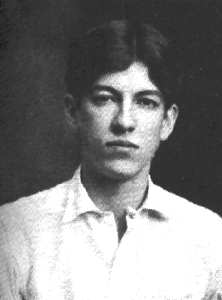
Alan Seeger's poem is spoken by someone who expects to meet Death on a battlefield when spring returns. The meeting is called a "rendezvous", an appointment the speaker has agreed to keep. The settings are scenes of fighting: a "disputed barricade", a "battered hill", a "flaming town".
Spring and its blossoms are set against this appointment throughout. In the last stanza the speaker admits it would be better to lie in bed beside a lover. Yet he has given his word, and he says he will not fail to keep it. The poem holds acceptance, longing and duty together.
Summary
The first stanza states that the speaker has a rendezvous with Death at some disputed barricade. It will come when spring returns with rustling shade and apple blossoms fill the air. The opening line is repeated. The meeting is set for when spring brings back blue and fair days.
The second stanza imagines what may happen. Death may take the speaker's hand and lead him into his dark land. He may close the speaker's eyes and stop his breath. Or the speaker may pass him by. Still, the speaker has a rendezvous on a scarred slope of a battered hill when spring comes round this year and the first meadow flowers appear.
The third stanza grants that it would be better to lie deep in silk and soft down. There love throbs in blissful sleep, pulse beside pulse and breath beside breath, and waking is dear. But the speaker has a rendezvous with Death at midnight in some burning town. It will come when spring moves north again this year. True to his pledged word, he says he will not fail that rendezvous.
Themes and meaning
Death as an appointment is the poem's governing idea. Death is a person who may "take my hand" and "lead me into his dark land". The word "rendezvous" makes dying sound like a meeting arranged in advance. The speaker does not hunt Death or flee from him. He expects to keep a date.
Spring is set against death in every stanza. The meeting will come with "apple-blossoms" and "the first meadow-flowers". The season of new life becomes the season of dying. The contrast sharpens both the beauty of spring and the loss it will bring.
Uncertainty sits inside the certainty. Line 10 admits "It may be I shall pass him still." The speaker does not know he will die. What is fixed is his presence at the meeting place, not its outcome.
Love and comfort are the strongest pull away from duty. The third stanza describes a bed "Pillowed in silk" where "Love throbs out in blissful sleep". The speaker admits "'twere better" to be there. He does not pretend the choice is easy.
Duty and honor close the poem. The speaker is "to my pledged word" true. The final line, "I shall not fail that rendezvous", turns the poem from expectation into vow. Readers differ on whether this is courage, resignation or an embrace of death.
Tone
The tone is calm, solemn and resolved. The repeated opening line is stated plainly, without fear or boasting. The speaker sounds like someone stating a known fact.
The spring images bring a note of tenderness. "blue days and fair" and the apple blossoms are described with real pleasure. That pleasure makes the expected death feel heavier.
The second stanza is quiet and almost gentle. Death leading the speaker by the hand sounds less violent than intimate. The third stanza grows warm and longing in its picture of love. The ellipsis after line 19 marks a pause. Then "But" returns the speaker to his vow, and the last line is firm.
Form and structure
The poem has 24 lines in three stanzas of six, eight and ten lines. Nearly every line has eight syllables. The metre is iambic tetrameter, four rising beats to a line, and it is very regular.
The rhyme is irregular but frequent. "Death" returns as the refrain word and rhymes twice with "breath". The stanzas grow longer as the poem goes, and the refrain line moves deeper into each. The last two lines close on the couplet "true" and "rendezvous".
Poetic devices
Personification line 1
I have a rendezvous with Death Death is capitalized and treated as a person to meet. The line sets up the poem's central figure.
Refrain line 5
I have a rendezvous with Death The opening line returns within the stanza and again later. Its repetition gives the poem the weight of a vow.
Imagery line 4
And apple-blossoms fill the air The spring image is soft and full of life. It contrasts sharply with the appointment with Death.
Metaphor line 8
And lead me into his dark land Death is a guide to a dark country. Dying becomes a journey rather than a violent end.
Alliteration line 12
On some scarred slope of battered hill The s sounds link the damaged ground. The line gives a harsh picture of the battlefield.
Sensory imagery line 16
Pillowed in silk and scented down Touch and smell create a scene of luxury. It is the life the speaker turns away from.
Parallelism line 18
Pulse nigh to pulse, and breath to breath The repeated pattern places two lovers side by side. Breath here answers the breath Death would quench in line 9.
Ellipsis line 19
Where hushed awakenings are dear... The dots let the picture of love trail off. The pause comes just before the turn back to duty.
Personification line 22
When Spring trips north again this year Spring moves lightly, like a person walking. The light verb contrasts with the burning town in the line before.
Words worth knowing
rendezvous
An arranged meeting at a set time and place. The French word gives the appointment a formal, almost romantic air.
barricade
A barrier put up to block an advance. Disputed means fought over by both sides.
'twere
It were, meaning it would be.
down
Soft, fine feathers used to fill pillows and bedding. Not the direction.
nigh
Near or close.
What readers have said
This reader insists the poet surely feared death and rejects reading the poem as a premonition. Tim, 2005
This reader sees a young man who prefers life to death and may fear it, but who speaks of responsibility and honor. Adriana, 2005
This reader calls it the ultimate anti-war poem and finds the last two stanzas especially haunting. Leslie Horewinkle, 2005
This reader's only brother kept a copy of the poem in his wallet, and the reader finds it hauntingly beautiful yet sad. human53, 2007
Citing a letter, this reader argues that Seeger embraced death and saw it in action as noble. matt, 2007
John F. Kennedy, newly married, told Jacqueline that "Rendezvous With Death" was his favorite poem.
It almost seems like a self-fulfilling prophecy eh?
WilliamUnited States
everyone should write poetry and should respect what it stands fo because people who hate poetry probably don't know how to write it themselves.
EbonyUnited Kingdom
Excellent poem. I have just come accross whilst studying WW1 in school. Through analysing this poem, I have to say it is one of my favourites, very touching.
Tracy N. - He most certainly feared death. He was an Infantryman in the poison gas filled Trenches. Byron - Premonition?.....read above
Tom - JFK was a president that REALLY pissed off the mob. No prophecy there.
ABO ALIEgypt
I HAVE A RENDEZVOUS WITH DEATH
AdrianaUnited States
I remember studying this poem in high school. The first line came to me over coffee this morning, so I reread the poem. This young man certainly prefers life over death (much better to be home comfy in bed next to a loved one), he may even fear it, but this poem also speaks of responsibility and honor. He feels that death is imenent, I'm sure, because WWI casualties were staggering. It may have been premonition, but going "over there" late in the war almost certainly meant you weren't coming back. I'd forgotten how haunting this poem is.
Leslie HorewinkleBrunei Darussalam, Negara
As "Das Boot" is the penultimate anti-war film.
Seeger's poem is the ultimate anti-war poem.
The last two verses are especially haunting.
AsaadUnited Arab Emirates
Beautifully Sad!
mattUnited States
Yo Tim stop thinking your the show- Seeger most definetly embraced death, in 1915 he wrote a letter from the front saying, "If it must be, let it come in the heat of action. Why flinch? It is by far the noblest form in which death can come. It is in a sense almost a privilege. . . ." found that off english.emory.edu if you wanna check it out
mattUnited States
Yo Tim stop thinking that your the show- Seeger most definetly embraced death he wrote a letter in 1915 saying, "If it must be, let it come in the heat of action. Why flinch? It is by far the noblest form in which death can come. It is in a sense almost a privilege. . . ." found that off of english.emory.edu if you want to check it out for yourself
human53United States
My only brother, Ken, commited suicide in November many years ago. He had a copy of this poem in his wallet. It is hauntingly beautiful, yet sad.
NathanUnited States
I first heard this poem when it was used for the astounding Gears of War 2 trailer "Rendezvous." Minding that only the beginning parts of select stanzas were used in the trailer, it fit perfectly with the apocalyptic world of Gears of War, and the constant certainty of death. Alan Seeger most definitely embraced death. And I believe that quality makes him more noble than most people can ever be.
I love this Poem and I heard at the same place Nathan did.
patriciaFrance
I have a rendez-vous with death
I memorized this poem as a small child (I'm american) and was so moved to read it again that tears were pouring. In an way, Alan Seeger was my first poetic love.
John F. Kennedy, newly married, told Jacqueline that "Rendezvous With Death" was his favorite poem.
It almost seems like a self-fulfilling prophecy eh?
everyone should write poetry and should respect what it stands fo because people who hate poetry probably don't know how to write it themselves.
Excellent poem. I have just come accross whilst studying WW1 in school. Through analysing this poem, I have to say it is one of my favourites, very touching.
A premonition? Alan Seeger died July 4th 1916.
He did not fear death, he embraced it.
Tracy N. - He most certainly feared death. He was an
Infantryman in the poison gas filled
Trenches.
Byron - Premonition?.....read above
Tom - JFK was a president that REALLY pissed off the
mob. No prophecy there.
I HAVE A RENDEZVOUS WITH DEATH
I remember studying this poem in high school. The first line came to me over coffee this morning, so I reread the poem. This young man certainly prefers life over death (much better to be home comfy in bed next to a loved one), he may even fear it, but this poem also speaks of responsibility and honor. He feels that death is imenent, I'm sure, because WWI casualties were staggering. It may have been premonition, but going "over there" late in the war almost certainly meant you weren't coming back. I'd forgotten how haunting this poem is.
As "Das Boot" is the penultimate anti-war film.
Seeger's poem is the ultimate anti-war poem.
The last two verses are especially haunting.
Beautifully Sad!
Yo Tim stop thinking your the show- Seeger most definetly embraced death, in 1915 he wrote a letter from the front saying, "If it must be, let it come in the heat of action. Why flinch? It is by far the noblest form in which death can come. It is in a sense almost a privilege. . . ." found that off english.emory.edu if you wanna check it out
Yo Tim stop thinking that your the show- Seeger most definetly embraced death he wrote a letter in 1915 saying, "If it must be, let it come in the heat of action. Why flinch? It is by far the noblest form in which death can come. It is in a sense almost a privilege. . . ." found that off of english.emory.edu if you want to check it out for yourself
My only brother, Ken, commited suicide in November many years ago. He had a copy of this poem in his wallet. It is hauntingly beautiful, yet sad.
I first heard this poem when it was used for the astounding Gears of War 2 trailer "Rendezvous." Minding that only the beginning parts of select stanzas were used in the trailer, it fit perfectly with the apocalyptic world of Gears of War, and the constant certainty of death. Alan Seeger most definitely embraced death. And I believe that quality makes him more noble than most people can ever be.
Cool Poem
I love this Poem and I heard at the same place Nathan did.
I have a rendez-vous with death
I memorized this poem as a small child (I'm american) and was so moved to read it again that tears were pouring. In an way, Alan Seeger was my first poetic love.