Old Eben Flood, climbing alone one night
Over the hill between the town below
And the forsaken upland hermitage
That held as much as he should ever know
On earth again of home, paused warily.
The road was his with not a native near;
And Eben, having leisure, said aloud,
For no man else in Tilbury Town to hear:
"Well, Mr. Flood, we have the harvest moon
Again, and we may not have many more;
The bird is on the wing, the poet says,
And you and I have said it here before.
Drink to the bird." He raised up to the light
The jug that he had gone so far to fill,
And answered huskily: "Well, Mr. Flood,
Since you propose it, I believe I will."
Alone, as if enduring to the end
A valiant armor of scarred hopes outworn,
He stood there in the middle of the road
Like Roland's ghost winding a silent horn.
Below him, in the town among the trees,
Where friends of other days had honored him,
A phantom salutation of the dead
Rang thinly till old Eben's eyes were dim.
Then, as a mother lays her sleeping child
Down tenderly, fearing it may awake,
He set the jug down slowly at his feet
With trembling care, knowing that most things break;
And only when assured that on firm earth
It stood, as the uncertain lives of men
Assuredly did not, he paced away,
And with his hand extended paused again:
"Well, Mr. Flood, we have not met like this
In a long time; and many a change has come
To both of us, I fear, since last it was
We had a drop together. Welcome home!"
Convivially returning with himself,
Again he raised the jug up to the light;
And with an acquiescent quaver said:
"Well, Mr. Flood, if you insist, I might.
"Only a very little, Mr. Flood --
For auld lang syne. No more, sir; that will do."
So, for the time, apparently it did,
And Eben evidently thought so too;
For soon amid the silver loneliness
Of night he lifted up his voice and sang,
Secure, with only two moons listening,
Until the whole harmonious landscape rang --
"For auld lang syne." The weary throat gave out,
The last word wavered; and the song being done,
He raised again the jug regretfully
And shook his head, and was again alone.
There was not much that was ahead of him,
And there was nothing in the town below --
Where strangers would have shut the many doors
That many friends had opened long ago.
✦
Analysis
Mr Flood's Party: analysis
Introduction
"Mr Flood's Party" is a narrative poem in seven eight-line stanzas. Old Eben Flood, walking home alone at night with a jug he has filled in town, stops on the road and holds a party with himself. He toasts himself as "Mr. Flood," answers his own invitations and sings "auld lang syne" to the empty landscape.
The scene is gently comic, but its subject is loneliness and loss. The friends who once honored Eben are gone. The poem ends by stating that there is nothing left for him in the town below, only strangers behind shut doors.
Summary
Old Eben Flood climbs the hill alone one night. The road runs between the town below and his "forsaken upland hermitage," all he will ever know of home again. He stops warily. With no one near, he speaks aloud, though no one in Tilbury Town can hear.
Eben addresses himself as "Mr. Flood." He notes the harvest moon and says they may not see many more. Quoting "the poet," he says "The bird is on the wing" and proposes a drink. He raises the jug and answers himself huskily that he believes he will.
He stands alone in the middle of the road. The narrator compares him to a knight in scarred armor and to "Roland's ghost winding a silent horn." Below, in the town where friends once honored him, a ghostly greeting from the dead seems to ring. His eyes grow dim.
Eben sets the jug down with great care, as a mother lays down a sleeping child. He knows "that most things break." Only when the jug stands firm does he step away. Then he pauses again with his hand held out.
He greets himself as an old friend he has not met for a long time. Many changes have come to them both. He says "Welcome home!" and raises the jug again. With a wavering voice he answers that, if Mr. Flood insists, he might.
He accepts "Only a very little" then says "No more, sir" and "that will do." The narrator remarks that for the moment it apparently did. Soon Eben lifts his voice and sings. The "two moons" listen, and the landscape rings.
His tired voice gives out on "auld lang syne." He raises the jug once more, regretfully, shakes his head and is alone again. Little lies ahead of him. There is nothing for him in the town below, where strangers would shut doors that friends once opened.
Themes and meaning
The central theme is loneliness in old age. Eben climbs "alone" in line 1 and stands "Alone" in line 17. The party has only one guest, himself. The last stanza leaves him "again alone," with "nothing in the town below."
A second theme is loss and the passing of time. The "friends of other days" belong to the past. The "phantom salutation of the dead" in line 23 suggests that many are dead. The closing contrast of "strangers" and "many friends" shows the town that once welcomed him turned foreign.
A third theme is the divided self as company. Eben invents a companion by splitting himself in two, host and guest. The "two moons" in line 47 can be read as a drunk man's double vision. They also mirror his two selves. The self-talk is funny, but it also shows how complete his isolation is.
A fourth theme is fragility and care. Eben handles the jug "With trembling care, knowing that most things break." The narrator sets the steady jug against "the uncertain lives of men." The tenderness Eben once gave others now goes to a jug of drink.
A fifth theme is dignity in defeat. The images of armor and "Roland's ghost" make Eben a fallen hero. His battle is lost, and no one answers his horn. The poem grants him courage and courtesy even as it shows his decline.
Tone
The tone mixes gentle comedy with deep sympathy. Eben's polite exchanges with himself are funny: "Since you propose it, I believe I will." The narrator's dry remarks add to the humor, as in "apparently it did."
The narrator never mocks Eben. Similes of a knight and of a mother with her child give him dignity and tenderness. Words like "trembling," "quaver" and "weary throat" show his frailty with pity.
The tone grows sadder toward the end. The song fades, the "last word wavered," and Eben is "again alone." The last four lines are plain and bleak, with no humor left. The closing image of shut doors leaves the reader with his exclusion.
Form and structure
The poem has 56 lines in 7 stanzas of 8 lines each. The metre is iambic pentameter and very regular, with most lines at 10 syllables. The even-numbered lines of each stanza tend to rhyme in pairs, as in "below" and "know" or "fill" and "will." The odd-numbered lines mostly go unrhymed.
Some pairs are only near rhymes, such as "come" and "home," which the computed scheme leaves unmatched. Several sentences run across stanza breaks. The sixth stanza ends with a dash, and the song "For auld lang syne" completes it in line 49. Dialogue is set inside the regular metre, so Eben's speech keeps the same measured pace as the narration.
Poetic devices
Allusion line 11
The bird is on the wing, the poet says Eben quotes an unnamed poet on how quickly time flies. The bird on the wing becomes his excuse to drink.
Simile line 20
Like Roland's ghost winding a silent horn Roland is the legendary knight who blew his horn for help too late. Eben is a ghost of such a hero, and no one hears his call.
Metaphor line 18
A valiant armor of scarred hopes outworn His worn-out hopes are armor he still wears. The image gives him a battered courage.
Imagery line 23
A phantom salutation of the dead Eben seems to hear the greetings of dead friends. The town below is full of ghosts for him.
Simile line 25
as a mother lays her sleeping child The tender comparison shows how carefully he sets down the jug. It is gently comic and sad at once.
Aphorism line 28
knowing that most things break The short general truth reaches beyond the jug. It hints at the broken friendships and hopes behind him.
Dialogue with self line 16
Since you propose it, I believe I will Eben plays both host and guest. The polite exchange is funny and shows how alone he is.
Irony line 43
So, for the time, apparently it did The narrator's dry comment casts doubt on "that will do." We sense that a little will not be enough.
Synesthesia line 45
silver loneliness The color of moonlight is given to a feeling. The phrase makes the night both beautiful and lonely.
Image of doubling line 47
with only two moons listening The two moons suggest a drinker's double vision. They also echo the two selves at his party.
Antithesis line 56
That many friends had opened long ago The line sets past welcome against present exclusion by strangers. It ends the poem on loss.
Words worth knowing
hermitage
A hermit's dwelling; here, Eben's lonely home up the hill.
native
A local inhabitant, someone from the town.
winding
Blowing, as one blows a horn. It is said with a long i, unlike the wind that blows.
acquiescent
Agreeing or giving in without protest.
convivially
In a festive, friendly way, as at a party with drink.
auld lang syne
Scots for old long since, meaning the old days. It is also the title of a song sung for old times at partings.
Context
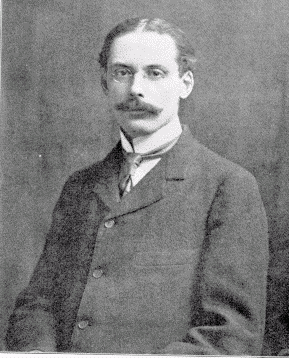
Edwin Arlington Robinson lived from 1869 to 1935. "Mr Flood's Party" was the archive's Poem of the Day on July 20, 2000. Readers left 17 comments on it here between 2004 and 2020.
What readers have said
Denise reads Eben as alone because he has outlived his youth and, with it, all his friends. Denise, 2004
Celeste disagrees: the friends are not dead but in the town below, and Eben has willingly left his old life and drinking companions behind. Celeste, 2007
Jill Weissich reads Eben as a relapsed drinker who cannot wait to get home. The talk of poets and old times numbs his shame, and the title is ironic. jill weissich, 2010
Steve sees Mr. Flood as all of us, alone at the core, and questions why being alone is seen as such a bad thing. Steve, 2008
Sarah G points out that the harvest moon sets the poem in autumn, not on New Year's Eve, despite the song he sings. Sarah G, 2009
Stephen argues that Eben has made this trek for liquor many times and needs no one's pity. stephen, 2010
Keep reading
Discover more of Edwin Arlington Robinson’s poetry.
The accompanying essay speaks of "the mooed of the poem," suggesting that a few cows, at least, came to the party. Nice to think he wasn't entirely alone with his other self.
DeniseUnited States
To analyze this poem correctly, you have to know the author's other poem's, because Edwin Arlington Robinson wrote about very somber and melancholy things. He made "Tilbury Town" because he needed a place for all of the outcasts of his poems. Mr. Flood, who lives in Tilbury town, is no exception. He writes about isolationism and people who feel alone for some reason. According to Robinson, Eben Flood is alone…
Read the whole comment
To analyze this poem correctly, you have to know the author's other poem's, because Edwin Arlington Robinson wrote about very somber and melancholy things. He made "Tilbury Town" because he needed a place for all of the outcasts of his poems. Mr. Flood, who lives in Tilbury town, is no exception. He writes about isolationism and people who feel alone for some reason. According to Robinson, Eben Flood is alone because he has outlived his youthfulness and in turn has outlived all his friends.
I love "Mr. Flood's Party" simply because I love the idea of an elderly man alone on a hilltop drunk and talking to himself. I don't however like the overall pathos created throughout the poem with Robinson's tone and views of old age. However, if Robinson's intentions had been to give everyone a sense of sorrow over Eben Flood's pithetic life, I applaud him as he has accomplished his goal.
I only read it because of english class but i love the poem once I did read it!
LoriUnited States
this poem is a bit confusing at first but once you read it a couple of times you start to get the gist of it.
biancaJapan
i think that mr. floods party is the ideal poem about a drunk man on a hill talking to himself, it tells that the poet was in a creative mood when he wrote it.
ShanitaUnited States
At first this poem seemed to be confusing but after reading it again it became apparent that this is an old drunk man who is sad and lonely.
Trevor
To the post below: Are you freaking serious?
TabithaNew Zealand
I absolutly love E.A. Robinson's poetry! He is the best American writer ever!!!
CelesteUnited States
Mr Flood's party is not about a drunk lonley old man who has outlived his friends. Mr. Flood is just a man who has willing left his old life and friends. His friends were not dead. His old friends were in town below him.(20). The friends of "other days had honored him/ A phantom salutation of the dead"(2o). Meaning, honored as a privilege, phantom as the past and salutation as good bye. So he talks about a…
Read the whole comment
Mr Flood's party is not about a drunk lonley old man who has outlived his friends. Mr. Flood is just a man who has willing left his old life and friends. His friends were not dead. His old friends were in town below him.(20). The friends of "other days had honored him/ A phantom salutation of the dead"(2o). Meaning, honored as a privilege, phantom as the past and salutation as good bye. So he talks about a privlilege from the past he left behind "his drinking buddies". It has been a long time scence he has had a drink. "Well Mr. Flood, we have not met like this in a long time" (35) So the man is not drunk. He starts arguing with himself not to drink."He set the jug down..." (25)/ "With his hand extended out paused again:" (30). Then finally he gives in. "Welcome home!" (35). So Mr. Flood's Party is not about a drunk old man, it is about a man who is strugeling whith changing his life.
As an Eben (yes, it's an old Yankee name, EH-ben, not EE-ben) I was delighted that in early 1984 our freshman English class at Anna Maria College in Paxton, Massachusetts, covered a poem about someone named Eben. That's all I'll say for now.
RichardUnited States
Can someone please explain the allusion, "Auld Lang Syne"
well, take a deep breath, and upon exhaling, realize that, in the grandest of metaphors, Mr. Flood is all of us. We are all, at the very core of life, as "alone" as Mr. Flood appears to be to those who have commented thus far. What does it say about our cultures when "alone" is perceived to be such a bad thing. We always feel sorry for the person alone at a restaurant or movie ... why? We constantly strive to…
Read the whole comment
well, take a deep breath, and upon exhaling, realize that, in the grandest of metaphors, Mr. Flood is all of us. We are all, at the very core of life, as "alone" as Mr. Flood appears to be to those who have commented thus far. What does it say about our cultures when "alone" is perceived to be such a bad thing. We always feel sorry for the person alone at a restaurant or movie ... why? We constantly strive to surround ourselves with others, and all too often, merely to distract us from the fact that we are "alone" - - - even in a crowd, we have all felt alienated, disaffected, or alone. Enough of the rant: if you've made it this far, to me; Mr. Flood is alone, and in a moment of gracious surrender to that existential angst, he chooses to embrace the feeling and reflect on a point that we all will arrive at - or die too early to understand. Goodnight Mr. Flood --- it's been a wonderful party!
Sarah GUnited States
This poem is set in the fall, hence "Harvest Moon", NOT new years eve, despite the song he sings.
MissyAustralia
auld lang syne
auld lang syne is the song that plays at New Years!!!!! but i dont think the poem is actually on new years, hes just thinking of past times and is very drunk...
Mr. Flood had quit drinking (perhaps after alienating the folks in Tilbury Town). Then, he relapsed. He can't wait until home before he drains the jug "he had gone so far to fill." He pretends he was tempted by "the bird on the wing," or poetry, or "auld lang syne," which momentarily dulls his sense of shame. "Welcome home" says the alcoholic upon tasting his first sip. He has lost home, friends, work, and is now debating with himself or singing on a lonely cold night. The irony is in the title: "Mr. Flood's Party." A party of one.
he has been doing this for years he wasn't at his first rodeo. he is another example of unfulfilled people's dreams and makes this long trek for booze regularly. NOT a bleeding heart.
Steve, Thank you so much for you critical analysis of Mr. Flood's Party. Indeed he is remembering those golden days of youth and optimism. He will not have see, those friends, and family again. whereas, this place and quiet moments are his commeration is his connection to the idyllic place of fond memories, called home.
The accompanying essay speaks of "the mooed of the poem," suggesting that a few cows, at least, came to the party. Nice to think he wasn't entirely alone with his other self.
To analyze this poem correctly, you have to know the author's other poem's, because Edwin Arlington Robinson wrote about very somber and melancholy things. He made "Tilbury Town" because he needed a place for all of the outcasts of his poems. Mr. Flood, who lives in Tilbury town, is no exception. He writes about isolationism and people who feel alone for some reason. According to Robinson, Eben Flood is alone…
Read the whole commentTo analyze this poem correctly, you have to know the author's other poem's, because Edwin Arlington Robinson wrote about very somber and melancholy things. He made "Tilbury Town" because he needed a place for all of the outcasts of his poems. Mr. Flood, who lives in Tilbury town, is no exception. He writes about isolationism and people who feel alone for some reason. According to Robinson, Eben Flood is alone because he has outlived his youthfulness and in turn has outlived all his friends.
I love "Mr. Flood's Party" simply because I love the idea of an elderly man alone on a hilltop drunk and talking to himself. I don't however like the overall pathos created throughout the poem with Robinson's tone and views of old age. However, if Robinson's intentions had been to give everyone a sense of sorrow over Eben Flood's pithetic life, I applaud him as he has accomplished his goal.
I only read it because of english class but i love the poem once I did read it!
this poem is a bit confusing at first but once you read it a couple of times you start to get the gist of it.
i think that mr. floods party is the ideal poem about a drunk man on a hill talking to himself, it tells that the poet was in a creative mood when he wrote it.
At first this poem seemed to be confusing but after reading it again it became apparent that this is an old drunk man who is sad and lonely.
To the post below: Are you freaking serious?
I absolutly love E.A. Robinson's poetry! He is the best American writer ever!!!
Mr Flood's party is not about a drunk lonley old man who has outlived his friends. Mr. Flood is just a man who has willing left his old life and friends. His friends were not dead. His old friends were in town below him.(20). The friends of "other days had honored him/ A phantom salutation of the dead"(2o). Meaning, honored as a privilege, phantom as the past and salutation as good bye. So he talks about a…
Read the whole commentMr Flood's party is not about a drunk lonley old man who has outlived his friends. Mr. Flood is just a man who has willing left his old life and friends. His friends were not dead. His old friends were in town below him.(20). The friends of "other days had honored him/ A phantom salutation of the dead"(2o). Meaning, honored as a privilege, phantom as the past and salutation as good bye. So he talks about a privlilege from the past he left behind "his drinking buddies". It has been a long time scence he has had a drink. "Well Mr. Flood, we have not met like this in a long time" (35) So the man is not drunk. He starts arguing with himself not to drink."He set the jug down..." (25)/ "With his hand extended out paused again:" (30). Then finally he gives in. "Welcome home!" (35). So Mr. Flood's Party is not about a drunk old man, it is about a man who is strugeling whith changing his life.
As an Eben (yes, it's an old Yankee name, EH-ben, not EE-ben) I was delighted that in early 1984 our freshman English class at Anna Maria College in Paxton, Massachusetts, covered a poem about someone named Eben. That's all I'll say for now.
Can someone please explain the allusion, "Auld Lang Syne"
well, take a deep breath, and upon exhaling, realize that, in the grandest of metaphors, Mr. Flood is all of us. We are all, at the very core of life, as "alone" as Mr. Flood appears to be to those who have commented thus far. What does it say about our cultures when "alone" is perceived to be such a bad thing. We always feel sorry for the person alone at a restaurant or movie ... why? We constantly strive to…
Read the whole commentwell, take a deep breath, and upon exhaling, realize that, in the grandest of metaphors, Mr. Flood is all of us. We are all, at the very core of life, as "alone" as Mr. Flood appears to be to those who have commented thus far. What does it say about our cultures when "alone" is perceived to be such a bad thing. We always feel sorry for the person alone at a restaurant or movie ... why? We constantly strive to surround ourselves with others, and all too often, merely to distract us from the fact that we are "alone" - - - even in a crowd, we have all felt alienated, disaffected, or alone. Enough of the rant: if you've made it this far, to me; Mr. Flood is alone, and in a moment of gracious surrender to that existential angst, he chooses to embrace the feeling and reflect on a point that we all will arrive at - or die too early to understand. Goodnight Mr. Flood --- it's been a wonderful party!
This poem is set in the fall, hence "Harvest Moon", NOT new years eve, despite the song he sings.
auld lang syne
auld lang syne is the song that plays at New Years!!!!! but i dont think the poem is actually on new years, hes just thinking of past times and is very drunk...
Relapse
Mr. Flood had quit drinking (perhaps after alienating the folks in Tilbury Town). Then, he relapsed. He can't wait until home before he drains the jug "he had gone so far to fill."
He pretends he was tempted by "the bird on the wing," or poetry, or "auld lang syne," which momentarily dulls his sense of shame. "Welcome home" says the alcoholic upon tasting his first sip. He has lost home, friends, work, and is now debating with himself or singing on a lonely cold night. The irony is in the title: "Mr. Flood's Party." A party of one.
RELAPSE?
he has been doing this for years he wasn't at his first rodeo. he is another example of unfulfilled people's dreams and makes this long trek for booze regularly. NOT a bleeding heart.
Steve, Thank you so much for you critical analysis of Mr. Flood's Party. Indeed he
is remembering those golden days of
youth and optimism. He will not have
see, those friends, and family again.
whereas, this place and quiet moments
are his commeration is his connection
to the idyllic place of fond memories,
called home.