Here was a place where none would ever come
For shelter, save as we did from the rain.
We saw no ghost, yet once outside again
Each wondered why the other should be so dumb;
And ruin, and to our vision it was plain
Where thrift, outshivering fear, had let remain
Some chairs that were like skeletons of home.
There were no trackless footsteps on the floor
Above us, and there were no sounds elsewhere.
But there was more than sound; and there was more
Than just an axe that once was in the air
Between us and the chimney, long before
Our time. So townsmen said who found her there.
✦
Analysis
Haunted House: analysis
Introduction
"Haunted House" is a short poem in which two or more companions shelter from the rain in an abandoned house. They see no ghost and hear no sound. Yet when they come out, each wonders why the others were so silent.
The second stanza hints at the cause. Long ago, an axe was raised in that room, and townsmen "found her there." The poem never shows the crime directly. Its haunting lies in what the visitors sense but do not say, and in the few bare facts that are held back until the final line.
Summary
The speaker describes a place where no one would ever come for shelter, except as the speaker's group did, to escape the rain. They saw no ghost while they were inside. But once outside again, each wondered why the other had been "so dumb," so silent. The speaker adds that the ruin of the place was plain for all of them to see. Thrift and fear had left behind only "Some chairs that were like skeletons of home."
The speaker says there were no ghostly footsteps on the floor above and no sounds anywhere else. "But there was more than sound," the speaker insists. There was also the memory of "an axe that once was in the air" between them and the chimney. That violence happened long before their time, and they did not witness it. The last line explains it only as a report: so the townsmen said, the ones who "found her there."
Themes and meaning
The central theme is haunting without a ghost. The poem denies every usual sign: "We saw no ghost," no footsteps, "no sounds." Yet the visitors are shaken into silence. The house is haunted by knowledge of what happened there, not by any spirit.
A second theme is violence buried in the past. The axe is placed precisely, "Between us and the chimney." It happened "long before / Our time," yet the spot still carries it. The unnamed "her" in line 13 is the victim, and the poem withholds even her name.
A third theme is the ruin of home. The chairs are "like skeletons of home," bare frames of a life that has ended. The word "skeletons" links the house's decay to death. A place of shelter has become one where "none would ever come."
A fourth theme is unspoken, shared fear. Each visitor notices the other's silence and wonders at it. Neither says aloud what the house made them feel. The poem suggests that dread can pass between people without words.
Tone
The tone is restrained and uneasy. The speaker states facts in plain words and keeps denying the supernatural. "We saw no ghost" and "no sounds" sound calm and reasonable.
The second stanza shifts with "But there was more than sound." The repetition of "more" builds pressure while still saying little. The speaker circles the event before naming the axe.
The close is quiet and chilling. The speaker does not describe the crime but reports it at second hand, "So townsmen said." This detachment makes the last words, "found her there," all the more disturbing.
Form and structure
As printed here the poem has 13 lines in 2 stanzas of 7 and 6 lines. The computed rhyme scheme is ABCABBD for the first stanza and EFEFEF for the second. The second stanza alternates two rhymes, "floor" and "more" against "elsewhere" and "air."
The metre is iambic pentameter, with lines from 8 to 12 syllables. Most lines have 10. The first stanza's pattern and length suggest that a line may be missing before line 5, which begins abruptly with "And ruin." Sentences run across line ends, as from line 12 into line 13.
Poetic devices
Simile line 7
Some chairs that were like skeletons of home The bare chairs look like bones. The image ties the empty house to death and ended lives.
Negation line 3
We saw no ghost The speaker denies the expected ghost. The denial makes the unease that follows harder to explain.
Paradox line 8
There were no trackless footsteps on the floor Footsteps that leave no tracks would belong to a ghost. The speaker names the ghostly sound only to deny it.
Personification line 6
Where thrift, outshivering fear, had let remain Thrift and fear act like people who shiver. They decide what was carried off and what was left behind.
Repetition line 10
But there was more than sound The word "more" returns in the same line and runs into line 11. The repetition hints at something the speaker is reluctant to name.
Imagery line 11
an axe that once was in the air A single frozen image stands for the whole crime. The raised axe is shown, not its blow.
Enjambment line 12
long before The phrase breaks before "Our time" in line 13. The pause stretches the distance between the crime and the visitors.
Delayed revelation line 13
So townsmen said who found her there Only the last line reveals a victim. The poem ends on the discovery, with the hardest fact left unexplained.
Diction line 4
Each wondered why the other should be so dumb The word "dumb" means speechless. The line shows fear passing between the visitors in silence.
Words worth knowing
save
Except; "save as we did" means except as we did.
dumb
Silent, unable to speak, not stupid.
thrift
Saving habits; here, the urge to carry off anything useful from the house.
outshivering
A coinage built on shiver. The phrase is compressed, but it seems to set thrift against fear, which together left some chairs behind.
trackless
Leaving no tracks, as a ghost's footsteps would.
townsmen
People of the nearby town, whose report is the only source for what happened.
Context
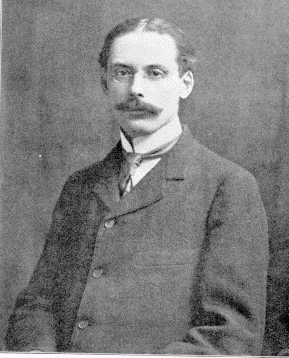
Edwin Arlington Robinson lived from 1869 to 1935. "Haunted House" was the archive's Poem of the Day on March 18, 2010. Readers left 5 comments on it here between 2004 and 2007.
What readers have said
Jessica values the poem for its suspense. Jessica, 2005
Giff admits not understanding the poem, which shows how much it leaves unsaid. Giff, 2005
Keep reading
Discover more of Edwin Arlington Robinson’s poetry.
Wow! 10/10, i'm using it for a project
I don't undersand it but I'm going to use it as my homework anyways.
I really like this poem. It has suspense. I'm also going to use it for my project.
sexy poem it turns me on!
I like ur Poem its nice to read