At ten AM the young housewife
moves about in negligee behind
the wooden walls of her husband's house.
I pass solitary in my car.
Then again she comes to the curb
to call the ice-man, fish-man, and stands
shy, uncorseted, tucking in
stray ends of hair, and I compare her
to a fallen leaf.
The noiseless wheels of my car
rush with a crackling sound over
dried leaves as I bow and pass smiling.
✦
Analysis
The Young Housewife: analysis
Introduction
"The Young Housewife" is a short scene seen from a passing car. The speaker drives by a house at ten in the morning. Inside, a young housewife moves about in her negligee. Later she comes out to the curb to call the delivery men.
The speaker compares her "to a fallen leaf". Then the car's wheels crackle over dried leaves as the speaker bows and drives on, smiling. The poem is brief, but its images of watching, desire and crushed leaves leave much open to reading.
Summary
The first stanza sets the time and place. "At ten AM" the young housewife moves about "in negligee". She is behind "the wooden walls" of a house that the poem says belongs to the husband. In the last line of the stanza the speaker enters, passing by alone in a car.
The second stanza shows her outside. "Then again" she comes to the curb to call "the ice-man, fish-man". She stands "shy, uncorseted", tucking in "stray ends of hair". Watching this, the speaker says, "I compare her / to a fallen leaf." The comparison is stated but not explained, and the stanza ends there.
The third stanza returns to the car. Its "noiseless wheels" make "a crackling sound" as they pass over "dried leaves". At the same moment the speaker bows to her from the car. The poem ends as the speaker drives past, "smiling", and the woman is not mentioned again.
Themes and meaning
The first theme is watching. The speaker sees the woman from outside, first behind walls and then at the curb. The words "Then again" suggest the speaker has seen her before. She does not seem to know she is observed. The poem can be read as an innocent glance or as something closer to spying.
A second theme is confinement. The house is not called hers, since it is the "husband's house". She is kept behind "wooden walls", and she steps out only to the curb. Her world reaches as far as the delivery men. Some readers see a woman held in by her marriage and her role.
A third theme is desire. Details such as "negligee" and "uncorseted" are intimate. They show the woman undressed for the day, private and unguarded. The speaker notices them closely. The bow and the smile at the end can be read as courteous or as knowing.
The last theme lies in the leaf image. The speaker compares her "to a fallen leaf". Then the wheels pass over "dried leaves" with "a crackling sound". Read together, the lines suggest that something fragile is being crushed. The poem does not say whether the speaker notices this link or means it.
Tone
The surface tone is light and casual. The speaker reports the scene plainly, with a time of day and simple actions. The closing phrase "bow and pass smiling" sounds polite and pleased.
Beneath the surface the tone is less easy. The speaker is "solitary", which adds a note of loneliness. The comparison "to a fallen leaf" brings in age, loss and decay.
The crackle of "dried leaves" under the wheels is faintly harsh. The pleasant smile at the end sits uneasily against these images. The mix leaves the reader unsure how far to trust the speaker's charm.
Form and structure
The poem has 12 lines in 3 stanzas of 4, 5 and 3 lines. It is free verse, with lines from 5 to 9 syllables. There is no regular metre and no rhyme scheme.
The only match at a line end is the word "car", which ends a line in the first stanza and again in the last. The car frames the woman on either side. The lines read like prose, in complete sentences. Enjambment such as "I compare her / to a fallen leaf" briefly delays each key image.
Poetic devices
imagery line 2
moves about in negligee behind The woman is seen in her nightclothes. The detail is private and intimate, and it places her inside the house.
symbol line 3
the wooden walls of her husband's house. The walls enclose her in a house that is not called hers. They can be read as a sign of confinement.
diction line 4
I pass solitary in my car. "solitary" shows the speaker is alone. It hints at the speaker's own isolation as an observer.
list line 6
to call the ice-man, fish-man, and stands Tradesmen are listed without "and". The quick list shows the small routine of her day.
imagery line 7
shy, uncorseted, tucking in Physical details show her unguarded. "uncorseted" marks her as undressed for public view.
simile line 8
and I compare her The speaker openly announces a comparison. It names the act of turning her into an image.
metaphor line 9
to a fallen leaf. The woman is likened to a fallen leaf. The image suggests fragility, fading and being cast off.
paradox line 10
The noiseless wheels of my car The wheels are "noiseless", yet in line 11 they make "a crackling sound". The noise comes from what they crush, not from the car.
onomatopoeia line 11
rush with a crackling sound over "crackling" imitates the sound of dry leaves breaking. It links back to the woman as a leaf.
Words worth knowing
negligee
A light, loose nightgown or dressing gown worn by a woman.
uncorseted
Not wearing a corset, the tight undergarment then worn to shape the body. It means informally dressed.
ice-man
A man who delivered blocks of ice to homes for cooling food.
curb
The edge of the pavement, next to the street.
solitary
Alone, without company.
Context
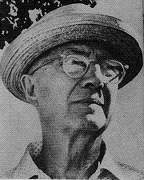
"The Young Housewife" is by William Carlos Williams (1883–1963). It has been on americanpoems.com since 2003 and was a Poem of the Day on December 9, 2005. Readers have left eight comments on it, from 2005 to 2011.
What readers have said
Brent reads the poem as about boundaries and the breaking of a young woman's spirit by the husband who holds her. Brent, 2005
Kristine notes that the house is called the husband's, not the woman's, and sees the dried leaf as showing her worn out by her duties. Kristine, 2005
fatma dashti finds the images at once seductive and suggestive of ideas beyond their surface. fatma dashti, 2008
Markus proposes a dark reading, that the speaker has been watching her and the crushed leaves hint at violence. Markus, 2010
Ashley reads it as about loneliness and isolation, of both the woman and the one who watches her. Ashley, 2011
Keep reading
Discover more of William Carlos Williams’s poetry.
This poem is very easy to understand and its a beautiful poem. i really enjoyed it.
BrentUnited States
While I agree it is a beautiful poem, and it may be easy to read, it is a very complex read. One must look at the text more deeply to both see the true meaning and the deeper meaning. The poems implications include that of boundaries and and to an extent the breaking of a young woman, by her husband, trying to hold her if not against her will, but by breaking her spirit.
KristineUnited States
The Young Housewife is an easy to read poem, and I really enjoyed reading it. I think of a young woman that is empowered by her husband when I read this poem. This woman is frail and unkempt because she is stuck in a house that she does not call her own because it is called in the poem her husband's home. She is compared to a leaf that is dried, and when I think of a leaf that is dried up I feel she may look old and weak from her duties as a housewife. She is allowed to come out of the house only to call on the duties that pertain to the home.
I want to know what the poet want to say in third stanza..
Amalia PUnited States
I didnt understand this peom but as i read the peom over again for the second time i understood the meaning of this peom...it talks about how a young housewife becomes a young girl with a broken spirit and an old soul...captive in her husband house for she uis not able to call it her own....great peom
fatma dashtiKuwait
William Carlos Williams uses very specific images in "The Young Housewife" to reveal not merely a particular circumstance or event, but to also suggest underlying themes and ideas of his subject matter. For example, he gives to the reader various real and imagined images, such her moving about in negligee behind closed doors, or her going about her daily affairs, that are at once very seductive and suggestive of ideas that supercede their appearances. These images especially accentuate the young housewife's naturalness and beauty. However, they are quickly contrasted by a comparison drawn by Williams of the young lady to a fallen leaf.
Does anyone see premeditated murder as the topic of this poem? This woman is behind wooden walls so the narrator cannot see her, yet somehow he knows that she's there. I think this implies that he's been watching her for a while. And the next stanza seems to justify my thoughts. "Then AGAIN she comes to the curb..." The narrator knows that this is her daily routine. He then compares her to a fallen leaf (leaves mainly falling when they're dead), so when he runs over the dried leaves with his car, he is imagining what it would be like to kill her. That smile and nod then totally screams creeper.
This poem is about loneliness, of both the young woman and her observer. It is about isolation. It is about the people in the world longing for contact, real and significant contact, with each other, who are nonetheless separated by the edifice of society.
This poem is very easy to understand and its a beautiful poem. i really enjoyed it.
While I agree it is a beautiful poem, and it may be easy to read, it is a very complex read. One must look at the text more deeply to both see the true meaning and the deeper meaning. The poems implications include that of boundaries and and to an extent the breaking of a young woman, by her husband, trying to hold her if not against her will, but by breaking her spirit.
The Young Housewife is an easy to read poem, and I really enjoyed reading it. I think of a young woman that is empowered by her husband when I read this poem. This woman is frail and unkempt because she is stuck in a house that she does not call her own because it is called in the poem her husband's home. She is compared to a leaf that is dried, and when I think of a leaf that is dried up I feel she may look old and weak from her duties as a housewife. She is allowed to come out of the house only to call on the duties that pertain to the home.
I want to know what the poet want to say in third stanza..
I didnt understand this peom but as i read the peom over again for the second time i understood the meaning of this peom...it talks about how a young housewife becomes a young girl with a broken spirit and an old soul...captive in her husband house for she uis not able to call it her own....great peom
William Carlos Williams uses very specific images in "The Young Housewife" to reveal not merely a particular circumstance or event, but to also suggest underlying themes and ideas of his subject matter. For example, he gives to the reader various real and imagined images, such her moving about in negligee behind closed doors, or her going about her daily affairs, that are at once very seductive and suggestive of ideas that supercede their appearances. These images especially accentuate the young housewife's naturalness and beauty. However, they are quickly contrasted by a comparison drawn by Williams of the young lady to a fallen leaf.
Does anyone see premeditated murder as the topic of this poem? This woman is behind wooden walls so the narrator cannot see her, yet somehow he knows that she's there. I think this implies that he's been watching her for a while. And the next stanza seems to justify my thoughts. "Then AGAIN she comes to the curb..." The narrator knows that this is her daily routine. He then compares her to a fallen leaf (leaves mainly falling when they're dead), so when he runs over the dried leaves with his car, he is imagining what it would be like to kill her. That smile and nod then totally screams creeper.
THe Young Housewife
This poem is about loneliness, of both the young woman and her observer. It is about isolation. It is about the people in the world longing for contact, real and significant contact, with each other, who are nonetheless separated by the edifice of society.