By the road to the contagious hospital
under the surge of the blue
mottled clouds driven from the
northeast—a cold wind. Beyond, the
waste of broad, muddy fields
brown with dried weeds, standing and fallen
patches of standing water
the scattering of tall trees
All along the road the reddish
purplish, forked, upstanding, twiggy
stuff of bushes and small trees
with dead, brown leaves under them
leafless vines—
Lifeless in appearance, sluggish
dazed spring approaches—
They enter the new world naked,
cold, uncertain of all
save that they enter. All about them
the cold, familiar wind—
Now the grass, tomorrow
the stiff curl of wildcarrot leaf
One by one objects are defined—
It quickens: clarity, outline of leaf
But now the stark dignity of
entrance—Still, the profound change
has come upon them: rooted they
grip down and begin to awaken
✦
Analysis
Spring And All: analysis
Introduction
"Spring And All" describes a bare roadside landscape at the very end of winter. It begins "By the road to the contagious hospital", under a cold wind, among muddy fields and dead weeds. Nothing in the first stanzas seems alive.
From this lifeless scene the poem watches spring arrive. The plants "enter the new world naked", and one by one they take shape. The poem ends with them rooted and beginning "to awaken". It is a close look at the first, barely visible signs of new life.
Summary
The first stanza sets the scene. The speaker is "By the road to the contagious hospital". Blue, mottled clouds are driven from the northeast by "a cold wind". Beyond lies a "waste of broad, muddy fields" with weeds, some standing and some fallen.
The second stanza adds two more details of the landscape. There are "patches of standing water". There is also "the scattering of tall trees".
The third stanza looks along the roadside. It describes the "reddish / purplish, forked, upstanding, twiggy / stuff of bushes and small trees". Dead brown leaves lie under them. The stanza ends on "leafless vines".
The fourth stanza names what is happening. Spring is approaching, but it is "sluggish" and "dazed". It looks "Lifeless in appearance".
The fifth stanza turns to "They", the new plants. They "enter the new world naked" and cold. They are "uncertain of all / save that they enter". The "cold, familiar wind" is still all around them.
The sixth stanza looks ahead in time. It names the grass as coming "Now". The "stiff curl of wildcarrot leaf" will come "tomorrow".
The seventh stanza describes shapes becoming clear. "One by one objects are defined", the speaker says. Then "It quickens", with "clarity, outline of leaf".
The last stanza pauses on "the stark dignity of / entrance". It then states that "the profound change" has come. The plants are rooted, and they "grip down and begin to awaken".
Themes and meaning
The first theme is winter as a kind of death. The landscape is a "waste" of mud, dried weeds, "dead, brown leaves" and "leafless vines". Even spring looks "Lifeless in appearance". The road leads to a "contagious hospital", which adds a sense of sickness to the scene. One reader links the hospital to a landscape that itself needs curing.
The second theme is spring as birth. The plants "enter the new world naked, / cold". The words fit a newborn as well as a seedling. "quickens" in line 23 can also mean coming alive. Because "They" is never named, the poem can be read as describing all birth through the birth of plants.
The third theme is seeing things come into focus. Early in the poem the plant life is vague "stuff". Later "objects are defined" one by one. The speaker notes "clarity, outline of leaf". The emergence of spring is also the emergence of clear shapes to the eye.
The last theme is the dignity and struggle of beginning. The plants are "uncertain of all / save that they enter". The poem speaks of "the stark dignity of / entrance". It ends with the plants rooted as they "grip down and begin to awaken". Life starts not with bloom but with holding on.
Tone
The opening tone is bleak and exact. The speaker lists mud, weeds, standing water and dead leaves without comment. The cold wind and the "contagious hospital" make the scene feel harsh and unhealthy.
The tone begins to shift in the fourth stanza. Spring is "sluggish" and "dazed", but it "approaches". The speaker's attention turns to the new plants with something like respect. By the end the tone is quietly hopeful. Words such as "dignity", "profound" and "awaken" show a growing seriousness about the change.
Form and structure
The poem has 27 lines in 8 stanzas of uneven length, from 2 to 6 lines. It is free verse, with lines from 3 to 11 syllables and no regular metre. There is no rhyme scheme.
The few matches at line ends are mostly repeated words, such as "trees" and "leaf", which each close two lines. Dashes break many lines and stanzas. Several lines end on weak words such as "the" and "of", which pushes the reader forward. The long first stanza gives the dead landscape, and the shorter stanzas follow the growth.
Poetic devices
imagery line 5
waste of broad, muddy fields The landscape is called a waste. The word sets the barren, lifeless mood of the opening.
enjambment line 3
mottled clouds driven from the The line ends on "the". The sentence is pushed on into the next line, like the clouds driven by the wind.
accumulation line 10
purplish, forked, upstanding, twiggy A string of adjectives piles up before the noun. The loose, casual list suits the tangle of bare growth it describes.
personification line 15
dazed spring approaches Spring is given a dazed mind and slow movement. It arrives like someone half awake.
metaphor line 16
They enter the new world naked, The new plants are described as if being born. The line joins the life of plants to human birth.
repetition line 19
the cold, familiar wind "cold" repeats from line 17 and from the "cold wind" of line 4. The harsh conditions have not yet changed.
antithesis line 20
Now the grass, tomorrow Present and future are set side by side. The line maps the order in which new growth will come.
diction line 23
It quickens: clarity, outline of leaf "quickens" means comes alive. The colon then shows what that life looks like: sharp shapes.
caesura line 25
entrance—Still, the profound change The dash splits the line. It marks a pause before the poem states that the change has truly come.
imagery line 27
grip down and begin to awaken The roots take hold and the plants wake. The closing image is of effort and new life together.
Words worth knowing
contagious
Spreading disease by contact. A contagious hospital is one for patients with infectious diseases.
mottled
Marked with patches or spots of different shades.
save
Except. "uncertain of all / save that they enter" means uncertain of everything except that they are entering.
wildcarrot
Wild carrot, a common roadside plant with finely cut leaves. It is written as one word here.
quickens
Comes to life or becomes active. The older sense of quick means living.
stark
Bare and severe, without decoration.
Context
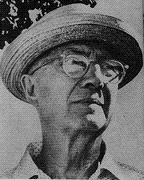
"Spring And All" is by William Carlos Williams (1883–1963). It has been on americanpoems.com since 2003 and was a Poem of the Day on February 7, 2012. Readers have left nine comments on it, from 2004 to 2011.
What readers have said
seif alawasd reads the early stanzas as barren winter and the later ones as life recovering its power in a cycle. seif alawasd, 2004
Joe widener finds that the description moves quickly and captures the newness of spring. Joe widener, 2005
Justin, by contrast, finds the poem nebulous and thinks the -ish and -y endings weaken the words, though winter's dreariness may lead to spring's clarity. Justin, 2005
Alaa' Kayed argues that such a simple cycle of seasons does not need such complicated diction. Alaa' Kayed, 2010
D reads the poem as a progressive awakening from the dead of winter into the life of spring. D, 2007
m.m links the hospital, a place for curing disease, to a landscape that is also sick and needs to be cured. m.m, 2010
Keep reading
Discover more of William Carlos Williams’s poetry.
the poet seem to be interested in the visual imagery alot by introducing lot of conrary colors and by indicating that life has its power to recreate its self again and again and that what looks familiar in the poem the first 4 stanzas seems to be talking about abarren arid wintery weather that seems to indicate the end but the other last stanzas seems to say that life will recover its powre as a cyclical process and thepower of living is celbrated very much
Joe widenerUnited States
his use of narrative description really captures the feeling of spring. it moves quick and the newness of spring is easily found.
JustinUnited States
"Spring and All" remains very nebulous in comparisson to other Williams poems. His use of "-ish" and "-y" as suffixes weakens the power of his words. The imagery does little to clarify. Maybe winter lacks clarity. The dreariness of winter leads to a profound clarity in the brigtness of spring.
This poem used to seem like just another meditation on spring, and, like Justin, I used to think it was not as concrete or powerful as some of Williams' best. However, I just read an essay in American Poetry Review that explains how this poem (and the volume it was written as part of) was a response to T.S. Eliot's The Waste Land - affirming the power, beauty and rejuvenating quality of the natural world in contrast to Eliot's bleak, despairing vision. I think it needs to be read in context, not just in the context of a resonse to Eliot, but in the context of the collection "Spring and All."
DUnited States
Spring And All is a progressive awakening from the dead of winter, transitioning into the life of spring.
Alaa' KayedJordan
spring and all
although it is said that williams intends to contradict the way Eliot write poetry; in that he alludes to real simple images in life, i dont think that he simplifies his point here. winter and spring in a cycle; one season follows the other. such a simple theme does not need such complication in terms of the diction. he uses colloquial language, however, had he used formal style, it would have been clearer.
ola
the peom works on two levels simultaneously. on the one hand, it celebrates the "rebirth" of spring. on the other hand, Williams pays tributes to his time as a physician, the time, he delivered over 2000 babies: "they enter the new worls naked, cold, uncertain of all,..."
in this poem there is a linkage between hospital which stands for curing diseases and the landscape depicted by the poet which is also sick and needs to be cured also the poem depends on the poetry immediate observation
enchPhilippines
The persona seemed like reminiscing all the bad memories he ever had in the past. Telling us how awful was it. But he believe that all the things neither bad or good that may happen has its reason. And the reason must be for good....::))
the poet seem to be interested in the visual imagery alot by introducing lot of conrary colors and by indicating that life has its power to recreate its self again and again and that what looks familiar in the poem the first 4 stanzas seems to be talking about abarren arid wintery weather that seems to indicate the end but the other last stanzas seems to say that life will recover its powre as a cyclical process and thepower of living is celbrated very much
his use of narrative description really captures the feeling of spring. it moves quick and the newness of spring is easily found.
"Spring and All" remains very nebulous in comparisson to other Williams poems. His use of "-ish" and "-y" as suffixes weakens the power of his words. The imagery does little to clarify. Maybe winter lacks clarity. The dreariness of winter leads to a profound clarity in the brigtness of spring.
This poem used to seem like just another meditation on spring, and, like Justin, I used to think it was not as concrete or powerful as some of Williams' best. However, I just read an essay in American Poetry Review that explains how this poem (and the volume it was written as part of) was a response to T.S. Eliot's The Waste Land - affirming the power, beauty and rejuvenating quality of the natural world in contrast to Eliot's bleak, despairing vision. I think it needs to be read in context, not just in the context of a resonse to Eliot, but in the context of the collection "Spring and All."
Spring And All is a progressive awakening from the dead of winter, transitioning into the life of spring.
spring and all
although it is said that williams intends to contradict the way Eliot write poetry; in that he alludes to real simple images in life, i dont think that he simplifies his point here. winter and spring in a cycle; one season follows the other. such a simple theme does not need such complication in terms of the diction. he uses colloquial language, however, had he used formal style, it would have been clearer.
the peom works on two levels simultaneously. on the one hand, it celebrates the "rebirth" of spring. on the other hand, Williams pays tributes to his time as a physician, the time, he delivered over 2000 babies: "they enter the new worls naked, cold, uncertain of all,..."
comment
in this poem there is a linkage between hospital which stands for curing diseases and the landscape depicted by the poet which is also sick and needs to be cured also the poem depends on the poetry immediate observation
The persona seemed like reminiscing all the bad memories he ever had in the past. Telling us how awful was it. But he believe that all the things neither bad or good that may happen has its reason. And the reason must be for good....::))