I HEAR America singing, the varied carols I hear;
Those of mechanics-each one singing his, as it should be, blithe and strong;
The carpenter singing his, as he measures his plank or beam,
The mason singing his, as he makes ready for work, or leaves off work;
The boatman singing what belongs to him in his boat-the deckhand singing on the steamboat
deck;
The shoemaker singing as he sits on his bench-the hatter singing as he stands;
The wood-cutter's song-the ploughboy's, on his way in the morning, or at the noon
intermission, or at sundown;
The delicious singing of the mother-or of the young wife at work-or of the girl sewing or
washing-Each singing what belongs to her, and to none else;
The day what belongs to the day-At night, the party of young fellows, robust, friendly,
Singing, with open mouths, their strong melodious songs.
This is a short free-verse poem by Walt Whitman. Its speaker listens to working Americans and hears each of them singing. He names them one by one: mechanics, a carpenter, a mason, a boatman, a shoemaker, a ploughboy, a mother, a girl sewing.
Each song belongs to its singer and to no one else. The poem is one long catalogue that moves through a working day and into the night. It presents the nation as a chorus made of separate voices. Its subjects are work, individuality and the idea that ordinary labour is a kind of music.
Summary
The speaker announces that he hears America singing. He calls what he hears "the varied carols I hear". The first singers are mechanics. Each sings his own song, "blithe and strong", and the speaker adds "as it should be".
The carpenter sings as he "measures his plank or beam". The mason sings as he gets ready for work or stops for the day. The boatman sings "what belongs to him in his boat". The deckhand sings on the deck of a steamboat.
The shoemaker sings while sitting at his bench. The hatter sings while standing. The speaker names the wood-cutter's song and then the ploughboy's. The ploughboy sings on his way out in the morning, at the midday break, or at sundown.
The speaker turns to women. He hears "The delicious singing of the mother" and of "the young wife at work". He hears the girl who is sewing or washing. Each of them sings "what belongs to her, and to none else".
The speaker sums up the daytime: "The day what belongs to the day". Then night comes. A party of young men gathers, "robust, friendly". They sing "with open mouths" their "strong melodious songs". The poem ends on this shared song.
Themes and meaning
Work as song. The poem treats labour as music. Every worker is caught in the act of working and singing at once. The carpenter sings "as he measures his plank or beam". The singing can be read literally, or as a figure for the sound and spirit of the work itself. The poem never separates the two.
The individual and the whole. The poem stresses that each song is owned. The mechanics each sing "his", and the boatman sings "what belongs to him". The women sing "what belongs to her, and to none else". Yet the first line gathers them all under one name, America. The nation appears as many separate songs heard together, not as one voice.
Equality of labour. No trade is ranked above another. The shoemaker, the hatter and the ploughboy get the same grammar as the carpenter. Work in the home stands beside paid work, since the mother and the girl sewing or washing are included. The phrase "as it should be" in line 2 shows that the speaker approves of this order.
The rhythm of a day. The catalogue follows the hours of work. The mason "makes ready for work, or leaves off work". The ploughboy sings in the morning, at noon and at sundown. Line 12 marks the turn with "The day what belongs to the day". The night then belongs to rest and company, as the young men sing together.
Ideal or report. The poem shows no hardship, no wages and no conflict. Every singer is content. This can be read as a picture of America as the speaker wishes it to be. It can also be read as what he believes he truly hears. The text offers no complaint that would settle the question.
Tone
The tone is celebratory and warm. The speaker is a listener rather than a worker. He says "I hear" and lets the others sing. His approval is open in the phrase "as it should be".
The warmth grows as the list goes on. The word "delicious" in line 10 is the most personal word in the poem. It shows delight, not just observation. The steady list of trades suggests patience and respect for each worker.
The ending lifts the tone. The single songs of the day give way to a group at night. The young men are "robust, friendly" and sing "with open mouths". The last phrase, "strong melodious songs", echoes "blithe and strong" from line 2. The text itself holds no irony, though some readers take its untroubled picture as idealised.
Form and structure
The poem has 13 lines in 1 stanza of 13 lines. It does not rhyme, as the scheme ABCDEFGHIJKLM shows. It is free verse with no regular metre. Line lengths run from 1 to 24 syllables.
The very short line 6 holds only the word "deck;". It is an indented carry-over of the long line above. The same is true of line 9 and line 11. The whole poem is a catalogue. Most items open with "The" and a worker, followed by "singing". Dashes join several workers inside a single line. Semicolons close most lines, so the list runs on as one long sentence until the full stop in line 13.
Poetic devices
metonymy line 1
I HEAR America singing America stands for its working people. The country itself seems to sing through them.
metaphor line 1
the varied carols I hear Work songs are called carols, a word for glad songs. The word frames the whole catalogue as celebration.
anaphora line 3
The carpenter singing his Lines open with the same pattern of worker plus singing. The repetition builds the list and gives each worker equal weight.
imagery line 3
as he measures his plank or beam A precise physical action shows the worker in the middle of his task. The song is tied to real work.
parallelism line 5
what belongs to him in his boat This phrase returns for the women in line 11. The echo stresses that every song is owned by its singer.
juxtaposition line 5
his boat-the deckhand A dash sets the boatman beside the deckhand with no linking word. Old and newer kinds of work stand side by side.
catalogue line 7
The shoemaker singing as he sits on his bench The list of trades is the poem's main structure. Sitting and standing workers are paired to widen the picture.
synaesthesia line 10
The delicious singing of the mother A word of taste describes a sound. It marks the speaker's special delight in this voice.
repetition line 12
The day what belongs to the day The doubled word closes the daytime list. It turns the idea of ownership from people to time itself.
alliteration line 13
their strong melodious songs The repeated s sounds of strong and songs give the final line a firm, rounded close.
Words worth knowing
carols
'songs of joy'. It is not limited to Christmas songs here.
mechanics
'skilled manual workers, tradesmen', not only people who repair machines.
blithe
'cheerful, carefree'.
hatter
'a maker of hats'.
intermission
'a pause'. Here it is the midday break in the ploughboy's work.
delicious
'delightful'. It is applied to a sound rather than a taste.
Context
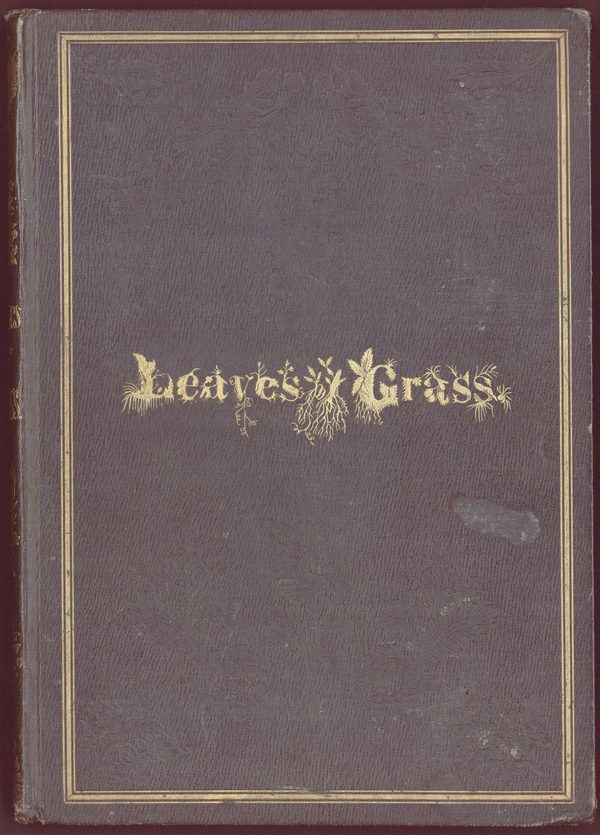
The archive's text comes from the 1900 edition of Leaves of Grass, where it is the fourth poem. Walt Whitman lived from 1819 to 1892.
What readers have said
Samuel Salgado found the poem too patriotic and nationalistic, and asked why Hispanic, Latino and Asian workers are left out. Samuel Salgado, 2005
Garrett replied to such criticism by pointing out that the poem never mentions race, so readers who assume the workers are white bring that assumption themselves. Garrett, 2005
Kiki thought the poem unrealistic because America was not free for everyone, with minorities and women silenced, and pointed readers to Langston Hughes. Kiki, 2005
Jamie suggested the poem may be sarcastic, reading the singing as the workers' hope and night as the only time they sing freely "with open mouths". Jamie, 2005
Jill argued that the singing is figurative, with the song standing for the daily routine of work that keeps the country moving. Jill, 2005
Elsi Reyes read the line about each woman singing what belongs to her as saying that everybody has their own style and should simply be themselves. Elsi Reyes, 2005
he shows they were happy to do their jobs despite the low wages and hard labor, they were just happy to be in America
Debbie ValentaUnited States
I wonder if Whitman were alive today, what songs would he hear from America? I'm afraid they may not be as happy.
Samuel SalgadoUnited States
I find the poem " I Hear America Singing" to be too patriotic. Yes the Americans were happy despite the low wages and hard labor, but they were not the only hard laborers. What about the Hispanics, Latinos, and even Asians? They work as hard,or, even harder than the Americans. " I Hear America Singing" is too patriotic and nationalistic.
Alexandria WilliamsUnited States
Whitman shows that everyone lives by their own song and even though we are all individuals in our own right , we are brought together by our american song. He displays his views of patriotism and his idea of being an American.
kandyseUnited States
The poem had a good meaning to it that connected to everyday life. I agree with most of the things stated in the poem. I think one of the most important statements in the poem was "Trust no Future, how'er pleasant! Let the dead past bury it's dead! Act-act in the leaving Present! Heart within and God o'er head!" If you live trying to fix your past, your future will never be right.
JonathanUnited States
In the poem it says that each person is singing their own song. I think this poem represents that everyone is different in their own way and were not the same. It also probably represents that they were happy to be an American.
Justin SandersUnited States
In "I Hear America Singing" the poet shows songs that different types of people form one song of America. It also shows that these types of poems are what America is known for. We are all different but we are Americans too.
"I Hear America Singing" has a meaning for saying that everybody has there own style."Each singing what belongs to her, and to none else."Is saying that everybody is different.You don't have to be someone your not to impress another person, but to just be yourself and not someone your not.
In "I Hear America Singing" Whitman says that everyone has his or her own life style. He kind of says that we are all unique but Americans too.I think this poem is nice but really don't like it .
Jason AnthonyUnited States
" I Hear America Singing" I think that it represents how he felt about America back then and how it was as happy as can be. These days though I don't think the poem would quite fit with the way America is. I say that because the people of America are not always happy with what they do and most jobs don't pay enough. Also our economy is all screwed up.
Leyla RodriguezUnited States
I liked this poem because it talks about all the hard woking people all over America. He says that if everybody had a song they would all be different. I also like it because he is talking about the importance of the common people.
darrylUnited States
This poem is okay to me.I think it just means that everybody is important in America. Woopie!
RainbowChina
When I read this poem, I find Whitman only thought of the people who did physical labour. Did they represent all Americans?
AlexAustralia
Whitman man a good and also boring man. This poem is really boring and also has a very good facts about the poeple. Look at America now! How is it! the poem has nothing antmore for someone to read cause it's pointless!
mattUnited States
Hi, I am working on an assignment for english that is to compare the two poets, Walt Whitman and Emily Dickinson. I am not just to state the obvious; Dickenson is confined and Whitman was out experiencing nature. I am supposed to find deeper meaning into the poetry and contrast and compare. If anyone has ideas to help me please, please e-mail me. [email removed]
Marcellus CoxUnited States
To me it talks about people singing about the country they love, what makes people happy about living in the u.s.a. Makes people want to sing about there prombles. Also makes everbody want to sing there troubles away.
Yery AguilarUnited States
I think that the poem "I hear America Singing" is a very good poem because it says that you shouldn't hate what you do for a living.If you have to do it anyways might as well enjoy it.
jose guillenUnited States
she was trying to say the different ways american express themselves.
MARIELA MARTINEZUnited States
I BELIEVE THAT " I HEAR AMERICA SINGING' IS ABOUT THE PEOPLE THAT WORK VERY HARD DOING THEIR JOB EVERY DAY, AND ARE HAPPY TO BE WORKING FOR GREAT COUNTRY LIKE AMERICA.
Tanesha RichardsonUnited States
what i thought about the poem "I Hear America Singing" was that it was enjoyable. I think he was trying to say that having a good job to go to everyday is enjoying. I also think that he's trying to say that jobs are not always bad there sometimes wonderful. I also think he's trying to say sing about what you have instead of showing it off to everyone.
Desiree GarciaUnited States
In the poem "I Hear America Singing Whitman makes me think that everybody here started slow and in the end they were the richest man, they loved working because they were americans, but if hw were alive today he would say that everything has changed. Now everybody doesn't care,they not patriac because now it's all about white people and they forgey evrybody else
BLANCAUnited States
IN "I HEAR AMERICA SINGING" I THINK THAT THIS POEM DOESN'T MAKE SENSE BECAUSE IT'S WRITTEN LIKE IN THE OLD FASHINED WAY WITH WEIRD WORDS.THE POET DIDN'T REALLY MAKE A POINT.
johnny lepeUnited States
The poem "I hear America singing" was too patriotic it had too many words that only true americans could read, but its showing that these people are happy as long as they are in the country and not caring about how they treat them.
dominique thomas
He is saying that he hear the sweet sounds of the american people while they enjoy their day at work.
LarryUnited States
From the persons day it sounds like everyone was happy about their jobs, they are in the garden of eve and tha makes me like it.
Raquel AlvaradoUnited States
I think that the poem"I hear America Singing" is a great poem because it shows that people back then were happy to get any job, but today people are non-conformists at what they do for a living.
Marlene Gomez
In "I Hear America Singing" you can hear that it shows that the people in america love to sing to their country and to their nobel jobs even with low wages and hard times the people af america will always enjoy living in their country and enjoy singing to their beautiful America.
michaelZimbabwe
The poem was alright but i did not like the poem because it was not real nobody sing when they work at these kind of jobs. bye
Victor Betts Jfr
I feel that in this poem they feel exciting as they work,when on the other hand some people dont like to work an sing "excitement"
dwq
IT WAS FUNNY
Karen WhitleyUnited States
To me the poem means that everyone is different and in America that is ok. Everyone is allowed to sing their song out loud, not silenced by diversity, "singing with open mouth." It is not necessarily singing, or workers...the workers represent the ordinary citizen and the songs are our voices and opinions. Even the small guys have the freedom of speech
I feel this means that everybody needs to do their jobs for the community. Relating this to a Melody, the melody doesnt work without the harmony and like that if only one person "sings their song" or does their work then the song isnt complete and the community that relys on each other will fall apart.
natalie millonUnited States
Walt Whitman is a very patriotic poet. In his poem, he repeatedly used "singing" as a symbolization of freedom and happiness in America. He also described a very utopian society, a perfect place to dwell in.
KatieUnited States
To me this poem is less about a carefree society that is all joy and singing. I think Whitman realized the problems in America also. This poem is more about people finding satidfaction in their lives because it is THEIR LIFE. No one elses. They are independent and that makes them free. To be able to say that you worked for something, and it is yours, is a great thing. Even if it is a low, honest working wage, or just the ability to be comfortable with yourself.
JillUnited States
Well- The SINGING that is refered to here is a figurative song. They people are not actually SINGING while they work. The song is the routine of their work that is basically the work that is holding America up--keeping the country moving. This poem was written in a time where our country was going through many many changes industrially, socially, we were gearing up for the civil war, and slavery was on the cusp of…
Read the whole comment
Well- The SINGING that is refered to here is a figurative song. They people are not actually SINGING while they work. The song is the routine of their work that is basically the work that is holding America up--keeping the country moving. This poem was written in a time where our country was going through many many changes industrially, socially, we were gearing up for the civil war, and slavery was on the cusp of being abolished. This poem is about the people in America, those who make the country what it is. Whitman wrote for the common man. He glorified blue collar work as the support that holds the country together. The common man- as he called it- was essentially America. Whitman did not even publish his work using his name. He wanted his stuff to be read by everyone of all social classes and ethnicities.
Kira NerriceUnited States
I'm currently studying Walt Whitman and I am right now learning about this poem (I'm a sixth grader). This is one of the few poems I like and understand. Why do teachers make kids study poems?!?
Edgar AndradeUnited States
I Hear America Singing is a great poem and I think it says alot of inspiring things. I like this poem because it talks about americas workforce. I can relate to this poem aswell.
KikiUnited States
I think that Walt Whitman was unrealistic in this poem as America was not "free" for everyone during the time that this poem was written. Minorities and women's rights were not heard during this time thus their "singing" was silenced. Read Langston Hughes, "I, too, sing America" to fully understand the feelings of the oppressed and discriminated.
JohnUnited States
I get confused on the different kind of literary devies these kind of poems have...could anybody explain them to me please?
JamieUnited States
Walt Whitman, in this poem, may actually be trying to be sarcastic. At the time the poem was written workers were being mistreated and the conditions they worked under were terrifying. Maybe the workers singing is their hope and the only time they can sing "with open mouths" is at night when they are amongst other workers and can express themselves freely. Being heavily connected with the democratic party, a huge concern for Whitman was human rights as well as unity.
This poem was written in a time where America was going through many many changes industrially, socially...I think the author just speak out his good wish about amercan common people.
GarrettUnited States
I find it quite amusing that a large majority of the individuals leaving such negative comments about one of the greatest American writers ever to have lived are widely illiterate and look no deeper into the poem than what they see on the surface. Many of you criticize how Whitman does not speak of latinos, asians, or blacks. You just assume that he is speaking of white people and only white people. In what part of…
Read the whole comment
I find it quite amusing that a large majority of the individuals leaving such negative comments about one of the greatest American writers ever to have lived are widely illiterate and look no deeper into the poem than what they see on the surface. Many of you criticize how Whitman does not speak of latinos, asians, or blacks. You just assume that he is speaking of white people and only white people. In what part of his poem does he mention race? It seems that you have personal issues and stereotypes of white people as racist. If you had any knowledge of Walt Whitman, you would know that he was in such grievance over the assassination of Abraham Lincoln that he wrote two poems about his mourning. One of these is "O Captain! My Captain!" Of course you would probably look at this poem and think to yourself, "He is just talking about some white captain on a ship who dies." So why would you even think for one second that Whitman advocated racism or slavery when he was in support of abolition? Please type your comments in Microsoft Word next time so that spell-check is in effect and you may correct your errors so that you may not appear even more ignorant than you already are. In addition, Walt Whitman lived in the 1800's, so one cannot merely pass off this poem as unrealistic. Perhaps this is so by today's standards, but at the time the poem was written it was very realistic. Agriculture dominated the economy and industry was emerging as a player in the market as well. Consequently, the people described in his poem all perform physical labor. So, one should not question Whitman's lack of reference to people with other occupations. Whitman is also describing the American workforce and population as a whole. If he were to be so very specific as to list every occupation that existed, I do not believe that anyone would sit through an entire reading of his work. So once again I ask of you, go to school, the library, the internet, anywhere, and educate yourself on the subject matter so that you will have facts to support your argument. Thank you.
Sarah FarhdaUnited States
This poem is disgusting and ought to be banned from all school reading lists. It is nothing but an enigmatic reference to his sexual love affair with a boy and his mother. In line 8 he comments on the little ploughboy's "wood-cutting song." Then he continues on to reveal how the boy was available at "morning, noon, intermission, or sundown." He continues with a reveling in the mother's "delicious singing" while she "works." Finally whitman concludes with a reference to an orgy with "robust" boys.("Party of young fellows.
I am with Garrett from the U.S. Perhaps some of the people reading the poem and commenting should read Whitman's biography and some of his other works. How can he be "too patriotic"? The time in his life that he wrote much of his poetry was during The Civil War period and it was a time that greatly affected Whitman. He was a nurse for wounded soldiers and he wrote poetry about this and about the assassination of Lincoln. Later, he also wrote poems that praised the everyday world around him - like his list poem "I Hear America Singing". Read "Miracles", another list poem. It shows how Whitman felt about his fellow man and the goodness and beauty of the world around him.
Vinh leVietnam
I'm not native America so it's so hard for me to understand the meaning of each line in the potry "I hear America singing" so I hope some one can help me figure out them... e-mail me :[email removed]
joodieBulgaria
My love you are like a roll of cookie dough to me You make me want to kiss you with my wet soggy lips Come to me my little cough drop I think you are like a hairy baboon I love you
joodieBulgaria
My Poem: A bitter autumn wind comes upon the earth with a great swoosh The trees shiver in the cold bitter winds Oh save my soul bitter winds
AmberUnited States
Im doing a project thing about this poem and I find it quite intresting to see all the imagry and how he expresses himself in the poem "I Hear America Singing". I think he is a great poet and I love his plays!!
Shimon WeinrothIsrael
America singing on the eve of the industrial revolution her workmen of all trades, he incldes the women and mothers the storng melodious song full of hope and enthusiam on the eve or reconstruction and indusrialization industrialization. One must explain his poetry in context with the times and not condemn him in term of today. Yet it is worhty to note the irony of the times in the following poem.inspired by…
Read the whole comment
America singing on the eve of the industrial revolution her workmen of all trades, he incldes the women and mothers the storng melodious song full of hope and enthusiam on the eve or reconstruction and indusrialization industrialization. One must explain his poetry in context with the times and not condemn him in term of today. Yet it is worhty to note the irony of the times in the following poem.inspired by Whiman's I hear America Singing
Songs of the New world
I hear technology singing I hear the hum of computers from the sockets in the wall and transmitters down the hall
I feel the waves of energy tremors of mighty power fill the rooms and towers with the click and beat pulsing all about
TROYUnited States
I REALLY REALLY LIKE THE POEM
CCCCCCCCCCCCCanada
Sahara from U.S u do not know what u r talking about this is one of the greatest poets in American History. It doesn't say anything about a love affair in the whole poem now does it? NOPE
Thomas WoosUnited States
Yes, after much review, the poem does glorify blue collared workers of America (Lines 2-6) and suggest both America as a diverse (I hear America singing, the "varied carols" I hear;) and yet strong (Singing...their strong melodious songs) nation. It is not disputed that Whitman had sexual attraction towards men, however only 3rd hand accounts say he was actually in a homosexual relationship. Yes there are more than…
Read the whole comment
Yes, after much review, the poem does glorify blue collared workers of America (Lines 2-6) and suggest both America as a diverse (I hear America singing, the "varied carols" I hear;) and yet strong (Singing...their strong melodious songs) nation.
It is not disputed that Whitman had sexual attraction towards men, however only 3rd hand accounts say he was actually in a homosexual relationship. Yes there are more than obvious "suggestions" of such attractions (Line 7), but an attraction does not mean a relationship.
Argueing to remove great work such as this from school curriculum because of some suttle suggestions of a homosexual preference and a few 100 year old rumours is down right wrong. It is similar to saying we should remove "Romeo & Juliet" from all school books because it contains violence, suggestions of sex, and murder.
i did a reasurch paper on it and i felt it is such pragmatic to neglect the artists and others in the empowerment of the nation
AndreaUnited States
Comment number 43 is a dumb thing to say. If you don't understand poetry do NOT comment on it. Just because he was a homosexual does NOT mean his poems revolve around that. This poem has its flaws but does not say anything about that.
PatrickUnited States
Interesting side-note to this poem, try reading and comparing it to Langston Hughes' "I, Too"
SpinnaUnited States
This poem was used by William Striker during his newfond speech on politics because of how insperational it is. It should be required by law to be taught throughout our school sytems because of its imagery and use of poetic devices such as metaphors and similes. His poetic skills surpass that of even the best poets of the now and even the past. He should be regarded by all as the father of national and stirring poems. All hail Whitman!
Jordan SloneUnited States
This poem is very boring.
marcoItaly
I discovered Whitman 4 years ago and now i cant stay one day without read his poetry. i would like to corrispond with other people that have my same interest.
AradiaUnited States
IF you match up the lines it comes close to an Alabama song, "40 Hour Week". They both deal with the middle-class working man, the machines, and mechanics. It's intresting to compare the two.
Danielle FerreiraUnited States
I LOVE THIS POEM!its one of the best poems Mr.Whitman has wrote i remember reading this in the 6th grade not understanding one word but then when i came to high school i began to understand it and of course love it!
First of all I must say VERY WELL SAID GARRETT!!! (Comment No. 42) because I have noticed there are a few illiterate commenters on here, who obviously have no love for the art of poetry and must read poetry only in order to pass a course. So in closing, if you do not understand the concept of poetry and have no skills of analysing properly, please keep your negativity to yourself and read content that is at your level.
cUnited States
"he founded a "free soil" newspaper, the "Brooklyn Freeman". / "returns to Brooklyn and edits The Brooklyn Freeman." / "He resigned from his position in 1848 because his stand against slavery was too strong for the paper's owners." That would imply that he's against slavery. Please, do some research before you form an opinion on a topic you don't know anything about. To me, this poem is Whitman's idea of what…
Read the whole comment
"he founded a "free soil" newspaper, the "Brooklyn Freeman". / "returns to Brooklyn and edits The Brooklyn Freeman." / "He resigned from his position in 1848 because his stand against slavery was too strong for the paper's owners."
That would imply that he's against slavery. Please, do some research before you form an opinion on a topic you don't know anything about.
To me, this poem is Whitman's idea of what America should be: everyone is content with the life they have. No matter what class the people are of, they do not wish to have more, nor do they flaunt off what they have. The "singing" is just a way to say that the people's spirits are high. "Singing with open mouths" means they are proud to say that they are content with their lives whether they be carpenters or woodcutters.
i think that this is a great poem. the end EMOOOOOOOOOOOOO!
lizUnited States
this poem by whitman is such an awesome poem i did a biography on this amazing man and thereis so much more to him he is such an astonishing writer and person
DesireeUnited States
This poem is clearly about achieving the American dream. Everyone is working from nothing to become something. They are singing in unison. They are all happy about playing their part to build up america. In Langston's hughes I, Too he includes himself and represents for the black community as well. I believe that whitman wasn't trying to make racism an issue. He was just commenting on the American dream.
ashley griffinUnited States
luv it
DanielleUnited States
that was a pretty good poem, i didnt like the rhyme scheme to it but i did like the meaning that the whole world is singing and needs to be joyous for what we do have, for some have nothing.
nicoleCanada
this poem was really cool it is one of the best poems i have read the poet is really cool and the dude who wrot emooooooo is emoooooooooooooo
nicoleCanada
the poem was great
sarahUnited States
No one mentioned Hughes' poem is an allusion to Whitman's. Does anyone study allusion anymore?
AlexanderNorway
I would like to comment that i view this poem as a symbol of American nationalism. It seems to me that Whitman is using singing as a symbol of the sounds that working creates, turning the sounds of industry into music. But at the same time he is portraying a happy world. It's obviusly about the American Dream, but it is also about finding joy in your work. The main issue i have with the poem is within the two…
Read the whole comment
I would like to comment that i view this poem as a symbol of American nationalism. It seems to me that Whitman is using singing as a symbol of the sounds that working creates, turning the sounds of industry into music. But at the same time he is portraying a happy world. It's obviusly about the American Dream, but it is also about finding joy in your work. The main issue i have with the poem is within the two sentences: "The boatman singing what belongs to him in his boat - the deckhand singing on the steamboat deck." Life was not so rosy being a worker in America. Sure it is nice now after the workers got a lot more rights, but this was written while Capitalism was in it's prime. Being a worker was not that nice, the life of a worker was not far from what we would regard as hell. While Whitman being the posetive American would write something like this, the british writer Charles Dickens shows the negativity of the time. While the age of enlightenment was supposed to bring great prosperity and joy to the workers (read: The American Dream) working conditions did not really improve that much. If you were born poor in Britain you died poor, the same held true for America, except here you had a small chance at becoming rich. Even though a chance is better then no chance the overly posetive poem clearly showcases the ambivolence of the time. People did not just want to think they were in a time where everyone was important, they wanted to believe it. Personally i hate Nationalism. If you look at earlier societies like Germany and Italy you can see what it leads to. Fascism follows Nationalism and Fascism can be regarded as distilled Nationalism in my opinion. A nationalistic attitude is nothing to be proud of, it only leads to racism. As a last note i would like to mention that even if the American Dream offered a second chance to a lot of people, we don't even have to dig deeper then the slaves to understand that not everyone had such a great life.
I am doing a Term Paper on Whitman and 2 poems by him! O Captain My Captain and I Hear America Singing! They are such great poems! He is really amazing with his works!!
wadeUnited States
poem
It was great until he brought up women...That totally killed it..nuff said
he shows they were happy to do their jobs despite the low wages and hard labor, they were just happy to be in America
I wonder if Whitman were alive today, what songs would he hear from America? I'm afraid they may not be as happy.
I find the poem " I Hear America Singing" to be too patriotic. Yes the Americans were happy despite the low wages and hard labor, but they were not the only hard laborers. What about the Hispanics, Latinos, and even Asians? They work as hard,or, even harder than the Americans. " I Hear America Singing" is too patriotic and nationalistic.
Whitman shows that everyone lives by their own song and even though we are all individuals in our own right , we are brought together by our american song. He displays his views of patriotism and his idea of being an American.
The poem had a good meaning to it that connected to everyday life. I agree with most of the things stated in the poem. I think one of the most important statements in the poem was "Trust no Future, how'er pleasant! Let the dead past bury it's dead! Act-act in the leaving Present! Heart within and God o'er head!" If you live trying to fix your past, your future will never be right.
In the poem it says that each person is singing their own song. I think this poem represents that everyone is different in their own way and were not the same. It also probably represents that they were happy to be an American.
In "I Hear America Singing" the poet shows songs that different types of people form one song of America. It also shows that these types of poems are what America is known for. We are all different but we are Americans too.
"I Hear America Singing" has a meaning for saying that everybody has there own style."Each singing what belongs to her, and to none else."Is saying that everybody is different.You don't have to be someone your not to impress another person, but to just be yourself and not someone your not.
In "I Hear America Singing" Whitman says that everyone has his or her own life style. He kind of says that we are all unique but Americans too.I think this poem is nice but really don't like it .
" I Hear America Singing"
I think that it represents how he felt about America back then and how it was as happy as can be. These days though I don't think the poem would quite fit with the way America is. I say that because the people of America are not always happy with what they do and most jobs don't pay enough. Also our economy is all screwed up.
I liked this poem because it talks about all the hard woking people all over America. He says that if everybody had a song they would all be different. I also like it because he is talking about the importance of the common people.
This poem is okay to me.I think it just means that everybody is important in America. Woopie!
When I read this poem, I find Whitman only thought of the people who did physical labour. Did they represent all Americans?
Whitman man a good and also boring man. This poem is really boring and also has a very good facts about the poeple. Look at America now! How is it! the poem has nothing antmore for someone to read cause it's pointless!
Hi, I am working on an assignment for english that is to compare the two poets, Walt Whitman and Emily Dickinson. I am not just to state the obvious; Dickenson is confined and Whitman was out experiencing nature. I am supposed to find deeper meaning into the poetry and contrast and compare. If anyone has ideas to help me please, please e-mail me. [email removed]
To me it talks about people singing about the country they love, what makes people happy about living in the u.s.a.
Makes people want to sing about there prombles. Also makes everbody want to sing there troubles away.
I think that the poem "I hear America Singing" is a very good poem because it says that you shouldn't hate what you do for a living.If you have to do it anyways might as well enjoy it.
she was trying to say the different ways american express themselves.
I BELIEVE THAT " I HEAR AMERICA SINGING' IS ABOUT THE PEOPLE THAT WORK VERY HARD DOING THEIR JOB EVERY DAY, AND ARE HAPPY TO BE WORKING FOR GREAT COUNTRY LIKE AMERICA.
what i thought about the poem "I Hear America Singing" was that it was enjoyable. I think he was trying to say that having a good job to go to everyday is enjoying. I also think that he's trying to say that jobs are not always bad there sometimes wonderful. I also think he's trying to say sing about what you have instead of showing it off to everyone.
In the poem "I Hear America Singing Whitman makes me think that everybody here started slow and in the end they were the richest man, they loved working because they were americans, but if hw were alive today he would say that everything has changed. Now everybody doesn't care,they not patriac because now it's all about white people and they forgey evrybody else
IN "I HEAR AMERICA SINGING" I THINK THAT THIS POEM DOESN'T MAKE SENSE BECAUSE IT'S WRITTEN LIKE IN THE OLD FASHINED WAY WITH WEIRD WORDS.THE POET DIDN'T REALLY MAKE A POINT.
The poem "I hear America singing" was too patriotic it had too many words that only true americans could read, but its showing that these people are happy as long as they are in the country and not caring about how they treat them.
He is saying that he hear the sweet sounds of the american people while they enjoy their day at work.
From the persons day it sounds like everyone was happy about their jobs, they are in the garden of eve and tha makes me like it.
I think that the poem"I hear America Singing" is a great poem because it shows that people back then were happy to get any job, but today people are non-conformists at what they do for a living.
In "I Hear America Singing" you can hear that it shows that the people in america love to sing to their country and to their nobel jobs even with low wages and hard times the people af america will always enjoy living in their country and enjoy singing to their beautiful America.
The poem was alright but i did not like the poem because it was not real nobody sing when they work at these kind of jobs. bye
I feel that in this poem they feel exciting as they work,when on the other hand some people dont like to work an sing "excitement"
IT WAS FUNNY
To me the poem means that everyone is different and in America that is ok. Everyone is allowed to sing their song out loud, not silenced by diversity, "singing with open mouth." It is not necessarily singing, or workers...the workers represent the ordinary citizen and the songs are our voices and opinions. Even the small guys have the freedom of speech
I feel this means that everybody needs to do their jobs for the community. Relating this to a Melody, the melody doesnt work without the harmony and like that if only one person "sings their song" or does their work then the song isnt complete and the community that relys on each other will fall apart.
Walt Whitman is a very patriotic poet. In his poem, he repeatedly used "singing" as a symbolization of freedom and happiness in America. He also described a very utopian society, a perfect place to dwell in.
To me this poem is less about a carefree society that is all joy and singing. I think Whitman realized the problems in America also. This poem is more about people finding satidfaction in their lives because it is THEIR LIFE. No one elses. They are independent and that makes them free. To be able to say that you worked for something, and it is yours, is a great thing. Even if it is a low, honest working wage, or just the ability to be comfortable with yourself.
Well- The SINGING that is refered to here is a figurative song. They people are not actually SINGING while they work. The song is the routine of their work that is basically the work that is holding America up--keeping the country moving. This poem was written in a time where our country was going through many many changes industrially, socially, we were gearing up for the civil war, and slavery was on the cusp of…
Read the whole commentWell- The SINGING that is refered to here is a figurative song. They people are not actually SINGING while they work. The song is the routine of their work that is basically the work that is holding America up--keeping the country moving. This poem was written in a time where our country was going through many many changes industrially, socially, we were gearing up for the civil war, and slavery was on the cusp of being abolished. This poem is about the people in America, those who make the country what it is. Whitman wrote for the common man. He glorified blue collar work as the support that holds the country together. The common man- as he called it- was essentially America. Whitman did not even publish his work using his name. He wanted his stuff to be read by everyone of all social classes and ethnicities.
I'm currently studying Walt Whitman and I am right now learning about this poem (I'm a sixth grader). This is one of the few poems I like and understand. Why do teachers make kids study poems?!?
I Hear America Singing is a great poem and I think it says alot of inspiring things. I like this poem because it talks about americas workforce. I can relate to this poem aswell.
I think that Walt Whitman was unrealistic in this poem as America was not "free" for everyone during the time that this poem was written. Minorities and women's rights were not heard during this time thus their "singing" was silenced. Read Langston Hughes, "I, too, sing America" to fully understand the feelings of the oppressed and discriminated.
I get confused on the different kind of literary devies these kind of poems have...could anybody explain them to me please?
Walt Whitman, in this poem, may actually be trying to be sarcastic. At the time the poem was written workers were being mistreated and the conditions they worked under were terrifying. Maybe the workers singing is their hope and the only time they can sing "with open mouths" is at night when they are amongst other workers and can express themselves freely. Being heavily connected with the democratic party, a huge concern for Whitman was human rights as well as unity.
This poem was written in a time where America was going through many many changes industrially, socially...I think the author just speak out his good wish about amercan common people.
I find it quite amusing that a large majority of the individuals leaving such negative comments about one of the greatest American writers ever to have lived are widely illiterate and look no deeper into the poem than what they see on the surface. Many of you criticize how Whitman does not speak of latinos, asians, or blacks. You just assume that he is speaking of white people and only white people. In what part of…
Read the whole commentI find it quite amusing that a large majority of the individuals leaving such negative comments about one of the greatest American writers ever to have lived are widely illiterate and look no deeper into the poem than what they see on the surface. Many of you criticize how Whitman does not speak of latinos, asians, or blacks. You just assume that he is speaking of white people and only white people. In what part of his poem does he mention race? It seems that you have personal issues and stereotypes of white people as racist. If you had any knowledge of Walt Whitman, you would know that he was in such grievance over the assassination of Abraham Lincoln that he wrote two poems about his mourning. One of these is "O Captain! My Captain!" Of course you would probably look at this poem and think to yourself, "He is just talking about some white captain on a ship who dies." So why would you even think for one second that Whitman advocated racism or slavery when he was in support of abolition? Please type your comments in Microsoft Word next time so that spell-check is in effect and you may correct your errors so that you may not appear even more ignorant than you already are. In addition, Walt Whitman lived in the 1800's, so one cannot merely pass off this poem as unrealistic. Perhaps this is so by today's standards, but at the time the poem was written it was very realistic. Agriculture dominated the economy and industry was emerging as a player in the market as well. Consequently, the people described in his poem all perform physical labor. So, one should not question Whitman's lack of reference to people with other occupations. Whitman is also describing the American workforce and population as a whole. If he were to be so very specific as to list every occupation that existed, I do not believe that anyone would sit through an entire reading of his work. So once again I ask of you, go to school, the library, the internet, anywhere, and educate yourself on the subject matter so that you will have facts to support your argument. Thank you.
This poem is disgusting and ought to be banned from all school reading lists. It is nothing but an enigmatic reference to his sexual love affair with a boy and his mother. In line 8 he comments on the little ploughboy's "wood-cutting song." Then he continues on to reveal how the boy was available at "morning, noon, intermission, or sundown." He continues with a reveling in the mother's "delicious singing" while she "works." Finally whitman concludes with a reference to an orgy with "robust" boys.("Party of young fellows.
I am with Garrett from the U.S. Perhaps some of the people reading the poem and commenting should read Whitman's biography and some of his other works. How can he be "too patriotic"? The time in his life that he wrote much of his poetry was during The Civil War period and it was a time that greatly affected Whitman. He was a nurse for wounded soldiers and he wrote poetry about this and about the assassination of Lincoln. Later, he also wrote poems that praised the everyday world around him - like his list poem "I Hear America Singing". Read "Miracles", another list poem. It shows how Whitman felt about his fellow man and the goodness and beauty of the world around him.
I'm not native America so it's so hard for me to understand the meaning of each line in the potry "I hear America singing" so I hope some one can help me figure out them...
e-mail me :[email removed]
My love you are like a roll of cookie dough to me
You make me want to kiss you with my wet soggy lips
Come to me my little cough drop
I think you are like a hairy baboon
I love you
My Poem:
A bitter autumn wind comes upon the earth with a great swoosh
The trees shiver in the cold bitter winds
Oh save my soul bitter winds
Im doing a project thing about this poem and I find it quite intresting to see all the imagry and how he expresses himself in the poem "I Hear America Singing". I think he is a great poet and I love his plays!!
America singing on the eve of the industrial revolution her workmen of all trades, he incldes the women and mothers the storng melodious song full of hope and enthusiam on the eve or reconstruction and indusrialization industrialization. One must explain his poetry in context with the times and not condemn him in term of today. Yet it is worhty to note the irony of the times in the following poem.inspired by…
Read the whole commentAmerica singing on the eve of the industrial revolution
her workmen of all trades, he incldes the women and mothers the storng melodious song full of hope and enthusiam on the eve or reconstruction and indusrialization industrialization. One must explain his poetry in context with the times and not condemn
him in term of today. Yet it is worhty to note the irony of the times in the following poem.inspired by
Whiman's I hear America Singing
Songs of the New world
I hear technology singing
I hear the hum of computers
from the sockets in the wall
and transmitters down the hall
I feel the waves of energy
tremors of mighty power
fill the rooms and towers
with the click and beat pulsing all about
I REALLY REALLY LIKE THE POEM
Sahara from U.S u do not know what u r talking about this is one of the greatest poets in American History. It doesn't say anything about a love affair in the whole poem now does it? NOPE
Yes, after much review, the poem does glorify blue collared workers of America (Lines 2-6) and suggest both America as a diverse (I hear America singing, the "varied carols" I hear;) and yet strong (Singing...their strong melodious songs) nation. It is not disputed that Whitman had sexual attraction towards men, however only 3rd hand accounts say he was actually in a homosexual relationship. Yes there are more than…
Read the whole commentYes, after much review, the poem does glorify blue collared workers of America (Lines 2-6) and suggest both America as a diverse (I hear America singing, the "varied carols" I hear;) and yet strong (Singing...their strong melodious songs) nation.
It is not disputed that Whitman had sexual attraction towards men, however only 3rd hand accounts say he was actually in a homosexual relationship. Yes there are more than obvious "suggestions" of such attractions (Line 7), but an attraction does not mean a relationship.
Argueing to remove great work such as this from school curriculum because of some suttle suggestions of a homosexual preference and a few 100 year old rumours is down right wrong. It is similar to saying we should remove "Romeo & Juliet" from all school books because it contains violence, suggestions of sex, and murder.
i did a reasurch paper on it and i felt it is such pragmatic to neglect the artists and others in the empowerment of the nation
Comment number 43 is a dumb thing to say. If you don't understand poetry do NOT comment on it. Just because he was a homosexual does NOT mean his poems revolve around that. This poem has its flaws but does not say anything about that.
Interesting side-note to this poem, try reading and comparing it to Langston Hughes' "I, Too"
This poem was used by William Striker during his newfond speech on politics because of how insperational it is. It should be required by law to be taught throughout our school sytems because of its imagery and use of poetic devices such as metaphors and similes. His poetic skills surpass that of even the best poets of the now and even the past. He should be regarded by all as the father of national and stirring poems. All hail Whitman!
This poem is very boring.
I discovered Whitman 4 years ago and now i cant stay one day without read his poetry. i would like to corrispond with other people that have my same interest.
IF you match up the lines it comes close to an Alabama song, "40 Hour Week". They both deal with the middle-class working man, the machines, and mechanics. It's intresting to compare the two.
I LOVE THIS POEM!its one of the best poems Mr.Whitman has wrote i remember reading this in the 6th grade not understanding one word but then when i came to high school i began to understand it and of course love it!
First of all I must say VERY WELL SAID GARRETT!!! (Comment No. 42) because I have noticed there are a few illiterate commenters on here, who obviously have no love for the art of poetry and must read poetry only in order to pass a course. So in closing, if you do not understand the concept of poetry and have no skills of analysing properly, please keep your negativity to yourself and read content that is at your level.
"he founded a "free soil" newspaper, the "Brooklyn Freeman". / "returns to Brooklyn and edits The Brooklyn Freeman." / "He resigned from his position in 1848 because his stand against slavery was too strong for the paper's owners." That would imply that he's against slavery. Please, do some research before you form an opinion on a topic you don't know anything about. To me, this poem is Whitman's idea of what…
Read the whole comment"he founded a "free soil" newspaper, the "Brooklyn Freeman". / "returns to Brooklyn and edits The Brooklyn Freeman." / "He resigned from his position in 1848 because his stand against slavery was too strong for the paper's owners."
That would imply that he's against slavery. Please, do some research before you form an opinion on a topic you don't know anything about.
To me, this poem is Whitman's idea of what America should be: everyone is content with the life they have. No matter what class the people are of, they do not wish to have more, nor do they flaunt off what they have. The "singing" is just a way to say that the people's spirits are high. "Singing with open mouths" means they are proud to say that they are content with their lives whether they be carpenters or woodcutters.
i think that this is a great poem.
the end
EMOOOOOOOOOOOOO!
this poem by whitman is such an awesome poem i did a biography on this amazing man and thereis so much more to him he is such an astonishing writer and person
This poem is clearly about achieving the American dream. Everyone is working from nothing to become something. They are singing in unison. They are all happy about playing their part to build up america. In Langston's hughes I, Too he includes himself and represents for the black community as well. I believe that whitman wasn't trying to make racism an issue. He was just commenting on the American dream.
luv it
that was a pretty good poem, i didnt like the rhyme scheme to it but i did like the meaning that the whole world is singing and needs to be joyous for what we do have, for some have nothing.
this poem was really cool it is one of the best poems i have read the poet is really cool and the dude who wrot emooooooo is emoooooooooooooo
the poem was great
No one mentioned Hughes' poem is an allusion to Whitman's. Does anyone study allusion anymore?
I would like to comment that i view this poem as a symbol of American nationalism. It seems to me that Whitman is using singing as a symbol of the sounds that working creates, turning the sounds of industry into music. But at the same time he is portraying a happy world. It's obviusly about the American Dream, but it is also about finding joy in your work. The main issue i have with the poem is within the two…
Read the whole commentI would like to comment that i view this poem as a symbol of American nationalism. It seems to me that Whitman is using singing as a symbol of the sounds that working creates, turning the sounds of industry into music. But at the same time he is portraying a happy world. It's obviusly about the American Dream, but it is also about finding joy in your work. The main issue i have with the poem is within the two sentences: "The boatman singing what belongs to him in his boat - the deckhand singing on the steamboat deck." Life was not so rosy being a worker in America. Sure it is nice now after the workers got a lot more rights, but this was written while Capitalism was in it's prime. Being a worker was not that nice, the life of a worker was not far from what we would regard as hell. While Whitman being the posetive American would write something like this, the british writer Charles Dickens shows the negativity of the time. While the age of enlightenment was supposed to bring great prosperity and joy to the workers (read: The American Dream) working conditions did not really improve that much. If you were born poor in Britain you died poor, the same held true for America, except here you had a small chance at becoming rich. Even though a chance is better then no chance the overly posetive poem clearly showcases the ambivolence of the time. People did not just want to think they were in a time where everyone was important, they wanted to believe it. Personally i hate Nationalism. If you look at earlier societies like Germany and Italy you can see what it leads to. Fascism follows Nationalism and Fascism can be regarded as distilled Nationalism in my opinion.
A nationalistic attitude is nothing to be proud of, it only leads to racism. As a last note i would like to mention that even if the American Dream offered a second chance to a lot of people, we don't even have to dig deeper then the slaves to understand that not everyone had such a great life.
I am doing a Term Paper on Whitman and 2 poems by him! O Captain My Captain and I Hear America Singing! They are such great poems! He is really amazing with his works!!
poem
It was great until he brought up women...That totally killed it..nuff said