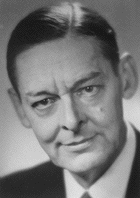
T.S. Eliot

Portrait of T.S. Eliot
T.S. Eliot 1888–1965
1888Born

Thomas Stearns Eliot was born in St. Louis, Missouri, of an old New England family. He was educated at Harvard and did graduate work in philosophy at the Sorbonne, Harvard, and Merton College, Oxford. He settled in England, where he was for a time a schoolmaster and a bank clerk, and eventually literary editor for the publishing house Faber & Faber, of which he later became a director. He founded and, during the seventeen years of its publication (1922-1939), edited the exclusive and influential literary journal Criterion. In 1927, Eliot became a British citizen and about the same time entered the Anglican Church.

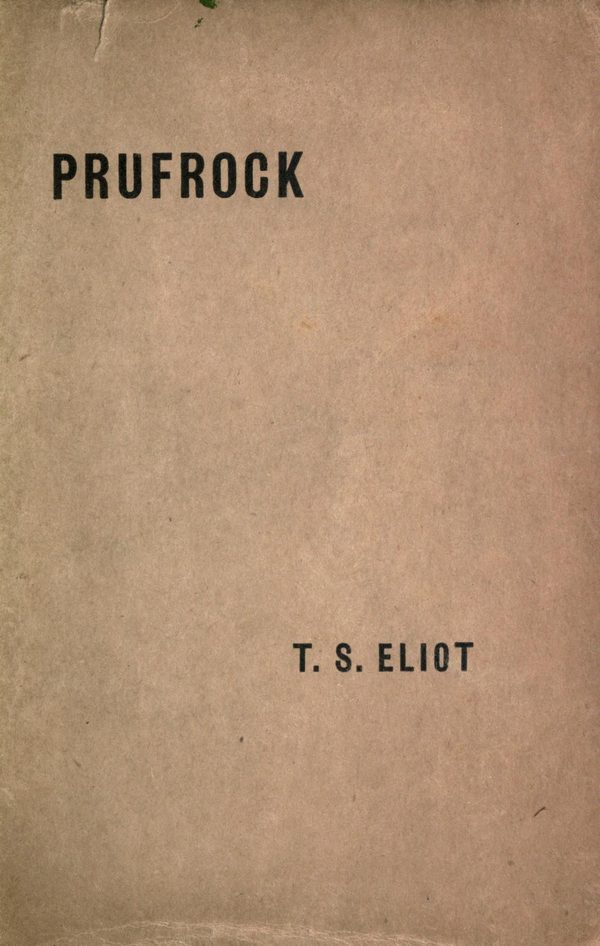
Eliot has been one of the most daring innovators of twentieth-century poetry. Never compromising either with the public or indeed with language itself, he has followed his belief that poetry should aim at a representation of the complexities of modern civilization in language and that such representation necessarily leads to difficult poetry. Despite this difficulty his influence on modern poetic diction has been immense. Eliot's poetry from Prufrock (1917) to the Four Quartets (1943) reflects the development of a Christian writer: the early work, especially The Waste Land (1922), is essentially negative, the expression of that horror from which the search for a higher world arises.

In Ash Wednesday (1930) and the Four Quartets this higher world becomes more visible; nonetheless Eliot has always taken care not to become a "religious poet". He often belittled the power of poetry as a religious force. However, his dramas Murder in the Cathedral (1935) and The Family Reunion (1939) are more openly Christian apologies. In his essays, especially the later ones, Eliot advocates a traditionalism in religion, society, and literature that seems at odds with his pioneer activity as a poet. But although the Eliot of Notes towards the Definition of Culture (1948) is an older man than the poet of The Waste Land, it should not be forgotten that for Eliot tradition is a living organism comprising past and present in constant mutual interaction. Eliot's plays Murder in the Cathedral (1935), The Family Reunion (1939), The Cocktail Party (1949), The Confidential Clerk (1954), and TheElderStatesman(1959) were published in one volume in 1962; Collected Poems 1909-62 appeared in 1963.
Reading closely

Analyses

A full analysis sits under 10 of these poems: what each poem says, how it is built and how readers here have read it. About the analyses

  • The Hollow MenHollow men of straw, eyes they dare not meet, and the Shadow between idea and act
  • Journey Of The MagiA hard winter journey, a Birth that felt like Death, and a traveller no longer at ease
  • PreludesCity squalor in four scenes, people as hands and feet, pity cut short by a bitter laugh
  • Macavity: The Mystery CatA master-criminal cat, the refrain of his absence, and grand claims for petty crimes
  • Ash WednesdayRenouncing hope and ambition, prayer to a silent Lady, and the struggle to turn to faith
  • GerontionAn old man in a dry season, history as a deceiver, and passion and senses lost
  • The Naming Of CatsA cat's three names, from everyday to secret, and the inner self no human can discover
  • The HippopotamusA muddy hippo raised to heaven while a comfortable, worldly Church stays below in the mist
  • Whispers of ImmortalitySkulls under the skin, Grishkin's animal charm, and thought kept warm between dry ribs

From readers

What readers say about T.S. Eliot

  1. On The Love Song of J. Alfred Prufrock

    “I think Eliot is saying life is ridiculous, "full of high intent but a bit obtuse." The path of life is "tedious" and full of "insidious intent". But if we dare to presume upon life and love, we can "disturb the universe" and it insidious and obtuse nature. The "eternal footman" awaits us all and…”

  2. On Macavity: The Mystery Cat

    “This Poem is extremely humourous as there is use of hyperbole. The poet tells us about how macavity is very dangerous and hard to catch(use of repetition, "macavity's not there", to emphasise difficulty in the capture of Macavity). Yet, later in stanza 5, "Or when the milk is missing, or another…”

  3. On Ash Wednesday

    “It is interesting that the writing styles of this poem vary. Some lines are long while others consist of two words, some are plainly stated while others are drawn out, highly symbolic and chock full of allusions (which I do not fully understand.) He also -in parallel to his other poem "The…”

  4. On Gerontion

    “This poem can be easily understood if you can Decipher the many literary references in the poem. If you can't the the whole thing just appears to be a great big load of nonsense! The key to understanding this poem, is in the last two lines, "tenants of the house, thoughts of a dry brain in a dry…”

  5. On The Hippopotamus

    “I believe that Eliot is talking about the establishment versus the body of believers which I believe to be "The Church." The religious rituals and practices are those designed by man and many believe these are the ticket to heaven when in actuality, the true Church is "wrapt in the poisonous mist."”

  6. On The Hollow Men

    “Most all of you are truly missing the point. The true concepts of these poem cannot be percieved without reading Joseph Conrads, "Heart of Darkness". This poem is an allusion to this book in every way. The Hollow Men is refering to all men in the world who live their lives with no purpose except to…”

Where readers gather

Most discussed

  1. The Hollow Men60 comments
  2. No. 1The Love Song of J. Alfred Prufrock50 comments
  3. Journey Of The Magi33 comments
  4. No. 3Preludes31 comments
  5. Macavity: The Mystery Cat30 comments
  6. Ash Wednesday25 comments
  7. No. 1Gerontion24 comments
  8. The Naming Of Cats20 comments
  9. No. 8The Hippopotamus16 comments
  10. No. 10Whispers of Immortality11 comments

All 45 poems

Prufrock and Other Observations · 1917 · 12 poems
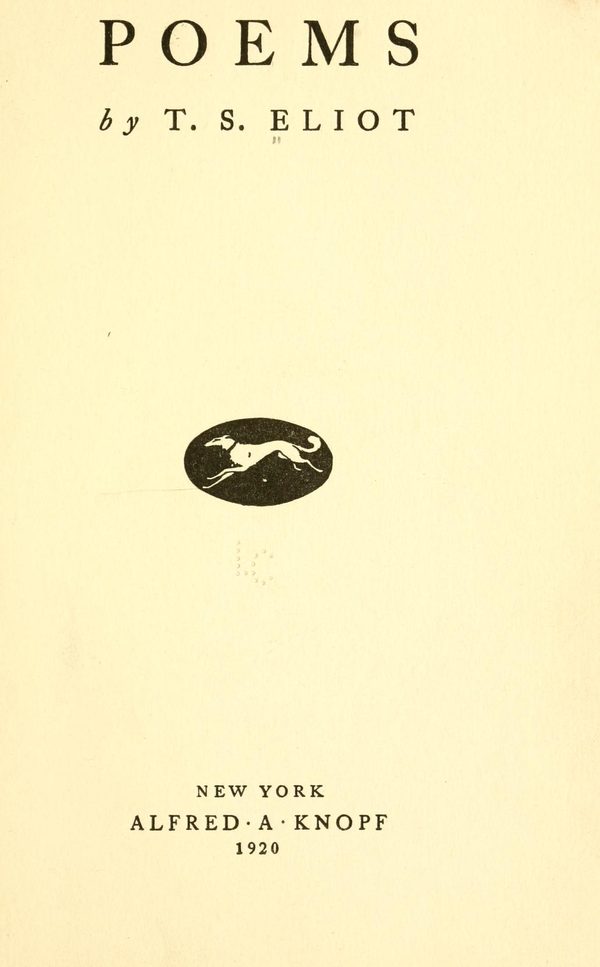
Poems · 1920 · 12 poems
The Waste Land · 1922 · 1 poem
The Hollow Men · 1925 · 1 poem
Old Possum's Book of Practical Cats · 1939 · 13 poems
Four Quartets · 1943 · 4 poems
Other poems · 2