First, are you our sort of a person?
Do you wear
A glass eye, false teeth or a crutch,
A brace or a hook,
Rubber breasts or a rubber crotch,
Stitches to show something's missing? No, no? Then
How can we give you a thing?
Stop crying.
Open your hand.
Empty? Empty. Here is a hand
To fill it and willing
To bring teacups and roll away headaches
And do whatever you tell it.
Will you marry it?
It is guaranteed
To thumb shut your eyes at the end
And dissolve of sorrow.
We make new stock from the salt.
I notice you are stark naked.
How about this suit----
Black and stiff, but not a bad fit.
Will you marry it?
It is waterproof, shatterproof, proof
Against fire and bombs through the roof.
Believe me, they'll bury you in it.
Now your head, excuse me, is empty.
I have the ticket for that.
Come here, sweetie, out of the closet.
Well, what do you think of that?
Naked as paper to start
But in twenty-five years she'll be silver,
In fifty, gold.
A living doll, everywhere you look.
It can sew, it can cook,
It can talk, talk, talk.
It works, there is nothing wrong with it.
You have a hole, it's a poultice.
You have an eye, it's an image.
My boy, it's your last resort.
Will you marry it, marry it, marry it.
✦
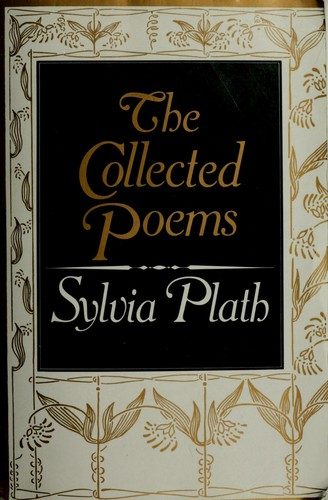
From the bookThe Collected PoemsFirst US edition, Harper & Row, 1981, in its dust jacket
Analysis
The Applicant: analysis
Introduction
"The Applicant" is a forty-line poem in eight stanzas of five lines. It is spoken by someone who sounds like an interviewer, a salesman and a marriage broker at once. The speaker questions an applicant, finds him empty, and offers him things to fill the lack.
The goods are a hand, a black suit and finally a woman called out of a closet. Each is praised for what it can do, and each time the speaker asks whether the applicant will "marry it". The poem treats marriage as a transaction. It makes a person into a product, and it keeps death in view the whole time.
Summary
The speaker opens by asking if the applicant is "our sort of a person". The questions that follow ask whether the applicant wears artificial parts. The list runs from "A glass eye, false teeth or a crutch" to "Rubber breasts or a rubber crotch". The stanza ends mid-sentence.
The list ends with "Stitches to show something's missing". The applicant seems to answer no, and the speaker asks how they can then give him anything. The speaker tells him to stop crying and open his hand. The hand is empty. The speaker offers "a hand" to fill it.
The offered hand is willing. It will "bring teacups and roll away headaches" and obey any order. The speaker asks, "Will you marry it?" The stanza ends on the start of a guarantee.
The guarantee is that the hand will close the applicant's eyes "at the end". It will also "dissolve of sorrow". The speaker adds that "We make new stock from the salt". Then the speaker notices that the applicant is naked and begins to offer a suit.
The suit is "Black and stiff, but not a bad fit." The speaker again asks if the applicant will marry it. The suit is proof against water, shattering, fire and "bombs through the roof". The speaker assures him that "they'll bury you in it".
The speaker now says the applicant's head is empty and claims to have "the ticket for that". The speaker calls someone to "Come here, sweetie, out of the closet". The speaker asks the applicant's opinion. The newcomer is "Naked as paper to start".
In twenty-five years "she'll be silver", and in fifty, gold. She is "A living doll, everywhere you look." The speaker lists that it can sew, cook and talk. The word talk is said three times.
The speaker says "It works" and that nothing is wrong with it. It is a poultice for a hole and an image for an eye. The speaker tells him, "My boy, it's your last resort." The poem ends by repeating the question of marriage three times.
Themes and meaning
Marriage as a sale. The poem is built as a sales pitch. The speaker screens a customer, displays goods and closes with a question. Each offer comes with selling points and a guarantee, as in "It is guaranteed" (line 15). The repeated "Will you marry it?" puts the proposal of marriage where a salesman would ask for the order.
A person turned into a thing. The woman who appears in the sixth stanza is never given a name. She is "sweetie", then "she", then "it", a shift across lines 28 to 34 that moves her from person to device. Her virtues are functions: "It can sew, it can cook". The phrase "A living doll" joins the living and the manufactured in one image.
Emptiness and filling. His hand is "Empty", he is "stark naked", and his head "is empty". At each stage the speaker fills the gap with an item. The closing lines make the logic plain, since for "a hole" there is "a poultice". The wife is offered as a remedy for a man's wants rather than as a partner.
Conformity. The first question is whether the applicant is "our sort of a person". The artificial parts in the first stanza suggest a body that is already partly manufactured. The poem can be read as saying that belonging requires being fitted with replacements. The applicant, too, is dressed and made to fit, and the suit is "not a bad fit".
Marriage and death. Death runs under the pitch. The hand will "thumb shut your eyes at the end". The suit is the one "they'll bury you in". Even the wife's worth is counted in anniversaries of silver and gold, so marriage is measured by how long it lasts.
Tone
The tone is brisk, smooth and falsely friendly. The speaker talks like a salesman who never lets the customer think. Questions come fast, and the speaker answers them for the applicant, as when his hand is pronounced "Empty".
Under the charm is bullying. "Stop crying." and "Open your hand." are orders. The speaker also insults while apologising, as in "Now your head, excuse me, is empty". The endearments "sweetie" and "My boy" sound fond but belittle both people.
The tone darkens without the voice changing. "Believe me, they'll bury you in it" is delivered as a reassurance. The cheerfulness about death makes the line grim. Many readers hear the whole poem as sarcasm, since the speaker praises what the poem exposes.
The ending turns from persuasion to pressure. "My boy, it's your last resort" removes any choice. The final line repeats "marry it" three times with a full stop, not a question mark. It sounds less like asking than insisting.
Form and structure
The poem has 40 lines in 8 stanzas, each of 5 lines. Line lengths vary from 3 to 11 syllables. There is no regular metre. The rhythm follows speech, with short questions and commands set against longer lists.
Rhyme is irregular but pointed. The word "it" ends line 13, line 14, line 22, line 25, line 36 and line 40, and "fit" ends line 21. That sound keeps returning to the pronoun that turns the wife into an object. Other rhymes include "hook", "look" and "cook" (line 4, lines 33–34) and "proof" with "roof" (lines 23–24).
Most stanzas run into the next without a break. Line 10 ends on "Here is a hand", and line 15 ends on "It is guaranteed". The pitch never pauses. The question "Will you marry it?" recurs as a refrain in line 14, line 22 and line 40.
Poetic devices
Rhetorical question line 1
First, are you our sort of a person? The poem opens like a screening interview. It sets up the speaker as a gatekeeper who decides who belongs.
Listing line 3
A glass eye, false teeth or a crutch, The catalogue of artificial parts presents the body as something assembled. It prepares for the later offer of a manufactured wife.
Synecdoche line 10
Here is a hand A single part stands for a whole person. The offered partner is reduced to what her hand can do.
Internal rhyme line 11
To fill it and willing The chime of fill and willing links the task with the obedience. It gives the pitch a jingle-like ring.
Repetition line 23
It is waterproof, shatterproof, proof Proof is repeated in the manner of advertising copy. The word is left hanging at the line end, so the next line lands harder.
Irony line 25
Believe me, they'll bury you in it. A reassurance about quality becomes a reminder of death. The salesman's cheer makes the line grim.
Simile line 30
Naked as paper to start The woman is compared to blank paper. She is presented as having no self until others write on her.
Metaphor line 33
A living doll, everywhere you look. The phrase turns a common compliment literal. It joins the living and the manufactured in one image.
Anaphora line 34
It can sew, it can cook, The repeated it can lists functions like a product label. The pronoun it completes the change from person to object.
Parallelism line 37
You have a hole, it's a poultice. Each need is matched to a fix in the same pattern. The wife is offered as a remedy, not a partner.
Refrain line 40
Will you marry it, marry it, marry it. The question heard twice before now repeats three times and ends on a full stop. Persuasion turns into insistence.
Words worth knowing
stock
Line 18. Can mean goods held for sale or a broth made by boiling. Both fit, since the salt of tears is turned into new product.
the ticket
Line 27. An informal phrase for exactly the thing that is needed.
silver
Lines 31–32. The traditional names for the twenty-fifth and fiftieth wedding anniversaries.
poultice
Line 37. A soft, moist mass applied to a wound or sore to soothe it or draw out infection.
last resort
Line 39. The final option when all others have failed.
brace
Line 4. A support strapped to a weak limb or the body, listed with the other artificial aids.
What readers have said
Elinor reads the poem as a mockery of the checklist people follow to reach a stereotypical happy marriage, pointing to the opening questions and the refrain. Elinor, 2005
Jane notes that the man is also stereotyped, since he is asked if he is "our sort of a person", and sees half the poem as about him and half about the wife. Jane, 2006
Dani B argues that the poem is wrongly held up as purely feminist, and says the fifth stanza describes and condemns the roles expected of men. Dani B, 2005
Jessie hears the call out of the closet as talking to a house dog, and reads the closet as the place the wife is kept when not needed. Jessie, 2006
Lauren reads the last stanza as saying that women are the bandage that covers men's faults and fills their needs. Lauren, 2006
lukas likes that the poem keeps the applicant unclear and says it sparks debate over whether the applicant is male or female. lukas, 2006
How often do you feel like you are, not the applicant, but the good? Regardless of your position- all too often women are the good. But smile with that knowledge, because with it comes rejection.
Stephanie
I believe that Sylvia Plath's Poem the Applicant is about the gender classification of women "to bring teacups and roll away headaches" And how men expect their women(make them their own property) to be like robots to be there to please them.
This poem represents men marrying the stereotype of the "right person" eg. Are you our sort of person? . The Poem is a mockery of the checklist needed to be followed in order to live a stereotipical "happy marriage".eg. Do you wear a glass eye, false teeth or a crutch.It can sew, it can cook, it can talk talk talk. and of course the repetition of the words "will you marry it?. The poem also states that "it is gauranteed" that most will fall into this trap of blending in. "My boy its your last resort" I enjoyed the poem and think it is very sarcastic and humorous.
I believe that this wonderful poem is wrongly held up by militant feminists as a purely feminist poem. Sylvia Plath may have been manic depressive, but she was certainly extremely intelligent as rapidly becomes clear when you read her biography. An extremely intelligent person should be circumspect enough to realise that it is not only men who are at fault here, and I think she displays this very well in stanza…
Read the whole comment
I believe that this wonderful poem is wrongly held up by militant feminists as a purely feminist poem. Sylvia Plath may have been manic depressive, but she was certainly extremely intelligent as rapidly becomes clear when you read her biography. An extremely intelligent person should be circumspect enough to realise that it is not only men who are at fault here, and I think she displays this very well in stanza five. Here she describes (and condemns) the roles and stereotypes that men are expected to conform to. The suit: stiff, black, proof against everything; "they'll bury you in it.". In other words, they have to be rigid, stoic, invincible, and must keep up this guise even unto the day they die. Despite what many feminists seem to think, men are not necessarily like this, for they too, like women, have expectations imposed upon them which they are forced to live up to, regardless of whether it complies with their nature or not. Sylvia Plath has shown that she is wise enough to know that there is something wrong with society, not men.
Sylvia Blath's writing puts the sarcasm on the trophy wife but at the same time stops the thought that every female has been placed on the earth to serve the man. It gives the image of a doll given to sooth a man after a hard days work and then be shut away when not needed.His suit never to be torn or darned because he hasn't have to do anything that may make him messy as the wife will 'rub it all away.' Thank goodness for someone puting it in writing just how hard these housewives had it.
PaigeAustralia
I believe the poem "The Applicant" is very cleverly written as the more you read it, the more you gain and understand from it. At first, I had no idea what the poem was about but gradually, by re-reading it and paying close attention to the words used and their true meaning I began to realise the point it was trying to put forward. It depicts females as a piece of machinery or like a robot, where we can be…
Read the whole comment
I believe the poem "The Applicant" is very cleverly written as the more you read it, the more you gain and understand from it. At first, I had no idea what the poem was about but gradually, by re-reading it and paying close attention to the words used and their true meaning I began to realise the point it was trying to put forward. It depicts females as a piece of machinery or like a robot, where we can be 'selected' and programmed "to bring teacups and roll away stitches" -the 'perfect' wife to keep up the desirable marriage. In the last ztance it seems to be someone drilling into the husband "marry it, marry it, marry it" as though there is great pressure on the male to pick the perfect, flawless, loyal, future wife
I think that "the applicant" is mostly about the stereotype women, "It can sew, it can cook". but then at the same time we see that the man is also being thought of like a stereotype, he is being asked if he has what it takes, "are you our sort of person?". At least half the poem is, i think, talking about them man (the applicant) where the other half tells us what the women can and should do "A living doll". It may also refer to the "Perfect marrige" because they would be pairing the perfect man with a robot doll. The women is shown to us as a bit of a robot. Because it is writtern by a feminist she would have writtern it in a sarcastic way.
I think that this poem represents how important women are in the lives of men. I think this poem is saying that men aren't complete without women in their lives. The last stanza is saying that women are the bandage, the thing that covers and fills their faults and needs. The second last line, 'my boy, this is your last resort' refers to men needing women in their lives.
This poem in my opinion, is not only focused on the way women are treated and stereotyped, but at the faults in our society, both men and women. It is attempting to show us that we seem to be nothing more than robots, manufactured to marry eachother and live a "happy life", and that this is the normal thing to do. Particularly in the last paragraph: "It works there is nothing wrong with it. You have a hole, it's a…
Read the whole comment
This poem in my opinion, is not only focused on the way women are treated and stereotyped, but at the faults in our society, both men and women. It is attempting to show us that we seem to be nothing more than robots, manufactured to marry eachother and live a "happy life", and that this is the normal thing to do. Particularly in the last paragraph:
"It works there is nothing wrong with it. You have a hole, it's a poultice. You have an eye, it's an image. My boy, it's your last resort. Will you marry it, marry it, marry it."
This verse to me symbolises the feeling that this is how a life should be led "It works, there is nothing wrong with it" and that it is the only weay to fit into a society and any deviation will bring sadness: "My boy, it's your last resort. Will you marry it, marry it, marry it."
I think this poem is making a mockery of marriage and the way woman are stereotyped. "to bring teacups and roll away headaches and do whatever you tell it" portrays women as an unfeeling object to be ordered around. Also "come here sweetie, out of the cupboard" and "a living doll, everywhere you look." Shows women as a robot, something that is only brought out when we are useful. Sylvia Plath has written a very good sarcastic poem.
I believe Sylvia Plath's poem 'The Applicant' is about the stereotypical role of the traditional housewife. There to do how her husband pleases, look as her husband wishes and do as her husband pleases. The poem implies the oppression of the wife to be, to become no more than "A living doll" bargained off as if she were a robot "To bring teacups and roll away headaches""It can sew, it can cook, It can talk,talk, talk".
This poem confused me. This is probably because I'm stupid but I will say that I did not enjoy reading this poem. It was what I believe to be about "the perfect woman". There is no such thing as "the perfect woman". So this poem had no point. HAHA. Sorry. The stereotype created in this poem annoys me. The way this portrays women appals me. This comment probably makes no scence what so ever so I will end it now.
Patrick Lockyer
The poem is an interesting view on a feminist's opinion. Without question it is an excellent poem to read. However, I believe this poem has little depth; and simply is what you see is what you get. The poem obviously comes from a person with true contempt for men who think this way. Without being disrespectful to the author, her opinions are quite unethical. But back on topic, I am supposed to be writing about the poem. So my opinion is that unlike many famous poems, this one is a weak attempt to put a sub-standard opinion across.
Daniel GautAustralia
I thought this poem was way too feminist for my liking. Sylvia Plath is trying to sterotype every male into a category of zombies who just order their wives/fiancee/girlfriends into doing what they want and that all men want a woman for is to do jobs. This is untrue and just because her husband treated her poorly doesn't mean that all men are tha same.
RachAustralia
Sylvia Plaths poem 'The Applicant' is about men 'interviewing' women to find the perfect applicant for marriage. Someone who will cook and clean up after them, because until they find a man they are 'naked as a paper'. It is extremely sarcastic and it is cleverly written.
AmieAustralia
What a poem! Sylvia's ability to entwine feminism into 'the applicant' was subtle yet expressive, at first the poem was a little confusing and needed reading through more than once in order to get the message. well done Sylvia.
JessieAustralia
Her poem is conveying the expected role of a women to a man, "out here sweetie out of the closet" is referenced as if they are talking to her like a common house dog, and the fact that she is in the closet represents how she can be there only when need, but hidden away when she is no longer required. "in 25 years she will be silver, in 50 gold." shows how with time she will become more willing to serve and a better wife " a living doll". in conclusion the poem sums up what was expected of a women in the early 60's how they had no power and were controlled by men like a rogot slave.
the poem is well structured. when i read it, the message was unclear though. i like the way it keeps the apllicant unclear. it provides hot debate as to whether the aplicant is male or female. well done.
AllyAustralia
I think this poem is about the stereotypical 'perfect wife' who needs to be able to fulfil her wifely duties such as to 'sew...cook...talk, talk, talk'. It's giving the sarcastic view that women must be this gorgeous doll-like figure, worthy enough to enter the male society - 'are you our sort of person? do you wear a glass eye, false teeth or a crutch?' I think it is also saying that marriage is somewhat of a…
Read the whole comment
I think this poem is about the stereotypical 'perfect wife' who needs to be able to fulfil her wifely duties such as to 'sew...cook...talk, talk, talk'. It's giving the sarcastic view that women must be this gorgeous doll-like figure, worthy enough to enter the male society - 'are you our sort of person? do you wear a glass eye, false teeth or a crutch?' I think it is also saying that marriage is somewhat of a burden for the man - at the end of the poem we hear 'it works, there is nothing wrong with it' as if to say 'i'll take you if I must.' The male is also left with the job of filling the blank head of the un-knowledgeable female who is 'naked as paper to start' as if to perhaps imply that this marriage is somewhat of a privilege for the female who can now rely on her male counterpart to give her the help she clearly needs in this life.
Everybody Knows that Chuck Norris wrote better poems than Silvia Plath, even Jesus. In fact, he invented the art form of poetry and his poems have been known to make people cry until death from dehydration.
Mitchell PorterAustralia
Slyvia Plath as far as i can tell from these poems that ive read of hers, was a manic depressive and a feminist. The Applicant seems to me to be about 8 paragrahs of complete and utter rubbish. And by rubbish i do not mean the poem in itself as its actually rather well written, but the way that most females seem to interperet the poem. Most of the militant feminists ive met seem to always have a Sylvia Plath qoute…
Read the whole comment
Slyvia Plath as far as i can tell from these poems that ive read of hers, was a manic depressive and a feminist. The Applicant seems to me to be about 8 paragrahs of complete and utter rubbish. And by rubbish i do not mean the poem in itself as its actually rather well written, but the way that most females seem to interperet the poem. Most of the militant feminists ive met seem to always have a Sylvia Plath qoute or poem on hand. The fact is that then poem is not just about women being expected to be good little housewives and serve tea. Plath is trying to make a point about stereotypes for both men and women. She makes points about women being stereo typical and also men, although the stuff about women being housewives is hardly reaklivent nowdays as women have all the power and behind every great man there has been a women waiting to stab him in the back and take over.
b.Australia
yeah, but see, Plath herself wasn't actually a feminist, as such. she quite enjoyed her domestic role. Actual "Feminism" as any kind of political movement or force, didn't come along until after her death. Its true that in a post feminism society, it may be a dominant reading of the poem, but we don't know what she actually meant, unless there some explicit statement explaining it (and i guess getting those from poets is pretty rare, as that's pretty much the 'magic' of poetry). i think its interesting the way people view a lot of her poems simply because many feminists have used her work, and put the poet herself up on somekind of pedestal, perhaps wrongfully.
SashaZimbabwe
I think that the poem is well written and not only sows how women were expected to act to be the perfect wife but at the same time illustrates the pressure men were under to get the perfect woman to be seen as an upstanding man in society. Plath was depressed most of her life but this meant that her poetry was honest and not a few words put together to show a glossed over veiw of life. The poem is not particularly feminist but simply shows it like it is.
How often do you feel like you are, not the applicant, but the good? Regardless of your position- all too often women are the good. But smile with that knowledge, because with it comes rejection.
I believe that Sylvia Plath's Poem the Applicant is about the gender classification of women "to bring teacups and roll away headaches" And how men expect their women(make them their own property) to be like robots to be there to please them.
This poem represents men marrying the stereotype of the "right person" eg. Are you our sort of person? . The Poem is a mockery of the checklist needed to be followed in order to live a stereotipical "happy marriage".eg. Do you wear a glass eye, false teeth or a crutch.It can sew, it can cook, it can talk talk talk. and of course the repetition of the words "will you marry it?. The poem also states that "it is gauranteed" that most will fall into this trap of blending in. "My boy its your last resort" I enjoyed the poem and think it is very sarcastic and humorous.
I believe that this wonderful poem is wrongly held up by militant feminists as a purely feminist poem. Sylvia Plath may have been manic depressive, but she was certainly extremely intelligent as rapidly becomes clear when you read her biography. An extremely intelligent person should be circumspect enough to realise that it is not only men who are at fault here, and I think she displays this very well in stanza…
Read the whole commentI believe that this wonderful poem is wrongly held up by militant feminists as a purely feminist poem. Sylvia Plath may have been manic depressive, but she was certainly extremely intelligent as rapidly becomes clear when you read her biography. An extremely intelligent person should be circumspect enough to realise that it is not only men who are at fault here, and I think she displays this very well in stanza five. Here she describes (and condemns) the roles and stereotypes that men are expected to conform to. The suit: stiff, black, proof against everything; "they'll bury you in it.". In other words, they have to be rigid, stoic, invincible, and must keep up this guise even unto the day they die. Despite what many feminists seem to think, men are not necessarily like this, for they too, like women, have expectations imposed upon them which they are forced to live up to, regardless of whether it complies with their nature or not. Sylvia Plath has shown that she is wise enough to know that there is something wrong with society, not men.
Sylvia Blath's writing puts the sarcasm on the trophy wife but at the same time stops the thought that every female has been placed on the earth to serve the man. It gives the image of a doll given to sooth a man after a hard days work and then be shut away when not needed.His suit never to be torn or darned because he hasn't have to do anything that may make him messy as the wife will 'rub it all away.' Thank goodness for someone puting it in writing just how hard these housewives had it.
I believe the poem "The Applicant" is very cleverly written as the more you read it, the more you gain and understand from it. At first, I had no idea what the poem was about but gradually, by re-reading it and paying close attention to the words used and their true meaning I began to realise the point it was trying to put forward. It depicts females as a piece of machinery or like a robot, where we can be…
Read the whole commentI believe the poem "The Applicant" is very cleverly written as the more you read it, the more you gain and understand from it. At first, I had no idea what the poem was about but gradually, by re-reading it and paying close attention to the words used and their true meaning I began to realise the point it was trying to put forward. It depicts females as a piece of machinery or like a robot, where we can be 'selected' and programmed "to bring teacups and roll away stitches" -the 'perfect' wife to keep up the desirable marriage. In the last ztance it seems to be someone drilling into the husband "marry it, marry it, marry it" as though there is great pressure on the male to pick the perfect, flawless, loyal, future wife
I think that "the applicant" is mostly about the stereotype women, "It can sew, it can cook". but then at the same time we see that the man is also being thought of like a stereotype, he is being asked if he has what it takes, "are you our sort of person?". At least half the poem is, i think, talking about them man (the applicant) where the other half tells us what the women can and should do "A living doll". It may also refer to the "Perfect marrige" because they would be pairing the perfect man with a robot doll. The women is shown to us as a bit of a robot. Because it is writtern by a feminist she would have writtern it in a sarcastic way.
I think that this poem represents how important women are in the lives of men. I think this poem is saying that men aren't complete without women in their lives. The last stanza is saying that women are the bandage, the thing that covers and fills their faults and needs. The second last line, 'my boy, this is your last resort' refers to men needing women in their lives.
This poem in my opinion, is not only focused on the way women are treated and stereotyped, but at the faults in our society, both men and women. It is attempting to show us that we seem to be nothing more than robots, manufactured to marry eachother and live a "happy life", and that this is the normal thing to do. Particularly in the last paragraph: "It works there is nothing wrong with it. You have a hole, it's a…
Read the whole commentThis poem in my opinion, is not only focused on the way women are treated and stereotyped, but at the faults in our society, both men and women. It is attempting to show us that we seem to be nothing more than robots, manufactured to marry eachother and live a "happy life", and that this is the normal thing to do. Particularly in the last paragraph:
"It works there is nothing wrong with it.
You have a hole, it's a poultice.
You have an eye, it's an image.
My boy, it's your last resort.
Will you marry it, marry it, marry it."
This verse to me symbolises the feeling that this is how a life should be led "It works, there is nothing wrong with it" and that it is the only weay to fit into a society and any deviation will bring sadness: "My boy, it's your last resort.
Will you marry it, marry it, marry it."
I think this poem is making a mockery of marriage and the way woman are stereotyped. "to bring teacups and roll away headaches and do whatever you tell it" portrays women as an unfeeling object to be ordered around. Also "come here sweetie, out of the cupboard" and "a living doll, everywhere you look." Shows women as a robot, something that is only brought out when we are useful. Sylvia Plath has written a very good sarcastic poem.
I believe Sylvia Plath's poem 'The Applicant' is about the stereotypical role of the traditional housewife. There to do how her husband pleases, look as her husband wishes and do as her husband pleases. The poem implies the oppression of the wife to be, to become no more than "A living doll" bargained off as if she were a robot "To bring teacups and roll away headaches""It can sew, it can cook, It can talk,talk, talk".
This poem confused me. This is probably because I'm stupid but I will say that I did not enjoy reading this poem. It was what I believe to be about "the perfect woman". There is no such thing as "the perfect woman". So this poem had no point. HAHA. Sorry. The stereotype created in this poem annoys me. The way this portrays women appals me. This comment probably makes no scence what so ever so I will end it now.
The poem is an interesting view on a feminist's opinion. Without question it is an excellent poem to read. However, I believe this poem has little depth; and simply is what you see is what you get. The poem obviously comes from a person with true contempt for men who think this way. Without being disrespectful to the author, her opinions are quite unethical. But back on topic, I am supposed to be writing about the poem. So my opinion is that unlike many famous poems, this one is a weak attempt to put a sub-standard opinion across.
I thought this poem was way too feminist for my liking. Sylvia Plath is trying to sterotype every male into a category of zombies who just order their wives/fiancee/girlfriends into doing what they want and that all men want a woman for is to do jobs. This is untrue and just because her husband treated her poorly doesn't mean that all men are tha same.
Sylvia Plaths poem 'The Applicant' is about men 'interviewing' women to find the perfect applicant for marriage. Someone who will cook and clean up after them, because until they find a man they are 'naked as a paper'. It is extremely sarcastic and it is cleverly written.
What a poem! Sylvia's ability to entwine feminism into 'the applicant' was subtle yet expressive, at first the poem was a little confusing and needed reading through more than once in order to get the message. well done Sylvia.
Her poem is conveying the expected role of a women to a man, "out here sweetie out of the closet" is referenced as if they are talking to her like a common house dog, and the fact that she is in the closet represents how she can be there only when need, but hidden away when she is no longer required.
"in 25 years she will be silver, in 50 gold." shows how with time she will become more willing to serve and a better wife " a living doll". in conclusion the poem sums up what was expected of a women in the early 60's how they had no power and were controlled by men like a rogot slave.
the poem is well structured. when i read it, the message was unclear though. i like the way it keeps the apllicant unclear. it provides hot debate as to whether the aplicant is male or female. well done.
I think this poem is about the stereotypical 'perfect wife' who needs to be able to fulfil her wifely duties such as to 'sew...cook...talk, talk, talk'. It's giving the sarcastic view that women must be this gorgeous doll-like figure, worthy enough to enter the male society - 'are you our sort of person? do you wear a glass eye, false teeth or a crutch?' I think it is also saying that marriage is somewhat of a…
Read the whole commentI think this poem is about the stereotypical 'perfect wife' who needs to be able to fulfil her wifely duties such as to 'sew...cook...talk, talk, talk'. It's giving the sarcastic view that women must be this gorgeous doll-like figure, worthy enough to enter the male society - 'are you our sort of person? do you wear a glass eye, false teeth or a crutch?'
I think it is also saying that marriage is somewhat of a burden for the man - at the end of the poem we hear 'it works, there is nothing wrong with it' as if to say 'i'll take you if I must.' The male is also left with the job of filling the blank head of the un-knowledgeable female who is 'naked as paper to start' as if to perhaps imply that this marriage is somewhat of a privilege for the female who can now rely on her male counterpart to give her the help she clearly needs in this life.
Everybody Knows that Chuck Norris wrote better poems than Silvia Plath, even Jesus. In fact, he invented the art form of poetry and his poems have been known to make people cry until death from dehydration.
Slyvia Plath as far as i can tell from these poems that ive read of hers, was a manic depressive and a feminist. The Applicant seems to me to be about 8 paragrahs of complete and utter rubbish. And by rubbish i do not mean the poem in itself as its actually rather well written, but the way that most females seem to interperet the poem. Most of the militant feminists ive met seem to always have a Sylvia Plath qoute…
Read the whole commentSlyvia Plath as far as i can tell from these poems that ive read of hers, was a manic depressive and a feminist. The Applicant seems to me to be about 8 paragrahs of complete and utter rubbish. And by rubbish i do not mean the poem in itself as its actually rather well written, but the way that most females seem to interperet the poem. Most of the militant feminists ive met seem to always have a Sylvia Plath qoute or poem on hand. The fact is that then poem is not just about women being expected to be good little housewives and serve tea. Plath is trying to make a point about stereotypes for both men and women. She makes points about women being stereo typical and also men, although the stuff about women being housewives is hardly reaklivent nowdays as women have all the power and behind every great man there has been a women waiting to stab him in the back and take over.
yeah, but see, Plath herself wasn't actually a feminist, as such. she quite enjoyed her domestic role. Actual "Feminism" as any kind of political movement or force, didn't come along until after her death. Its true that in a post feminism society, it may be a dominant reading of the poem, but we don't know what she actually meant, unless there some explicit statement explaining it (and i guess getting those from poets is pretty rare, as that's pretty much the 'magic' of poetry). i think its interesting the way people view a lot of her poems simply because many feminists have used her work, and put the poet herself up on somekind of pedestal, perhaps wrongfully.
I think that the poem is well written and not only sows how women were expected to act to be the perfect wife but at the same time illustrates the pressure men were under to get the perfect woman to be seen as an upstanding man in society. Plath was depressed most of her life but this meant that her poetry was honest and not a few words put together to show a glossed over veiw of life. The poem is not particularly feminist but simply shows it like it is.