The poem
I saw a man pursuing the horizon; Round and round they sped. I was disturbed at this; I accosted the man. "It is futile," I said, "You can never -"
"You lie," he cried, And ran on.
The poem
I saw a man pursuing the horizon; Round and round they sped. I was disturbed at this; I accosted the man. "It is futile," I said, "You can never -"
"You lie," he cried, And ran on.
"I saw a man pursuing the horizon" is an eight-line poem about a chase that cannot end. The speaker sees a man running after the horizon. He stops the man to tell him it is futile. Before he can finish, the man calls him a liar and runs on.
The poem sets two attitudes side by side. One is the speaker's reasoned certainty. The other is the runner's refusal to hear it. The poem gives the last word to the runner and does not say which of them is right.
The first stanza has six lines. The speaker reports seeing "a man pursuing the horizon" (line 1). "Round and round they sped", he says, so both the man and the horizon seem to move. The speaker is "disturbed at this" (line 3). He goes up to the man and stops him.
The speaker then speaks. "It is futile," he tells the man (line 5). He begins a second sentence, "You can never -" (line 6). The dash shows that he is cut off before he can say what the man can never do.
The second stanza has two lines. The man answers, "You lie," and cries it out (line 7). He gives no reason and does not stop to argue. Then he "ran on" (line 8).
The poem ends there. The speaker does not reply. The horizon is still ahead of the man, and the chase goes on. The poem offers no comment on who was right.
The impossible goal. The horizon recedes as one approaches it, so it can never be reached. The man's pursuit is therefore endless. The phrase "Round and round" suggests circling rather than progress. The poem uses a simple physical fact to picture any goal that moves as one moves.
Reason against conviction. The speaker states a plain truth: "It is futile." The man rejects it with "You lie." He does not argue. He simply refuses. The poem shows how a strong belief can shut out any fact that threatens it.
Who is foolish. One reading takes the runner as blind and stubborn, calling reason a liar. Another reading turns on the speaker. He is "disturbed" by something that does not harm him. He "accosted" the man, a word with a note of intrusion. On this reading the speaker is the narrow one, and the runner's persistence has its own worth.
The unfinished sentence. The speaker never completes "You can never -". The poem leaves open what exactly cannot be done. It may be reaching the horizon. It may be something larger. The cut-off also shows how little the runner wants to hear.
Persistence. The poem ends on "ran on". Whether this is admirable or pitiable, it is what lasts. The chase outlives the argument.
The speaker's tone is calm and a little superior. He reports the scene plainly. He admits he "was disturbed", which hints that the man's behaviour bothers him more than it should.
His speech is firm and final. "It is futile" is a verdict, not a question. He clearly expects to be heard.
The runner's reply is abrupt and heated. "You lie" is "cried", not said. It cuts off the speaker mid-sentence. The final line, "And ran on", is short and brisk. It leaves the speaker standing with his lesson unfinished.
The overall tone is dry and ironic. The poem gives the confident speaker no answer to the man's refusal. That silence can be read as mild humour at his expense.
The poem has 8 lines in 2 stanzas of 6 and 2 lines. It is free verse, with lines from 3 to 11 syllables and no regular metre.
There is one rhyme. The word "sped" at line 2 chimes with "said" at line 5. The other endings do not rhyme.
The stanza break does real work. It separates the speaker's attempt from the man's reply. The dash at the end of line 6 breaks the speaker's sentence at the stanza's edge. The second stanza is short and fast, like the man's answer. The lines grow shorter overall, ending on a line of 3 syllables.
pursuing the horizonThe horizon stands for a goal that moves away as one approaches. It can never be reached.
Round and round they spedThe doubled word suggests endless circling. The man and the horizon move together without progress.
I accosted the manThe verb suggests stopping someone boldly or rudely. It hints that the speaker is intruding.
"It is futile," I saidThe speaker's judgement is given in direct speech. It makes the clash of views immediate.
"You can never -"The sentence breaks off at the dash. The speaker is interrupted, and what cannot be done is left unsaid.
I saidThe word "said" rhymes with "sped" in line 2. It links the man's chase to the speaker's objection.
"You lie," he criedThe man calls a plain truth a lie. His certainty is as strong as the speaker's.
And ran onThe poem ends on a bare action with no comment. The flatness leaves the judgement to the reader.
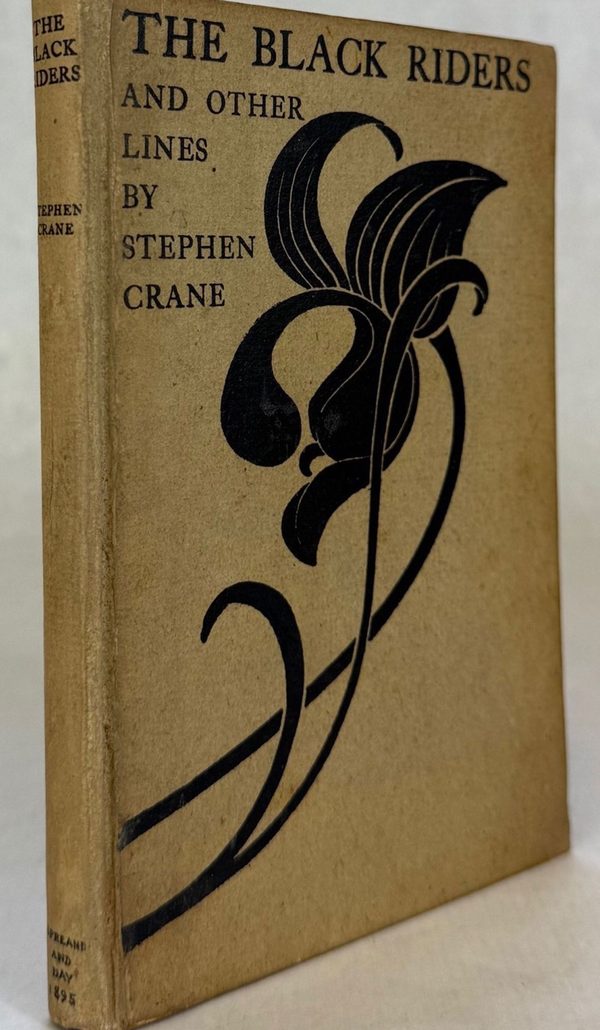
The poem is number 24 in The Black Riders & Other Lines by Stephen Crane (1871–1900). It has been on americanpoems.com since 2004. It was a Poem of the Day on June 25, 2000. Readers have left 26 comments on it, from 2005 to 2024.
Keep reading
Readers
How we perceive the world determines our actions. Crane was so succinct! He offers us opposite perspectives, balancing them perfectly.
this was written around the revolutionary war it represents the veiws of the differnt parties
Hey dumbass, the revolutionary war was in 1776....stephen crane was born 1871.
This poem is about seeking. It means that we all must find our own answers in life, and those answers can only be found within ourselves. To look for external solutions to internal problems is like chasing the horizon--for every step towards it, the horizon takes a step back from us. The individual in the poem knows this, and wants to explain it to the second individual, but the second individual is unable to see it because he too must walk his own path.
I think that you are all wrong. Or dumbasses, if you will...I think that this poem is about mankind...the man is in pursuit of a goal that is impossible to achieve, and then, when the voice of reason stops him and tells him of the hopelessness of his task, the man keeps running anyway. He prefers ignorance, and calls Reason a liar.
umm, no one is wrong, we all see the poem different ways, so none of us are dumbasses. I think that it means that humans have mind sets. The man that wants to go to the horizon thinks that he can, and he wants to. The other man sees and trys to tell him that it will not work, but since the man seeking the horizon is so set in his ways he calls the other guy a liar.we all have our own mind-sets about certian things like the lock-ness monster or big-foot or aliens, and this guy had one about the horizon. there are always people that will come against us in life, but you need to determine youself if what you are doing is wrong or justified.......thats what i got.
Thank you Jono for being the voice of Reason.
The Pursuer has the stubborness and ignorence of a child. How old do you have to be to be a man?
One man sees another who is futilely pursuing something that, he himself, does not think exists. So either the unbeliever just simply does not see what the big deal is, or the believer is caught up in a blind, useless faith. Considering how Crane keeps writing of a universe bereft of godly superintendence, it is more likely that it was intending it to be the latter. The observer must have felt sorry for that man who kept chasing something that simply is not there.
The man is pursuing infinty. whether it's possible is left to interpret.
Remember, there's a difference between poet and speaker. The speaker is disturbed by the man's pursuit of the horizon, but that doesn't mean Crane wants us to feel the same way. The two perspectives are that of the realist (the speaker) and the idealist (the man pursuing the horizon), and in fact Crane means for us to see the folly in the perspective of the realist. The key words here are "disturbed" and "accosted,"…
Read the whole commentRemember, there's a difference between poet and speaker. The speaker is disturbed by the man's pursuit of the horizon, but that doesn't mean Crane wants us to feel the same way. The two perspectives are that of the realist (the speaker) and the idealist (the man pursuing the horizon), and in fact Crane means for us to see the folly in the perspective of the realist. The key words here are "disturbed" and "accosted," which portray the speaker as arrogant and narrow-minded next to the pure idealism of the man pursuing the horizon.
A point of logic seperate from my analysis of the text: contrary to Jono's interpretation of the role of Reason, the impossibility of success does not, in itself, invalidate a quest. The question for a true voice of reason would be whether the goal, regardless of the possibilities for success, is commendable. All goals of rationalist philosophers have been quests for the horizon--utopian society, moral codes based on pure reason, etc. Perfection is by definition unattainable, but the quest for it is a hallmark of human intellectual pursuit, and Crane understood as much.
Jono was being stupid. Pursuing what you believe in is one of the most important things a human can do. Anything is possible if you seek with all of your heart. Try believing for once and see what happens... as for the poem...I see it as a semi-humorous view of peoples struggle for what is possible and what is not.
This poem reminds me of whe i kick this queers ass in basketball.
I think this could be contrasting the prominent views of the day--realism and romanticism. The man pursuing the horizon represents "I think anything is possible if you believe hard enough" romantic while the man telling him it is impossible represents the pessimistic realist
well......we all have certains goals in our life .and it very true that mankind believe on impossible ...remember everthing is possible with God and only if you put effort on it.becuase the man pursuing the horizon he was determined to achieve his goal no matter what....
i like this poem ...........show more poem for me...
Crane is a naturalist he is interested in showing how faith in something you can never reach is ignorant and how men refuse to believe the impossible is possible and that blind faith in achieving the impossible is futile.
I saw a man purusing the horizon
I think Brandt got it right here. I have always felt that the point of this poem was to praise the man who refused to accept his limitations. At the same time for some reason, I have always assumed that the man chasing the horizon knew it wsa in fact hopeless. But he refused to accept that. Where do I get this? "round and round they sped" Clearly he knew he was going in circules. But sometimes you pursue the dream of the horizon not because you will attain it but because you can't let go of the dream and still live.
I want to the the image in this poem ??Who tell me ??
Thank u !!
I saw a man
Today Hubble is inviting us to take quantum leaps into the vast infinitude of creation. This certainly gives the "lie" to our past limited beliefs that it would be a "futile" attempt. As the universe is infinite, so are the yet untapped powers of the human mind. So, keep running on to what is yet to be.
Naturalism is by definition pessimistic. However, Stephen Crane’s poem “A Man Pursuing the Horizon”, which is an excellent example of naturalism, can be interpreted pessimistically or optimistically. To interpret it optimistically, the man does not give up hope of fulfilling his dream no matter what happens. Interpreting the poem pessimistically, the man is foolish for not recognizing that it is impossible to catch the horizon, and is therefore wasting his life. Trying to make a naturalistic poem optimistic could consequently be compared to chasing the horizon.
sculpture
This poem has been a favorite of mine for 50 years.
I just completed a sculpture expressing the idea of pursuing the horizon. If you would like to see a picture of it, email me.
Probably he did reach the horizon. And he is in ecstacy and don't want to return to the meddles in life.For reaching the horizon implies understanding the universe. Probably he knows that it is possible to reach the horizon and thus calls the observer a liar. He was just mad enough.
The horizon shifts, so the man must have reached it at some point in time but being unaware of this, kept on running. The protagonist who accosts him is equally limited in his assumption that the horizon is unreachable as he is himself at that moment in someone else’s horizon. They are both limited in their ability to analyse and reflect.
Dear, John, my late father drew the stick figure of a man running towards the sun sinking on the horizon as far back as I can remember. (As far back as 1968) yesterday I was reading through some letters he sent me prior to his death in the mid 1990’s. And there in one is his letters were the first few lines of Crane’s poem which I am embarrassed to say I was not aware of and all those years I never asked him. Why he did that. I can’t believe it.
I would love to see a picture of your sculpture.
Thaddeus P Russo
People follow false beliefs—those ungrounded in reality—such as those in many religions. Pragmatically, people should abandon them, but they refuse to do so. The horizon will always be an unattainable mirage. This poem is similar to Crane’s “There was set before me a mighty hill.” Crane could be saying also that progress doesn’t exist. We all die.