Ah, broken is the golden bowl! the spirit flown forever!
Let the bell toll!- a saintly soul floats on the Stygian river;
And, Guy de Vere, hast thou no tear?- weep now or nevermore!
See! on yon drear and rigid bier low lies thy love, Lenore!
Come! let the burial rite be read- the funeral song be sung!-
An anthem for the queenliest dead that ever died so young-
A dirge for her the doubly dead in that she died so young.
"Wretches! ye loved her for her wealth and hated her for her pride,
And when she fell in feeble health, ye blessed her- that she died!
How shall the ritual, then, be read?- the requiem how be sung
By you- by yours, the evil eye,- by yours, the slanderous tongue
That did to death the innocence that died, and died so young?"
Peccavimus; but rave not thus! and let a Sabbath song
Go up to God so solemnly the dead may feel no wrong.
The sweet Lenore hath "gone before," with Hope, that flew beside,
Leaving thee wild for the dear child that should have been thy bride.
For her, the fair and debonair, that now so lowly lies,
The life upon her yellow hair but not within her eyes
The life still there, upon her hair- the death upon her eyes.
"Avaunt! avaunt! from fiends below, the indignant ghost is riven-
From Hell unto a high estate far up within the Heaven-
From grief and groan, to a golden throne, beside the King of Heaven!
Let no bell toll, then,- lest her soul, amid its hallowed mirth,
Should catch the note as it doth float up from the damned Earth!
And I!- to-night my heart is light!- no dirge will I upraise,
But waft the angel on her flight with a Paean of old days!"
✦
Analysis
Lenore: analysis
Introduction
"Lenore" is a funeral poem spoken by two voices. A young woman, Lenore, has died, and the mourners call on her lover, Guy de Vere, to weep. He refuses. In the stanzas set in quotation marks, he accuses the mourners of having hated her and killed her with slander.
The mourners admit their sin and ask for a solemn song. Guy de Vere answers that no bell should toll and no dirge be sung. Her soul has risen to Heaven, so he will send her off with a song of joy. The poem sets public mourning against private grief, and grief against triumph.
Summary
The first stanza opens with a cry that "the golden bowl" is broken and the spirit has flown. A bell should toll, for "a saintly soul floats on the Stygian river". The speaker asks Guy de Vere, "hast thou no tear?", and urges him to "weep now or nevermore". Lenore lies on the "rigid bier", and the speaker calls for the burial rite and a funeral song. She is "the queenliest dead that ever died so young".
In the second stanza, set in quotation marks, Guy de Vere replies and calls the mourners "Wretches!". They loved her for her wealth and hated her for her pride, and when she fell ill they were glad "that she died". He asks how such people can read the ritual or sing the requiem. Their "evil eye" and "slanderous tongue" killed an innocent who "died so young".
The third stanza returns to the first voice. It begins "Peccavimus", admitting sin, but tells him not to rave. It asks for a "Sabbath song" so solemn that the dead may feel no wrong. Lenore has "gone before" with Hope, leaving him wild for the girl who should have been his bride. Her hair still seems alive, but death is "upon her eyes".
In the last stanza Guy de Vere speaks again and cries "Avaunt!". Her ghost is torn from the fiends below and raised to "a golden throne" beside the King of Heaven. No bell should toll, in case her soul hears it rising from "the damned Earth". His heart is light tonight. He will sing no dirge but a "Paean of old days".
Themes and meaning
Grief is set against the falseness of public mourning. The mourners call for bells, rites and a "funeral song". Guy de Vere answers that the same people "loved her for her wealth" and "hated her for her pride". Their ritual looks to him like hypocrisy. The poem asks who has the right to mourn.
Death in youth is the poem's repeated wound. The phrase "died so young" closes both lines 6–7 and line 12. Lenore is also "the dear child that should have been thy" bride. The repetition makes her youth the centre of the loss. Line 7 calls her "doubly dead" because she died young, as if early death is a second death.
The poem turns death into triumph. In the last stanza the soul is "riven" from the fiends and set on "a golden throne". Guy de Vere's heart becomes "light", and he chooses a "Paean", a song of praise, over a dirge. One reading sees this as faith that she is saved. Another sees a grief so extreme it flips into defiance.
Body and soul are split apart. Line 18 places life "upon her yellow hair but not within her eyes". Line 19 repeats the image with "the death upon her eyes". The body still shows traces of life while the spirit has gone. This prepares the last stanza, where only the soul matters.
Tone
The first stanza is urgent and ceremonial. It is full of exclamations and commands: "Let the bell toll!", "See!", "Come!". The mourners sound grand and a little theatrical.
The second stanza is furious. Guy de Vere's "Wretches!" and his list of charges turn the funeral into an accusation. His questions are bitter, not searching.
The third stanza is solemn and conciliatory. The mourners admit guilt with "Peccavimus" and ask for calm. The picture of hair and eyes adds a quiet, eerie tenderness.
The last stanza is defiant and then exultant. "Avaunt! avaunt!" drives off the fiends and the funeral customs together. The closing lines are almost joyful, and the poem moves from grief through anger to triumph.
Form and structure
The poem has 26 lines in 4 stanzas of 7, 5, 7 and 7 lines.
The lines are very long, most between 13 and 16 syllables. The rhythm is a loose, rolling iambic line of about seven beats. Dashes and exclamation marks break it up constantly.
End rhymes often run in groups, such as "sung", "young" and "tongue". Internal rhyme is everywhere, as in "toll" and "soul" or "drear" and "bier". The computed scheme leaves "upraise" unmatched, though it seems to rhyme with "days".
Poetic devices
allusion line 1
broken is the golden bowl The image echoes a biblical figure for death, a broken vessel. It opens the poem on loss that cannot be mended.
allusion line 2
the Stygian river The Styx is the river of the dead in Greek myth. Classical and Christian images of death mix from the start.
internal rhyme line 2
Let the bell toll!- a saintly soul Toll and soul chime within the line. The sound imitates the ringing of a funeral bell.
apostrophe line 3
Guy de Vere, hast thou no tear? The speaker turns to address the lover. The question sets up the conflict between the two voices.
internal rhyme line 4
on yon drear and rigid bier Drear and bier ring together. The heavy rhymes slow the line over the body.
refrain line 7
in that she died so young The phrase repeats from line 6 and returns in line 12. It keeps her youth in front of the reader.
antithesis line 8
ye loved her for her wealth and hated her for her pride Two opposite feelings are set in one balanced line. Both are shown as selfish.
irony line 9
ye blessed her- that she died Blessing usually wishes someone well. Here it welcomes her death, exposing the mourners' cruelty.
synecdoche line 11
the evil eye,- by yours, the slanderous tongue Eye and tongue stand for envious looks and gossip. The body parts become weapons that did her to death.
antithesis line 19
upon her hair- the death upon her eyes Life and death are placed side by side on one body. The contrast makes the corpse both lovely and eerie.
imagery line 22
to a golden throne The golden throne answers the broken golden bowl of line 1. Loss is reversed into glory.
Words worth knowing
Stygian
Of the Styx, the river of the dead in Greek myth.
bier
A stand on which a corpse or coffin rests before burial.
Peccavimus
Latin for we have sinned. The mourners admit their guilt.
Avaunt
An old command meaning begone or away.
riven
Torn or split away. Here the soul is wrenched from the fiends.
Paean
A song of praise or triumph, the opposite of a dirge.
Context
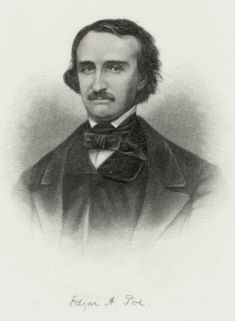
Edgar Allan Poe lived from 1809 to 1849. The poem has been on americanpoems.com since February 2003. It was the site's Poem of the Day on 4 March 2004. Readers left 16 comments on it between 2004 and 2010.
What readers have said
Jeremy reads the poem as saying that others loved Lenore for her possessions while the lover loved her for herself, and that they wanted her dead. Jeremy, 2004
Sleeper doubts that Lenore was as good as the poem claims and sees the praise as a shield against the common people. sleeper, 2005
Jess replies that people judged by wealth and looks and never knew the inner Lenore that she showed only to those she trusted. Jess, 2005
Shane reads the poem as questioning God and asking why God took her. shane, 2010
AlethiaMS singles out the last lines, where he refuses to sing a dirge or toll a bell in case her soul is held back. AlethiaMS, 2005
Bria Isbell hears a link to The Raven in weep now or nevermore, and reads the ending as Lenore's glory in death. Bria Isbell, 2010
This is a great poem. Here he's saying that everyone loved her for her possessions and wealth while he loved her for her beauty and personality. They wanted her dead and now she is. The name Lenore appears occassionally throughout Poe's poems. The Raven was the last one it appeared in, as Poe died soon after it's relase to the papers. You can't dislike him for repeating the name, you have to understand he's in great…
Read the whole comment
This is a great poem. Here he's saying that everyone loved her for her possessions and wealth while he loved her for her beauty and personality. They wanted her dead and now she is. The name Lenore appears occassionally throughout Poe's poems. The Raven was the last one it appeared in, as Poe died soon after it's relase to the papers. You can't dislike him for repeating the name, you have to understand he's in great distress and grief. Not to mention depression. He was married once, and after his wife died, he fell into great sadness and sorrow. From which his works emerge. He's not making this stuff up. It's coming from experience. So you really have to understand what you're reading when you're reading his works. Put yourself in his shoes, feel what he feels. You'll come to understand it alot better and more fully.
jamesprestonevansUnited States
I am not qualified to judge genius. He loved women ( a women ) very much. But he was not comfortable with women. It is because he loved and adored them that the result was always tragic. The man was a genius out of his element. Genuises are especially susceptible to women because they worship the ideal. You can feel the love and the heartbreak in Poe's life, which is the work he has teased and challenged and captivated us with. Lenore - Forever More.
sebastian aulenbachUnited States
when i showed this to my sister she cried. when a poet can make a person cry. they truly have a gift.
None of your businessSweden
It's strange that none of you haven't even mentioned any concrete examples from Poe's life. Of course his poems have resemblences with the life he lived, every work of art has some kind of connection to the artist. Inspiration comes from within, and the only way to personlize artwork is to find a style that appeals to you. The most famous artists all have their way of seeing things, their own belives and thoughts,…
Read the whole comment
It's strange that none of you haven't even mentioned any concrete examples from Poe's life. Of course his poems have resemblences with the life he lived, every work of art has some kind of connection to the artist. Inspiration comes from within, and the only way to personlize artwork is to find a style that appeals to you. The most famous artists all have their way of seeing things, their own belives and thoughts, and these things are visible in their creations. The same goes for Poe.
As you probably know, Poe was a very depressed person, mentally unstable and abused both drugs and alcohol. He married his 13-year old cousin (Virginia) in 1836, she busted a blood vessel in 1842, became invalidized, and died of tuberculosis in 1847. These incidents (among other things) colored his artwork greatly. In many of his poems you can draw paralells between the tragic fate of his beloved cousin/wife, and the fate of the girl he wrote about in his poems, Lenore(btw, he chose this name because it rhymes with "nevermore"). And for those who didn't know, Lenore has also become a comicbook character, produced by Roman Dirge, I recommend it strongly to anyone who likes poe's dark, yet tragic compossisons.
One more thing. We do not, I repeat, do not have polarbears in sweden, nor do we have penguins, they live on opposite ends of the earth, ffs! Is that clear?!
Country ArtUnited States
Lenore is a wonderful poem. It is sad and reflects Poe's true personality, the love and loss as well as depression from those things he holds to be his inspiration. Would Poe be as good of a writer if he had not suferred? Most writers are good because of their emotional detachment and ability to capture the truley gruesome and somehow put it into words. THey write what they feel and what they felt in the inital…
Read the whole comment
Lenore is a wonderful poem. It is sad and reflects Poe's true personality, the love and loss as well as depression from those things he holds to be his inspiration. Would Poe be as good of a writer if he had not suferred? Most writers are good because of their emotional detachment and ability to capture the truley gruesome and somehow put it into words. THey write what they feel and what they felt in the inital suffering. To say that poe was nothing but a Drug addict would be cutting down a poetic master mind. He is the father of horror stories and teen angst. Drugs only helped to intensify his feelings of pain and intensify his writing as well as allowed him to show the world his pain and let them feel it too. So don't criticize those who have the courage and talent to write works of art that can make others feel their emotions from a cold pieve of paper.
This is a wonderful poem, which reflects a lot of things that, as most of you have said, have important similarities to Poe's life. I myself read this poem after watching the Flash animations based on Roman Dirge's comics, which, as "none of your business" said, it a must read/watch.
I truly love this poem, sad as it may be. Especially the last few lines, where he refuses to sing a dirge or toll a bell, lest her soul wander off for good. Is awesome. Poe is awesome.
I don't think Lenore was as good-hearted as Poe describes her. Most people can look beyond wealth and beauty to see what someone is truly made of. I think Poe is using this as a sheild against the common people to prove his point that no one truly knew her.
Just a thought.
Jess
Yes while most people can look past wealth and whatnot to see someones inner worth not everyone can and especially in the times that Poe wrote alot of who you were was based on your wealth and looks. Also Poe probably meant that while people thought that they knew her they never tried to know the deeper inner person, the parts of Lenore that she didn't show to just everybody but only to those she trusted to be herself around. While Lenore was wealthy Poe saw that she was more than money as many people did not and only saw her cash but she was truly just a good person and in this poem Poe tries to express that there will never be another like her. Just my thoughts.
AnonymousUnited States
I'm not an Literature major, but I think you all miss one thing. Lenore was written in 1831. Poe married his 13 year old cousin in 1836 and lost her in 1847. People blame his depression on her death, but my question becomes: Who was lenore??
Stevan Fallon DunnUnited States
...See The Raven Posted Comments. ...Leore is some Love before his cousin Virgina, a lost love...be dead or alive. Poetic license allows use of death even when it is only poetic. He wrote Lenore the year he moved into Maria and Virgina Clemm's home, 1831. The lines 'The sweet Lenore hath "gone before" with Hope, that flew beside, Leaving thee WILD for THE DEAR CHILD (Virgina) that should have been thy bride." Poe…
Read the whole comment
...See The Raven Posted Comments.
...Leore is some Love before his cousin Virgina, a lost love...be dead or alive. Poetic license allows use of death even when it is only poetic. He wrote Lenore the year he moved into Maria and Virgina Clemm's home, 1831. The lines 'The sweet Lenore hath "gone before" with Hope, that flew beside, Leaving thee WILD for THE DEAR CHILD (Virgina) that should have been thy bride." Poe removes himself from first person, and writes as if the Heaven's have bestowed "the dear child' as his future bride....which did occur.
Lenore, finally is forgotten...as Virgina ([phone removed]) lay suffering the consumption.
The dark side of Poe's soul, The Shadow of the Raven, and Lenore....are both to be 'Nevermore', as he writes in 'The Raven'.......he clears all up with Virgina shortly before his death. i.e. Annabel Lee.
I added a little conundrum here, in the cross reference posted your poetry site, with 'The Raven'........easier than the Times crossword puzzle, though. Read Annabel lee, Lenore, and The Raven......for the answer.
It is quite clear to me that Poe is questioning God and is wondering why God would take her away from him.
Bria IsbellUnited States
Lenore
In the first paragraph, the narrorater makes a direct connection to The Raven, "weep now, or never more", the total meening in genral, what the cursed bird was telling the narrorater in the first place with its constant, almost enoying, saying "Nevermore". Then it goes on to talk about Lenor's inocent demeaner, and her total Glory in Death. The jelosy her opposers faceed her with in life should be a lesser in…
Read the whole comment
In the first paragraph, the narrorater makes a direct connection to The Raven, "weep now, or never more", the total meening in genral, what the cursed bird was telling the narrorater in the first place with its constant, almost enoying, saying "Nevermore". Then it goes on to talk about Lenor's inocent demeaner, and her total Glory in Death. The jelosy her opposers faceed her with in life should be a lesser in comparison to the jelosy they should have of her Glory in Death. Now she is in a "high estate of heaven"
If you've ever experenced the utter emptyness the narroater(Poe) felt, the utter hopelessness and devistation one will suffer when his/her entier world comes to a dead freez in time and reality, then this poem makes total sence. If not, however, the feeling is left to the readers imagination. Luckly, Poe provides WONDERFUL details, imagry, and disription, and thats what makes this a good poem. Its easy to feel epathy.
The Madd Hatter asked "How is a raven like a writing desk?" The answer is, Poe wrote on both!;)
Lenore could refer to his wife. Lenore means 'Helen' in some other language, and also means 'light'. He could be refering to the darkness he was left in after his wife died. Afterall, he wrote another poem entitled 'Lenore', which he used to cover up his wife's real name. The raven, black as it is, sitting on top of an influential Greek goddess or something, symbolises the blackness he is left in and he truly becomes as black as the raven's shadow. 'Nevermore' is the only word that the raven knows. The narrator in the poem understands this, that's why he decides that it is impossible to hold a conversation with the bird later in the poem.
This is a great poem. Here he's saying that everyone loved her for her possessions and wealth while he loved her for her beauty and personality. They wanted her dead and now she is. The name Lenore appears occassionally throughout Poe's poems. The Raven was the last one it appeared in, as Poe died soon after it's relase to the papers. You can't dislike him for repeating the name, you have to understand he's in great…
Read the whole commentThis is a great poem. Here he's saying that everyone loved her for her possessions and wealth while he loved her for her beauty and personality. They wanted her dead and now she is. The name Lenore appears occassionally throughout Poe's poems. The Raven was the last one it appeared in, as Poe died soon after it's relase to the papers. You can't dislike him for repeating the name, you have to understand he's in great distress and grief. Not to mention depression. He was married once, and after his wife died, he fell into great sadness and sorrow. From which his works emerge. He's not making this stuff up. It's coming from experience. So you really have to understand what you're reading when you're reading his works. Put yourself in his shoes, feel what he feels. You'll come to understand it alot better and more fully.
I am not qualified to judge genius. He loved women ( a women ) very much. But he was not comfortable with women. It is because he loved and adored them that the result was always tragic. The man was a genius out of his element. Genuises are especially susceptible to women because they worship the ideal. You can feel the love and the heartbreak in Poe's life, which is the work he has teased and challenged and captivated us with. Lenore - Forever More.
when i showed this to my sister she cried. when a poet can make a person cry. they truly have a gift.
It's strange that none of you haven't even mentioned any concrete examples from Poe's life. Of course his poems have resemblences with the life he lived, every work of art has some kind of connection to the artist. Inspiration comes from within, and the only way to personlize artwork is to find a style that appeals to you. The most famous artists all have their way of seeing things, their own belives and thoughts,…
Read the whole commentIt's strange that none of you haven't even mentioned any concrete examples from Poe's life. Of course his poems have resemblences with the life he lived, every work of art has some kind of connection to the artist. Inspiration comes from within, and the only way to personlize artwork is to find a style that appeals to you. The most famous artists all have their way of seeing things, their own belives and thoughts, and these things are visible in their creations. The same goes for Poe.
As you probably know, Poe was a very depressed person, mentally unstable and abused both drugs and alcohol. He married his 13-year old cousin (Virginia) in 1836, she busted a blood vessel in 1842, became invalidized, and died of tuberculosis in 1847.
These incidents (among other things) colored his artwork greatly. In many of his poems you can draw paralells between the tragic fate of his beloved cousin/wife, and the fate of the girl he wrote about in his poems, Lenore(btw, he chose this name because it rhymes with "nevermore"). And for those who didn't know, Lenore has also become a comicbook character, produced by Roman Dirge, I recommend it strongly to anyone who likes poe's dark, yet tragic compossisons.
One more thing. We do not, I repeat, do not have polarbears in sweden, nor do we have penguins, they live on opposite ends of the earth, ffs! Is that clear?!
Lenore is a wonderful poem. It is sad and reflects Poe's true personality, the love and loss as well as depression from those things he holds to be his inspiration. Would Poe be as good of a writer if he had not suferred? Most writers are good because of their emotional detachment and ability to capture the truley gruesome and somehow put it into words. THey write what they feel and what they felt in the inital…
Read the whole commentLenore is a wonderful poem. It is sad and reflects Poe's true personality, the love and loss as well as depression from those things he holds to be his inspiration. Would Poe be as good of a writer if he had not suferred? Most writers are good because of their emotional detachment and ability to capture the truley gruesome and somehow put it into words. THey write what they feel and what they felt in the inital suffering. To say that poe was nothing but a Drug addict would be cutting down a poetic master mind. He is the father of horror stories and teen angst. Drugs only helped to intensify his feelings of pain and intensify his writing as well as allowed him to show the world his pain and let them feel it too. So don't criticize those who have the courage and talent to write works of art that can make others feel their emotions from a cold pieve of paper.
i totally agree with you, country art - all of poe's poems are autobiographical and he would have nothing if he hadn't experienced what he had...
i love edgar allen poes work especialy this poem it is quite beatiful
This is a wonderful poem, which reflects a lot of things that, as most of you have said, have important similarities to Poe's life. I myself read this poem after watching the Flash animations based on Roman Dirge's comics, which, as "none of your business" said, it a must read/watch.
I truly love this poem, sad as it may be. Especially the last few lines, where he refuses to sing a dirge or toll a bell, lest her soul wander off for good. Is awesome. Poe is awesome.
I don't think Lenore was as good-hearted as Poe describes her. Most people can look beyond wealth and beauty to see what someone is truly made of. I think Poe is using this as a sheild against the common people to prove his point that no one truly knew her.
Just a thought.
Yes while most people can look past wealth and whatnot to see someones inner worth not everyone can and especially in the times that Poe wrote alot of who you were was based on your wealth and looks. Also Poe probably meant that while people thought that they knew her they never tried to know the deeper inner person, the parts of Lenore that she didn't show to just everybody but only to those she trusted to be herself around. While Lenore was wealthy Poe saw that she was more than money as many people did not and only saw her cash but she was truly just a good person and in this poem Poe tries to express that there will never be another like her.
Just my thoughts.
I'm not an Literature major, but I think you all miss one thing. Lenore was written in 1831. Poe married his 13 year old cousin in 1836 and lost her in 1847. People blame his depression on her death, but my question becomes: Who was lenore??
...See The Raven Posted Comments. ...Leore is some Love before his cousin Virgina, a lost love...be dead or alive. Poetic license allows use of death even when it is only poetic. He wrote Lenore the year he moved into Maria and Virgina Clemm's home, 1831. The lines 'The sweet Lenore hath "gone before" with Hope, that flew beside, Leaving thee WILD for THE DEAR CHILD (Virgina) that should have been thy bride." Poe…
Read the whole comment...See The Raven Posted Comments.
...Leore is some Love before his cousin Virgina, a lost love...be dead or alive. Poetic license allows use of death even when it is only poetic. He wrote Lenore the year he moved into Maria and Virgina Clemm's home, 1831. The lines 'The sweet Lenore hath "gone before" with Hope, that flew beside, Leaving thee WILD for THE DEAR CHILD (Virgina) that should have been thy bride." Poe removes himself from first person, and writes as if the Heaven's have bestowed "the dear child' as his future bride....which did occur.
Lenore, finally is forgotten...as Virgina ([phone removed]) lay suffering the consumption.
The dark side of Poe's soul, The Shadow of the Raven, and Lenore....are both to be 'Nevermore', as he writes in 'The Raven'.......he clears all up with Virgina shortly before his death. i.e. Annabel Lee.
I added a little conundrum here, in the cross reference posted your poetry site, with 'The Raven'........easier than the Times crossword puzzle, though. Read Annabel lee, Lenore, and The Raven......for the answer.
lenore
It is quite clear to me that Poe is questioning God and is wondering why God would take her away from him.
Lenore
In the first paragraph, the narrorater makes a direct connection to The Raven, "weep now, or never more", the total meening in genral, what the cursed bird was telling the narrorater in the first place with its constant, almost enoying, saying "Nevermore". Then it goes on to talk about Lenor's inocent demeaner, and her total Glory in Death. The jelosy her opposers faceed her with in life should be a lesser in…
Read the whole commentIn the first paragraph, the narrorater makes a direct connection to The Raven, "weep now, or never more", the total meening in genral, what the cursed bird was telling the narrorater in the first place with its constant, almost enoying, saying "Nevermore".
Then it goes on to talk about Lenor's inocent demeaner, and her total Glory in Death. The jelosy her opposers faceed her with in life should be a lesser in comparison to the jelosy they should have of her Glory in Death. Now she is in a "high estate of heaven"
If you've ever experenced the utter emptyness the narroater(Poe) felt, the utter hopelessness and devistation one will suffer when his/her entier world comes to a dead freez in time and reality, then this poem makes total sence. If not, however, the feeling is left to the readers imagination. Luckly, Poe provides WONDERFUL details, imagry, and disription, and thats what makes this a good poem. Its easy to feel epathy.
The Madd Hatter asked "How is a raven like a writing desk?"
The answer is, Poe wrote on both!;)
Lenore could refer to his wife. Lenore means 'Helen' in some other language, and also means 'light'. He could be refering to the darkness he was left in after his wife died. Afterall, he wrote another poem entitled 'Lenore', which he used to cover up his wife's real name.
The raven, black as it is, sitting on top of an influential Greek goddess or something, symbolises the blackness he is left in and he truly becomes as black as the raven's shadow.
'Nevermore' is the only word that the raven knows. The narrator in the poem understands this, that's why he decides that it is impossible to hold a conversation with the bird later in the poem.
=} a
this poem is my fav A