The Arrow and the Song is a twelve-line lyric by Henry Wadsworth Longfellow. A speaker shoots an arrow and sings a song, and loses track of both. Long afterward he finds each one again. The arrow is lodged, whole, in an oak. The song lives on, complete, in a friend's heart.
The poem sets a physical object beside a sung one and tells their stories in parallel. Its point lies in where each one ends up. Many readers take it as a lesson about words and their effects. The poem itself states no moral, and leaves the reader to draw one.
Summary
In the first stanza the speaker shoots an arrow "into the air" (line 1). It comes down somewhere, but he cannot say where. Lines 3–4 give the reason. The arrow flew so fast that his eyes could not follow it. He does not say he went looking for it.
The second stanza repeats the pattern with a song. The speaker "breathed a song into the air" (line 5). Line 6 repeats line 2 word for word. This time the reason is put as a question. No one has sight "so keen and strong" that it can follow a song as it travels (lines 7–8).
The third stanza jumps forward in time. "Long, long afterward" (line 9), the speaker finds the arrow in an oak, "still unbroke" (line 10). He also finds the song again, whole "from beginning to end" (line 11). It is kept "in the heart of a friend" (line 12). The poem ends there, without comment.
Themes and meaning
The first theme is that what we send out lasts. The arrow and the song both leave the speaker's control, and twice he says "I knew not where" (lines 2 and 6). Yet neither is lost. The arrow survives "still unbroke", and the song survives "from beginning to end". The poem suggests that acts forgotten by the one who did them can endure elsewhere.
A second theme is the contrast between things and words. The first two stanzas are a matching pair, and the contrast comes only at the end. The arrow ends lodged in a tree. The song ends in a person, in "the heart of a friend". The poem does not rank them, but the song gets the last two lines and the last word, which gives it the greater weight.
A third theme is friendship. The song reaches someone the speaker did not aim at. The friend has kept it complete, as if learned by heart. This can be read as a picture of how kindness is received and held. The speaker learns its effect only much later.
A fourth theme is the limit of what we can see. The speaker's "sight" cannot follow the arrow (lines 3–4). Line 7 asks who has sight "so keen and strong" to follow a song. Only time reveals where each landed. The phrase "Long, long afterward" makes the delay part of the lesson.
The arrow's meaning is open. The text never says it harmed anyone, for it strikes an oak, not a person. Some readers take the arrow as hurtful words and the song as kind ones. Others see the arrow simply as a physical act, set against a lasting spiritual one. The poem supports the contrast but leaves its moral to the reader.
Tone
The tone is calm, plain and reflective. The speaker reports events without emotional words. In the first two stanzas he admits his loss mildly. "I knew not where" carries no regret or alarm.
The question in lines 7–8 adds a note of wonder. It is gentle and needs no answer. It suggests that the song's path is beyond anyone's tracking, not only the speaker's.
The third stanza shifts toward quiet satisfaction. The doubled "Long, long" slows the verse and brings in a sense of time passed. There may be a touch of wistfulness in it. The final discovery is stated simply, yet the closing "heart of a friend" leaves the poem on a warm note. The restraint lets the ending carry its own feeling.
Form and structure
The poem has 12 lines in 3 stanzas of 4 lines each. It is written in rhymed couplets. The computed scheme is AABB, AACC, D?EE. Lines 1–2 and lines 5–6 share the rhymes air and where.
The question mark in the last stanza falls on line 10, whose word unbroke is not in the dictionary. To the ear, unbroke rhymes with oak in line 9. So the couplets hold throughout.
Lines run from 7 to 10 syllables. The metre is a loose iambic tetrameter, with four stresses per line. Extra light syllables often create an anapestic lilt, as in "into the air". Line 9 opens with two heavy stresses, "Long, long", which slows the final stanza.
Poetic devices
Repetition line 6
It fell to earth, I knew not where; Line 6 repeats line 2 exactly. The echo binds the arrow and the song into one pattern and stresses the speaker's ignorance of where each went.
Parallelism line 5
I breathed a song into the air, The line copies the shape of line 1, with song for arrow and breathed for shot. The swap of verbs marks the song as gentler and less aimed.
Rhetorical question line 8
That it can follow the flight of song? The question expects the answer no one. It widens the speaker's loss into a limit shared by everyone.
Metaphor line 8
the flight of song The song is given a flight like the arrow's. This lets the two be compared as things that travel and land.
Enjambment line 3
the sight The sentence runs from line 3 into line 4. The eye's pursuit is carried over the line break, as the arrow is carried out of view.
Caesura line 3
For, so swiftly it flew, the sight Two commas break the line into short pieces. The pauses slow the reader just as the line describes speed.
Alliteration line 4
follow it in its flight The repeated f sound links the watcher's effort to the arrow's movement.
Repetition line 9
Long, long afterward Doubling the word stretches the phrase and makes the passing of years felt.
Imagery line 10
I found the arrow, still unbroke; The whole arrow in the oak is a concrete picture of something that outlasts its moment. Its survival matches the song's.
Metaphor line 12
in the heart of a friend The heart becomes a place where a song can be found and kept. It sets a living person against the oak that holds the arrow.
Words worth knowing
unbroke
An older form of 'unbroken'. The arrow is still whole. The short form also rhymes with oak.
keen
Sharp or acute, here of eyesight.
breathed
Sang softly or uttered. It makes the song as light as breath, against the force of shot.
Context
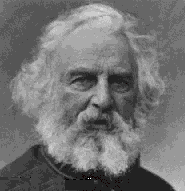
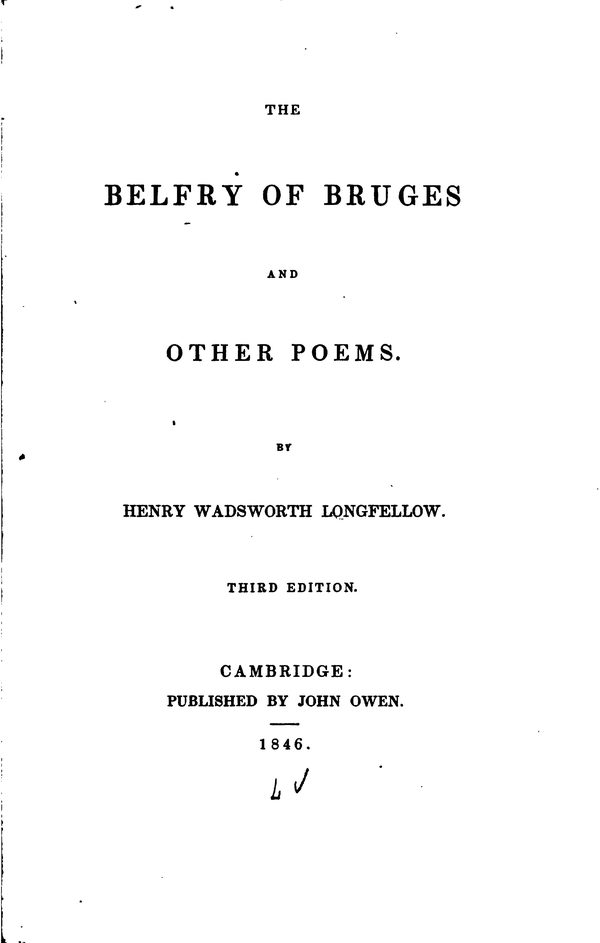
The poem appears in Longfellow's collection The Belfry of Bruges and Other Poems. It is the eighteenth poem in that book. Longfellow lived from 1807 to 1882. The poem has been in the americanpoems.com archive since 2004 and was a Poem of the Day that year.
What readers have said
Dennis Zelmer read the poem as a moral lesson about speech. For him the arrow is an insult, the oak an angry person offended by it, and the song a compliment. He concluded that it is better to sing songs than to shoot arrows. Dennis Zelmer, 2005
Katy read the arrow as harmful words that fly off without a trace. She saw the song as the forgiveness and compassion of friends, which outlasts the wound. Katy, 2005
peggy dohrman was taught a different version of the same lesson. The arrow stood for mean words that last forever and hurt deeply. The songs stood for kind words that give strength, love and hope. peggy dohrman, 2011
Grace saw the arrow as something concrete whose shooting comes to nothing. The song, by contrast, sows love in other people's hearts. She took this as a sign of music's power to go beyond the physical world. Grace, 2005
Whimsy first read it as a poem about sowing what one cannot reap, which appealed to the teacher in her. She then noticed that the singer does reap what he sowed. She came to read it as a hymn to marriage, whose leap of faith is realised long afterward. Whimsy, 2010
jen antonio read the poem as being about the consequences of our actions. She saw the arrow as able to harm wherever it lands, and the song as the arrow's opposite. jen antonio, 2005
Keep reading
Discover more of Henry Wadsworth Longfellow’s poetry.
Thanks for the memories. I was telling my daughter about the poem and she knew nothing about it. She is 34 and they just do not teach the classics in school any more. What a waste.
M Deneen CarterUnited States
I recently heard a song entitled "The Arrow & The Song", written and produced by Elisa Burchett and Dmitry Brill(2003); it is a beautiful and captivating song on a 'chill/lounge' compilation CD mixed by Peter Rauhofer(2004). I was instantly enamoured with and intrigued by the metaphors suggested within the lyrics. I read the CD jacket insert further and realized that the producers of the song gave credit to…
Read the whole comment
I recently heard a song entitled "The Arrow & The Song", written and produced by Elisa Burchett and Dmitry Brill(2003); it is a beautiful and captivating song on a 'chill/lounge' compilation CD mixed by Peter Rauhofer(2004). I was instantly enamoured with and intrigued by the metaphors suggested within the lyrics. I read the CD jacket insert further and realized that the producers of the song gave credit to Longfellow's poem of the same name. The experience reinforced my belief that many people are drawn instinctually to certain types of language, as I have long considered H.W.Longfellow to be one of my favorite poets. Irony ensued immediately as it then occurred to me that I could not recall having ever read this particular poem before hearing the song. Furthermore, the title centers, at least in part, a 'song'. I understand there are many references to this pair, arrow and song, throughout many cultures and civilizations of known human history. In today's everchanging paradigm of quantum mechanics (pardon the pun), I feel the 'arrow' may represent God's creation of light/the theory of the speed of light; the 'song' correlating with sound.
elisa burchettUnited States
To M. Deneen Carter, Thank you for "reinforcing my belief" that people do listen. I work in a business where people listen superficially, at best, to the lyrics of the songs. I've read countless music reviews and came to the conclusion that people don't listen. Not even when they're paid to listen! I was given a book of poems as a gift and found The Arrow and The Song just when I needed it. It expressed my feelings…
Read the whole comment
To M. Deneen Carter,
Thank you for "reinforcing my belief" that people do listen. I work in a business where people listen superficially, at best, to the lyrics of the songs. I've read countless music reviews and came to the conclusion that people don't listen. Not even when they're paid to listen! I was given a book of poems as a gift and found The Arrow and The Song just when I needed it. It expressed my feelings perfectly and I began arranging a vocal version immediately. Longfellow's poem spoke to my feelings of isolation at the time. It brought to mind messages in bottles and the like. After recording the song I began to wonder where the song might land. My question has been answered. Thank you for listening.
The Arrow and The Song is a great poem. I had to learn it in high school and i am now teaching it to my daughter. It is a fabulous poem!!!
José Dativo Marques MoutinhoBrazil
Today when I was thinking about this poem, I tried Google and your site was the first one to show it. I have a strong feeling about this poem because, many years ago, when I was listening the records of Linguaphone, an old english course sold in Brasil those days, I found it and enjoy it very much. It remember me of my youth days back in the interior land, in the brasilian state of Minas Gerais, and used to play game with my bow and arrows that I made. The poem sounds to me like a tender and sweet music. Since those days, whenever possible, I say the piece, and all people get touched by its words and sound. Thank you for remembering me such great moments.
GraceChina
this poem reminds of the interpersonal relationship. you know, the arrow in the poem represents something concrete and physical, the shooting of the arrow results in nothing; while the song has sowed love in other people's heart, this shows the power of music, it can transcend the limitations of the realistic world.
HeatherUnited States
I love this poem. I had to remember and receit this poem in grade school, and I fell in love with it. I have been searching for it for a while now. I never forgot it once I had to memorize it.
S. SanthoshIndia
I have studied this in my college class in India. After that today to read this poem again. Excellent piece of work by Henry Wadsworth Longfellow.
jen antonioPhilippines
Well, i've encountered this poem while i was tutoring to my grade 4 neighbor. The arrow and the song is a poem that depicts the outcomes or consequences of our action, may it be for the betterment of the others or just plain out of nothing to do at all. the arrow symbolizes an object that could harm in itself, that once you release it you are not determined whether it would put a harm to someone or something on…
Read the whole comment
Well, i've encountered this poem while i was tutoring to my grade 4 neighbor. The arrow and the song is a poem that depicts the outcomes or consequences of our action, may it be for the betterment of the others or just plain out of nothing to do at all. the arrow symbolizes an object that could harm in itself, that once you release it you are not determined whether it would put a harm to someone or something on which it land. the song on the other hand is the irony of the arrow; the song could posibly connote a good deed that was given to someone. It might go swiftly and instantly but the effect is undetermined as well. This poem is about an arrow that symbolizes harm and a song that symbolizes compasion; once used together could create an outcome far different from what we have perceive. The end of the poem resolves what the two object has done; the arrow didn't create any harm while the song won a friend to end.
Dennis ZelmerUnited States
The poem is a moral lesson. Longfellow cautions us that the words we say travel quickly and widely. The arrow is an insult or negative word. The oak is an angry person we offended by the indiscriminate remark. The song is a compliment or word of praise. The friend is simply that... a friend. Better to sing songs than to shoot arrows!
KatyUnited States
I think this poem tells the powerful story of friendship. Although the arrow, the sometimes harmful words exchanged in a relationship, flies away quickly without a trace, the song, the loving forgiveness and compassion that friends possess, supercede and rush over the once piercing wound of the arrow. The song is everlasting, "from beginning to end," a true depiction of friendship and love.
An analysis on diction… Since Henry Wadsworth Longfellow is a well-known poet of the Indian poems of Hiawatha, it is not a surprise that he used the words arrow and song to present this poem. An arrow is an ancient weapon used by the Indians and other ancient people in warfare and hunting. The Indians in particular made their individual arrows for their own personal use; thus, they can identify their own amidst a…
Read the whole comment
An analysis on diction… Since Henry Wadsworth Longfellow is a well-known poet of the Indian poems of Hiawatha, it is not a surprise that he used the words arrow and song to present this poem. An arrow is an ancient weapon used by the Indians and other ancient people in warfare and hunting. The Indians in particular made their individual arrows for their own personal use; thus, they can identify their own amidst a hundred of other arrows. And long before writing was developed, Indians express their thoughts and feelings, orally; thus, singing was one of the popular arts in oral communication. So literally, one can picture an Indian shooting an arrow without specific target and lost sight of it. At another instant, the same Indian sang a song and lost sight of it, for nobody can see where a song goes. But later on in his life, he saw his arrow again stabbed deep in an oak, intact. And he also realized that his song was wholly kept in the heart of a friend. An analysis on Imagery… The author used metaphor in conveying a very basic yet important lesson to the readers; for naturally, an arrow is a harmful weapon—it hurts and worst, kills; while the song obviously relieves or refreshes the mind and heart. Thus, one can conclude that these two things represent or are a metaphor of the two kinds of words that each of us is capable of saying: the destructive or piercing words and the constructive or praising words. At the same time, the oak represents a person hurt by the cruel words one has spoken. The evil words had remained fresh and nurtured in spite of time. And the friend represents a person one has encouraged with such pleasing words that the deed was remembered through time. An analysis on theme… The poem reminds everyone to think twice and be aware of what one speaks—for words travel very quickly. And once out can either dishearten or encourage the person involved, and those words could affect him or her for a lifetime.
LaurenUnited States
For chorus in 8th grade our chorus teacher, Dr. Laun Berry, composed The Arrow and the Song by, Henry Wadsworth Longfellow. It is avery touching song and tells a story about a very important lesson learned about friendship. The amazing lyrics and sything words are what make this poem extravagent!
Patrick SteevesCanada
The poem The Arrow and the Song was written by the famous poet Henry Wadsworth Longfellow ([phone removed]). Henry lived in the romantic era long with composers Berlioz and Schumann. The romantic era was a period of brilliant masterpieces centered mainly of peace, love and symbolism. The Arrow and the Song was one of his greatest works and its meaning continues to today with the arrangement for choir by Marilyn…
Read the whole comment
The poem The Arrow and the Song was written by the famous poet Henry Wadsworth Longfellow ([phone removed]). Henry lived in the romantic era long with composers Berlioz and Schumann. The romantic era was a period of brilliant masterpieces centered mainly of peace, love and symbolism. The Arrow and the Song was one of his greatest works and its meaning continues to today with the arrangement for choir by Marilyn Lightfoot.
In the first line of the first stanza, the word arrow represents a friendship because like arrows, friendships can fly a far distance. The second line of the first stanza, “It fell to earth, I knew not where;” signifies that what the arrow symbolizes has been forgotten or lost from sight. The last two lines in the first stanza signify that things can change in a blink of an eye because if you blink you can literally miss the flight of an arrow.
The word song in the first line of the second stanza can represent many things. It can represent memories, dreams or rumors because if any of these things are spoken aloud, like a song, others will learn of them. I also noticed that the first two stanzas were very similar to each other and that lead me to believe that the arrow and the song both symbolize the same things. Also the second line of the first and second stanzas, “It fell to earth, I knew not where” represents that you can have no idea of where certain things may end up and they may bear unexpected consequences. The last two lines of stanza two confirm this. It also represents that a small act of kindness can convince a person to do an act of kindness to another and so on and so forth.
In the first sentence of the last stanza, I believe they choose the word oak because oaks are solid, strong and in this poem are used to symbolize a person’s soul. Also in the second sentence of the first stanza, “I found the arrow still unbroke;” signifies that they found that the friend from the first stanza was still their friend, no matter what disagreement they may have had. Finally, the last two lines of the third stanza states “And the song, from beginning to end/I found again in the heart of a friend.” These lines imply that seeing or talking to a friend can revitalize hopes, goals, and dreams.
The title also supports my theory. Since an arrow is intended to be harmful, this may be the reason that the friendship was “killed”. Also, since songs are meant to be meaningful, pure and beautiful, this can easily represent memories, dreams or goals, since they are meant to be meaningful, pure and beautiful.
i really like this poem it kinda touched me you know wat im sayin
MadelineUzbekistan
We sang the words to this poem as a song in chorus this year, as well as the first verse to "Snow-Flakes".As I read these poems to myself, the chords that accompanied these words are playing in my head... I believe that Longfellow has a hidden talent as a songwriter as well as a poet. (come to think of it, What's the difference?)
janis hunterUnited Kingdom
would like the words to the poem hiawatha
vincentPhilippines
in this poem,,, i've got moral lessons,,eventhough i could hurt people(we are not perfectly made).thus, it just only reminding us people that WE! should be careful what we say and what we do!Sometimes our patience could be gone!!!But here in poem shows that there is forgiveness if we have mistaken...If you have some of angryness in our heart just let go! Just say to God He'll take the fight and win it for you!!! HAVE A BLESSED DAY!
billyUnited States
i have to do this poem for my english techer. i had to get it memorized. it has a great moral to it
Whimsy
At first I thought it was a poem about someone who sows what he cannot reap -- it touched the heart of the teacher in me.
But the singer reaped what he'd sown -- and I realized this could well be a hymn to matrimony!
The leap of faith the couple takes at the altar is realized long, long afterward.
What is it doing in my kids' poetry book?
The kids are the fruit of that faith, hope and love at the altar, so it is somehow very appropriate to be in one of their books.
Sinds I was in a 4th grade elementary school up to this day, I LOVE this poem EVER. I remember my teacher demonstrate every single words to make it LIVE of LIFE .... I thank Henry Wadsworth Longfellow for inspiring children with all his POEMs ...Your name printed deeply in my MIND ...
laurenUnited States
the menaing
. In the poem the first line has the arrow which represents friendship, because like friendship can fly in a distance. The second line is saying that arrow is symbolizing it has been forgotten from sight. The last two lines in the first stanza indicates that things can change in a blink of an eye, because if you really do blink you could literally miss the flight of the arrow. In the first line of the second stanza…
Read the whole comment
. In the poem the first line has the arrow which represents friendship, because like friendship can fly in a distance. The second line is saying that arrow is symbolizing it has been forgotten from sight. The last two lines in the first stanza indicates that things can change in a blink of an eye, because if you really do blink you could literally miss the flight of the arrow. In the first line of the second stanza it signifies the song as a memory or a dream, like a song others will learn them. The second line of the first and second stanza both say “it fell to earth, I knew not where” means that you do not know where life is going to take you and that you may have consequences. In the last stanza the poem uses, “oak” and I think they use this because it represents someone’s soul because your soul is strong and so is an oak tree. On the second line in the last stanza it says “I found the arrow still unbroken” symbolizes that they found there friend (from the first stanza) and they are still friend no matter what disagreement they get into. Lastly, it says “I found again in the heart of a friend” which means to me that they are friends again.
I was taught the difference was that the arrow was a word or words that were mean and destructive lasted forever and hurt deeply and that songs were kinds words that gave strength and found love and hope forever
Sam CastleeUnited States
wow I really like this poem its awesome it makes me think of the time my cousin and I were throwing glass into the back yard and when he left back to the army three months later I would sit outside where the glass was and sometimes I would pick it up and throw it back out there missing him.
MISSES & KISSES!!!!
tierraUnited States
f
i luv tis poem 2
kumarIndia
Good poem!
Its is really nice poem..
AmyroseUnited States
i have to sing this in chourus and it sounds really awesome with all the harmony and stuff but my teacher is making me write a report on longfellow. :(
Mohammad SumanBangladesh
About This Poem
As on young age I did not understand the meaning.... Now I can understand & feel the poem very much. But No one can understand me.
Thanks for the memories. I was telling my daughter about the poem and she knew nothing about it. She is 34 and they just do not teach the classics in school any more. What a waste.
I recently heard a song entitled "The Arrow & The Song", written and produced by Elisa Burchett and Dmitry Brill(2003); it is a beautiful and captivating song on a 'chill/lounge' compilation CD mixed by Peter Rauhofer(2004). I was instantly enamoured with and intrigued by the metaphors suggested within the lyrics. I read the CD jacket insert further and realized that the producers of the song gave credit to…
Read the whole commentI recently heard a song entitled "The Arrow & The Song", written and produced by Elisa Burchett and Dmitry Brill(2003); it is a beautiful and captivating song on a 'chill/lounge' compilation CD mixed by Peter Rauhofer(2004). I was instantly enamoured with and intrigued by the metaphors suggested within the lyrics. I read the CD jacket insert further and realized that the producers of the song gave credit to Longfellow's poem of the same name. The experience reinforced my belief that many people are drawn instinctually to certain types of language, as I have long considered H.W.Longfellow to be one of my favorite poets.
Irony ensued immediately as it then occurred to me that I could not recall having ever read this particular poem before hearing the song. Furthermore, the title centers, at least in part, a 'song'.
I understand there are many references to this pair, arrow and song, throughout many cultures and civilizations of known human history. In today's everchanging paradigm of quantum mechanics (pardon the pun), I feel the 'arrow' may represent God's creation of light/the theory of the speed of light; the 'song' correlating with sound.
To M. Deneen Carter, Thank you for "reinforcing my belief" that people do listen. I work in a business where people listen superficially, at best, to the lyrics of the songs. I've read countless music reviews and came to the conclusion that people don't listen. Not even when they're paid to listen! I was given a book of poems as a gift and found The Arrow and The Song just when I needed it. It expressed my feelings…
Read the whole commentTo M. Deneen Carter,
Thank you for "reinforcing my belief" that people do listen. I work in a business where people listen superficially, at best, to the lyrics of the songs. I've read countless music reviews and came to the conclusion that people don't listen. Not even when they're paid to listen! I was given a book of poems as a gift and found The Arrow and The Song just when I needed it. It expressed my feelings perfectly and I began arranging a vocal version immediately. Longfellow's poem spoke to my feelings of isolation at the time. It brought to mind messages in bottles and the like. After recording the song I began to wonder where the song might land. My question has been answered. Thank you for listening.
Elisa
The Arrow and The Song is a great poem. I had to learn it in high school and i am now teaching it to my daughter. It is a fabulous poem!!!
Today when I was thinking about this poem, I tried Google and your site was the first one to show it. I have a strong feeling about this poem because, many years ago, when I was listening the records of Linguaphone, an old english course sold in Brasil those days, I found it and enjoy it very much. It remember me of my youth days back in the interior land, in the brasilian state of Minas Gerais, and used to play game with my bow and arrows that I made. The poem sounds to me like a tender and sweet music. Since those days, whenever possible, I say the piece, and all people get touched by its words and sound. Thank you for remembering me such great moments.
this poem reminds of the interpersonal relationship. you know, the arrow in the poem represents something concrete and physical, the shooting of the arrow results in nothing; while the song has sowed love in other people's heart, this shows the power of music, it can transcend the limitations of the realistic world.
I love this poem. I had to remember and receit this poem in grade school, and I fell in love with it. I have been searching for it for a while now. I never forgot it once I had to memorize it.
I have studied this in my college class in India. After that today to read this poem again. Excellent piece of work by Henry Wadsworth Longfellow.
Well, i've encountered this poem while i was tutoring to my grade 4 neighbor. The arrow and the song is a poem that depicts the outcomes or consequences of our action, may it be for the betterment of the others or just plain out of nothing to do at all. the arrow symbolizes an object that could harm in itself, that once you release it you are not determined whether it would put a harm to someone or something on…
Read the whole commentWell, i've encountered this poem while i was tutoring to my grade 4 neighbor. The arrow and the song is a poem that depicts the outcomes or consequences of our action, may it be for the betterment of the others or just plain out of nothing to do at all. the arrow symbolizes an object that could harm in itself, that once you release it you are not determined whether it would put a harm to someone or something on which it land. the song on the other hand is the irony of the arrow; the song could posibly connote a good deed that was given to someone. It might go swiftly and instantly but the effect is undetermined as well. This poem is about an arrow that symbolizes harm and a song that symbolizes compasion; once used together could create an outcome far different from what we have perceive. The end of the poem resolves what the two object has done; the arrow didn't create any harm while the song won a friend to end.
The poem is a moral lesson. Longfellow cautions us that the words we say travel quickly and widely. The arrow is an insult or negative word. The oak is an angry person we offended by the indiscriminate remark. The song is a compliment or word of praise. The friend is simply that... a friend. Better to sing songs than to shoot arrows!
I think this poem tells the powerful story of friendship. Although the arrow, the sometimes harmful words exchanged in a relationship, flies away quickly without a trace, the song, the loving forgiveness and compassion that friends possess, supercede and rush over the once piercing wound of the arrow. The song is everlasting, "from beginning to end," a true depiction of friendship and love.
An analysis on diction… Since Henry Wadsworth Longfellow is a well-known poet of the Indian poems of Hiawatha, it is not a surprise that he used the words arrow and song to present this poem. An arrow is an ancient weapon used by the Indians and other ancient people in warfare and hunting. The Indians in particular made their individual arrows for their own personal use; thus, they can identify their own amidst a…
Read the whole commentAn analysis on diction…
Since Henry Wadsworth Longfellow is a well-known poet of the Indian poems of Hiawatha, it is not a surprise that he used the words arrow and song to present this poem. An arrow is an ancient weapon used by the Indians and other ancient people in warfare and hunting. The Indians in particular made their individual arrows for their own personal use; thus, they can identify their own amidst a hundred of other arrows. And long before writing was developed, Indians express their thoughts and feelings, orally; thus, singing was one of the popular arts in oral communication. So literally, one can picture an Indian shooting an arrow without specific target and lost sight of it. At another instant, the same Indian sang a song and lost sight of it, for nobody can see where a song goes. But later on in his life, he saw his arrow again stabbed deep in an oak, intact. And he also realized that his song was wholly kept in the heart of a friend.
An analysis on Imagery…
The author used metaphor in conveying a very basic yet important lesson to the readers; for naturally, an arrow is a harmful weapon—it hurts and worst, kills; while the song obviously relieves or refreshes the mind and heart. Thus, one can conclude that these two things represent or are a metaphor of the two kinds of words that each of us is capable of saying: the destructive or piercing words and the constructive or praising words. At the same time, the oak represents a person hurt by the cruel words one has spoken. The evil words had remained fresh and nurtured in spite of time. And the friend represents a person one has encouraged with such pleasing words that the deed was remembered through time.
An analysis on theme…
The poem reminds everyone to think twice and be aware of what one speaks—for words travel very quickly. And once out can either dishearten or encourage the person involved, and those words could affect him or her for a lifetime.
For chorus in 8th grade our chorus teacher, Dr. Laun Berry, composed The Arrow and the Song by, Henry Wadsworth Longfellow. It is avery touching song and tells a story about a very important lesson learned about friendship. The amazing lyrics and sything words are what make this poem extravagent!
The poem The Arrow and the Song was written by the famous poet Henry Wadsworth Longfellow ([phone removed]). Henry lived in the romantic era long with composers Berlioz and Schumann. The romantic era was a period of brilliant masterpieces centered mainly of peace, love and symbolism. The Arrow and the Song was one of his greatest works and its meaning continues to today with the arrangement for choir by Marilyn…
Read the whole commentThe poem The Arrow and the Song was written by the famous poet Henry Wadsworth Longfellow ([phone removed]). Henry lived in the romantic era long with composers Berlioz and Schumann. The romantic era was a period of brilliant masterpieces centered mainly of peace, love and symbolism. The Arrow and the Song was one of his greatest works and its meaning continues to today with the arrangement for choir by Marilyn Lightfoot.
In the first line of the first stanza, the word arrow represents a friendship because like arrows, friendships can fly a far distance. The second line of the first stanza, “It fell to earth, I knew not where;” signifies that what the arrow symbolizes has been forgotten or lost from sight. The last two lines in the first stanza signify that things can change in a blink of an eye because if you blink you can literally miss the flight of an arrow.
The word song in the first line of the second stanza can represent many things. It can represent memories, dreams or rumors because if any of these things are spoken aloud, like a song, others will learn of them. I also noticed that the first two stanzas were very similar to each other and that lead me to believe that the arrow and the song both symbolize the same things. Also the second line of the first and second stanzas, “It fell to earth, I knew not where” represents that you can have no idea of where certain things may end up and they may bear unexpected consequences. The last two lines of stanza two confirm this. It also represents that a small act of kindness can convince a person to do an act of kindness to another and so on and so forth.
In the first sentence of the last stanza, I believe they choose the word oak because oaks are solid, strong and in this poem are used to symbolize a person’s soul. Also in the second sentence of the first stanza, “I found the arrow still unbroke;” signifies that they found that the friend from the first stanza was still their friend, no matter what disagreement they may have had. Finally, the last two lines of the third stanza states “And the song, from beginning to end/I found again in the heart of a friend.” These lines imply that seeing or talking to a friend can revitalize hopes, goals, and dreams.
The title also supports my theory. Since an arrow is intended to be harmful, this may be the reason that the friendship was “killed”. Also, since songs are meant to be meaningful, pure and beautiful, this can easily represent memories, dreams or goals, since they are meant to be meaningful, pure and beautiful.
i really like this poem it kinda touched me you know wat im sayin
We sang the words to this poem as a song in chorus this year, as well as the first verse to "Snow-Flakes".As I read these poems to myself, the chords that accompanied these words are playing in my head... I believe that Longfellow has a hidden talent as a songwriter as well as a poet.
(come to think of it, What's the difference?)
would like the words to the poem hiawatha
in this poem,,, i've got moral lessons,,eventhough i could hurt people(we are not perfectly made).thus, it just only reminding us people that WE! should be careful what we say and what we do!Sometimes our patience could be gone!!!But here in poem shows that there is forgiveness if we have mistaken...If you have some of angryness in our heart just let go! Just say to God He'll take the fight and win it for you!!! HAVE A BLESSED DAY!
i have to do this poem for my english techer. i had to get it memorized. it has a great moral to it
At first I thought it was a poem about someone who sows what he cannot reap -- it touched the heart of the teacher in me.
But the singer reaped what he'd sown -- and I realized this could well be a hymn to matrimony!
The leap of faith the couple takes at the altar is realized long, long afterward.
What is it doing in my kids' poetry book?
The kids are the fruit of that faith, hope and love at the altar, so it is somehow very appropriate to be in one of their books.
At first I thought it was a poem about someone who sows what he cannot reap -- it touched the heart of the teacher in me.
But the singer reaped what he'd sown -- and I realized this could well be a hymn to matrimony!
The leap of faith the couple takes at the altar is realized long, long afterward.... See More
What is it doing in my kids' poetry book?
The kids are the fruit of that faith, hope and love at the altar, so it is somehow very appropriate to be in one of their books.
Unchanging friendship
It gives softness throughout, as if written by female poet. In his last stanza, I found again in a heart of a friend.
Wiseacre
Third line: I lose more damn arrows that way
Ever favoriete poem
Sinds I was in a 4th grade elementary school up to this day, I LOVE this poem EVER. I remember my teacher demonstrate every single words to make it LIVE of LIFE .... I thank Henry Wadsworth Longfellow for inspiring children with all his POEMs ...Your name printed deeply in my MIND ...
the menaing
. In the poem the first line has the arrow which represents friendship, because like friendship can fly in a distance. The second line is saying that arrow is symbolizing it has been forgotten from sight. The last two lines in the first stanza indicates that things can change in a blink of an eye, because if you really do blink you could literally miss the flight of the arrow. In the first line of the second stanza…
Read the whole comment. In the poem the first line has the arrow which represents friendship, because like friendship can fly in a distance. The second line is saying that arrow is symbolizing it has been forgotten from sight. The last two lines in the first stanza indicates that things can change in a blink of an eye, because if you really do blink you could literally miss the flight of the arrow. In the first line of the second stanza it signifies the song as a memory or a dream, like a song others will learn them. The second line of the first and second stanza both say “it fell to earth, I knew not where” means that you do not know where life is going to take you and that you may have consequences. In the last stanza the poem uses, “oak” and I think they use this because it represents someone’s soul because your soul is strong and so is an oak tree. On the second line in the last stanza it says “I found the arrow still unbroken” symbolizes that they found there friend (from the first stanza) and they are still friend no matter what disagreement they get into. Lastly, it says “I found again in the heart of a friend” which means to me that they are friends again.
The arrow and the song
I was taught the difference was that the arrow was a word or words that were mean and destructive lasted forever and hurt deeply and that songs were kinds words that gave strength and found love and hope forever
wow I really like this poem its awesome it makes me think of the time my cousin and I were throwing glass into the back yard and when he left back to the army three months later I would sit outside where the glass was and sometimes I would pick it up and throw it back out there missing him.
MISSES & KISSES!!!!
f
i luv tis poem 2
Good poem!
Its is really nice poem..
i have to sing this in chourus and it sounds really awesome with all the harmony and stuff but my teacher is making me write a report on longfellow. :(
About This Poem
As on young age I did not understand the meaning....
Now I can understand & feel the poem very much. But No one can understand me.