Why did you turn back,
that hell should be reinhabited
of myself thus
swept into nothingness?
Why did you turn?
why did you glance back?
So you have swept me back--
I who could have walked with the live souls
above the earth.
I who could have slept among the live flowers
at last.
so for your arrogance
and your ruthlessness
I am swept back
where dead lichens drip
dead cinders among moss of ash.
What was it that crossed my face
with the light from yours
and your glance?
What was it you saw in my face --
the light of your own face,
the fire of your own presence?
✦
Analysis
Eurydice: analysis
Introduction
"Eurydice" is a free-verse poem spoken by the figure named in its title. In Greek myth, Eurydice was lost to the underworld a second time when Orpheus looked back at her. The poem never names him. It is spoken to an unnamed "you" who turned and glanced back.
The speaker asks again and again why he turned. She contrasts the life she might have had above ground with the dead world she is swept back into. She blames his "arrogance" and "ruthlessness." The poem ends by asking what he really saw in her face.
Summary
The speaker asks why the listener turned back. She says that hell must now be inhabited again by her. She has been "swept into nothingness." The stanza is a single question.
The second stanza repeats the question in shorter form. The speaker asks, "Why did you turn?" Then she asks, "why did you glance back?"
The third stanza states the result. "So you have swept me back," the speaker says. She could have walked with "the live souls / above the earth." She could have slept among "the live flowers / at last."
The fourth stanza names the causes and the place. Because of his "arrogance" and "ruthlessness," she is swept back. She returns to a place "where dead lichens drip." There, "dead cinders" lie among "moss of ash."
The fifth stanza turns to a new question. The speaker asks what it was that crossed her face. It came "with the light from yours / and your glance."
The final stanza asks a last question. What did he see in her face? The speaker offers an answer inside the question itself: "the light of your own face, / the fire of your own presence."
Themes and meaning
The first theme is loss caused by another person's act. The poem is built on the question "Why did you turn?" The turn is small, only a glance. Yet it sends the speaker back to hell. The poem shows how one moment of another's choice can undo a whole future.
A second theme is life set against death. Stanza 3 speaks of "the live souls" and "the live flowers." Stanza 4 answers with "dead lichens" and "dead cinders among moss of ash." Even the moss, usually green and living, is made of ash. The repeated "live" and "dead" divide the world she lost from the one she must enter.
A third theme is blame. The speaker names his faults plainly: "arrogance" and "ruthlessness." She does not treat the turn as an accident or a moment of love. The poem can be read as an accusation, giving the lost woman a voice that the myth does not give her.
A fourth theme is self-regard. The last stanza asks what he saw in her face, and suggests he saw "the light of your own face." One reading is that he looked back to see himself reflected, not to see her. On this reading the turn was an act of vanity. The question form leaves room for doubt, but the answer is built into it.
A fifth theme is the self erased. Line 4 speaks of being "swept into nothingness." The verb "swept" returns in lines 7 and 14. The speaker is moved about like dust, with no choice of her own.
Tone
The tone opens in anguish and disbelief. The first two stanzas are only questions, asked and asked again. The shortening from "Why did you turn back" to "Why did you turn?" sounds like grief tightening.
In stanzas 3 and 4 the tone becomes bitter and accusing. The speaker lists what she has lost with longing, as in "at last." Then she names his "arrogance" and "ruthlessness" without softening.
The last two stanzas cool into sharper questioning. The speaker seems to be thinking the event through. The final question is almost cold. It turns grief into a judgment of the man who looked.
Form and structure
The poem has 22 lines in 6 stanzas of 4, 2, 5, 5, 3 and 3 lines. It is free verse with no metre. Lines vary widely, from 2 to 11 syllables.
Repeated words take the place of rhyme: "back" ends line 1, line 6, line 7 and line 14. The word "face" returns at the end of line 17 and line 20. The poem opens and closes with questions, which frame its accusations. Dashes at line 7 and line 20 mark sharp turns. Some stanzas begin in lower case after a full stop.
Poetic devices
Rhetorical question line 1
Why did you turn back The poem opens with a question that has no good answer. It sets the tone of grief and blame.
Repetition line 5
Why did you turn? The first question returns, cut shorter. The repetition shows the speaker unable to move past the moment.
Repetition line 7
So you have swept me back "swept" recurs across the poem. It makes the speaker a passive object moved by another's act.
Anaphora line 10
I who could have slept among the live flowers "I who could have" repeats from line 8. The pattern lists lost possibilities and stresses what might have been.
Enjambment line 11
at last. The phrase stands alone on a short line. It stresses how near the speaker came to release.
Imagery line 15
where dead lichens drip The underworld is shown as damp, grey and decaying. The image contrasts with the "live flowers" above.
Paradox line 16
moss of ash Moss is living and green, and ash is burnt and dead. Combined, they picture a place where even growth is lifeless.
Light imagery line 21
the light of your own face The light in her face is his own, reflected back. It suggests he looked to see himself.
Metaphor line 22
the fire of your own presence His presence is pictured as fire. The image links his self-regard to the ash and cinders of the underworld.
Words worth knowing
Eurydice
In Greek myth, the wife of Orpheus. He was allowed to lead her back from the underworld on condition that he not look back at her, and when he did, she was lost.
reinhabited
Lived in again. Here hell is to be occupied once more by the speaker.
of myself
An older use of "of" meaning by: hell is reinhabited by me.
lichens
Crusty, plant-like growths that cover rocks and bark.
cinders
Small pieces of partly burnt material left after a fire.
Context
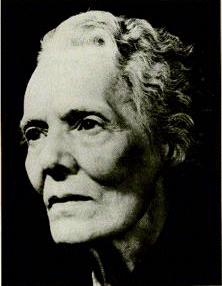
H. D. lived from 1886 to 1961. "Eurydice" was the archive's Poem of the Day on August 20, 2000. Readers left 7 comments on it between 2005 and 2023.
What readers have said
Kia reads the poem through the myth and takes its subject to be male arrogance, which can neither wait nor keep a condition. Kia, 2008
Natalie also sees arrogance, and adds a failure of trust: he could not simply trust that she was right behind him. Natalie, 2009
anuma from alipur reads the poem as Eurydice accusing Orpheus of arrogance, after he looked back at the very edge of the underworld. anuma from alipur, 2010
Pandora reads it more loosely, as a fall from grace brought on by someone the speaker does not admire. This reader finds the speaker at last recognising a likeness to that person. Pandora, 2008
Jacob objects to summing the poem up as being about one thing, arguing that nothing written in it should be denied or ranked above the rest. Jacob, 2010
I think this is about a fall from grace, and someone being influenced by a person they don't admire or even particularly like. They blame that person for their "reinhabitance of Hell" only to relfect a little deeper and discover that they are not so very different from that person afterall.
PS- Don't do drugs, Nick! It kills you. Plus if you aren't high you might actually come up with something articulate to say.
KiaGermany
I don't think this talks about her being influenced by another person. Eurydice in the ancient Greek myth was Orpheus' wife, she died and was sent to hell. Orpheus could go and take her back at a condition: that in the way back in the world he should not have turned his face to look at her. Of course he did, that's why he could not have his wife back. "Thanks" to him Eurydice couldnt leave hell. The topic of this poem is the arrogance of the male, who can neither wait nor respect any conditions..he just does what he wants and what in that moment feels like, without caring too much.
NatalieUnited States
Personally, i think it is the arrogance of men and their inability to trust women. He was unable to tust the fact that she is with him, right behind him following him and wants to be with him just as much as he wants to be with her. and in this peom she asks him why did he look back, why couldnt he just trust that she is right there behind him without looking. why couldnt he just feel it...
JacobZimbabwe
Incomplete?
That's only the first of 7 parts of this poem...
And you can't just say it's "about" something. The poem is a poem. You can't deny anything that's written in it or elevate something else to the only important thing.
anuma from alipurIndia
eurydice
Here is the poem in which eurydice is accusing orpheus, her lover for being arrogant. Euridice has trampled a snake by mistake and died, orpheus goes underworld to take her back, but his request is recieved on one condition that he must not look back until she has crossed the underworld and reached to the earth again but orpheus looks back just on the verge of ending of underworld and Euridice is doomed again.
this is a fantastic poem and this is why im on drugs
I think this is about a fall from grace, and someone being influenced by a person they don't admire or even particularly like. They blame that person for their "reinhabitance of Hell" only to relfect a little deeper and discover that they are not so very different from that person afterall.
PS- Don't do drugs, Nick! It kills you. Plus if you aren't high you might actually come up with something articulate to say.
I don't think this talks about her being influenced by another person. Eurydice in the ancient Greek myth was Orpheus' wife, she died and was sent to hell. Orpheus could go and take her back at a condition: that in the way back in the world he should not have turned his face to look at her. Of course he did, that's why he could not have his wife back. "Thanks" to him Eurydice couldnt leave hell.
The topic of this poem is the arrogance of the male, who can neither wait nor respect any conditions..he just does what he wants and what in that moment feels like, without caring too much.
Personally, i think it is the arrogance of men and their inability to trust women. He was unable to tust the fact that she is with him, right behind him following him and wants to be with him just as much as he wants to be with her. and in this peom she asks him why did he look back, why couldnt he just trust that she is right there behind him without looking. why couldnt he just feel it...
Incomplete?
That's only the first of 7 parts of this poem...
And you can't just say it's "about" something. The poem is a poem. You can't deny anything that's written in it or elevate something else to the only important thing.
eurydice
Here is the poem in which eurydice is accusing orpheus, her lover for being arrogant. Euridice has trampled a snake by mistake and died, orpheus goes underworld to take her back, but his request is recieved on one condition that he must not look back until she has crossed the underworld and reached to the earth again but orpheus looks back just on the verge of ending of underworld and Euridice is doomed again.
very inspiring