This twelve-line poem is spoken by someone who is already dead. The speaker died for Beauty and has barely been laid in the tomb. Then a second person, who died for Truth, is placed in the next room.
The two talk through the wall. They agree that Beauty and Truth are one, so they are brothers. They keep talking as kin through a night, until moss grows up to their lips and covers their names.
The poem sets a calm, friendly conversation about ideals against the slow work of the grave. Its last lines ask what dying for an ideal is worth. They leave the question open once no one can read the names.
Summary
The speaker says, "I died for Beauty". The speaker had hardly been settled in the tomb when someone else arrived. This newcomer, a man, had died for Truth. He was laid "In an adjoining room", right next to the speaker's own resting place.
The newcomer speaks first, and he speaks softly. He asks the speaker why they failed. The speaker answers with two words, "For Beauty". He replies that he died for Truth, and says that the two causes are really one. So, he concludes, the two of them are brothers.
The two meet "as Kinsmen" and spend a whole night together. They talk to each other across the wall that separates their rooms. The talk goes on until moss has grown all the way up to their lips. The moss also spreads over their names and covers them. The poem ends there, with the conversation stopped and both names hidden.
Themes and meaning
Death for an ideal is the starting point. One speaker died for Beauty and one for Truth, and how they died is never described. The poem cares only about the cause. The question "Why I failed" treats dying as failing. It may simply mean dying, or it may mean that the cause itself was lost.
The second idea is that Beauty and Truth are the same. The man who died for Truth says "Themself are One". A plural subject takes the singular reflexive "Themself", so the grammar joins the two ideals as it names them. Because the causes are one, the people who served them become one family. The poem does not argue this claim, but the speaker accepts it.
Kinship and company in death form the third idea. The grave is pictured as a house with rooms, and the dead are neighbours who talk "between the Rooms". "We Brethren, are" and "as Kinsmen" turn strangers into relatives. The tomb becomes a place of fellowship rather than isolation, at least for a while.
The last idea is forgetting. The moss first reaches their lips, which ends their speech. Then it covers their names, which ends their memory among the living. The ending can be read as ironic, since people who died for lasting ideals do not last. It can also be read gently, because they lose their names only after finding each other.
Tone
The tone is calm and matter-of-fact from the first line. "I died for Beauty" is a dramatic claim. It is followed at once by the plain, almost domestic "but was scarce" and "Adjusted in the Tomb". The speaker sounds like someone who has just moved into new lodgings.
The conversation in the second stanza is courteous. The newcomer "questioned softly". The answers are short, and the dashes make them sound halting and careful. There is no complaint about dying.
The third stanza grows warmer, as "Kinsmen" and "We talked" suggest ease and companionship. The last two lines shift the mood without raising the voice. The dashes in "And covered up -- our names --" pause before the loss. The speaker does not lament, and the quiet statement leaves the reader to feel the loss.
Form and structure
The poem has 12 lines in 3 stanzas of 4 lines each. The first eight lines alternate eight and six syllables. This is common metre, the hymn pattern of iambic tetrameter alternating with iambic trimeter. The third stanza loosens it: line 9 and line 12 have seven syllables, and line 11 has nine. The syllable range is 6 to 9.
The only exact rhyme is "Tomb" with "room", at line 2 and line 4. "replied" and "said" share only a final consonant, as do "Rooms" and "names". The computed scheme counts these as unrhymed. Dashes break many lines. Abstract nouns such as Beauty, Truth and Night are capitalised.
Poetic devices
Understatement line 1
but was scarce After the grand claim of dying for Beauty, the speaker turns to the small matter of being barely settled. The drop in scale sets the poem's calm, unheroic voice.
Alliteration line 1
Beauty -- but The repeated b sound links the ideal to the qualifying word that follows it. The dash between them makes the turn from the ideal to the plain fact audible.
Enjambment line 3
When One who died for Truth, was lain The sentence runs on into line 4 to say where he was laid. The run-on mirrors the arrival of the second body, carried over into the next space.
Euphemism line 5
Why I failed The newcomer calls dying failing. The word leaves open whether the speaker merely died or also lost the cause they died for.
Parallelism line 7
And I -- for Truth The reply echoes the shape of the speaker's answer in line 6. The matching phrases prepare for the claim that the two causes are one.
Paradox line 7
Themself are One Two ideals are called one, and the grammar enacts it. A singular reflexive stands for a plural subject.
Inverted syntax line 8
We Brethren, are The verb is held to the end, which gives the declaration a formal, almost scriptural weight. The archaic plural adds to that effect.
Metaphor line 10
We talked between the Rooms The graves become rooms in one house, and the dead become neighbours. The image makes death sociable before the ending takes that away.
Imagery line 11
Until the Moss had reached our lips Slow natural growth measures the passing of time. Moss reaching the lips shows speech being stopped.
Caesura line 12
And covered up -- our names -- The dash makes a pause before the object of the loss. The final dash leaves the poem open, as if the voice trails off.
Words worth knowing
scarce
Here an adverb meaning 'scarcely' or 'barely', not 'rare'.
Adjusted
'Settled' or 'arranged', as a body is laid out and placed in position.
lain
Used where standard grammar would have 'laid', meaning 'placed'. The form suggests the body lying there.
Themself
An unusual singular reflexive used for the two ideals together, stressing that they are one thing.
Brethren
An old plural of 'brother', often meaning 'fellow members' of a faith or group rather than blood relatives.
Kinsmen
'Relatives'. Here it means the two are family through their shared cause, not by birth.
Context
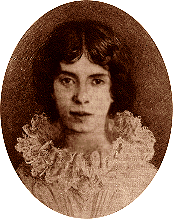
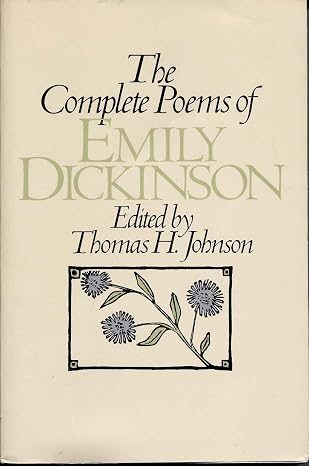
The archive's text of this poem comes from Complete Poems of Emily Dickinson, published in 1955. There it is number 449. Emily Dickinson lived from 1830 to 1886.
What readers have said
King Mongo sees no reason to assume the speaker is a woman, since the poem uses "Brethren", an old plural of brother. King Mongo, 2005
Glenda Stewart Burianek argues that brethren can describe a close bond between a man and a woman, and reads the night together as a romantic love. Glenda Stewart Burianek, 2010
Sho, who chose the poem for a college project, reads both as having failed, and takes the moss at their lips as a sign that everyone is forgotten in the end. Sho, 2005
Anna reads the poem as saying that martyrdom is useless, because the cause is lost once the moss covers the names. Anna, 2007
Sally links the poem to a line by John Keats equating beauty and truth, and reads death as the thing that joins them into one. Sally, 2005
Kiley, analysing the poem for an English class, reads Beauty and Truth as goals no one can fully reach, so the two dead share solidarity in failing. Kiley, 2007
i am doing ths poem for my project and i love this poem because taht the woman die for love and the man die for truth . i understand that most women wants to be beautiful so most die becasue that they ant to be beautiful. so i love this poem i love her she is my favor. poet. ever
RoddyPeru
>My Cries. > >It`s been years since I had a good cry. >There is so much in my heart. >I just don`t know how to let it out. >I wish it was like breathing >Alas, the sigh of my relief comes from thinking >What is to be >Where will life take me yonder >Like driftwood I just seem to float >Unfortunately thy liquid is not of tears. >Beauty is in tranquility and peace >Beauty is in appreciation >Beauty is never…
Read the whole comment
>My Cries. > >It`s been years since I had a good cry. >There is so much in my heart. >I just don`t know how to let it out. >I wish it was like breathing >Alas, the sigh of my relief comes from thinking >What is to be >Where will life take me yonder >Like driftwood I just seem to float >Unfortunately thy liquid is not of tears. >Beauty is in tranquility and peace >Beauty is in appreciation >Beauty is never lost...just forgotten. >I am beautiful...and I don`t have >to be a flower or a woman. >I should be appreciate and thanked. >I`ve worked to hard to have my beauty >fade into the night. >Love is not everything, for love will not >fulfill my heart. >Love and beauty, beauty is love. > >me >----- >I died for Beauty -- but was scarce >Adjusted in the Tomb >When One who died for Truth, was lain >In an adjoining room -- > >He questioned softly "Why I failed"? >"For Beauty", I replied -- >"And I -- for Truth -- Themself are One -- >We Brethren, are", He said -- > >And so, as Kinsmen, met a Night -- >We talked between the Rooms -- >Until the Moss had reached our lips -- >And covered up -- our names --
to quest for beauty is to live on life's wake The other, a path for those who wait, and live and die for death's sake
KenTaiwan
I love this poem,because it gives me a very shock and a bright picture.I seem see the Moss covered the two persons, covered Truth and Beauty ,then they become one..
SallyChina
John Keats said 'Beauty is truth, truth beauty,—that is all Ye know on earth, and all ye need to know.' Beauty and truth are One, and only death can bring them together, into One. Death helps keep beauty and truth in their peaks, and to their eternity... Great minds think alike.
ShoUnited States
i like this poem, and i chose it for a project in one of my college courses a while back. i feel the man died for truth and the woman for death; however, they both 'failed' since their dead. when the moss covered them up to their lips, which led to them not being able to talk to themselves anymore. so in the end you live for whatever and then you die, but in the end you'll be forgotten anyways.
Dickinson expounds young Keats ( who died at the age of 25) intrigue with truth and beauty. there is a harmony and dis harmony in this equasion. which spurred the birth of this poem
Disharmony of Keats
Truth is beauty, beauty is truth Can one be constant, the other vary Still be equal to each other Mystery of beauty, Miracle of truth
Shimon Weinroth
vaniaBrazil
Eu morri pela beleza, mas não me acomodava na mortalha Quando alguem que morre pela verdade é colocado na tumba ao lado. Ele suavimente questionou-me: Porque havia fracassado? e eu respondi: - pela beleza. E eu pela verdade, ambas são uma. Somos irmãos, ele disse. E então como antiquarios encontraram uma noite, conversávamos por entre as salas. Até que o lôdo ( lama esverdeada) atingiu os nossos lábios e cobriu os…
Read the whole comment
Eu morri pela beleza, mas não me acomodava na mortalha Quando alguem que morre pela verdade é colocado na tumba ao lado. Ele suavimente questionou-me: Porque havia fracassado? e eu respondi: - pela beleza. E eu pela verdade, ambas são uma. Somos irmãos, ele disse. E então como antiquarios encontraram uma noite, conversávamos por entre as salas. Até que o lôdo ( lama esverdeada) atingiu os nossos lábios e cobriu os nossos nomes.
COMENTÁRIO: Beleza e verdade são um porque são subjetivas. Não são eternas os valores e padrões estão em constante mudança e o que era novo passa a ser antiquadro em outra realidade, é coberto por outra visão de mundo, por outra realidade.Beleza e verdade apesar de serem motivo de paixão e luta morrem e são apagadas.
RachelAustralia
I just discovered this poem for a nui project, and i loved it from the first read! Amazing. To take something as poignant as 'truth is beauty, beauty truth' and turn it into a poem which is inspiring in its own right- i love it. Of course, i have to have a bit of a femminst gripe about the fact that it is the woman who died for beauty... :)
I don't think there's any reason to assume the speaker is a woman, other than that Emily Dickinson was a woman, and/or beauty is an attribute typically tied to the female.
The 8th line says "Brethren." I don't think a woman could be brethren to anyone--the word is an antiquated plural of "brother."
EmmaUnited States
I do not think that the speaker is a woman that died for love, love is beautiful, but the connection is between truth and beauty. They are tied together and no matter what a person says or does it will eventually fade and it will be forgotten/covered with moss, that they are not seen as the same until someone else dies for the same reasons and they are tied once again for people to recognize.
KatieUnited States
I Love this poem, and so many people interpret it incorrectly! Emily Dickinson very rarely wrote with herself as the narrator, she is not the "I" in the poem, she is just relating. I think the focus is on the personifications of Truth and Beauty dying, failing, in their attempts and then after they have accepted their fate and found fellowship in each other's company, they plight worsened in that they were forgotten. The poem is one of her greatest and people get so caught up with the details they miss the point!
WilsonUnited States
This poem is so beautiful. I believe there are two aspects of the poem you can deal with: The one that concentrates on her transitus into the afterlife and focuses on her death, and the one that deals with the parallel between truth and beauty and how both are significant to the true understanding and meaning of the poem... It is weird that the Dickinson would use the word “fail” as a metaphor for death. This is…
Read the whole comment
This poem is so beautiful. I believe there are two aspects of the poem you can deal with: The one that concentrates on her transitus into the afterlife and focuses on her death, and the one that deals with the parallel between truth and beauty and how both are significant to the true understanding and meaning of the poem... It is weird that the Dickinson would use the word “fail” as a metaphor for death. This is especially interesting and significant because when the narrator of the poem remarks that she “died for beauty” earlier in the poem, one would think she actually meant that she “lived” for beauty. Subsequently, she equates “living,” “dying” and “failing,” and does all these things for truth and beaut (two equivalent things). But why would Dickinson who loved the beauty and nature have two people who died for beauty and truth be nullified by the covering of the moss. Why aren't their deaths significant?
Wow, wverybody else is like "wow this is so great!" I Think it's extremely morbid! I mean, look at her hundreds of other poems about death...doesn't that say something? For a person who spent most of the latter half of her life in her own house, and never even let her visitors see her. sounds like a kook to me! She needed to have gotten out and gotten some inspiration from something. William Dean Howells, a fellow realist, was a strong advocate of only writing about the sweeter side of life, and I agree!
Anonymous
one just has one time to die. Hence, we should live so meaningfully in order that when we die we can proudly say the "I died for beauty"
lowlifeUnited States
First and formost im no expert on poetry and or liturature as a hole i dont think i even spelled it right .Im not emily dickinson nor did i ever know of her as of a few months ago.I am not going to critisize or even attempt to justify her words with any other meening nor choose any other words ,or order there of.And definatly not insult any of the comments or commenters by regergitating 'what is already said and…
Read the whole comment
First and formost im no expert on poetry and or liturature as a hole i dont think i even spelled it right .Im not emily dickinson nor did i ever know of her as of a few months ago.I am not going to critisize or even attempt to justify her words with any other meening nor choose any other words ,or order there of.And definatly not insult any of the comments or commenters by regergitating 'what is already said and done so in such a well mannor.What i do know is I opened a friends Book,and opend some where around the middle or so .This poem was for some reason stood out and commanded and then forced my attention to read it.For the past few years ive been reading and writing alot,I hate sleeping,and lost rhe taste for T.V. when used for anything other than a back round light.BOTTOM LINE AGAIN HAHAHA I READ IT TWO GOOD TIMES wispered it to my self with out really too much thought ,a second after i had wispered "names" i took my nose out of the book looked streight forward AND GASPED looked down read the last few lines again dropped my arms to the sides of the chair i was in took in a deep breath and gasped again. Thats all i know ,about this poem...
aaronUnited States
it took me a while, this stuff is friggin confusing. i never thought to include truth and beauty in my analysis though, then again i've never heard of john keats. it never even ocurred to me that the poem went that deep, i just assumed she wrote because she was bored of staying in her parents house and having no life. i agree with whoever said that the speaker is a guy, but i was also thinking it could be an ugly…
Read the whole comment
it took me a while, this stuff is friggin confusing. i never thought to include truth and beauty in my analysis though, then again i've never heard of john keats. it never even ocurred to me that the poem went that deep, i just assumed she wrote because she was bored of staying in her parents house and having no life. i agree with whoever said that the speaker is a guy, but i was also thinking it could be an ugly girl (...i died for beauty...). the whole tomb thing threw me off for like half an hour, and i assumed it was a sort of egyptian-like tomb, where it's literally rooms with coffins in it. but after reading the last line a couple times i figurred out that 'tomb', in it's context, is grave, like with grass and tombstones. the moss covering the names gave that one away. i hate how she capitalizes everything, it makes irelevant things seem important.
JessUnited States
it seems that people percieve the speaker as a woman. yes Dickinson was a woman, but if u pay close attention to the the quote made by the man in the "ajoining room" he says "we brethrens" which is a plural for brothers. the actually use of brothers could mean something different than the idea that the two people were LITERALLY brothers. Then again just a line down "kinsmen" is used. which can be translated into a MALE RELATIVE. Obvioulsy both are men and closely related from what I see.
n0RmieUnited States
I wrote my thoughts about this poem in a paper. The first time I read it I thought it was a woman who died for beauty, in her tomb, she met a guy who died for truth and they fall in love. But I was like..there has to be something deeper to this. I read it a second time and thought it was about how people are always concerned about how they look so much that ''theycovered'' themselves to the point where tehyre not…
Read the whole comment
I wrote my thoughts about this poem in a paper. The first time I read it I thought it was a woman who died for beauty, in her tomb, she met a guy who died for truth and they fall in love. But I was like..there has to be something deeper to this. I read it a second time and thought it was about how people are always concerned about how they look so much that ''theycovered'' themselves to the point where tehyre not themselves anymore..and that theyre conceited and stuff..and when she says that she died for beauty..i thought it mean that she was so conceited and thought herself beutiful even when she died, but in reality, she wasnt. Th third time I read it i thought it was about someone that didn't think she was beautifel ('but was scarce') But she died accepting that..and theyre..both one, I dont really know how to explain it, I may be completely worng, but everyone has different opinions and takes in stuff differently. But now I read someone's comment and it may be about self conflict....
There is ofcourse many interpretations to this poem and not one can be the right one, unless one has talked to Emily Dickinson herself then ofcourse one can enlighten everyone else because her poems are quite hard to understand. Well I believe the poem itself is two martyrs talking to eachother. They have both lived and protested in what they believed in (beauty and truth) and in doing so they were killed therefore they failed and eventually they were forgotten. Thats what I think.
sofiaUnited States
I am researching this poem for a project and I have interpreted it this way: This poem is basically about two men who have died each for one reason (truth, beauty). They were not particularly punished through death for their truth and beauty, but died unhappy because they were always thriving for these qualities and never achieved them. They call eachother brethren, not because they were particularly related, but because they both "failed" for similar reasons and were forgotten. This is just my interpretation of this poem.
ashaAustralia
when i read this poem like most of you all i was deeply entranced in emily's use of language to express her uttermost inner perception on death and failure. if i was skeptical id say she was insane, but as morbid as this poem seems i see reason to it. and it was clarified to me the first time i read it too; death is the altimate removal of personality and i dentity (i would say another factor is time). no matter what circumstances under which you die or how renown you were in life or what dictated the passion of your life be it aspiration for beauty or belief in truth Death is our altimatum.
KileyUnited States
In analyzing this poem for my english class, I have come to several conclusions. Dickenson is using "Beauty" and "Truth" to represent the goals we all strive for throughout our lives. It is not possible to achieve these goals, however, (who can achieve complete beauty or truth?) but nonetheless, we strive for them, and in the end, fail. In my opinion, the speaker is a woman, and is laid next to a man after death.…
Read the whole comment
In analyzing this poem for my english class, I have come to several conclusions. Dickenson is using "Beauty" and "Truth" to represent the goals we all strive for throughout our lives. It is not possible to achieve these goals, however, (who can achieve complete beauty or truth?) but nonetheless, we strive for them, and in the end, fail. In my opinion, the speaker is a woman, and is laid next to a man after death. They converse, sharing their lives and goals, and share solidarity with one another and every other being who strives for goals in life. The moss covering up the lips and the names of the speaker and her companion is very significant. It represents the memories being forgotten, and the lives of the speaker and companion not being remembered. They were unable to make themselves remembered through beauty and truth, and so failed.
PaulUnited States
this poem is a direct reference to John Keats Ode to a Grecian Urn written about 60 years before this poem was written. The obvious meaning is that Keats is the man who died for Truth and Dickinson died for Beauty, however, time eventually destroys them both, refering to the fact that Keats died before his poems became famous, and Dickinson felt that the same would happen to her.
I believe that when she refers to "bretheren" and "kinsmen" she is referring to truth and beauty, and not to the characters themselves (although, I would argue that they embody beauty and truth respectively). By saying "We bretheren are" she is speaking of the purposes of mardyrdom, and that truth and beauty are synonymous. However, the ultimate message in this poem is that mardyrdom is useless, and fails the mardyr, because eventually the message is lost as the moss "covered up- our names-"
if you like this poem and the imagery you will also enjoy "A Boy and a Girl" by Octavio Paz! Enjoy
Mallory SmithAndorra
In the second line, the word, "tomb" rhymes with "womb" and I believe this is done purposely.
Dickinson wanted to bring together these two words to express that fact that she greatly enjoyed being penetrated rectally.
This may very possibly be true.
WowCanada
Read you babbling idiots
It angers me how F-ING IGNORANT some of these interpretations are. The one that died for Beauty is NOT a woman, YOU GODDAMN ILLITERATES. Consider the diction "Brethren" and "Kinsmen" that Dickinson used to describe the relationship between the two - they are two male companions. Not that gender of these subjects would matter much, but it is highly annoying as people automatically assume that a woman must be the one…
Read the whole comment
It angers me how F-ING IGNORANT some of these interpretations are.
The one that died for Beauty is NOT a woman, YOU GODDAMN ILLITERATES. Consider the diction "Brethren" and "Kinsmen" that Dickinson used to describe the relationship between the two - they are two male companions. Not that gender of these subjects would matter much, but it is highly annoying as people automatically assume that a woman must be the one that died for beauty because apparently women aspire to become beautiful. And thinking that Emily Dickinson died aspiring to be beautiful is simply absurd and just stupid and just f-ing stupid and dishonoring of Emily Dickinson's transcendental genius. Emily Dickinson did not bother herself with those worldly, futile, trifling matters; she was an enormously talented literary genius - She didn't wallow in trivialities such as outward appearance as some of you seem to be presuming her to be.
Of course the narrator that died for beauty is not an ugly girl that wanted to be beautiful. DUMBF*CKS.
Glenda Stewart BurianekUnited States
I Died for Beauty
I believe that brethren may, in a poetic sense, refer to a close relationship between a male and a female. The "Kinsmen met a night", I believe, speaks of a romantic love between a man and a woman and that their love ran deeply, because, though they were not in any way related, they felt as one - perhaps even one in Christ.
As much as I appreciate the sublime genius of Emily Dickinson, to me the imagery would be greater if the last word of the poem were tombs.
i am doing ths poem for my project and i love this poem because taht the woman die for love and the man die for truth . i understand that most women wants to be beautiful so most die becasue that they ant to be beautiful. so i love this poem i love her she is my favor. poet. ever
>My Cries. > >It`s been years since I had a good cry. >There is so much in my heart. >I just don`t know how to let it out. >I wish it was like breathing >Alas, the sigh of my relief comes from thinking >What is to be >Where will life take me yonder >Like driftwood I just seem to float >Unfortunately thy liquid is not of tears. >Beauty is in tranquility and peace >Beauty is in appreciation >Beauty is never…
Read the whole comment>My Cries.
>
>It`s been years since I had a good cry.
>There is so much in my heart.
>I just don`t know how to let it out.
>I wish it was like breathing
>Alas, the sigh of my relief comes from thinking
>What is to be
>Where will life take me yonder
>Like driftwood I just seem to float
>Unfortunately thy liquid is not of tears.
>Beauty is in tranquility and peace
>Beauty is in appreciation
>Beauty is never lost...just forgotten.
>I am beautiful...and I don`t have
>to be a flower or a woman.
>I should be appreciate and thanked.
>I`ve worked to hard to have my beauty
>fade into the night.
>Love is not everything, for love will not
>fulfill my heart.
>Love and beauty, beauty is love.
>
>me
>-----
>I died for Beauty -- but was scarce
>Adjusted in the Tomb
>When One who died for Truth, was lain
>In an adjoining room --
>
>He questioned softly "Why I failed"?
>"For Beauty", I replied --
>"And I -- for Truth -- Themself are One --
>We Brethren, are", He said --
>
>And so, as Kinsmen, met a Night --
>We talked between the Rooms --
>Until the Moss had reached our lips --
>And covered up -- our names --
to quest for beauty is to live
on life's wake
The other, a path for those
who wait,
and live and die for death's
sake
I love this poem,because it gives me a very shock and a
bright picture.I seem see the Moss covered the two persons, covered Truth and Beauty ,then they become one..
John Keats said 'Beauty is truth, truth beauty,—that is all Ye know on earth, and all ye need to know.'
Beauty and truth are One, and only death can bring them together, into One. Death helps keep beauty and truth in their peaks, and to their eternity... Great minds think alike.
i like this poem, and i chose it for a project in one of my college courses a while back. i feel the man died for truth and the woman for death; however, they both 'failed' since their dead. when the moss covered them up to their lips, which led to them not being able to talk to themselves anymore. so in the end you live for whatever and then you die, but in the end you'll be forgotten anyways.
Dickinson expounds young Keats ( who died at the age of 25) intrigue with truth and beauty. there is a harmony and dis harmony in this equasion. which spurred the birth of this poem
Disharmony of Keats
Truth is beauty, beauty is truth
Can one be constant, the other vary
Still be equal to each other
Mystery of beauty, Miracle of truth
Shimon Weinroth
Eu morri pela beleza, mas não me acomodava na mortalha Quando alguem que morre pela verdade é colocado na tumba ao lado. Ele suavimente questionou-me: Porque havia fracassado? e eu respondi: - pela beleza. E eu pela verdade, ambas são uma. Somos irmãos, ele disse. E então como antiquarios encontraram uma noite, conversávamos por entre as salas. Até que o lôdo ( lama esverdeada) atingiu os nossos lábios e cobriu os…
Read the whole commentEu morri pela beleza, mas não me acomodava na mortalha
Quando alguem que morre pela verdade é colocado na tumba ao lado.
Ele suavimente questionou-me:
Porque havia fracassado? e eu respondi: - pela beleza.
E eu pela verdade, ambas são uma. Somos irmãos, ele disse.
E então como antiquarios encontraram uma noite, conversávamos por entre as salas.
Até que o lôdo ( lama esverdeada) atingiu os nossos lábios e cobriu os nossos nomes.
COMENTÁRIO: Beleza e verdade são um porque são subjetivas. Não são eternas os valores e padrões estão em constante mudança e o que era novo passa a ser antiquadro em outra realidade, é coberto por outra visão de mundo, por outra realidade.Beleza e verdade apesar de serem motivo de paixão e luta morrem e são apagadas.
I just discovered this poem for a nui project, and i loved it from the first read! Amazing. To take something as poignant as 'truth is beauty, beauty truth' and turn it into a poem which is inspiring in its own right- i love it. Of course, i have to have a bit of a femminst gripe about the fact that it is the woman who died for beauty... :)
I don't think there's any reason to assume the speaker is a woman, other than that Emily Dickinson was a woman, and/or beauty is an attribute typically tied to the female.
The 8th line says "Brethren." I don't think a woman could be brethren to anyone--the word is an antiquated plural of "brother."
I do not think that the speaker is a woman that died for love, love is beautiful, but the connection is between truth and beauty. They are tied together and no matter what a person says or does it will eventually fade and it will be forgotten/covered with moss, that they are not seen as the same until someone else dies for the same reasons and they are tied once again for people to recognize.
I Love this poem, and so many people interpret it incorrectly! Emily Dickinson very rarely wrote with herself as the narrator, she is not the "I" in the poem, she is just relating. I think the focus is on the personifications of Truth and Beauty dying, failing, in their attempts and then after they have accepted their fate and found fellowship in each other's company, they plight worsened in that they were forgotten.
The poem is one of her greatest and people get so caught up with the details they miss the point!
This poem is so beautiful. I believe there are two aspects of the poem you can deal with: The one that concentrates on her transitus into the afterlife and focuses on her death, and the one that deals with the parallel between truth and beauty and how both are significant to the true understanding and meaning of the poem... It is weird that the Dickinson would use the word “fail” as a metaphor for death. This is…
Read the whole commentThis poem is so beautiful. I believe there are two aspects of the poem you can deal with: The one that concentrates on her transitus into the afterlife and focuses on her death, and the one that deals with the parallel between truth and beauty and how both are significant to the true understanding and meaning of the poem... It is weird that the Dickinson would use the word “fail” as a metaphor for death. This is especially interesting and significant because when the narrator of the poem remarks that she “died for beauty” earlier in the poem, one would think she actually meant that she “lived” for beauty. Subsequently, she equates “living,” “dying” and “failing,” and does all these things for truth and beaut (two equivalent things). But why would Dickinson who loved the beauty and nature have two people who died for beauty and truth be nullified by the covering of the moss. Why aren't their deaths significant?
Wow, wverybody else is like "wow this is so great!"
I Think it's extremely morbid! I mean, look at her hundreds of other poems about death...doesn't that say something? For a person who spent most of the latter half of her life in her own house, and never even let her visitors see her. sounds like a kook to me! She needed to have gotten out and gotten some inspiration from something. William Dean Howells, a fellow realist, was a strong advocate of only writing about the sweeter side of life, and I agree!
one just has one time to die. Hence, we should live so meaningfully in order that when we die we can proudly say the "I died for beauty"
First and formost im no expert on poetry and or liturature as a hole i dont think i even spelled it right .Im not emily dickinson nor did i ever know of her as of a few months ago.I am not going to critisize or even attempt to justify her words with any other meening nor choose any other words ,or order there of.And definatly not insult any of the comments or commenters by regergitating 'what is already said and…
Read the whole commentFirst and formost im no expert on poetry and or liturature as a hole i dont think i even spelled it right .Im not emily dickinson nor did i ever know of her as of a few months ago.I am not going to critisize or even attempt to justify her words with any other meening nor choose any other words ,or order there of.And definatly not insult any of the comments or commenters by regergitating 'what is already said and done so in such a well mannor.What i do know is I opened a friends Book,and opend some where around the middle or so .This poem was for some reason stood out and commanded and then forced my attention to read it.For the past few years ive been reading and writing alot,I hate sleeping,and lost rhe taste for T.V. when used for anything other than a back round light.BOTTOM LINE AGAIN HAHAHA I READ IT TWO GOOD TIMES wispered it to my self with out really too much thought ,a second after i had wispered "names" i took my nose out of the book looked streight forward AND GASPED looked down read the last few lines again dropped my arms to the sides of the chair i was in took in a deep breath and gasped again. Thats all i know ,about this poem...
it took me a while, this stuff is friggin confusing. i never thought to include truth and beauty in my analysis though, then again i've never heard of john keats. it never even ocurred to me that the poem went that deep, i just assumed she wrote because she was bored of staying in her parents house and having no life. i agree with whoever said that the speaker is a guy, but i was also thinking it could be an ugly…
Read the whole commentit took me a while, this stuff is friggin confusing. i never thought to include truth and beauty in my analysis though, then again i've never heard of john keats. it never even ocurred to me that the poem went that deep, i just assumed she wrote because she was bored of staying in her parents house and having no life. i agree with whoever said that the speaker is a guy, but i was also thinking it could be an ugly girl (...i died for beauty...). the whole tomb thing threw me off for like half an hour, and i assumed it was a sort of egyptian-like tomb, where it's literally rooms with coffins in it. but after reading the last line a couple times i figurred out that 'tomb', in it's context, is grave, like with grass and tombstones. the moss covering the names gave that one away. i hate how she capitalizes everything, it makes irelevant things seem important.
it seems that people percieve the speaker as a woman. yes Dickinson was a woman, but if u pay close attention to the the quote made by the man in the "ajoining room" he says "we brethrens" which is a plural for brothers. the actually use of brothers could mean something different than the idea that the two people were LITERALLY brothers. Then again just a line down "kinsmen" is used. which can be translated into a MALE RELATIVE. Obvioulsy both are men and closely related from what I see.
I wrote my thoughts about this poem in a paper. The first time I read it I thought it was a woman who died for beauty, in her tomb, she met a guy who died for truth and they fall in love. But I was like..there has to be something deeper to this. I read it a second time and thought it was about how people are always concerned about how they look so much that ''theycovered'' themselves to the point where tehyre not…
Read the whole commentI wrote my thoughts about this poem in a paper. The first time I read it I thought it was a woman who died for beauty, in her tomb, she met a guy who died for truth and they fall in love. But I was like..there has to be something deeper to this.
I read it a second time and thought it was about how people are always concerned about how they look so much that ''theycovered'' themselves to the point where tehyre not themselves anymore..and that theyre conceited and stuff..and when she says that she died for beauty..i thought it mean that she was so conceited and thought herself beutiful even when she died, but in reality, she wasnt.
Th third time I read it i thought it was about someone that didn't think she was beautifel ('but was scarce') But she died accepting that..and theyre..both one,
I dont really know how to explain it, I may be completely worng, but everyone has different opinions and takes in stuff differently.
But now I read someone's comment and it may be about self conflict....
There is ofcourse many interpretations to this poem and not one can be the right one, unless one has talked to Emily Dickinson herself then ofcourse one can enlighten everyone else because her poems are quite hard to understand. Well I believe the poem itself is two martyrs talking to eachother. They have both lived and protested in what they believed in (beauty and truth) and in doing so they were killed therefore they failed and eventually they were forgotten. Thats what I think.
I am researching this poem for a project and I have interpreted it this way: This poem is basically about two men who have died each for one reason (truth, beauty). They were not particularly punished through death for their truth and beauty, but died unhappy because they were always thriving for these qualities and never achieved them. They call eachother brethren, not because they were particularly related, but because they both "failed" for similar reasons and were forgotten. This is just my interpretation of this poem.
when i read this poem like most of you all i was deeply entranced in emily's use of language to express her uttermost inner perception on death and failure. if i was skeptical id say she was insane, but as morbid as this poem seems i see reason to it. and it was clarified to me the first time i read it too; death is the altimate removal of personality and i dentity (i would say another factor is time). no matter what circumstances under which you die or how renown you were in life or what dictated the passion of your life be it aspiration for beauty or belief in truth Death is our altimatum.
In analyzing this poem for my english class, I have come to several conclusions. Dickenson is using "Beauty" and "Truth" to represent the goals we all strive for throughout our lives. It is not possible to achieve these goals, however, (who can achieve complete beauty or truth?) but nonetheless, we strive for them, and in the end, fail. In my opinion, the speaker is a woman, and is laid next to a man after death.…
Read the whole commentIn analyzing this poem for my english class, I have come to several conclusions. Dickenson is using "Beauty" and "Truth" to represent the goals we all strive for throughout our lives. It is not possible to achieve these goals, however, (who can achieve complete beauty or truth?) but nonetheless, we strive for them, and in the end, fail. In my opinion, the speaker is a woman, and is laid next to a man after death. They converse, sharing their lives and goals, and share solidarity with one another and every other being who strives for goals in life. The moss covering up the lips and the names of the speaker and her companion is very significant. It represents the memories being forgotten, and the lives of the speaker and companion not being remembered. They were unable to make themselves remembered through beauty and truth, and so failed.
this poem is a direct reference to John Keats Ode to a Grecian Urn written about 60 years before this poem was written. The obvious meaning is that Keats is the man who died for Truth and Dickinson died for Beauty, however, time eventually destroys them both, refering to the fact that Keats died before his poems became famous, and Dickinson felt that the same would happen to her.
I believe that when she refers to "bretheren" and "kinsmen" she is referring to truth and beauty, and not to the characters themselves (although, I would argue that they embody beauty and truth respectively). By saying "We bretheren are" she is speaking of the purposes of mardyrdom, and that truth and beauty are synonymous. However, the ultimate message in this poem is that mardyrdom is useless, and fails the mardyr, because eventually the message is lost as the moss "covered up- our names-"
if you like this poem and the imagery you will also enjoy "A Boy and a Girl" by Octavio Paz! Enjoy
In the second line, the word, "tomb" rhymes with "womb" and I believe this is done purposely.
Dickinson wanted to bring together these two words to express that fact that she greatly enjoyed being penetrated rectally.
This may very possibly be true.
Read you babbling idiots
It angers me how F-ING IGNORANT some of these interpretations are. The one that died for Beauty is NOT a woman, YOU GODDAMN ILLITERATES. Consider the diction "Brethren" and "Kinsmen" that Dickinson used to describe the relationship between the two - they are two male companions. Not that gender of these subjects would matter much, but it is highly annoying as people automatically assume that a woman must be the one…
Read the whole commentIt angers me how F-ING IGNORANT some of these interpretations are.
The one that died for Beauty is NOT a woman,
YOU GODDAMN ILLITERATES.
Consider the diction "Brethren" and "Kinsmen" that Dickinson used to describe the relationship between the two - they are two male companions.
Not that gender of these subjects would matter much,
but it is highly annoying as people automatically assume that a woman must be the one that died for beauty because apparently women aspire to become beautiful.
And thinking that Emily Dickinson died aspiring to be beautiful is simply absurd and just stupid and just f-ing stupid and dishonoring of Emily Dickinson's transcendental genius.
Emily Dickinson did not bother herself with those worldly, futile, trifling matters; she was an enormously talented literary genius - She didn't wallow in trivialities such as outward appearance as some of you seem to be presuming her to be.
Of course the narrator that died for beauty is not an ugly girl that wanted to be beautiful. DUMBF*CKS.
I Died for Beauty
I believe that brethren may, in a poetic sense, refer to a close relationship between a male and a female. The "Kinsmen met a night", I believe, speaks of a romantic love between a man and a woman and that their love ran deeply, because, though they were not in any way related, they felt as one - perhaps even one in Christ.
As much as I appreciate the sublime genius of Emily Dickinson, to me the imagery would be greater if the last word of the poem were tombs.
Their names are Truth and Beauty - it's Keats
So it is important that they talked [through showing their names side by side] until their names were covered.
Emily Dickinson is referring back to Keats' Ode to a Grecian Urn - which ends
“Beauty is truth, truth beauty,—that is all
Ye know on earth, and all ye need to know.”
I just died laughing thank you