
|
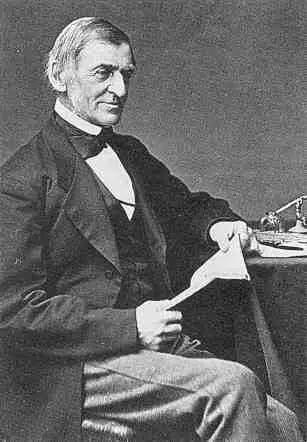
Poet: Ralph Waldo Emerson
Poem: Concord Hymn
Poem of the Day:
May 9 2006
Comment 12 of 12, added on March 31st, 2008 at 2:30 PM.
This poem was written by Emerson to commemorate the raising of a monument to the Battle of Lexington and Concord, April 19, 1775.
"By the rude bridge that arched the flood" - an old definition of the word "rude" is "unpolished" or "rudimentary" -- a handmade bridge going over the Concord River.
"Their flag to April's breeze unfurled" - with their flag waving in the April breeze
"Here once the embattled farmers stood" - self explanatory, the "here" is the banks of Concord River by the bridge
"And fired the shot heard round the world" - the shot was reported (not physically heard, of course) all over the world; it let the British know that they were going to have trouble on their hands, and gave downtrodden people in oppressed nations hope in their own struggles.
"The foe long since in silence slept" - As the dedication ceremony is taking place, the British who fought at the Battle of Lexington and Concord are long dead
"Alike the conqueror silent sleeps" - Just as above, the Colonists who fought and died in this battle have been dead for a long time before the monument ceremony.
"And time the ruined bridge has swept down the dark stream that seaward creeps" -- the passage of time has swept the original, ruined bridge, which fell into the river, away to the sea.
"By these green banks, by this soft stream we set today a votive stone" At the ceremony, they are placing a monument by the River to commemorate the Battle.
"That memory may their deeds redeem when, like our sires, our sons are gone" --the monument is being placed in the hopes that the heroic deeds of the embattled farmers shall be called to mind and remembered, even after the deaths of the children of the generation of people who are placing the monument, who acknowledge that their parents ("sires") have already died.
"Spirit, that made those heroes dare to die and leave their children free" - Emerson is talking about the courage of the farmers who dared to fight the British soldiers knowing that they themselves would probably perish, but nevertheless so committed to the cause of freedom that they determined they would lay down their own lives in order to secure freedom for the next generation ("their children") and beyond.
"Bid time and nature gently spare the shaft we raise to them and thee" Emerson is asking the Spirit (higher power, or God) to instruct time and nature to preserve the monument ("shaft") that is being erected in memory of the heroes of the Battle and in honor of the Sprit (higher power, or God).
Karen from United States
Comment 11 of 12, added on February 13th, 2007 at 5:18 PM.
whos to know whats in the mind of a great poet? no one, but we can try to interpret the meaning and make it our own...it can be rewarding
Merman from United States
Comment 10 of 12, added on March 22nd, 2006 at 4:08 PM.
dude i think that poem is not elementryish i mean really guys come on and give the guy some clap for what he did goodness i mean really ya guys must be horrible if ya think thats bad.....
wtf from Australia
Are you looking for more information on this poem? Perhaps you are trying to analyze it? The poem, Concord Hymn, has received 12 comments. Click here to read them, and perhaps post a comment of your own. Of course you can also always discuss poems by Ralph Waldo Emerson with others on the American Poems poetry forum!
|
This poem was written by Emerson to commemorate the raising of a monument to the Battle of Lexington and Concord, April 19, 1775.
"By the rude bridge that arched the flood" - an old definition of the word "rude" is "unpolished" or "rudimentary" -- a handmade bridge going over the Concord River.
"Their flag to April's breeze unfurled" - with their flag waving in the April breeze
"Here once the embattled farmers stood" - self explanatory, the "here" is the banks of Concord River by the bridge
"And fired the shot heard round the world" - the shot was reported (not physically heard, of course) all over the world; it let the British know that they were going to have trouble on their hands, and gave downtrodden people in oppressed nations hope in their own struggles.
"The foe long since in silence slept" - As the dedication ceremony is taking place, the British who fought at the Battle of Lexington and Concord are long dead
"Alike the conqueror silent sleeps" - Just as above, the Colonists who fought and died in this battle have been dead for a long time before the monument ceremony.
"And time the ruined bridge has swept down the dark stream that seaward creeps" -- the passage of time has swept the original, ruined bridge, which fell into the river, away to the sea.
"By these green banks, by this soft stream we set today a votive stone" At the ceremony, they are placing a monument by the River to commemorate the Battle.
"That memory may their deeds redeem when, like our sires, our sons are gone" --the monument is being placed in the hopes that the heroic deeds of the embattled farmers shall be called to mind and remembered, even after the deaths of the children of the generation of people who are placing the monument, who acknowledge that their parents ("sires") have already died.
"Spirit, that made those heroes dare to die and leave their children free" - Emerson is talking about the courage of the farmers who dared to fight the British soldiers knowing that they themselves would probably perish, but nevertheless so committed to the cause of freedom that they determined they would lay down their own lives in order to secure freedom for the next generation ("their children") and beyond.
"Bid time and nature gently spare the shaft we raise to them and thee" Emerson is asking the Spirit (higher power, or God) to instruct time and nature to preserve the monument ("shaft") that is being erected in memory of the heroes of the Battle and in honor of the Sprit (higher power, or God).
Karen from United States