perfectly natural;perfectly
putting
it mildly lively(but
Death
is strictly
scientific
& artificial &
evil & legal)
we thank thee
god
almighty for dying
(forgive us,o life!the sin of Death
✦
Analysis
dying is fine)but Death: analysis
Introduction
"dying is fine)but Death" is a short free-verse poem that sets two forms of one word against each other. It treats the verb form, dying, as natural and lively. It treats the capitalised noun, Death, as cold, scientific and legal. The speaker argues this in a loose, flirting voice, calling the listener "baby", and ends with a prayer of thanks "for dying". Words and punctuation break apart as the poem goes. Its first line closes a parenthesis that was never opened, and its last line opens one that never closes.
Summary
Line 1 makes the opening claim: "dying is fine)but Death". A closing parenthesis follows "fine", though no opening one comes before it. The sentence then stops on the capitalised noun and breaks off.
The second stanza cuts in with a sound and a pet name: "?o", "baby" and "i", each on its own line. The third stanza supplies "wouldn't like". The fourth finishes the thought: "Death if Death / were / good:for". The colon and the "for" promise a reason.
Line 9 begins that reason with "when". A parenthesis sets aside "instead of stopping to think". The next stanza says that when you "begin to feel of it,dying / 's miraculous". The speaker then asks "why?be".
The word because is split across the stanza break, and line 13 reads "cause dying is". The next stanza answers with "perfectly natural". The speaker adds that this is "putting / it mildly" and calls dying "lively". A new parenthesis opens on "(but".
"Death" stands alone in line 17. The next stanza says it "is strictly / scientific" and "& artificial &". Line 21 completes the list with "evil & legal)" and closes the parenthesis.
The last stanza turns to prayer: "we thank thee / god / almighty for dying". Line 25 asks life to forgive "the sin of Death". A parenthesis opens before "forgive" and stays open to the end.
Themes and meaning
Two forms of one word carry the argument. Dying is a verb form, something under way. Death is a noun with a capital, a fixed thing. The poem gives them opposite lists. Dying is "miraculous", "perfectly natural" and "lively". Death is "scientific", "artificial", "evil" and "legal". The second list names things people make and rule on, and it puts evil among them.
Feeling beats thought here. Line 9 pushes thinking into brackets: "(instead of stopping to think)". Line 10 puts feeling in the main sentence: "begin to feel of it". Dying is known from the inside, by touch. Death is known from the outside, by whatever is "strictly / scientific".
The last stanza turns a religious order around. The speakers thank god "for dying", not for rescue from it. They then ask forgiveness from life, not from god: "forgive us,o life!". The sin they name is Death itself. The likeliest reading is that people are to blame for it, since the earlier list called it "artificial".
The contrast reaches past the end of a body. A thing that is "lively" is not simply ending. So the two words also stand for two ways of living, one awake and changing, the other fixed and numb. The flirting of "?o" and "baby" lets an erotic sense into dying as well. That sense colours the poem without replacing its plain subject, which is mortality.
The parentheses support the preference for process. Line 25 opens one and never closes it. Line 1 closes one that was never opened. Read as a loop, the prayer runs back into the first line. The poem then has no end, which suits its argument against a final state.
Tone
The voice starts out casual and teasing. "?o" and "baby" sound like talk between lovers or friends. The mock lesson of "why?be" keeps it playful, and so does the aside "putting / it mildly". The speaker seems delighted with the claim.
The tone hardens at line 17. "Death" gets a line to itself, and "strictly" sounds official. The ampersands in "& artificial &" make the list flat and curt, like items in a charge. The attitude here is scorn.
The last stanza changes register again. The lone "i" of line 4 becomes "we", and slang gives way to "we thank thee". The church language comes with a half-smile, but the thanks are meant, because the whole poem has argued for them. The unclosed last line leaves the prayer hanging.
Form and structure
The poem is free verse with no regular metre. It has 25 lines in 12 stanzas. The stanzas alternate between 1 line and 3 lines, and the last stanza has 4. Lines run from 1 to 9 syllables.
Rhyme plays no real part. Some lines end on the same word, "Death" or "dying". The only true rhyme is "be" in line 12 with "thee" in line 22. Breaks fall inside words and phrases, as in "why?be" and "'s miraculous". Punctuation often has no space after it, as in "good:for", so words collide. "Death" is the only word with a capital, so it stands out each time it appears.
Poetic devices
Antithesis line 1
dying is fine)but Death The line sets the verb form against the noun. The whole poem develops this one contrast.
Direct address line 3
baby The pet name makes a claim about mortality sound like private, flirting talk. It keeps the subject from turning solemn.
Capitalisation line 6
Death if Death The capital and the repetition turn the word into something like a named figure. Lower-case dying gets no such weight.
Parenthesis line 9
(instead of stopping to think) Thinking is literally set aside in brackets. The grammar acts out what the line recommends.
Enjambment line 11
's miraculous The contraction is cut from its noun and starts a new line. The small sound gets a pause before the large word arrives.
Enjambment across a stanza break line 12
why?be The word because splits across a stanza break. The answer to the question is held back, like a teacher pausing.
Understatement line 16
it mildly lively The speaker calls dying "perfectly" lively and says even that is putting it mildly. The claim grows larger by pretending to hold back.
Polysyndeton line 20
& artificial & Repeated ampersands make the charges against Death pile up. The symbol itself looks clerical, which suits the list.
Juxtaposition line 21
evil & legal) Two words that should be opposed stand side by side as equals. The pairing is the poem's sharpest irony.
Archaic diction line 22
we thank thee Prayer language arrives abruptly after the slang of the opening. The change in register marks the turn to the last stanza.
Apostrophe line 25
forgive us,o life! Life is addressed as a power that can forgive. It takes the place god held two lines before.
Words worth knowing
feel of
To feel of something is to touch or handle it, to find out by feeling. The phrase is older or regional, and it makes dying something explored by hand.
thee
An old form of you, used here as it is in prayer.
baby
A term of endearment for an adult, not an infant.
Context
This poem was the site's Poem of the Day on November 17, 2011.
What readers have said
Arlin reports a family eulogy that cited this poem and said cummings was right: at death the spirit merely makes a transition. Arlin, 2004
Lawrence Besserman misremembers the opening in reverse, since actual dying seems terrible and the abstract noun bearable, and he says calling dying fine is ironic. Lawrence Besserman, 2007
Jessie separates the words through the Christian idea of life after dying: dying is the body's physical process, and Death is the spirit's death on turning from God. Jessie, 2005
David reads it completely differently, hearing in death the little death of orgasm, or petite mort. He sees an irreverent but heartfelt comment on the role of sex in society, though he ends unsure. David, 2009
Claudine Collier-Fanaselle calls dying the natural moment the spirit leaves the body, and Death the hospitals, lawyers, wills and embalming fluid that take nature out of dying. Claudine Collier-Fanaselle, 2011
Timothy Barr rejects the idea that dying is simply being ranked above death, and calls the poem half ironic and half introspective, a pondering and not a statement. Timothy Barr, 2005
Notice the difference between the present participle "dying" and the common noun "Death." ee displays his tolerance for life with the use of the participle and his distance from life with the 'scientific" Death. The poem takes on a prayer form at the end - a common ee device where he brings together contrary topics into a magical, yet logical phrase that does his thematic and rhetorical bidding
Arlin
My dear wife of 42 years, Jean, passed away earlier this month. In a eulogy written by my brother Edward, he refers to this being my favorite ee cummings poem. My brother says, "cummings was right. Her spirit merely made its transition."
suziPakistan
in this poem ee shows us that dying is different to death. he paints the image in our minds that death is a legal crime but dying is normal and not a crime.this is hard to understand but after you have read through it a few times it becomes clear.
AdrienneUnited States
I think this poem is about a love of life and nature. It seems cummings sees life as a gift from God and death is to leave behind that gift. Yes it is legal, but its a crime because the world is so beautiful. It is obvious that cummings doesnt like science very much when he refers to death (negatively) as "scientific". Death is when you have no pulse or brain activity. But dying is nature, not science.
Chelsia WigglestonCanada
Cummings shows us the mastery of landuage and yet, withthe mastery, a certain breaking of the rules that leads into the insight we derive. It is in this piece especially that we can become clear of the several intents this poem holds. The surface and later, the inspiration shown in the deepest bowls of his work become apperant only through revelation and understanding of the man himself.
AshlieyUnited States
I Really dont understand the poem and it is weriod. And I Really dont like it
maryjaneCanada
i think ee cummings is trying to justify death and dying in the sense that in the end of the poem he begins to glorify god for dying. He is setting a division between death and dying a looking at them from scientifical and ethical perspectives.
Tutor girl
live--don't just exist. As long as you are breathing you have hope and at the point that you die you also have hope because of Jesus' death. Also from the moment of birth we are all dying (ironic isn't it?)
rokhoonCanada
i really like the poem. it gets me to think about this matter
bev gardnerUnited States
E. E. Cumming has a audio recording read by author. This is wonderful.
bethanyUnited States
i love this poem b/c he's so right! death and dying are perceived completely different - or at least should be, is what i assume he's saying. death is usally viewed very negatively, but dying, its a natural process we all go through, its still a part of life. but death is final, and i think the God reference reference has a lot to do w/ that comment, b/c Jesus (being interchangable w/ God) rose from the dead (death) - e.e. praises him for dying, not for his death.
krissyCanada
it is hard 2 understand!
Timothy BarrUnited States
I don't believe e.e. is trying to say how dying is superior to death. I believe the poem is half-ironic, and half-introspective. We fear our mortality, but we praise the process as noble. I think e.e. is reflecting on his own dilemma in this subject. How to deal with opposing views on dying and death. he is not telling, he is asking, or more likely pondering.
JessieUnited States
It seems to me that Cummings is separating dying and death throught the Christian conception of life after dying through Jesus. I think that when he speaks of dying he is talking of the physical process we go through before the body dies. But, his conception of death seems to be the death of the spirit, or when we turn away from God, which is only final after the process of dying.
randyUnited States
this poem is trying to say something about dying thats about all i got out of it!
DavidUnited States
Cummings is discussing dying as a movement and a leaving of things, moment by moment by living people. Things you do when you are "not there" - like when you're having fun but not thinking about it. Dying to disappointing and hurtful things, but with no "death" to it. Death closes doors. Dying opens them.
CaraAustralia
I like this poem lots more than the others by e.e cummings- it makes so much more sense!
A & WAustralia
Death is the end, its final but dying is life. We understand dying but we dont understand death and because of that we fear death.
Jasmine StradbrookAustralia
The way I feel about the poem is that he talks about how death might be bad and unwelcoming but it is something from the day we are born, know it will come. So in that way it is something that we look towards. It talks about just beofore we die we feel it instead of thinking of it.
Jessie's got it right. dying is physical. death is spiritual. dying just means your body is dead, you stopped breathing...but your spirit and your memory lives on. Death means your spirit no longer exists, you're lifeless. ironically, some people can be Death while they're alive.
Lawrence BessermanIsrael
For what it's worth, I regularly misremember the refrain of this poem as 'Death isn't so bad, but dying, o baby'--the reverse of Cummings' evaluation of the participle versus the noun. The thinking behind my misremembering is that the actual experience of 'dying' is terrible, whereas the abstraction of the noun 'death' is bearable--i think the irony of Cummings' beginning with the difficult-to-swallow statement 'diung is fine' should not be lost. . .
jessie's got it...when he says "dying," he's referring to the physical cessation of a heartbeat and brain activity. but when he says "Death," it definitely symbolizes a spiritual death, a loss of one's vivacity and fervor, a loss of one's beliefs or morals, a loss of one's essential self (something that, more often than not, occurs while one is still breathing and physically functioning).the last little part: we thank thee god almighty for dying (forgive us,o life!the sin of Death
makes this rather apparent...dying is natural and good, but Death is abominable.
As cummings uses them here, neither dying or death refer to the death of the body. 'Death' here, is actually a fate worse than death, as we know it. It is the death or awareness, of feeling and consciousness. It's the attachment to the world of form and identification with the ego and its objectification of 'things' (maya). 'Dying' is the awakening into the moment; "when you begin to feel of it". It's the death of fear, the death of ego, being fully present beyond the mind "(instead of stopping to think)". Thus the gratitude for dying and the regret of death.
I read this completely differently - didn't Cummings often (if not usually) use the "petit mort" sense of death in his poetry? I don't think I'm reading too much into this - between "?o/baby" and dying "perfectly/putting/it mildly lively" versus Death "artificial &/evil & legal", and "the sin of Death" - I took it as Cummings' irreverent but heartfelt commentary on the role of sex in society. I don't mean to be vulgar at all, I just thought that was a characteristic of Cummings' poetry and automatically read it that way. The more literal interpretation makes sense too, though, so now I'm not so sure. Does anyone have a link to Cummings' own reading of the poem?
I believe that what we are supposed to learn from this poem is that dying is the beautiful, natural ending of life. The wondrous moment when the spirit leaves the body, while Death is all about hospitals and flatlines, lawyers and wills, morticians and embalming fluid, all the ways in which we take nature out of dying.
WilliamUnited States
What a perfect metaphor for this poem to chop it off at the knees to protect a copy(so-called)right. Want to know what cummngs meant by death? Here it is, served up on a platter by the copyright holder, artificial and evil and LEGAL. They know not what they do, LOL.
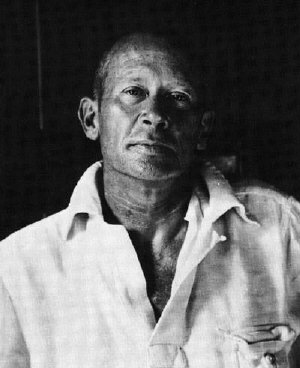
Notice the difference between the present participle "dying" and the common noun "Death." ee displays his tolerance for life with the use of the participle and his distance from life with the
'scientific" Death. The poem takes on a prayer form at the end - a common ee device where he brings together contrary topics into a magical, yet logical phrase that does his thematic and rhetorical bidding
My dear wife of 42 years, Jean, passed away earlier this month. In a eulogy written by my brother Edward, he refers to this being my favorite ee cummings poem. My brother says, "cummings was right. Her spirit merely made its transition."
in this poem ee shows us that dying is different to death. he paints the image in our minds that death is a legal crime but dying is normal and not a crime.this is hard to understand but after you have read through it a few times it becomes clear.
I think this poem is about a love of life and nature. It seems cummings sees life as a gift from God and death is to leave behind that gift. Yes it is legal, but its a crime because the world is so beautiful. It is obvious that cummings doesnt like science very much when he refers to death (negatively) as "scientific". Death is when you have no pulse or brain activity. But dying is nature, not science.
Cummings shows us the mastery of landuage and yet, withthe mastery, a certain breaking of the rules that leads into the insight we derive. It is in this piece especially that we can become clear of the several intents this poem holds. The surface and later, the inspiration shown in the deepest bowls of his work become apperant only through revelation and understanding of the man himself.
I Really dont understand the poem and it is weriod. And I Really dont like it
i think ee cummings is trying to justify death and dying in the sense that in the end of the poem he begins to glorify god for dying. He is setting a division between death and dying a looking at them from scientifical and ethical perspectives.
live--don't just exist. As long as you are breathing you have hope and at the point that you die you also have hope because of Jesus' death. Also from the moment of birth we are all dying (ironic isn't it?)
i really like the poem. it gets me to think about this matter
E. E. Cumming has a audio recording read by author. This is wonderful.
i love this poem b/c he's so right! death and dying are perceived completely different - or at least should be, is what i assume he's saying. death is usally viewed very negatively, but dying, its a natural process we all go through, its still a part of life. but death is final, and i think the God reference reference has a lot to do w/ that comment, b/c Jesus (being interchangable w/ God) rose from the dead (death) - e.e. praises him for dying, not for his death.
it is hard 2 understand!
I don't believe e.e. is trying to say how dying is superior to death. I believe the poem is half-ironic, and half-introspective. We fear our mortality, but we praise the process as noble. I think e.e. is reflecting on his own dilemma in this subject. How to deal with opposing views on dying and death. he is not telling, he is asking, or more likely pondering.
It seems to me that Cummings is separating dying and death throught the Christian conception of life after dying through Jesus. I think that when he speaks of dying he is talking of the physical process we go through before the body dies. But, his conception of death seems to be the death of the spirit, or when we turn away from God, which is only final after the process of dying.
this poem is trying to say something about dying thats about all i got out of it!
Cummings is discussing dying as a movement and a leaving of things, moment by moment by living people. Things you do when you are "not there" - like when you're having fun but not thinking about it. Dying to disappointing and hurtful things, but with no "death" to it. Death closes doors. Dying opens them.
I like this poem lots more than the others by e.e cummings- it makes so much more sense!
Death is the end, its final but dying is life. We understand dying but we dont understand death and because of that we fear death.
The way I feel about the poem is that he talks about how death might be bad and unwelcoming but it is something from the day we are born, know it will come. So in that way it is something that we look towards. It talks about just beofore we die we feel it instead of thinking of it.
dying is fine but death o baby.
possibly the best line ever.
Jessie's got it right. dying is physical. death is spiritual. dying just means your body is dead, you stopped breathing...but your spirit and your memory lives on. Death means your spirit no longer exists, you're lifeless. ironically, some people can be Death while they're alive.
For what it's worth, I regularly misremember the refrain of this poem as 'Death isn't so bad, but dying, o baby'--the reverse of Cummings' evaluation of the participle versus the noun. The thinking behind my misremembering is that the actual experience of 'dying' is terrible, whereas the abstraction of the noun 'death' is bearable--i think the irony of Cummings' beginning with the difficult-to-swallow statement 'diung is fine' should not be lost. . .
jessie's got it...when he says "dying," he's referring to the physical cessation of a heartbeat and brain activity. but when he says "Death," it definitely symbolizes a spiritual death, a loss of one's vivacity and fervor, a loss of one's beliefs or morals, a loss of one's essential self (something that, more often than not, occurs while one is still breathing and physically functioning).the last little part:
we thank thee
god
almighty for dying
(forgive us,o life!the sin of Death
makes this rather apparent...dying is natural and good, but Death is abominable.
As cummings uses them here, neither dying or death refer to the death of the body. 'Death' here, is actually a fate worse than death, as we know it. It is the death or awareness, of feeling and consciousness. It's the attachment to the world of form and identification with the ego and its objectification of 'things' (maya).
'Dying' is the awakening into the moment; "when you begin to feel of it". It's the death of fear, the death of ego, being fully present beyond the mind "(instead of stopping to think)".
Thus the gratitude for dying and the regret of death.
I read this completely differently - didn't Cummings often (if not usually) use the "petit mort" sense of death in his poetry? I don't think I'm reading too much into this - between "?o/baby" and dying "perfectly/putting/it mildly lively" versus Death "artificial &/evil & legal", and "the sin of Death" - I took it as Cummings' irreverent but heartfelt commentary on the role of sex in society. I don't mean to be vulgar at all, I just thought that was a characteristic of Cummings' poetry and automatically read it that way. The more literal interpretation makes sense too, though, so now I'm not so sure. Does anyone have a link to Cummings' own reading of the poem?
dying is fine) but Death
I believe that what we are supposed to learn from this poem is that dying is the beautiful, natural ending of life. The wondrous moment when the spirit leaves the body, while Death is all about hospitals and flatlines, lawyers and wills, morticians and embalming fluid, all the ways in which we take nature out of dying.
What a perfect metaphor for this poem to chop it off at the knees to protect a copy(so-called)right. Want to know what cummngs meant by death? Here it is, served up on a platter by the copyright holder, artificial and evil and LEGAL.
They know not what they do, LOL.